
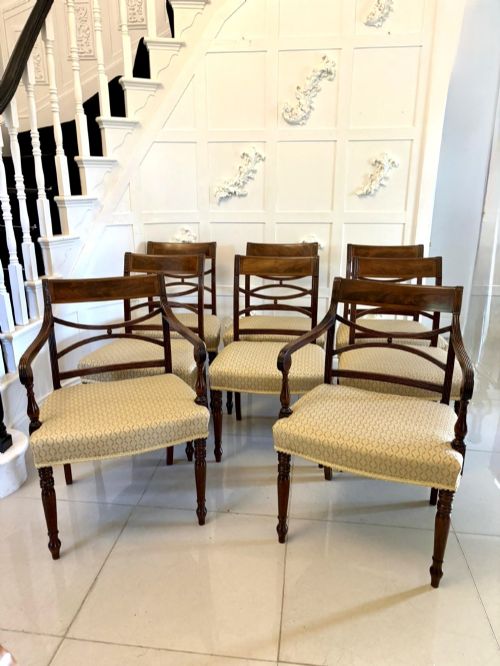
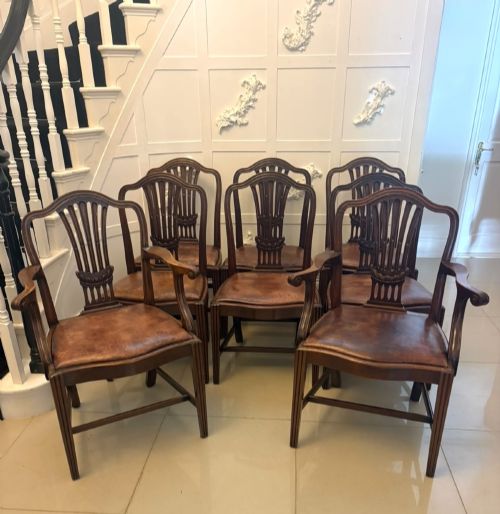
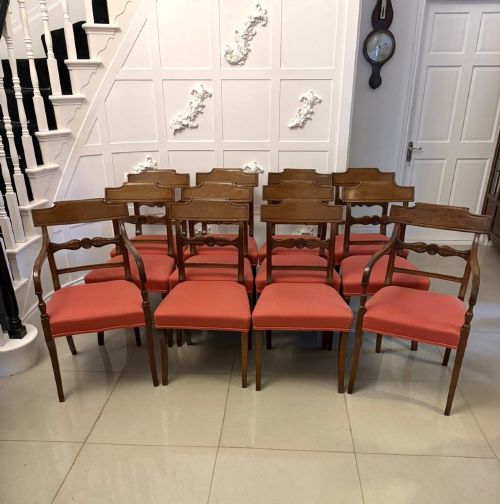
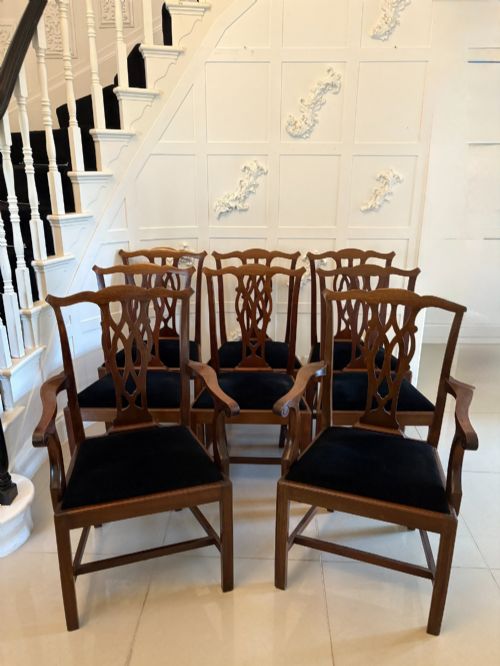

Period Mahogany Carver Chairs
Period mahogany carver chairs bring architectural timber and generous arm support to the dining table.
Period Mahogany Carver Chairs
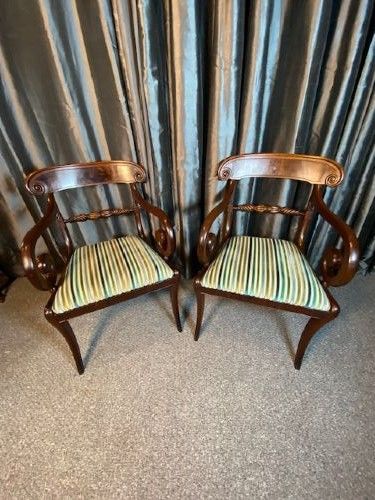
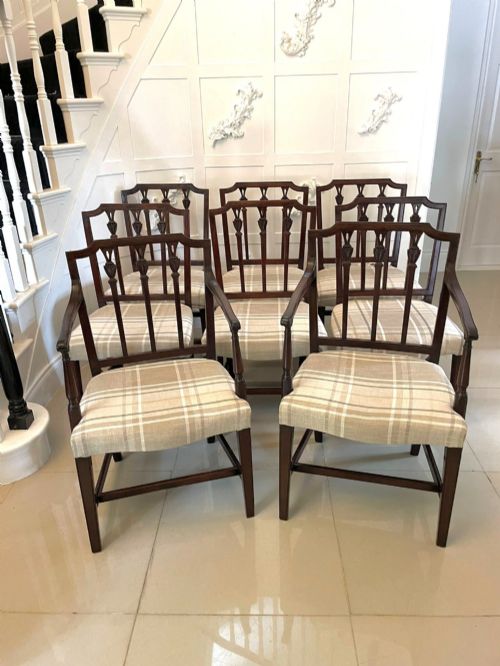
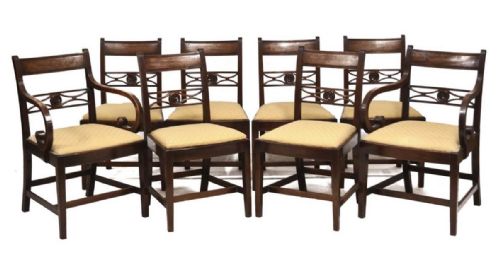
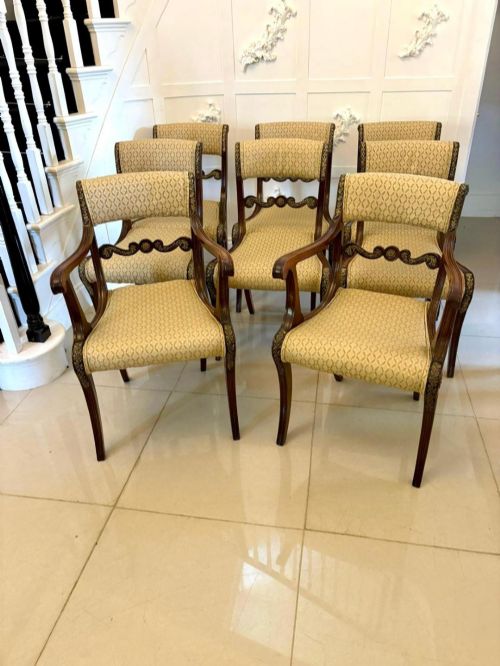
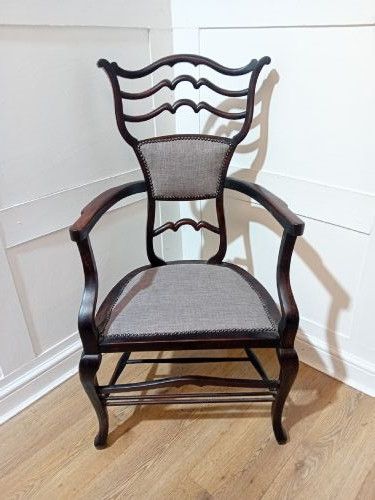
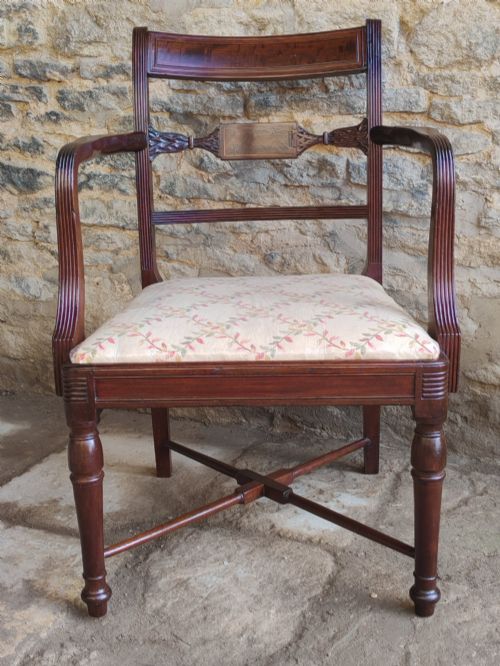
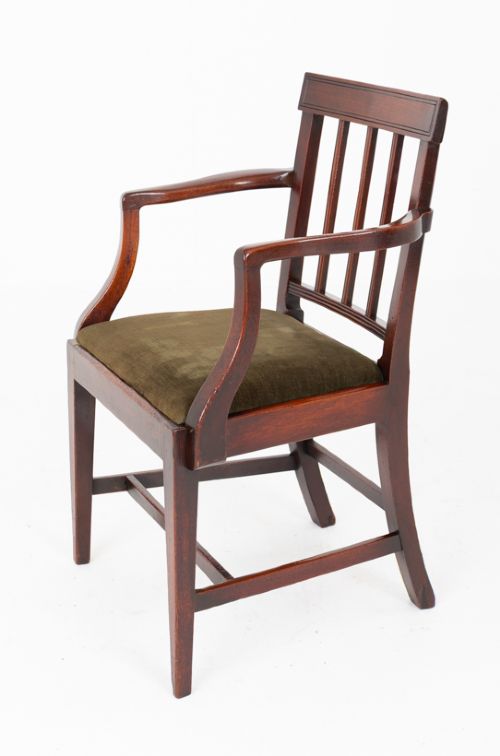
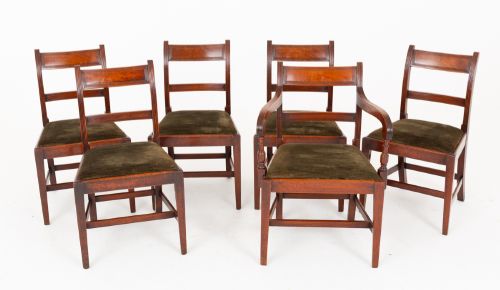
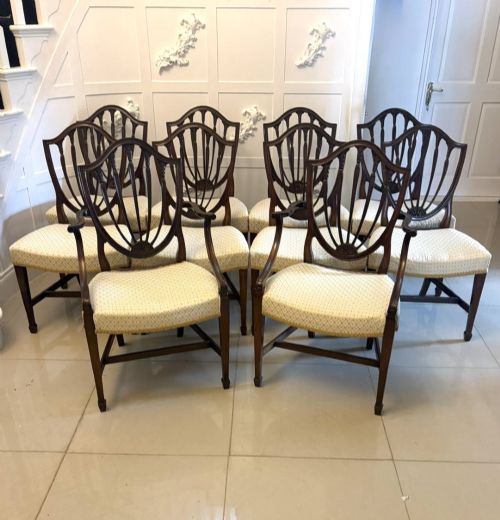
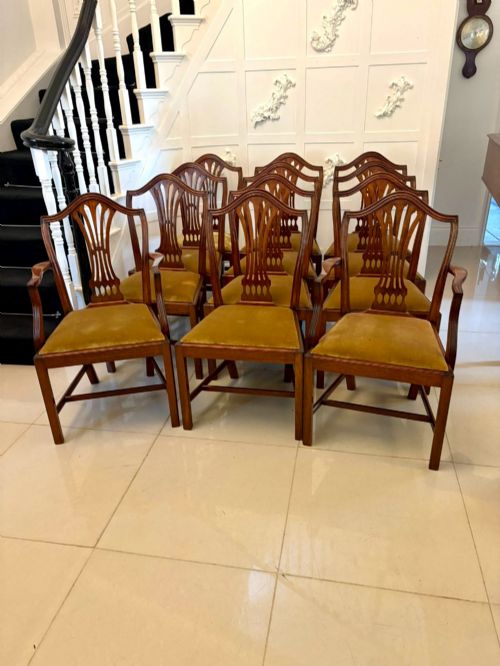
Period mahogany carver chairs are sturdy armchairs designed to sit at the head and foot of a dining table or to function as solitary reading seats. When you search for period mahogany carver chairs, you encounter seating forms spanning the Georgian, Regency, Edwardian and Victorian eras. These range from substantial 18th-century Chippendale and Hepplewhite designs to crisply reeded Regency frames and later Edwardian revivals.
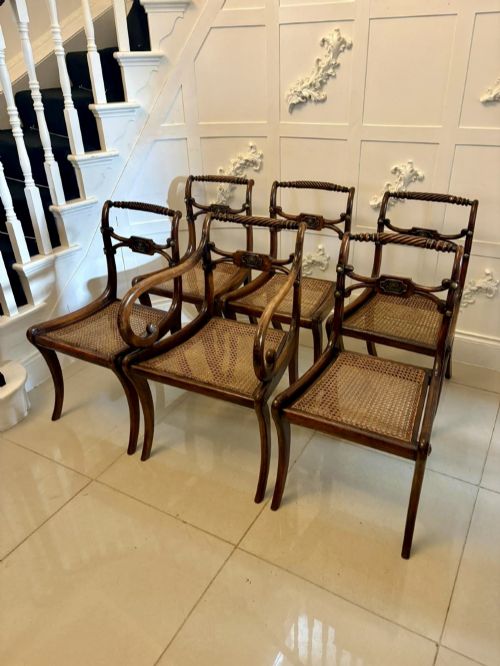
The pieces on this page appear either as single armchairs, matched pairs, or as the designated arm carvers included within larger sets of dining chairs. Single carvers often show idiosyncratic regional cabinet-making, whereas those matched to larger sets repeat the exact splat or reeding pattern of the accompanying dining chairs. Buyers most frequently meet versions from the late 18th and early 19th centuries, constructed with open armrests designed to accommodate voluminous period attire.
Materials and Construction
Cabinet-makers relied heavily on dense tropical mahogany for its stability, fine grain, and capacity to hold crisp hand-carved details like husks, paterae and acanthus leaves. Timber was selected with careful attention to figure, utilising straight-grained sections for structural integrity in the slender stiles and arms. Secondary woods like pine or oak frequently appear in the internal corner blocks and seat frames, unseen from the exterior.
Joints were predominantly pegged mortise and tenon structures, engineered to withstand the persistent strain applied to armrests over generations of daily use. Seats were webbed and stuffed with traditional organic materials before being covered in textiles such as horsehair fabric, velvet, or woven cane panels. Brass embellishments, castors or subtle inlay lines occasionally punctuate the timber frames, particularly on Regency and later revival examples.
Generous elbow room in early carvers accommodates voluminous Georgian gowns.
Judgments of Quality
The refinement of the hand-carved ornament dictates the tier of the piece, distinguishing master workshop output from provincial production. Crisp undercutting in the splats, sharply defined fluting on the legs, and balanced proportions reveal the confidence of the original maker. Heavy, clunky timber sections or soft, flattened carvings indicate a lesser workshop economy.
Integrity of the timber frame and the retention of original structural members govern the durability of the chair. Chairs that have endured without major timber replacement around the fragile arm-to-back joints command greater appreciation. Subtle details, such as the elegant sweep of an elbow or the tapering of a rear leg, separate standard utilitarian seating from exhibition quality output.
Maple and Co·Alfred Allen of Birmingham
The Period Mahogany Carver Chairs Glossary
- Carver
- An armchair designed specifically to match a set of dining chairs, traditionally placed at the ends of the table.
- Shield Back
- A chair back shaped like a heraldic shield, popularized by George Hepplewhite and his contemporaries in the late eighteenth century.
- Sabre Leg
- A concave, outwardly curving leg reminiscent of a cavalry sword, characteristic of Regency furniture design.
- Cane
- Woven rattan or split reed used to form breathable seat panels or back inserts within a wooden frame.
- Splatt
- The central vertical wooden strip connecting the seat to the top rail of a chair back, often pierced and intricately carved.
Period Mahogany Carver Chairs: Frequently Asked Questions
How do I spot a marriage?
Examine the underside of the seat frame and the interior joints for discrepancies in timber colour, grain direction, and tool marks. A married carver often reveals minor structural adjustments where mismatched arms or top rails were forced to fit an older base.
Look closely at the wear patterns and polish consistency across the arms and back legs. Genuine matched sets share identical wear and identical timber preparation throughout.
Can I sit in them daily?
These chairs are structurally robust enough for daily domestic use provided the joints remain tight and secure. Periodic inspection by a specialist conservator prevents minor timber movement from developing into a major fracture.
Avoid dragging the chairs by their armrests, as this applies unnatural lateral torque to the upright supports. Lift them gently from the main seat rail when repositioning.
Were they always sold in pairs?
Carvers were traditionally commissioned as part of large dining suites, usually numbering two armchairs to accompany a dozen or half-dozen single chairs. Pairs of carvers also existed independently for use in libraries, drawing rooms, or master bedrooms.
Single carvers frequently survive today because dining sets became separated or because individual armchairs were utilised as desk seats.