




Lattice Back Dining Chairs
Lattice back dining chairs offer structured elegance and sturdy seating, bringing architectural depth to a room through open woodwork.
Lattice Back Dining Chairs
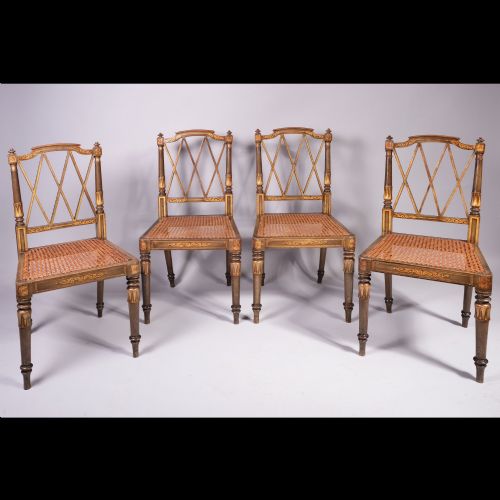
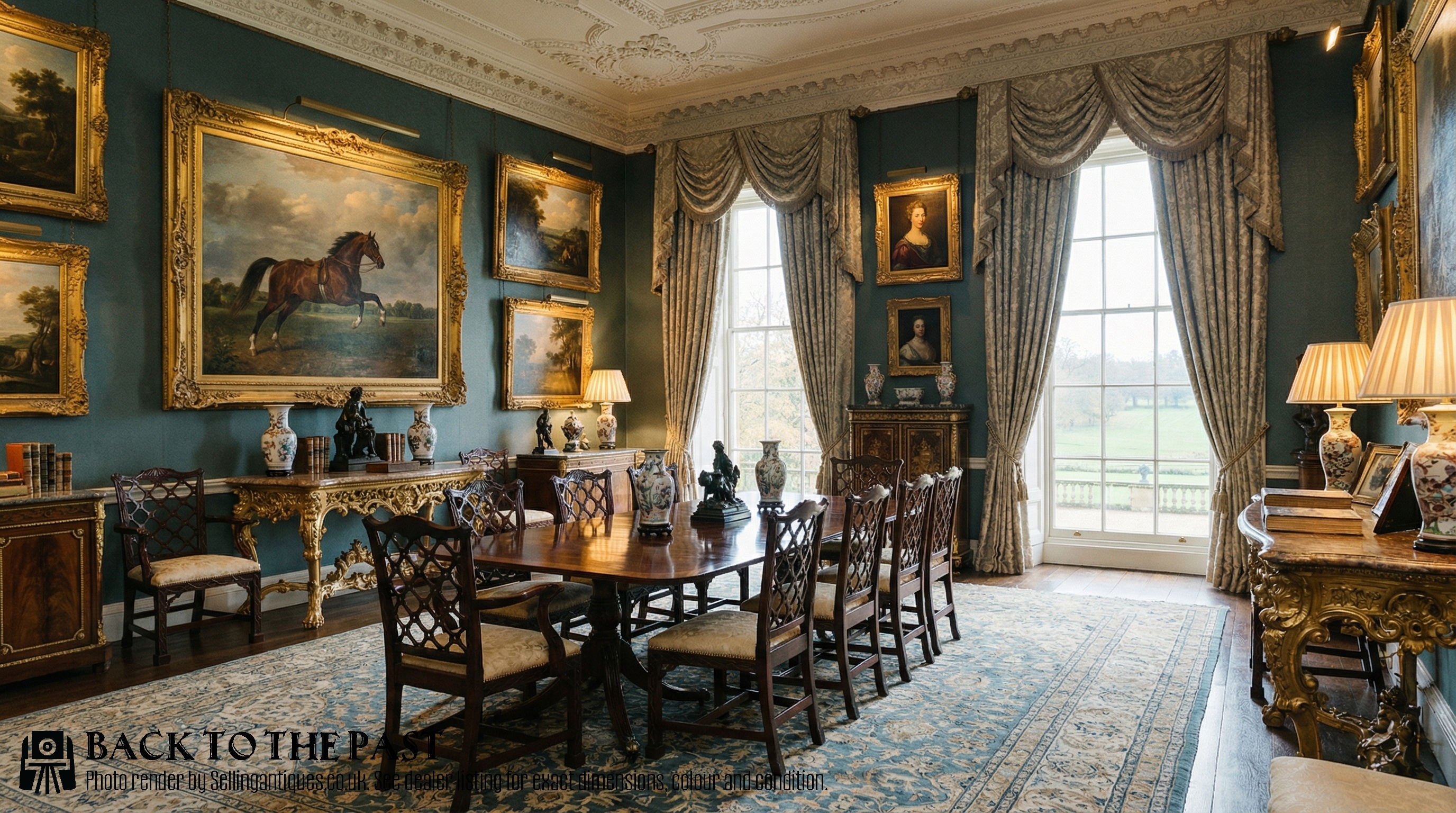
When you search for lattice back dining chairs, you encounter seating solutions that span centuries of domestic design. These pieces combine functional dining comfort with open, geometric backrests that range from formal Georgian craftsmanship to early twentieth-century oak interpretations.
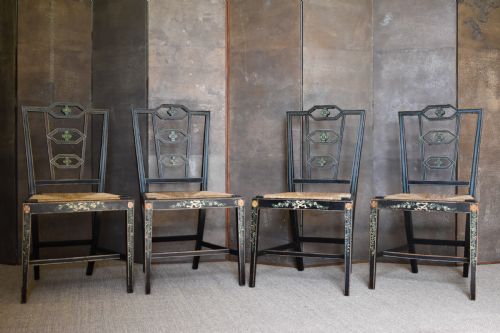
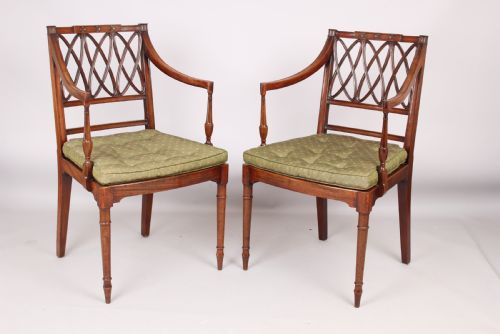
The versions most frequently met on this page include mahogany sets influenced by Chippendale and Sheraton styles, alongside robust oak examples from the nineteen-twenties. Buyers also discover painted finishes, elm kitchen variations, and occasional armchairs designed to complement matching side chairs.
How they were made
The primary material underpinning these items is timber, with mahogany and oak dominating the record. Cabinetmakers utilised solid woods for structural integrity, shaping rails and splats to form the characteristic open patterns.
Detailing involves skilled joinery, with some examples incorporating cane inserts, applied paint, gold leaf, or delicate inlaid elements to enhance the surface appearance. Fabric upholstery provides the seat padding, fixed to frames built for daily dining use.
The record shows materials ranging from mahogany and oak to elm, cane, and paint, spanning periods from the eighteenth century to the nineteen-thirties.
What varies in quality
Quality rests upon the precision of the timber work and the integrity of the joinery within the open backrest. Higher-end pieces demonstrate refined proportion and careful carving that maintain strength despite the intricate negative space.
The scale of the set also dictates distinction, as matching groups of six, eight, or more unified chairs require consistent material selection and uniform craftsmanship across every seat.
Thomas Chippendale·Liberty and Co·Brights of Nettlebed
The Lattice Back Dining Chairs Glossary
- Lattice back
- A chair back featuring an open, criss-cross or geometric wooden framework. This design lightens the visual weight of the timber while providing robust lumbar support.
- Carver
- An armchair designed specifically for the head of a dining table. These pieces match the style of the smaller side chairs in a set.
- Splat
- The vertical wooden strip down the centre of a chair back. In these items, the splat is pierced or intersected to form the lattice pattern.
- Elbow chair
- An alternative term for an armchair with integrated armrests. They offer a wider seat than standard side chairs.
- Reeded
- Decorated with parallel convex mouldings carved directly into the wood. This technique adds texture to chair legs and rails.
Lattice Back Dining Chairs: Frequently Asked Questions
How do I choose the right set size?
Consider the dimensions of your dining table and the space available in your room. Sets frequently appear in groups of four, six, or eight, often including carver armchairs for the ends.
Matching the chair count to your table ensures balanced seating without overcrowding the dining area.
What is the difference between side chairs and carvers?
Side chairs lack armrests and are designed to slide neatly beneath the dining table when not in use. Carvers feature arms, offering a more commanding presence usually reserved for the head of the table.
Many larger sets combine a majority of side chairs with a pair of matching carvers.
How do I care for antique wood dining chairs?
Keep wooden frames away from direct heat sources and strong sunlight to prevent the timber from drying out or splitting. Dust regularly with a dry cloth and apply appropriate wax sparingly.
Check upholstered seat pads periodically to ensure the internal support remains secure.
Are these chairs suitable for daily use?
Solid construction and durable hardwoods make these pieces fully functional for everyday dining. Proper joinery ensures the frames withstand regular movement around the table.
Inspect the stability of the legs and back joints to confirm they remain solid for routine sitting.