




Period Mahogany Accent Table
A period mahogany accent table brings rich timber grain and compact utility to a room, offering a functional surface rooted in Georgian and Regency design.
Period Mahogany Accent Table
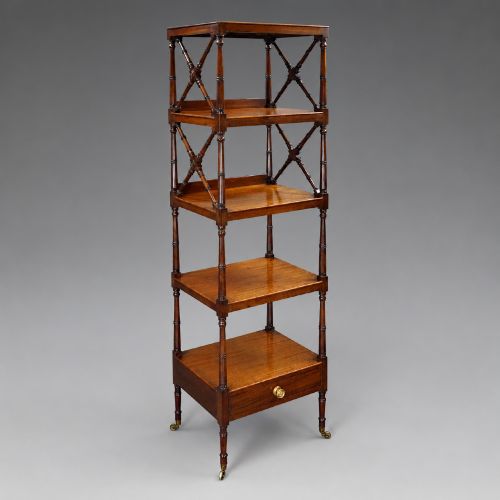
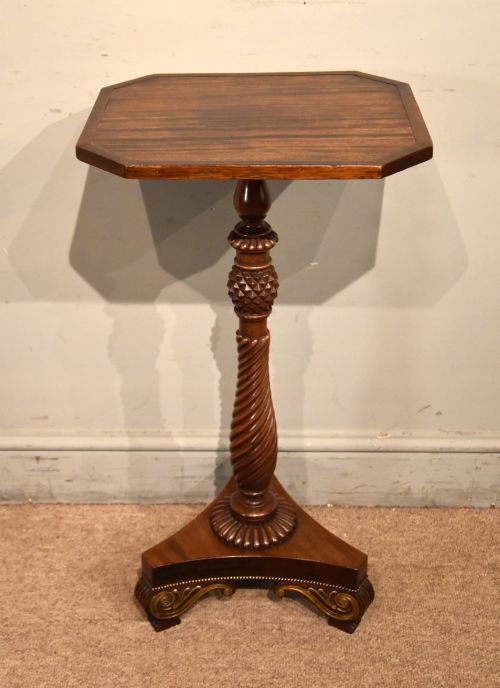
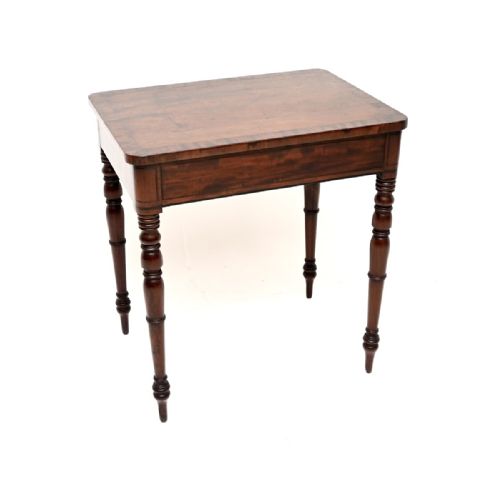
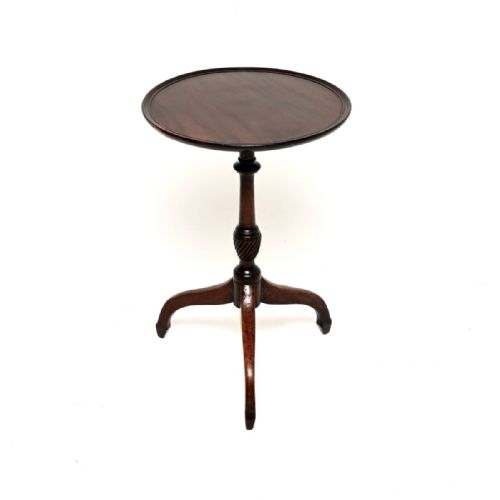
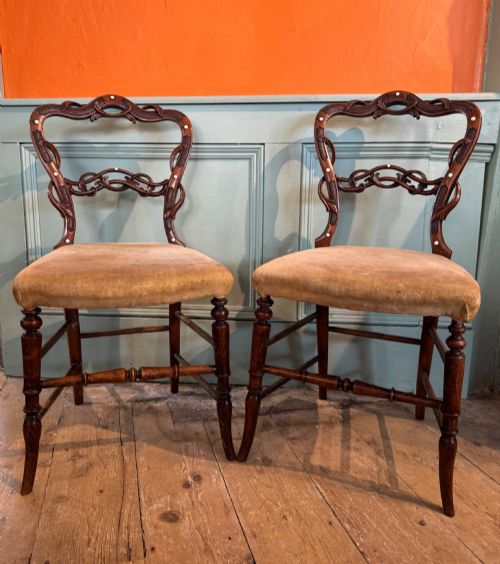
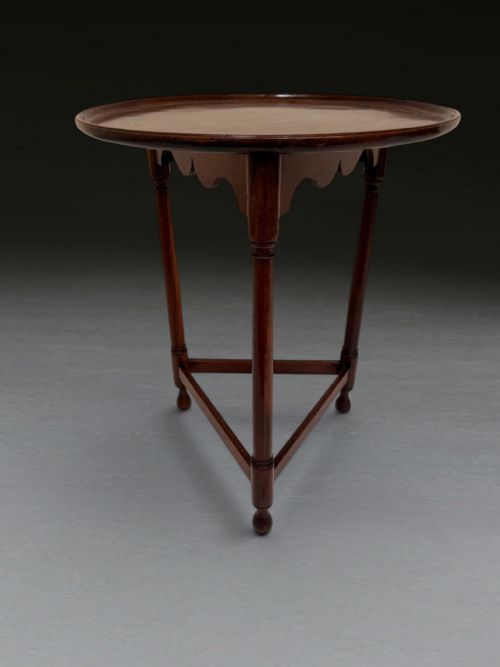
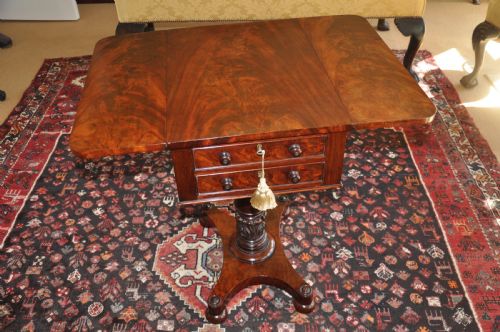
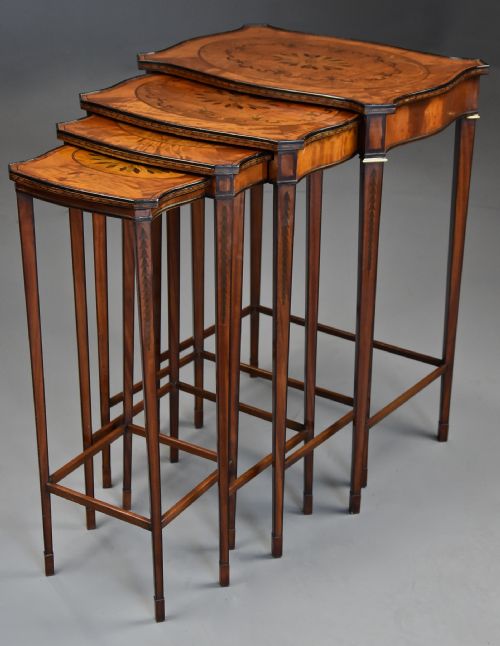
A period mahogany accent table represents a diverse group of small furnishings designed for specific domestic tasks in past centuries. When searching for a period mahogany accent table, buyers encounter formats ranging from tripod wine tables and pembroke tables to nest of tables and multi-tiered whatnots.
The pieces on this page span the eighteenth, nineteenth, and early twentieth centuries, drawing heavily on Georgian, Regency, and Sheraton styles. Side tables and occasional tables dominate the selection, built for mobility and placement beside seating or against walls.
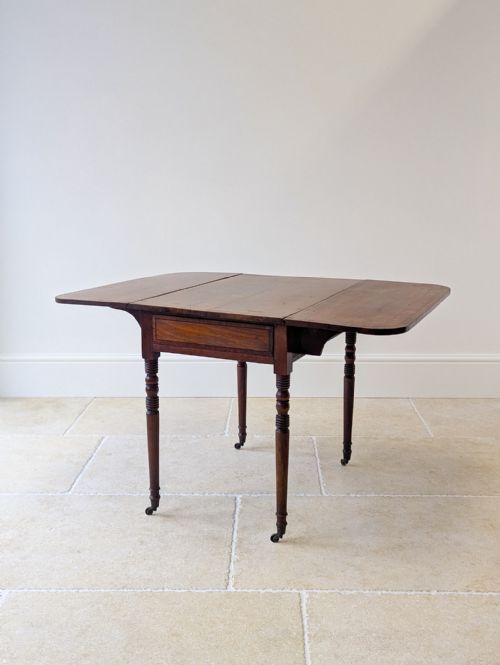
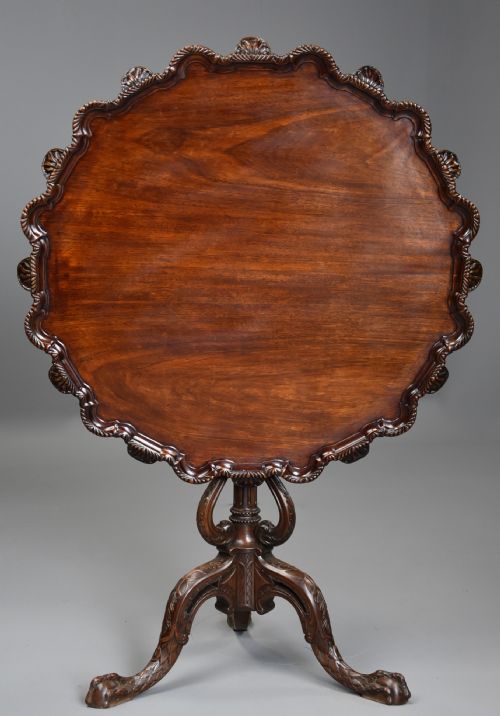
Originating from periods when furniture served distinct functional roles, these items include drop-leaf Pembroke tables and birdcage tripod tables with tilt tops. Each form reflects the domestic habits of its era, balancing decorative presence with practical utility.
Materials and construction methods
Makers relied principally on mahogany, complemented by secondary timbers and decorative veneers such as satinwood and rosewood inlay. Brass hardware, bone inlay, and occasional marble tops appear on specific pieces, adding structural contrast and tactile variety.
Cabinetmakers utilised timber manipulation techniques like birdcage actions, drop-leaf hinges, and spider legs to create movable, adaptable furniture. Surfaces often display careful turning on tripod pedestals, delicate edge moulding, and serpentine shaping.
Joinery depended on traditional hand-cut joints, whilst decorative details involved fine stringing, crossbanding, and scroll carving. The combination of dense mahogany and precise woodworking allowed these smaller tables to withstand centuries of use.
Several tables include folding mechanisms designed originally to hide breakfast crumbs or steady a late-night glass of wine.
Distinctions in craftsmanship and design
Quality rests in the proportion of the piece, the density and figuring of the mahogany grain, and the restraint or ambition of the carving. Superior examples exhibit harmonious dimensions where pedestals, legs, and tops relate precisely to one another without awkward heaviness.
Details such as hand-cut dovetails inside drawers, original brass castors, and crisp execution of Sheraton or Chippendale stylistic motifs elevate a piece. Finer tables integrate inlays like satinwood smoothly into the primary mahogany surface, maintaining flush transitions and balanced layouts.
Gillows
The Period Mahogany Accent Table Glossary
- Tripod table
- A small table supported by a central pillar resting on three spreading feet. Many versions incorporate a tilt-top mechanism for convenient storage against a wall.
- Whatnot
- An open set of shelves used for displaying ornaments or holding books. These pieces often feature three or more tiers supported by slender upright posts.
- Birdcage
- A timber framework beneath the top of a tripod table allowing the surface to both tilt and rotate. This mechanism requires precise joinery to operate smoothly.
- Serpentine
- A curved line that undulates outward and inward, commonly found on the front edges of drawers or the tops of tables. It creates a fluid, organic silhouette.
Period Mahogany Accent Table: Frequently Asked Questions
What is a pembroke table used for?
A pembroke table served as a versatile, movable surface in eighteenth and nineteenth-century parlours and bedrooms. Its drop leaves allowed the table to expand for writing or tea service and contract to save space.
Today, these tables function effectively as compact desks, bedside stands, or sofa tables. Their hinged flaps make them particularly adaptable for smaller rooms needing flexible furniture.
What distinguishes a George III table?
George III period tables reflect the restrained elegance and classical influence of the late eighteenth century. They frequently employ solid mahogany with subtle stringing, clean lines, and sturdy geometric proportions.
Cabinetmakers of this era focused on functional ingenuity, producing clever folding mechanisms and balanced forms. The craftsmanship prioritises structural integrity alongside refined surface decoration.
Can I use an accent table daily?
Period accent tables are sturdy enough for regular daily use when treated with reasonable care. Solid mahogany construction provides natural durability for holding lamps, books, or drinks.
Using coasters and avoiding placement near direct heat sources will protect the antique timber and finish. These tables were built for active domestic service and continue to perform that role.