

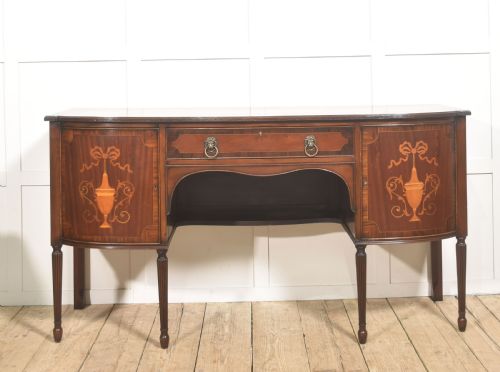


Antique Serpentine Drawer Table
An antique serpentine drawer table brings curving lines and functional storage together, emerging primarily in dressing mirrors and side pieces from the Georgian, Victorian, and Edwardian eras.
Antique Serpentine Drawer Table
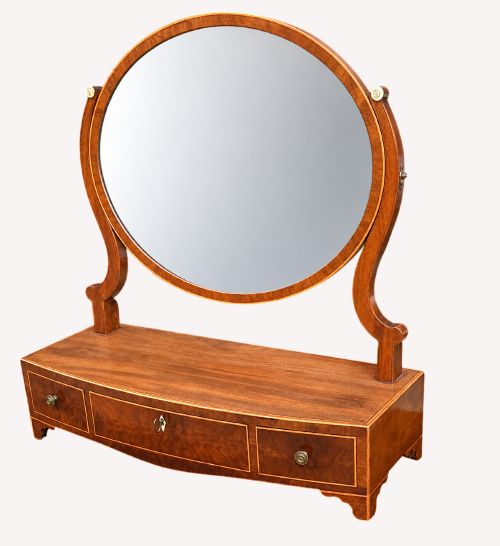
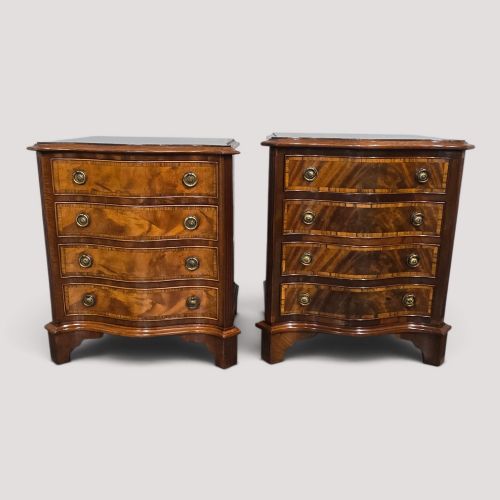
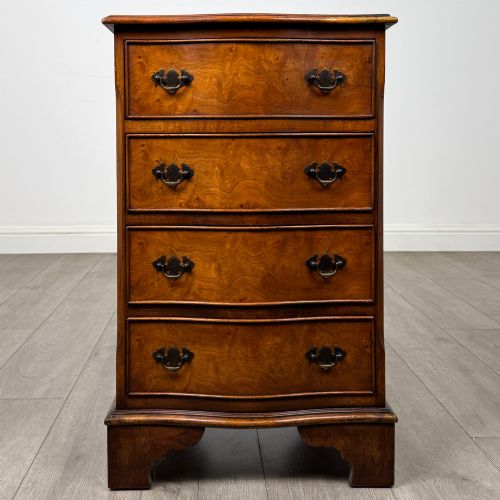
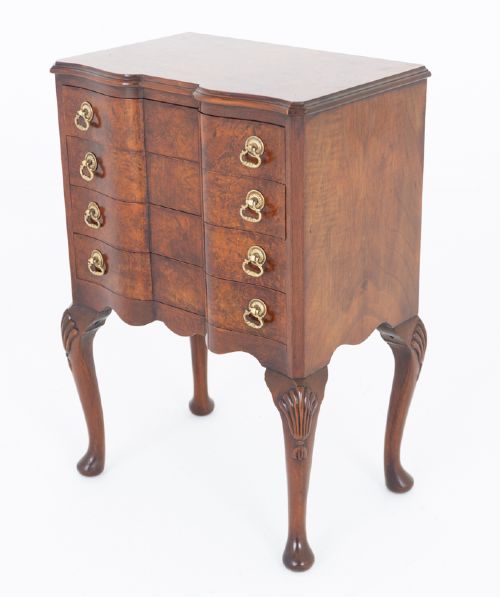
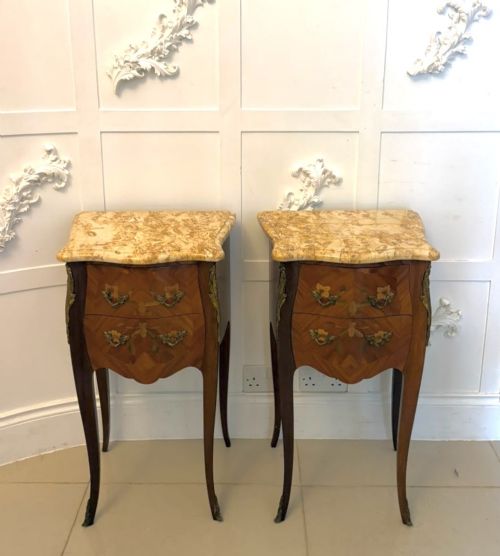
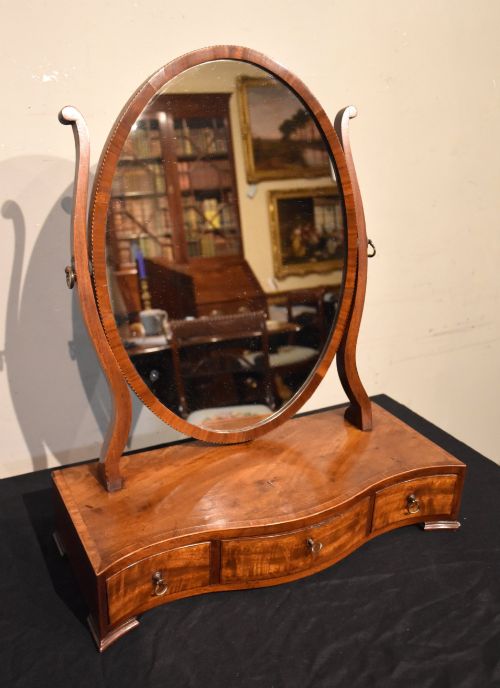
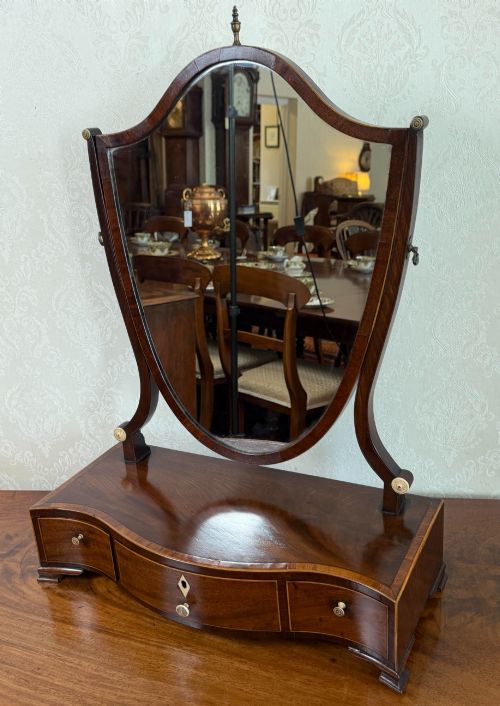
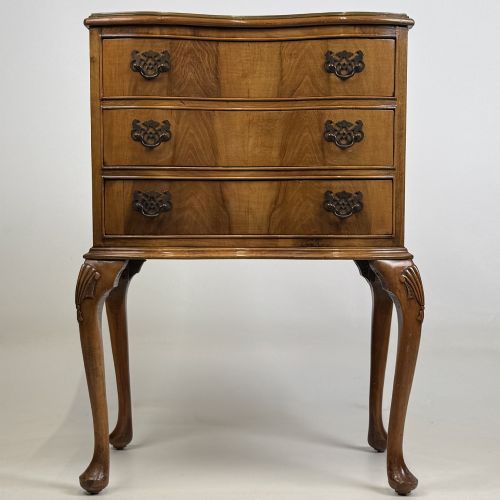
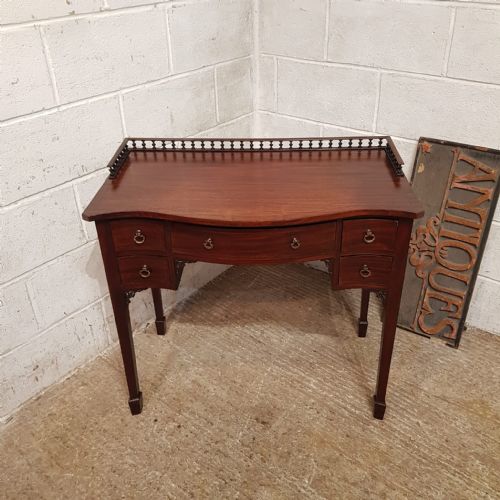
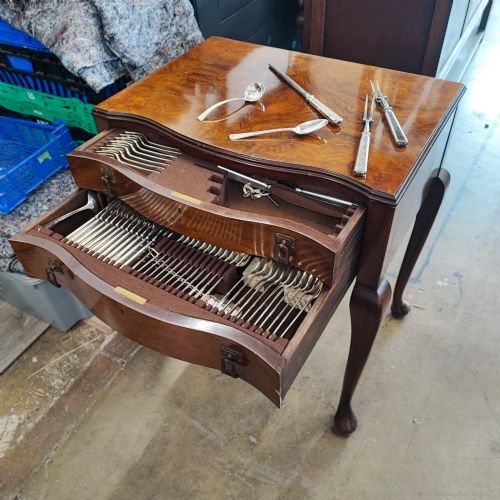
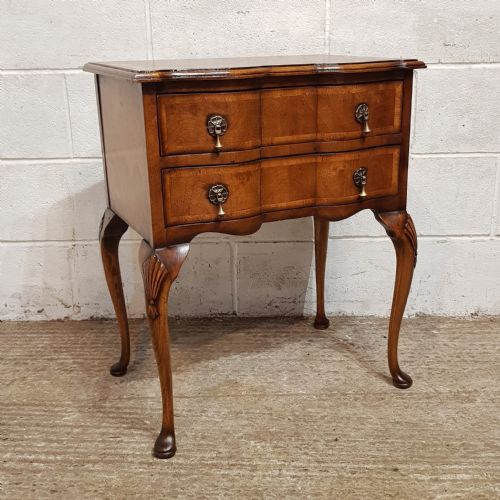
An antique serpentine drawer table presents a distinctive undulating front line that softens the rigidity of standard case furniture. When searching this phrase, a buyer encounters a diverse group of objects including dressing table mirrors fitted with small serpentine drawers, alongside bedside chests, writing tables, and side tables.
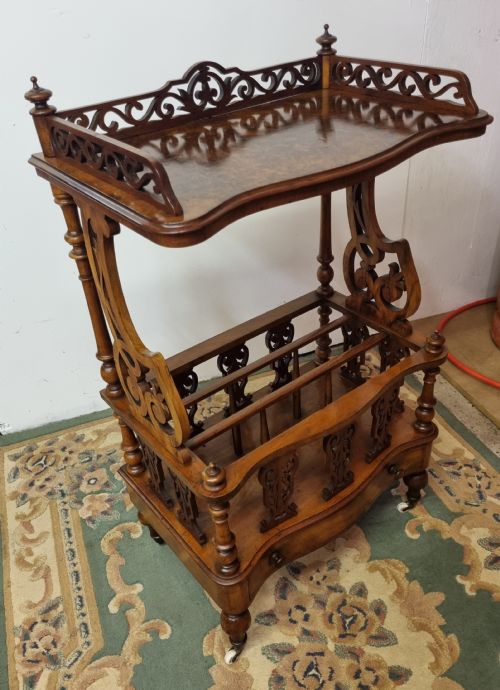
The pieces appearing on this page span several centuries, with particular representation from the Georgian and Victorian periods, as well as later Edwardian and 1920s interpretations. Dressing mirrors with serpentine drawer bases are especially common among the surviving inventory, alongside compact bedside chests and occasional side tables.
Makers and craftsmen applied this flowing serpentine contour to utilitarian forms meant for bedrooms, dressing rooms, and parlours. These items combine the practical utility of a drawer with the visual rhythm of a curved silhouette, utilising traditional cabinet-making formats from the eighteenth, nineteenth, and early twentieth centuries.
Materials and Construction
Cabinet-makers relied heavily on mahogany and walnut, frequently selecting burr walnut to create highly figured surfaces on the drawer fronts and tops. Secondary woods provided structural stability behind these decorative exterior veneers, while boxwood inlay and brass hardware added contrasting detail.
Shaping the characteristic serpentine front required skilled woodworking techniques, as solid timber or thick veneers had to be painstakingly cut and planed to achieve the gentle convex-concave curves. Joinery techniques such as dovetailing secured the drawer construction, ensuring the curved fronts aligned precisely with the surrounding framework.
Some tiny Georgian dressing mirrors hide secret compartments behind their serpentine drawers for storing clandestine love letters and coins.
Assessing Quality and Craftsmanship
The quality of an antique serpentine drawer table rests in the harmony of its proportions and the execution of its curves. Superior pieces display fluid, evenly balanced serpentine sweeps rather than stiff or abrupt angles, reflecting the maker's mastery over the wood.
The choice and preservation of timber veneers dictate much of the visual merit. Well-matched burr walnut or rich mahogany grain patterns that flow naturally across the curved drawer fronts elevate a piece above simpler, unfigured constructions.
Epstein and Co
The Antique Serpentine Drawer Table Glossary
- Serpentine
- A shaped furniture front featuring a convex central section flanked by two concave curves. This undulating profile creates a sense of movement and visual depth.
- Burr Walnut
- Timber taken from the abnormal growth of a walnut tree, yielding complex, swirling grain patterns. It was sliced into thin veneers for decorative table tops and drawer faces.
- Dressing Mirror
- A small mirror mounted on a pivoting frame above a miniature chest or box containing small drawers. These items sat atop larger dressing chests or dedicated tables.
- Boxwood Inlay
- Narrow strips of pale boxwood inserted into contrasting darker wood surfaces to form geometric or linear decorative borders.
- Kneehole Desk
- A writing table featuring a central recess for the user's legs, flanked by pedestals of drawers.
Antique Serpentine Drawer Table: Frequently Asked Questions
What rooms suit an antique serpentine drawer table?
These pieces fit naturally into bedrooms, hallways, or living spaces where compact surfaces and storage are required. Their curved profiles allow them to occupy minimal floor space while adding architectural interest to an interior.
Bedside versions hold lamps and night items, while dressing mirrors sit comfortably on chests of drawers or writing surfaces. Their modest scale makes them adaptable to both traditional and modern room layouts.
How do I distinguish Georgian from later revival styles?
Examining the construction methods, secondary timbers, and patination helps determine the age of a piece. Eighteenth-century examples display hand-cut joinery and aged mahogany or walnut surfaces developed through decades of polishing.
Revival pieces from the Edwardian era or the 1920s often utilise machine-assisted techniques and distinct veneer treatments. Comparing the hardware style and internal drawer linings against period standards clarifies the manufacturing era.
Were these tables used for writing or dressing?
Function varied widely depending on the specific form, ranging from dedicated dressing mirrors with integrated drawer boxes to small writing and side tables. Some pieces incorporate ink wells or fitted compartments beneath the top surface.
Others served primarily as decorative occasional furniture for displaying objects or holding correspondence in a parlour. The presence of drawers determined their capacity for small personal items.
How should I care for a walnut veneer surface?
Burr walnut and mahogany veneers require stable environmental conditions away from direct sunlight and extreme humidity changes. Applying a mild beeswax polish periodically helps maintain the moisture and sheen of the wood.
Avoiding excessive moisture and placing protective pads under objects placed on the top surface prevents marking. Gentle dusting with a soft cloth preserves the delicate grain patterns.