
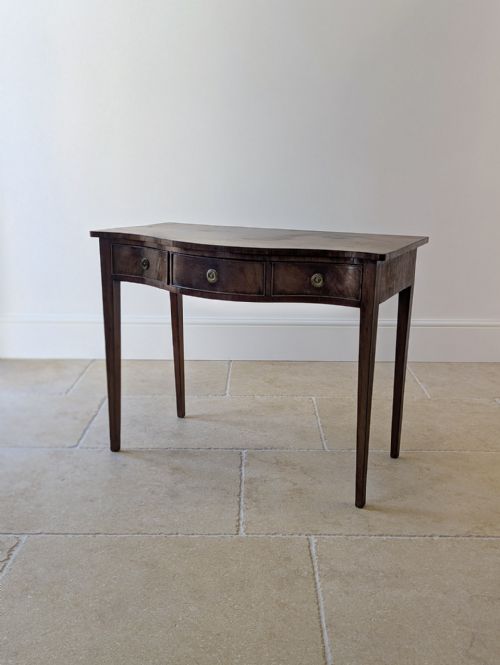
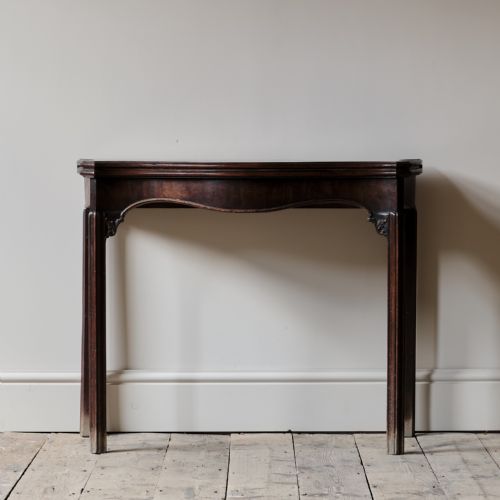
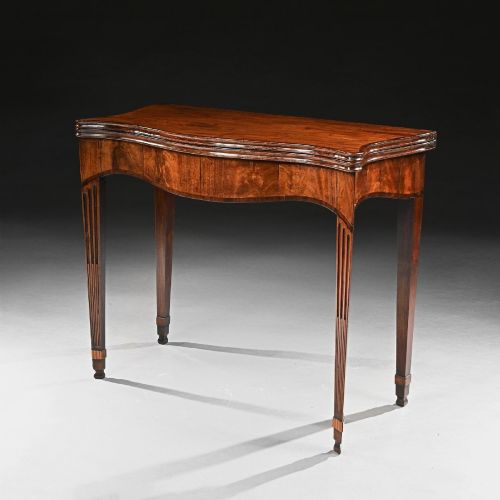

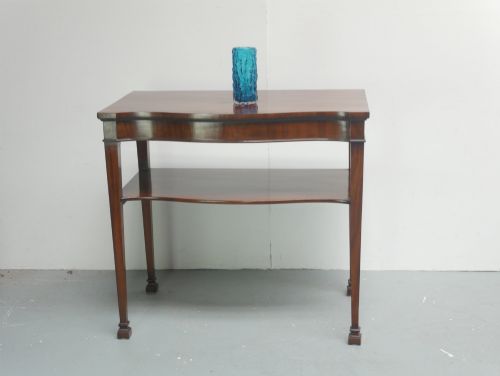
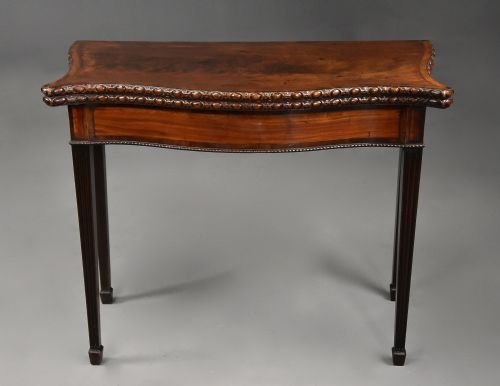
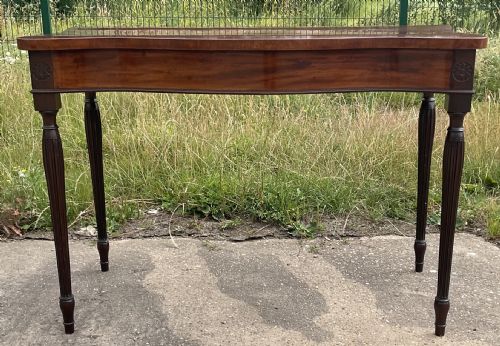
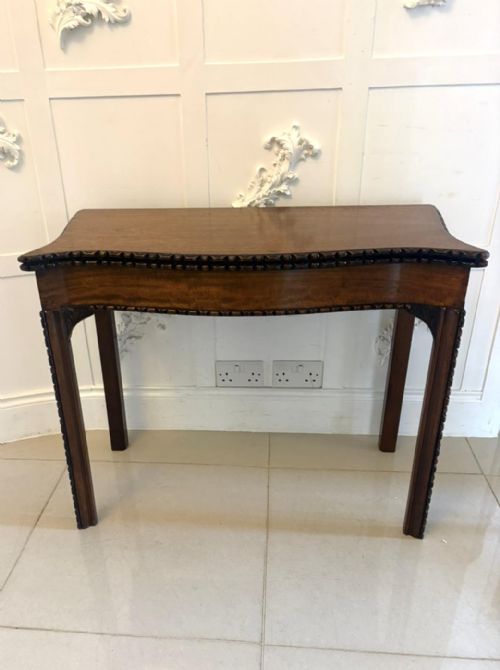
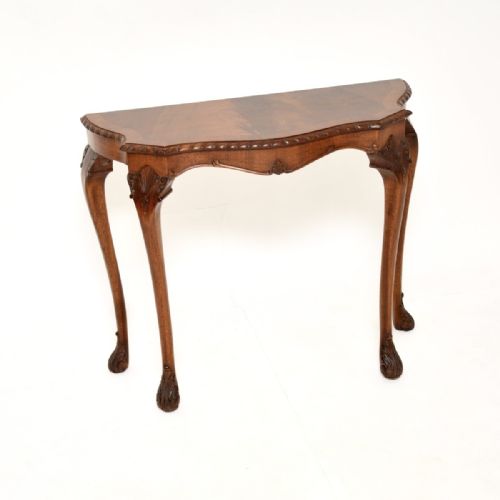
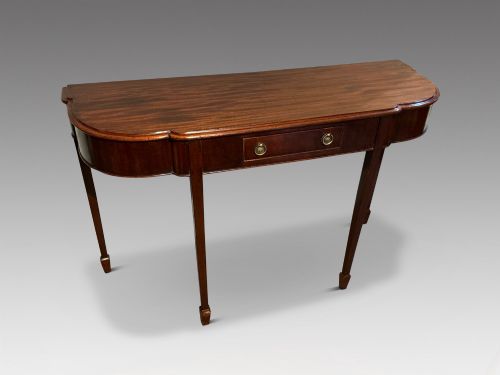
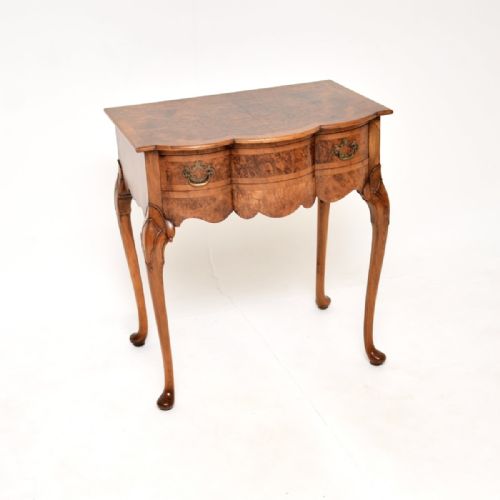
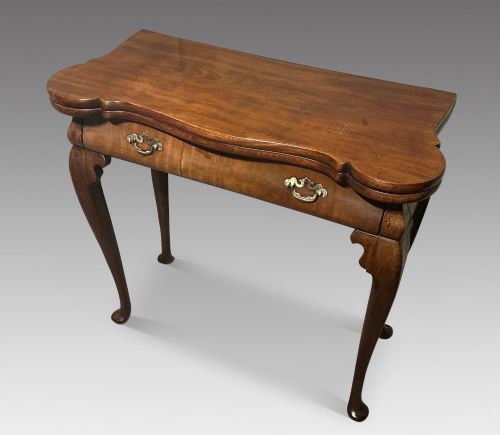
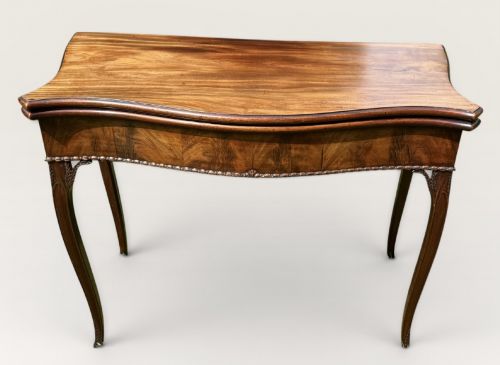
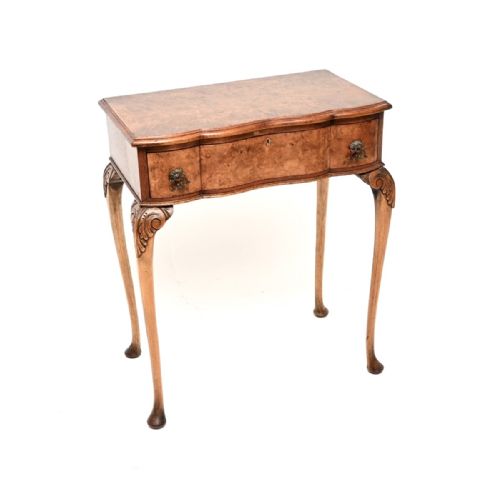

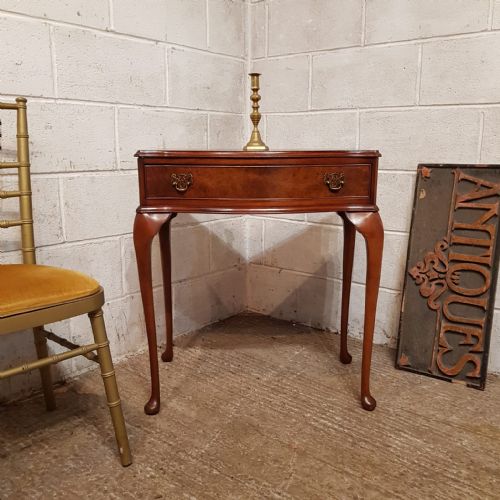
Georgian Serpentine Console Table
A georgian serpentine console table brings fluid 18th-century movement and rich timber grain to a room.
Georgian Serpentine Console Table
A georgian serpentine console table presents a distinctive undulating front line that curves inward and outward, combining decorative grace with functional surface area. When exploring this page, a buyer encounters authentic 18th-century examples alongside later revivals from the 19th and early 20th centuries.
The form spans several practical variations, appearing frequently as folding card tables, tea tables, and serving tables. These pieces originated during the Georgian period and George III eras, though later cabinetmakers continued reproducing the serpentine outline through the Edwardian years and into the 1930s.
Materials and construction
Makers constructed these tables primarily from solid mahogany and mahogany veneers, often utilising figured cuts like flame mahogany or burr walnut to catch the light across the curved front. Finer details frequently incorporate contrasting timbers such as satinwood, boxwood, and brass hardware.
The undulating serpentine shape required skilled hand-sawing and precise joinery to maintain structural integrity along the curved apron and top. Folding mechanisms on card and tea tables relied on sturdy hinged frames designed to support heavy timber leaves without sagging.
Georgian Serpentine Console Table Retail Price Guide 2026
Typical asking prices for georgian serpentine console table among the pieces listed under this phrase on Sellingantiques today, from the lower quarter to the upper quarter. They describe what is for sale here now, not the wider market.
Card tables, serving tables, and console forms dominate the recorded object types for this undulating furniture style.
Assessing quality and craftsmanship
Quality rests heavily on the depth of the timber's original patina and the fluidity of the serpentine sweep across the front. Superior examples display crisp, hand-carved detailing along the rails and legs, whereas lesser or later revival pieces often rely on simpler moulded edges.
The crispness of wood inlays and the snugness of joints when the table stands closed or open indicate the maker's original skill. Original surfaces untouched by harsh modern stripping hold far greater integrity than heavily refinished timber.
Gillow·Hepplewhite·Chippendale
The Georgian Serpentine Console Table Glossary
- Serpentine
- A curved front outline that dips inward centrally and arches outward toward the ends. This flowing shape creates dynamic shadow and movement across the timber.
- Patina
- The deep sheen and varied tone developed by wood over centuries of handling and exposure. It signals genuine age and careful maintenance.
- Card table
- A specialised folding table featuring a hinged top that opens to reveal a baize-lined playing surface. Many serpentine forms were built for this dual purpose.
- Serving table
- A large side table designed for dining rooms to hold dishes and platters. These versions often lack the folding leaves found on smaller game tables.
- Veneer
- A thin layer of highly figured wood, such as flame mahogany or burr walnut, applied over a stable secondary timber. This technique showcases dramatic grain patterns.
Georgian Serpentine Console Table: Frequently Asked Questions
How do I spot an 18th-century original?
Examine the timber underneath and inside the frame for hand-tool marks, traditional joinery, and natural oxidation. Authentic 18th-century pieces show consistent wear patterns and dry, dense wood that differs noticeably from 20th-century reproductions.
Check the construction of the folding mechanisms and the underside of the top boards. Period pieces use timber shrinkage and hand-cut fixings that modern workshop copies cannot easily replicate.
Were these tables meant for cards?
Many serpentine tables feature folding tops specifically designed for evening card games. When closed, they functioned as slim console or side tables against a wall.
Opening the top reveals a fold-out leaf supported by a swing leg or concertina frame, exposing a felt or leather playing surface underneath.
How do I care for mahogany surfaces?
Keep wooden tables away from direct sunlight and strong heat sources to prevent the veneers from drying out or splitting. Dust regularly with a soft, dry cloth rather than applying heavy silicone polishes.
Feeding the timber occasionally with traditional beeswax preserves the natural moisture and enhances the depth of the historical patina.
What is the difference between console and side tables?
Console tables historically required attachment to a wall for complete stability, utilising decorative front legs. Side tables stand independently on four legs and can move freely around a room.
In modern usage, the terms often overlap, particularly with serpentine forms that serve decorative display purposes in hallways and reception rooms.