



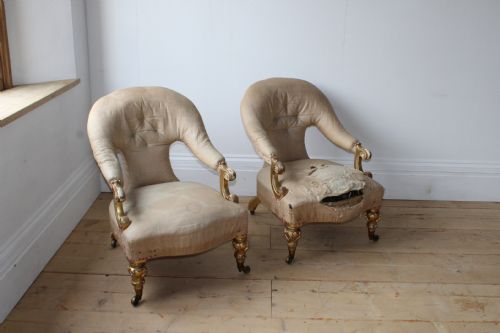


Period Giltwood Seating
Period giltwood seating brings gilded carved timber and upholstered elegance into a room through armchairs, sofas, and salon suites.
Period Giltwood Seating
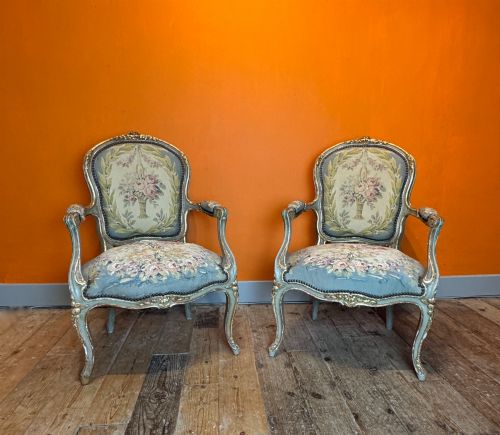
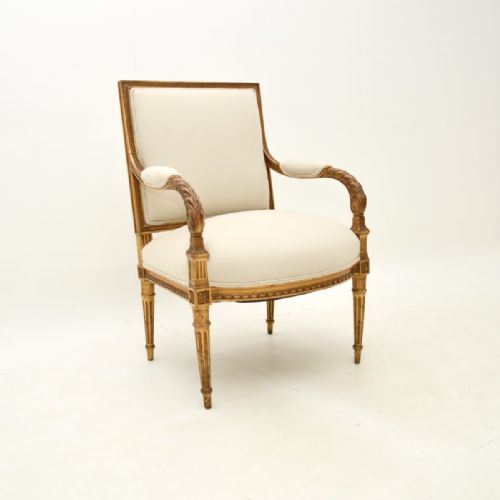
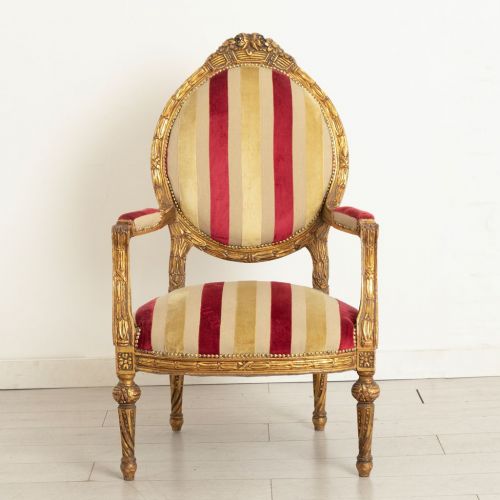
Period giltwood seating comprises chairs, settees, and sofas shaped from wood and finished with gold leaf or paint, spanning the eighteenth and nineteenth centuries. Buyers searching for period giltwood seating encounter French and English pieces, with armchairs and salon chairs appearing most frequently alongside occasional chairs and sofas.
The selection ranges from Regency and Georgian forms to Louis XVI style, Louis XIV style, and Napoleon III revival pieces. Workshops constructed these items for formal rooms, utilising beech and other timbers beneath their gilded surfaces.
Upholstery varies across the inventory, with tapestry, velvet, and fabric coverings complementing the carved wooden frames. Occasional pieces incorporate cane seating, while related works include fine art portraits from the Regency period.
Materials and Construction
Craftsmen shaped these frames from solid timbers such as beech and wood, applying intricate carvings before finishing the surfaces. Gold leaf and brass details were then applied to the carved woodwork to create the characteristic metallic sheen.
Upholstered items received layers of traditional stuffing secured beneath fabrics, tapestry, or velvet. Caned variants integrated woven cane panels directly into the wooden framework of the seat.
Period Giltwood Seating Retail Price Guide 2026
Typical asking prices for period giltwood seating among the pieces listed under this phrase on Sellingantiques today, from the lower quarter to the upper quarter. They describe what is for sale here now, not the wider market.
One portrait from the Regency period wears a blue bonnet, watching over the wooden chairs from the wall.
Assessing Quality
The crispness and depth of the wood carving distinguish finer examples from simpler production. Skilled hands carved foliage and scrollwork with sharp contours that retain their definition beneath successive layers of gilding.
The application of gold leaf and the integrity of the underlying wooden frame determine durability and visual weight. Superior pieces maintain robust joinery in the beech structure and an even adhesion of the metallic leaf across complex contours.
The Period Giltwood Seating Glossary
- Giltwood
- Wood that has been coated with gold leaf or gold paint. This finish creates a luminous metallic surface that catches light across the carved details of the frame.
- Fauteuil
- An open-arm armchair with upholstered back and seat, typically featuring exposed wooden arms. These French seats originated in the seventeenth century and remained popular through later revival periods.
- Regence
- A French transitional style spanning the early eighteenth century, bridging classical formality and the flowing curves of rococo design. Pieces from this aesthetic display bold carved motifs and substantial proportions.
- Bergere
- A closed-arm upholstered armchair with solid sides and a loose seat cushion. The upholstered panels provide enclosed comfort distinct from open-arm designs.
- Salon Suite
- A matched set of seating furniture designed for a formal drawing room or reception space. These groupings typically comprise a sofa and several matching armchairs or salon chairs.
Period Giltwood Seating: Frequently Asked Questions
How do I clean period giltwood seating?
Dust these surfaces gently using a soft, dry brush to avoid disturbing the fragile gold leaf. Moisture and modern chemical cleaners damage the historic finish.
Keep gilded furniture away from direct sunlight and heating vents to prevent the wood from drying and the gold leaf from flaking.
Can I use these chairs every day?
These historical items function best with moderate, careful use rather than heavy daily lounging. The delicate gilded frames and antique joinery require gentle handling.
Placing them in low-traffic sitting areas preserves the structural integrity of the wood and the integrity of the original upholstery.
What is the difference between an armchair and a fauteuil?
An armchair is a broad English or continental term for any seat with side supports for the arms. A fauteuil specifically denotes a French open-arm design with exposed carved wooden framing.
Both types appeared across eighteenth and nineteenth-century parlours, though fauteuils frequently display distinct continental revival styling.
How do I identify a Regency gilt chair?
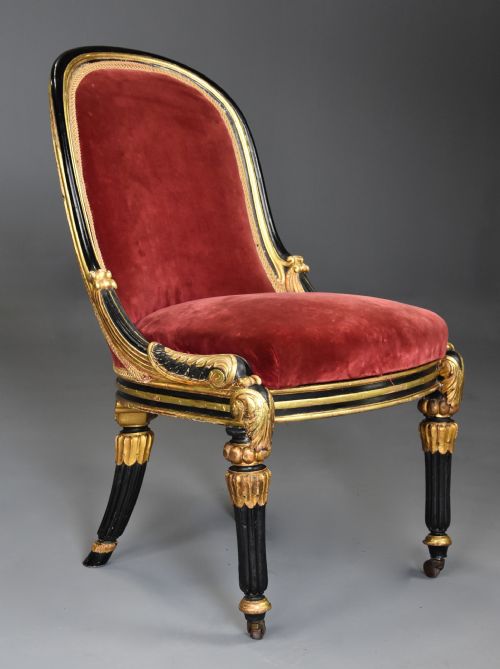
Regency seating reflects early nineteenth-century English taste, often incorporating ebonised elements alongside giltwood or cane inserts. The lines lean toward classical restraint inspired by ancient Greek and Roman forms.
Look for sabre legs, restrained carving, and distinct timber treatments that mark this specific British design epoch.