


Rococo Giltwood Chair
A rococo giltwood chair brings fluid, carved organic lines and a luminous gilded finish to any interior space.
Rococo Giltwood Chair
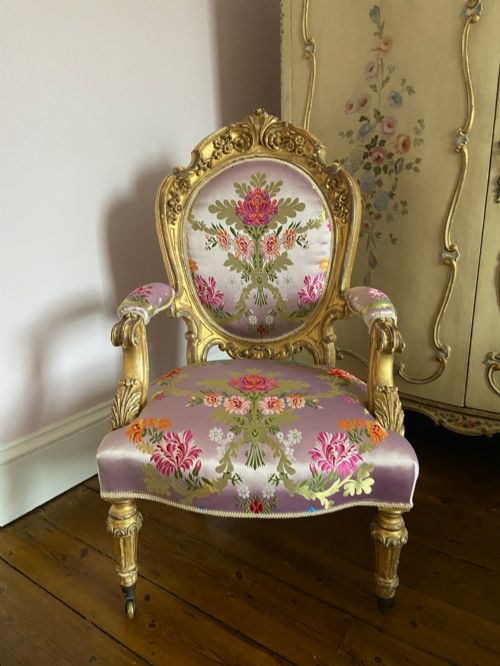
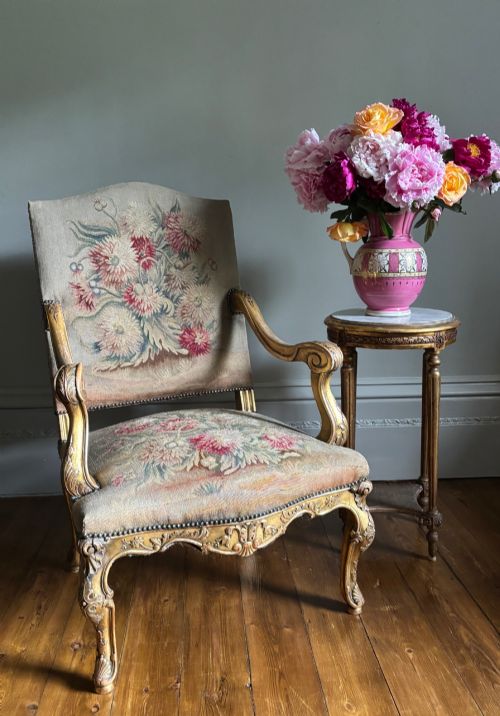
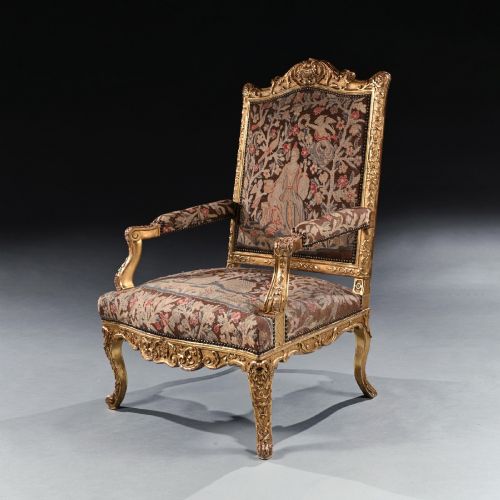
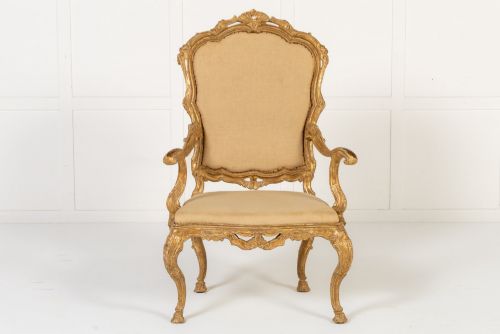
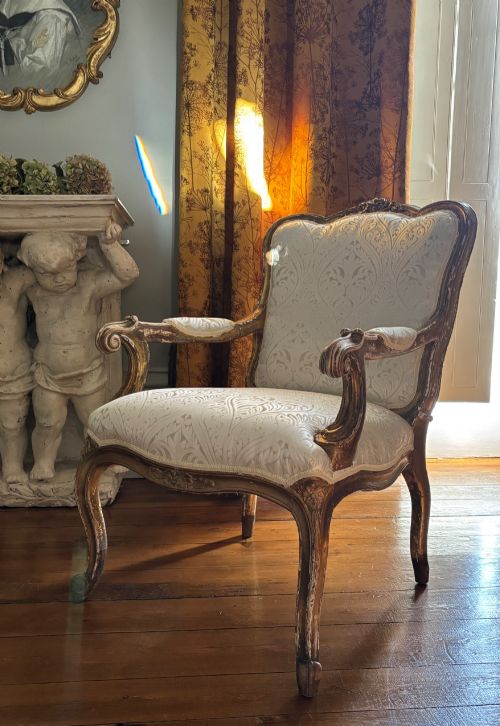
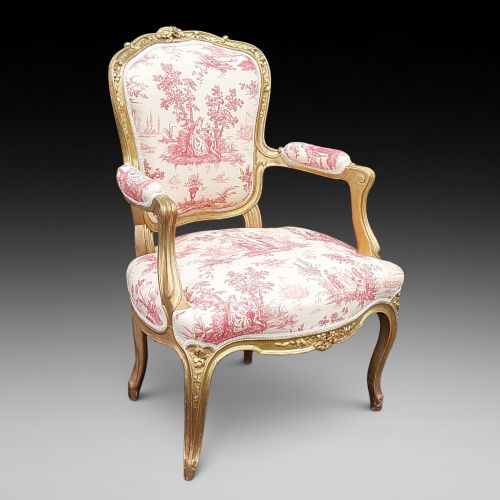
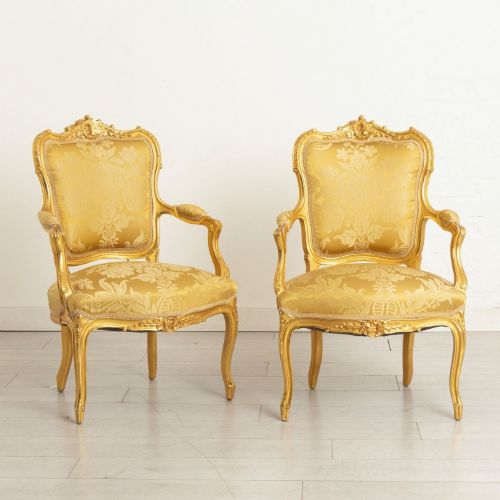
A rococo giltwood chair is a seat constructed from carved wood, coated in thin gold leaf, and shaped with asymmetric curves, floral motifs, and scrollwork. These seating pieces span armchairs, side chairs, dining chairs, and salon suites originating from eighteenth-century workshops up to later nineteenth-century revival periods.
The pieces on this page mostly comprise nineteenth-century French and Italian revival examples alongside genuine eighteenth-century creations. Buyers encounter open armchairs, bergere chairs with enclosed sides, and large pairs intended for formal reception rooms.
What varies in quality
The depth and crispness of the hand carving separate simpler items from superior examples. Skilled carvers produced deep undercut foliage, flowing scrolls, and organic asymmetry that appear fully integrated into the wooden frame rather than superficial.
The application and preservation of the gilding also define the grade of an item. Original gold leaf showing a warm, aged patina demonstrates higher craftsmanship than later repainting with flat gold paint.
Listings feature items spanning from the eighteenth century through the nineteenth century, including Georgian, regence, and various revival styles.
Blaise Maucuy
The Rococo Giltwood Chair Glossary
- Giltwood
- Wood that has been decorated with a very thin layer of gold leaf. This finish gives furniture a bright metallic appearance while protecting the underlying timber.
- Fauteuil
- An open-arm armchair with upholstered back and seat, developed in France during the seventeenth century. The wooden arms typically feature padded elbow rests.
- Bergere
- An enclosed armchair with upholstered sides and a loose seat cushion. This form provides a more enclosed and comfortable seat than standard open armchairs.
- Regence
- A transitional stylistic period between Louis XIV and Louis XV defined by lighter, more curving decorative forms. It marks the early development of rococo design.
- Gesso
- A plaster mixture applied to wood surfaces as a smooth base for gilding. Artisans must build and sand this layer carefully before laying gold leaf.
Rococo Giltwood Chair: Frequently Asked Questions
How do I identify a true period piece?
Examine the construction methods, tool marks on the wood, and the ageing of the gesso beneath the gold leaf. Eighteenth-century pieces display hand-cut joinery and wear patterns consistent with extended use.
Revival pieces from the nineteenth century often utilise machine-sawn timber or different assembly techniques while copying earlier design vocabularies.
Can I use these chairs for daily dining?
Many of these chairs served as formal salon or occasional seating rather than heavy dining furniture. While sturdy examples function well around a dining table, their delicate carved arms and antique silk textiles require careful handling.
Consider the structural stability of the frame and the durability of the upholstery before assigning them to high-traffic domestic environments.
What is the difference between giltwood and gold paint?
Giltwood involves applying extremely thin sheets of genuine gold leaf over a prepared gesso and bole ground. This method reflects light with a deep, varied metallic warmth that develops a soft patina over centuries.
Gold paint consists of metallic powder suspended in a medium, resulting in a flat, uniform surface lacking the dimensional depth of true leaf.
How should I care for antique gilding?
Keep gilded furniture away from direct sunlight, excessive moisture, and sudden temperature fluctuations that can cause the gesso and wood to crack. Dust the surfaces very gently with a soft, dry brush without applying liquid cleaning products.
Avoid abrasive cloths or commercial polishes which can strip away fragile historic gold leaf.