
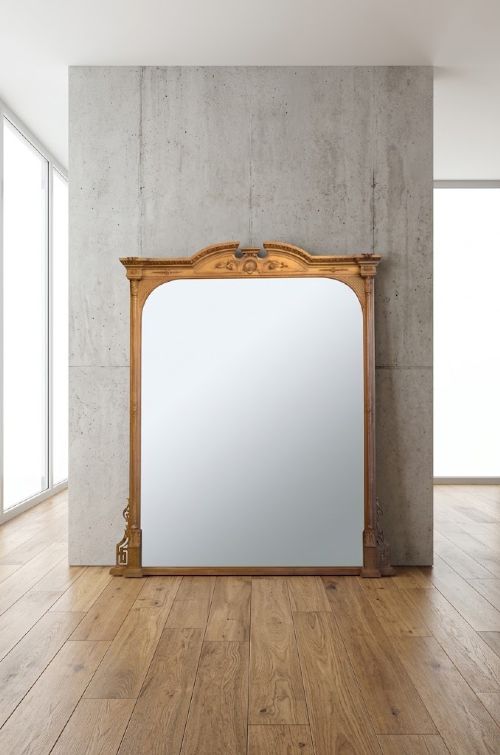
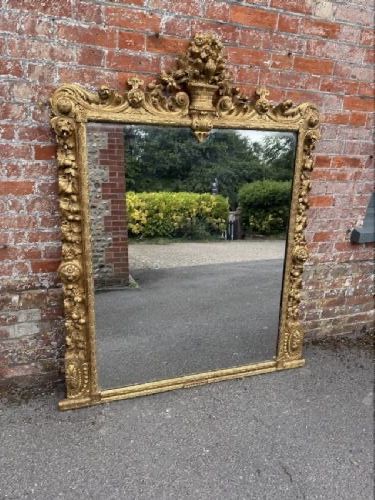
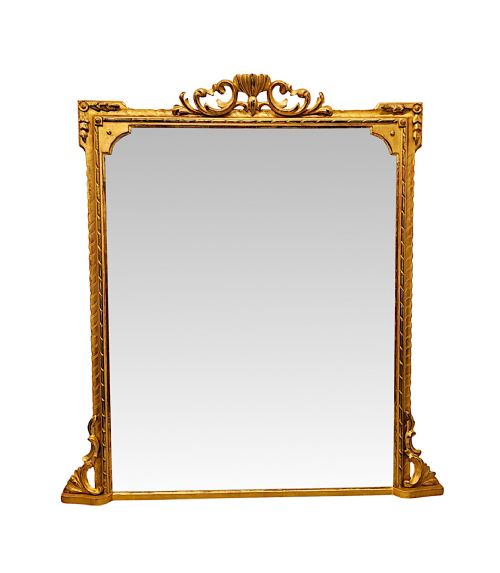
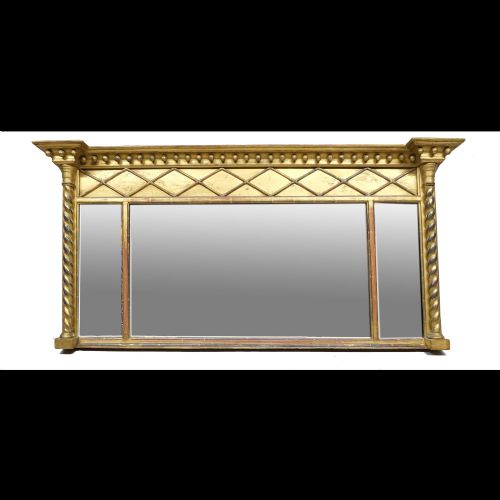

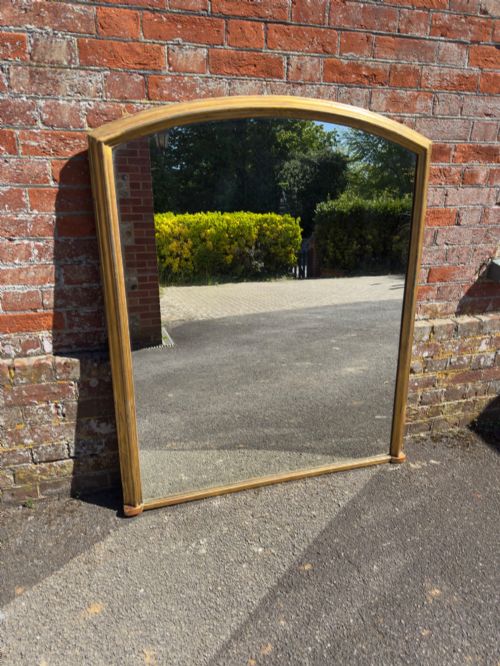


Period Gilded Fireplace Mirror
A period gilded fireplace mirror anchors a room with light and weight, bringing nineteenth-century presence straight to a chimney breast.
Period Gilded Fireplace Mirror
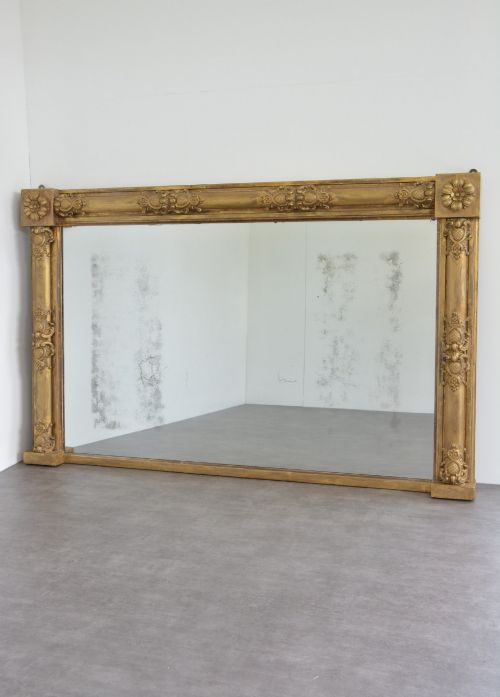
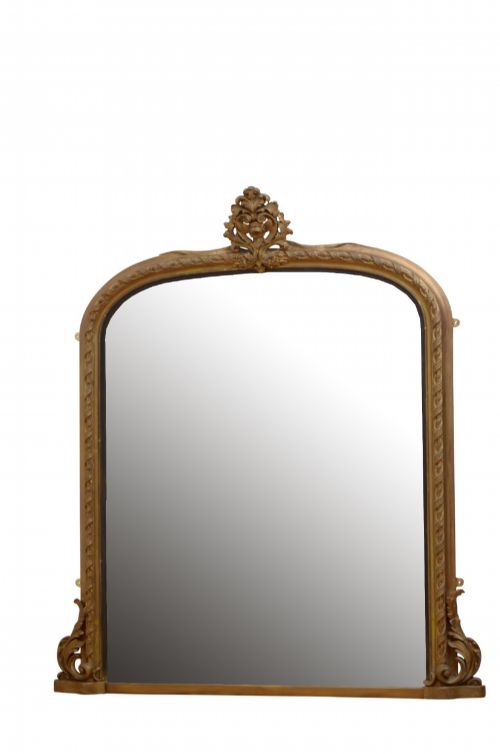
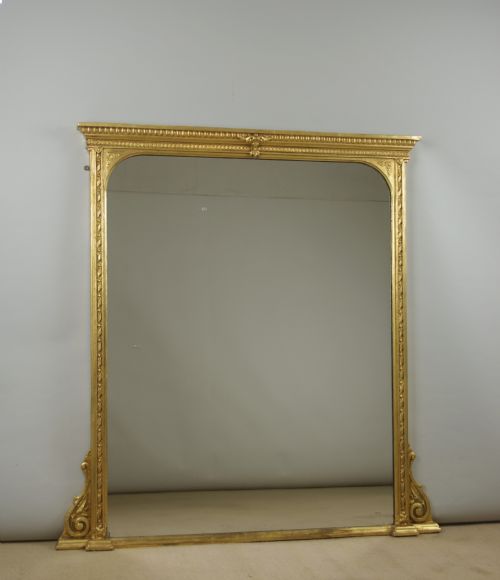
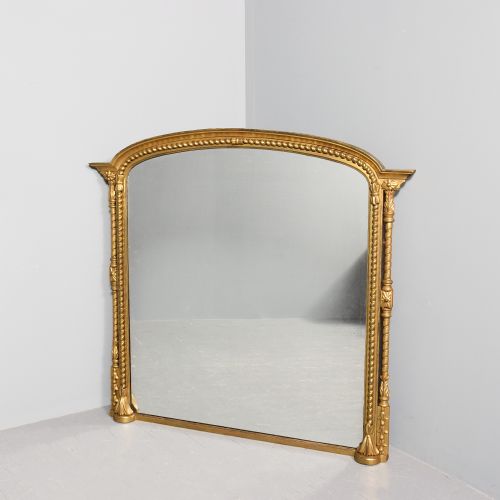
A period gilded fireplace mirror appears primarily as an overmantel mirror designed to sit directly above a hearth, filling the wide horizontal space characteristic of nineteenth-century reception rooms. These substantial looking-glasses reflect natural illumination deep into an interior while adding architectural gravity to the fireplace elevation.
The selection ranges from grand Regency designs featuring classical friezes to arched Victorian interpretations and neat Edwardian ovals. Surviving examples demonstrate the enduring appeal of wide format wall mirrors framed in gold leaf across the Regency, Victorian, and Edwardian eras.
Materials and Construction
Carved wood and gesso form the foundational structure for these frames, providing the ductile surface necessary for intricate relief ornamentation. Artisans applied layers of chalk preparation over timber before gilding with gold leaf or painting details in ebonised wood to create sharp tonal contrast.
Original mirror glass frequently exhibits foxing, an oxidation process that creates characteristic dark speckling across the reflective plate over time. Backboards constructed from timber planks remain attached to many surviving pieces, protecting the silvering and structural integrity.
Current listings feature nineteenth-century and early twentieth-century pieces spanning Regency, Victorian, and Edwardian styles.
Distinction in Craftsmanship
The sophistication of the carved wooden ornament dictates the upper tier of quality, distinguishing deeply modelled acanthus leaves and laurel wreaths from simpler moulded compositions. Master carvers executed crisp details by hand, ensuring that corner motifs and friezes retain sharp definition beneath the layers of gilding.
Proportion and structural retention also separate standard examples from finer ones, particularly in how the frame joins manage the expansive weight of heavy glass plates. Superior pieces maintain tight mitres and original gilding surfaces that have aged with a rich, undisturbed patina.
The Period Gilded Fireplace Mirror Glossary
- Overmantel mirror
- A large horizontal looking-glass specifically manufactured to hang upon the wall directly above a fireplace mantelpiece. These pieces often repeat the architectural proportions of the room below them.
- Giltwood
- Timber that has been coated with thin leaves of gold or metal leaf applied over a prepared gesso ground. This finish provides a warm, reflective metallic surface that catches interior candlelight and daylight.
- Gesso
- A plaster-like mixture of gypsum or chalk mixed with glue binder, applied to wood frames to create a smooth surface for gilding. Carvers could shape and incise this material before applying gold leaf.
- Foxing
- The natural ageing of mirror glass where chemical changes produce small dark spots or cloudy patches across the reflective surface. Collectors often prize light foxing as evidence of authentic antiquity.
- Triptych
- A mirror divided into three distinct vertical panels within a single frame, popular during the Regency period. The flanking sections often feature separate plates divided by slender colonnettes.
Period Gilded Fireplace Mirror: Frequently Asked Questions
How do I hang a heavy overmantel mirror safely?
Secure the mirror directly into wall studs using heavy-duty steel brackets designed to bear the substantial weight of wood and glass.
Consult a professional installer to evaluate the plaster and masonry of your chimney breast before mounting any large antique frame.
What is foxed glass on an antique mirror?
Foxing refers to the natural degradation of the silver backing behind the glass, appearing as delicate dark spots or cloudy areas.
This chemical ageing process confirms the glass plate dates from the period rather than serving as a modern replacement.
Where should a period fireplace mirror be placed?
Position the mirror centrally on the chimney breast directly above the mantel shelf to maintain traditional nineteenth-century interior proportions.
Hanging the glass at this height allows it to reflect room lighting and architectural details effectively across the space.
How do I clean a gilded wood frame?
Dust the carved surfaces gently with a soft, dry ostrich feather duster to remove surface particles without disturbing the fragile gold leaf.
Avoid all water, chemical sprays, and abrasive cloths, as moisture strips historical gilding from the gesso foundation.
How do I identify a Regency period mirror?
Look for classical motifs such as laurel wreaths, acanthus leaves, columns, and figural elements like greyhounds integrated into the wooden frame.
Regency examples often favour architectural symmetry and crisp neoclassical detailing that distinguishes them from later Victorian flourishes.