
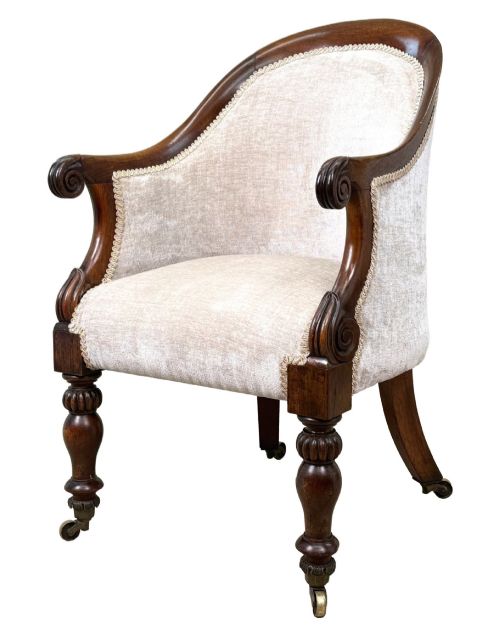
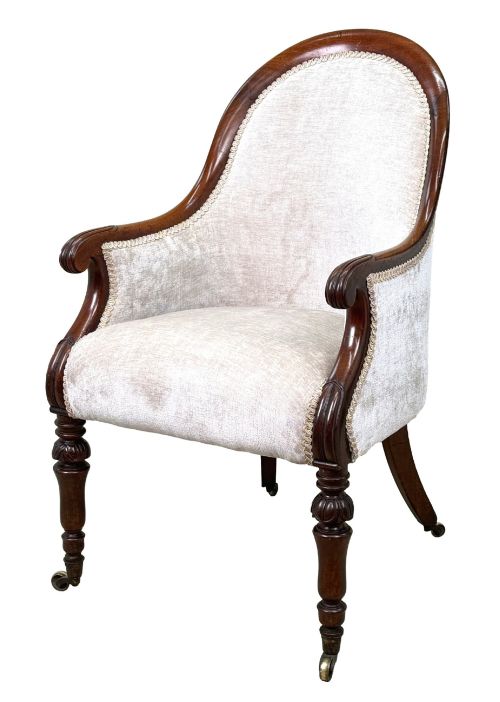
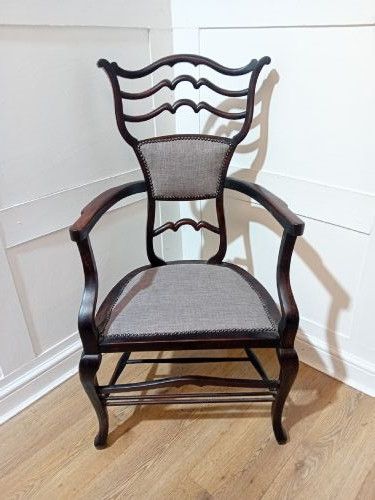
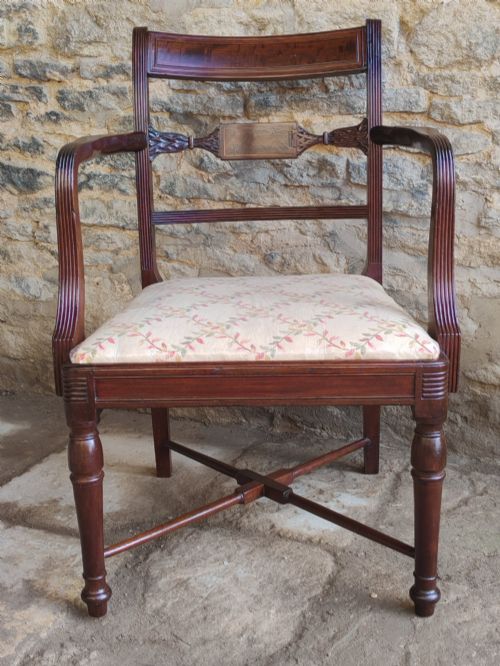
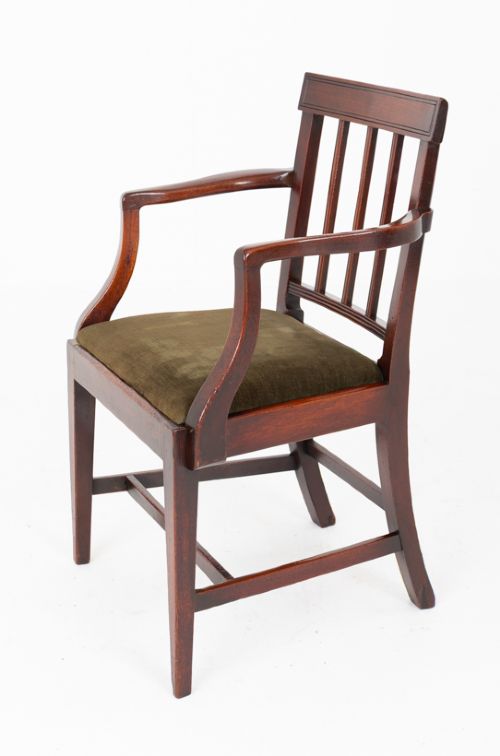
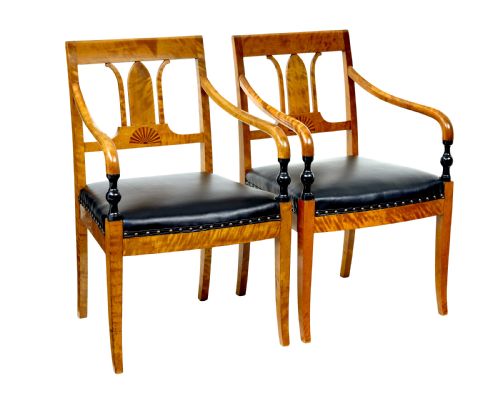
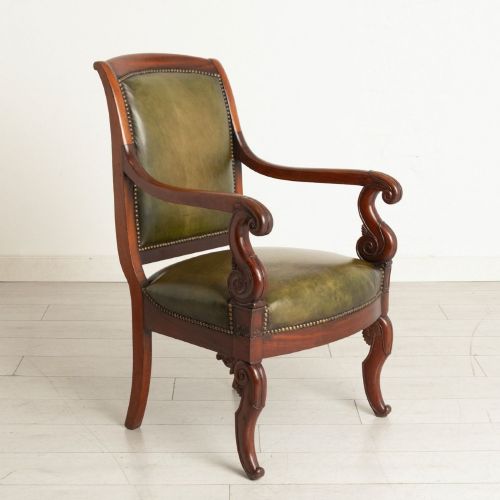
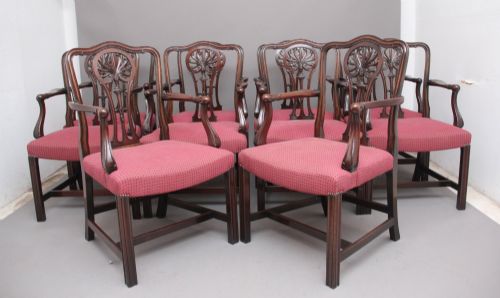
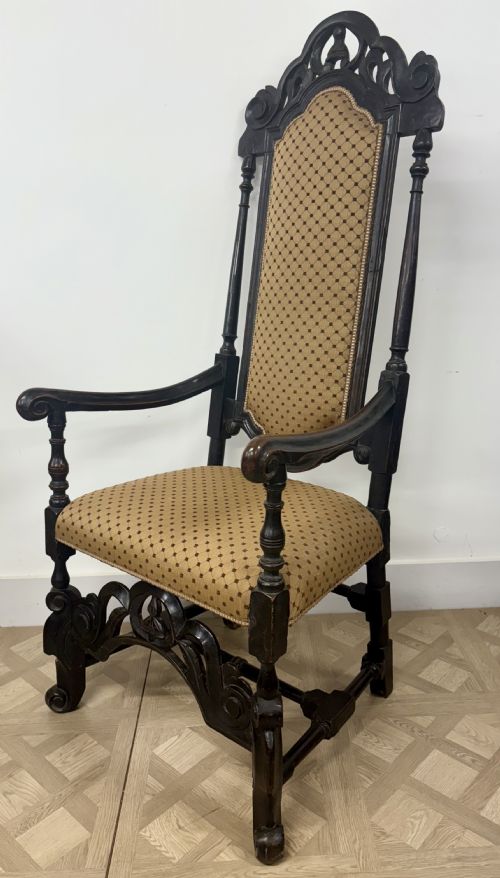
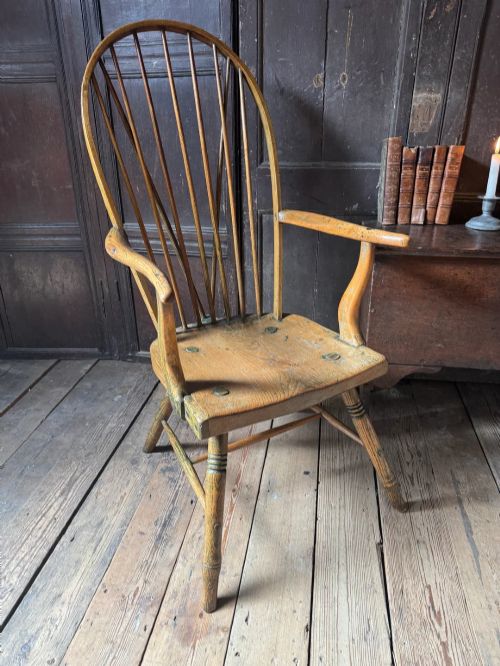
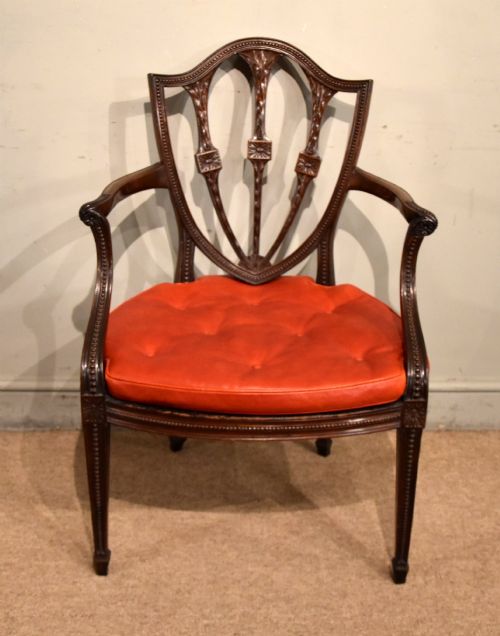
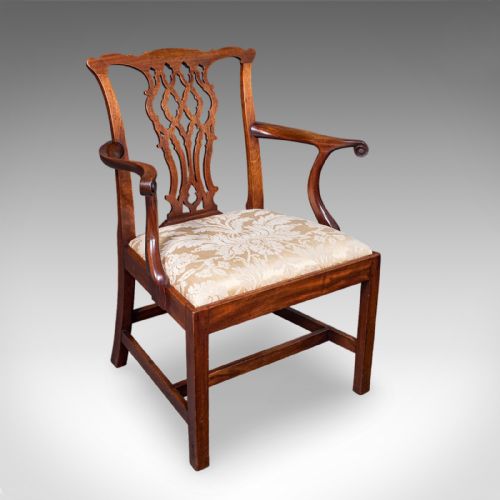
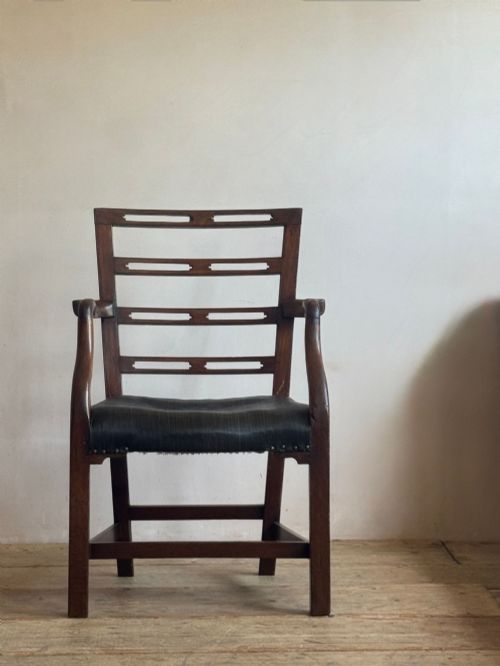
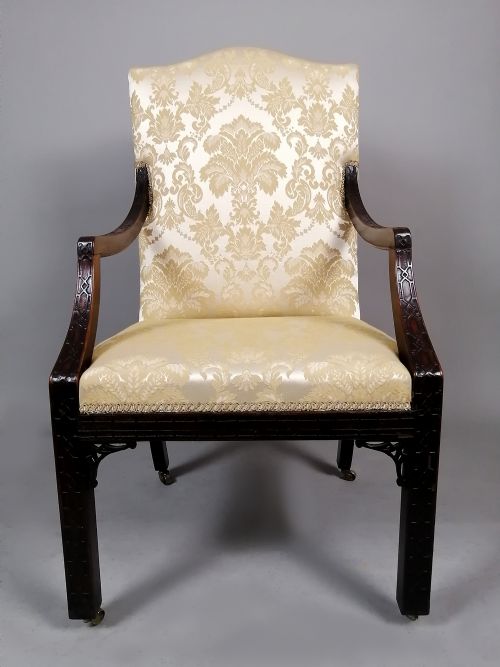
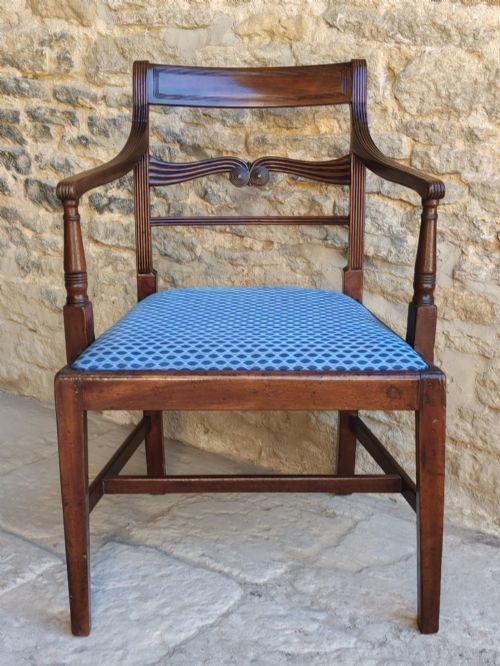
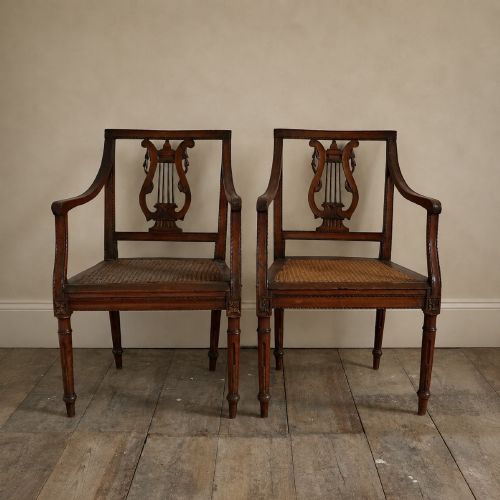
Period Desk Armchair
A period desk armchair brings substance to a study, offering the solid construction and timber patination characteristic of earlier centuries.
Period Desk Armchair
A period desk armchair provides a supportive seat for writing and reading, combining the generous proportions of a library or elbow chair with the mobility or height suited to a desk. Buyers exploring this category encounter sturdy timber frames designed to support sustained daily use in private libraries and studies.
The selections recorded here span the eighteenth, nineteenth, and early twentieth centuries, drawing heavily upon Georgian, Regency, and Victorian aesthetics. Mahogany and walnut dominate the surviving examples, often accompanied by secondary timbers such as ash, elm, or fruitwood in provincial pieces.
Forms range from simple ladder-back and Windsor variants to sophisticated tub library chairs upholstered in leather or fabric. Carvers and gentleman's elbow chairs frequently cross over into use as desk seating, fulfilling the requirement for a substantial seat with supportive arms.
Materials and construction methods
Cabinetmakers relied on dense hardwoods like mahogany and walnut to form the structural framework, utilising traditional mortise and tenon joints to withstand the lateral stresses placed on chair arms. Secondary timbers including ash and elm reinforced provincial work, particularly within Windsor and hoop-back designs.
Surface detailing frequently incorporated brass inlay, delicate stringing, or carved mahogany splats, reflecting the prevailing styles of the Georgian and Regency periods. Caned seating panels and leather upholstery provided resilient working surfaces that endured decades of daily service.
Listings span multiple eras from the seventeenth century through the Edwardian period, featuring mahogany, walnut, ash, and elm.
Distinctions in quality and execution
The calibre of a period desk armchair rests upon the integrity of its timber selection and the precision of its joinery. Superior examples demonstrate crisp carving to the splats and arms, alongside thoughtful proportioning that balances comfort with architectural presence.
Subtleties in brass inlay, patination of the wood surface, and the retention of original upholstery foundations elevate certain specimens above standard utilitarian seating. The distinction between a provincial workshop piece and a London cabinetmaker's commission often lies in the refinement of these secondary details.
Alfred Allen of Birmingham·Gillows of Lancaster
The Period Desk Armchair Glossary
- Carver
- A dining or desk armchair, typically featuring open arms, designed to match a set of side chairs.
- Bergere
- An enclosed armchair with an upholstered back and sides, frequently incorporating cane panels.
- Gainsborough
- A wide, upholstered armchair with open padded arms, originating in the mid-eighteenth century.
- Tub chair
- A comfortable armchair characterised by a continuous curved back and arms forming a semicircular enclosure.
- Patina
- The deep, lustrous surface sheen developed on hardwood through years of handling, polishing, and ageing.
Period Desk Armchair: Frequently Asked Questions
How do I distinguish a Georgian desk chair from a Victorian copy?
Georgian examples display hand-cut joinery, native timber choice, and a deep patination acquired over centuries of use. Victorian interpretations often reveal machine-sawn components and heavier proportions under closer inspection.
Examining the underside and interior framing reveals the construction methods characteristic of each specific era.
Can I use a library armchair at a modern writing desk?
Many period armchairs fit comfortably beneath standard desk heights, provided the clearance accommodates the arms and seat rail. Checking the specific dimensions of both chair and desk ensures a practical working arrangement.
Many historic chairs were built with generous proportions specifically for reading and writing.
What is the difference between a carver chair and a desk chair?
Carver chairs traditionally served at the head of a dining table, while desk chairs were engineered for study environments. In practice, makers often adapted similar frames for both purposes using sturdy timber and supportive armrests.
Upholstered leather inserts frequently denote examples intended primarily for writing rooms.
How should I care for antique leather upholstery?
Maintaining historical leather involves gentle dusting and the occasional application of specialised conservation wax to prevent drying. Avoiding direct sunlight and sustained heat sources preserves the natural flexibility of the hide.
Regular, minimal maintenance protects the historic surface without altering the established finish.