
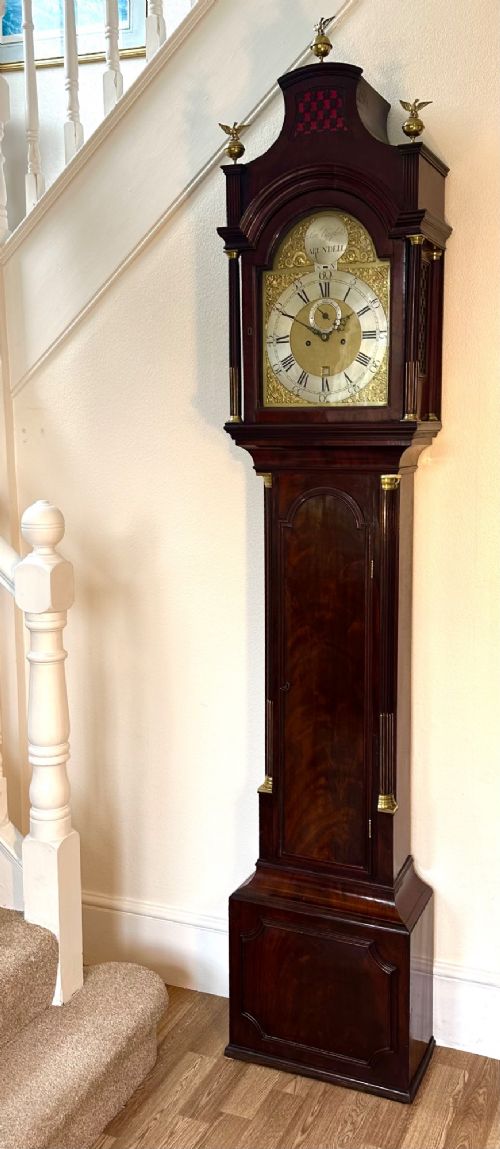
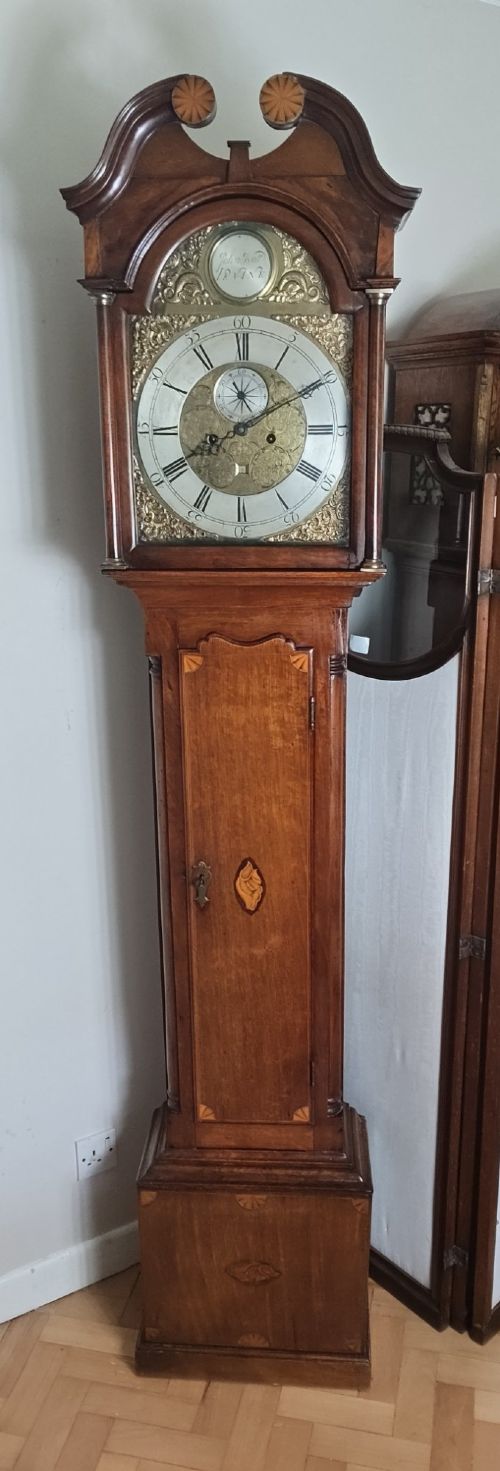
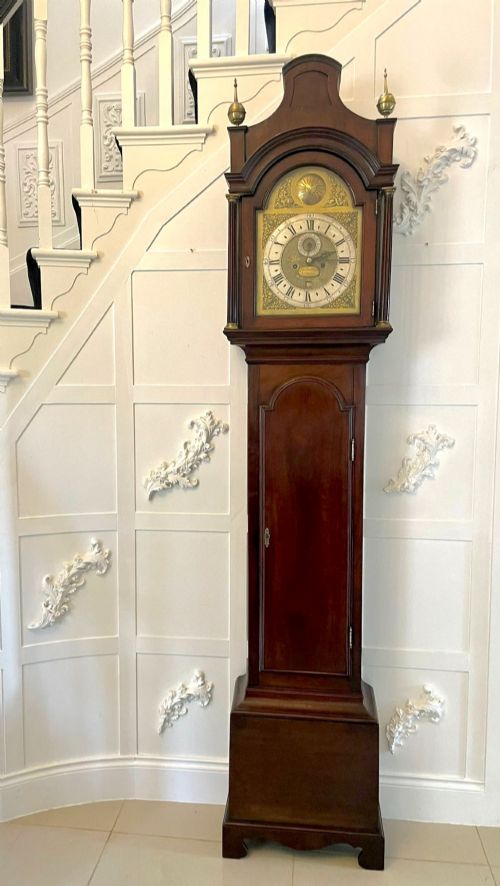
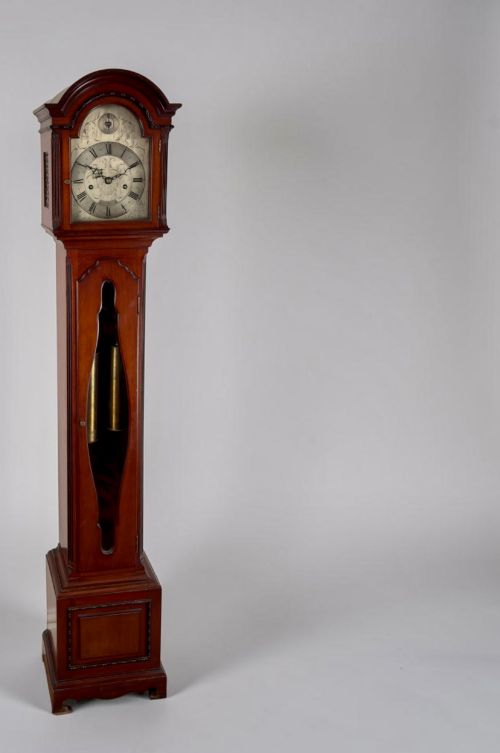
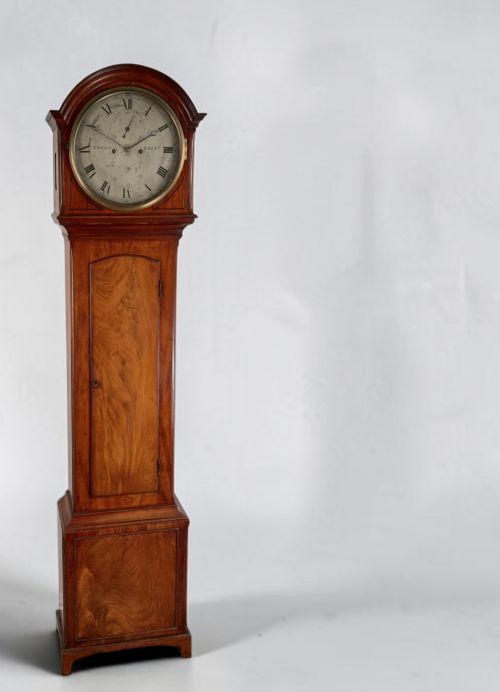
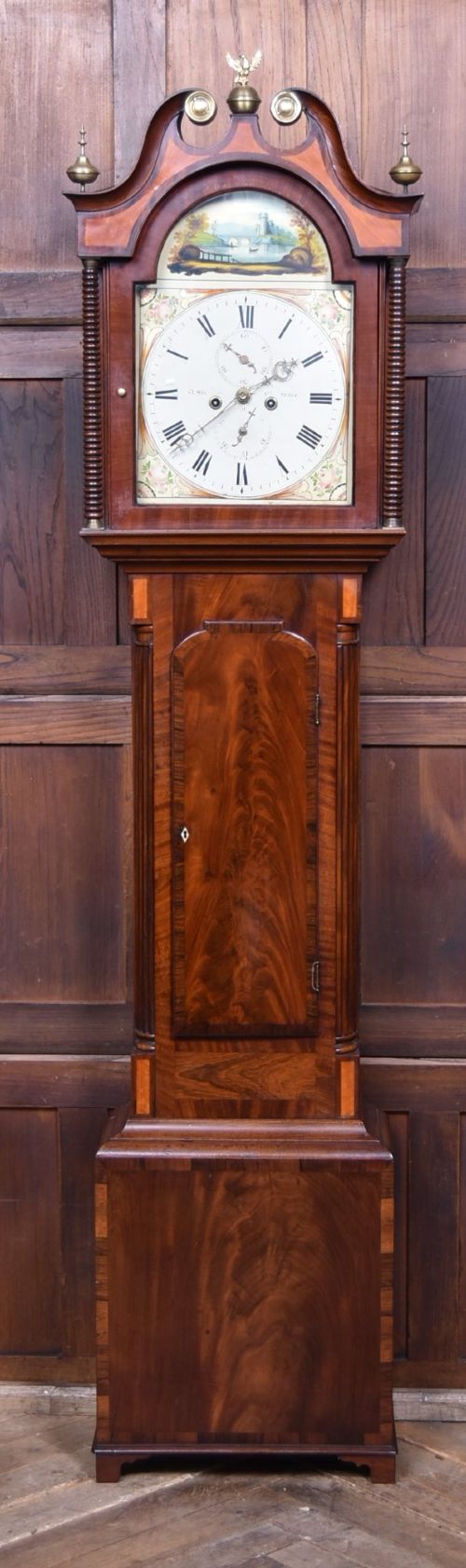
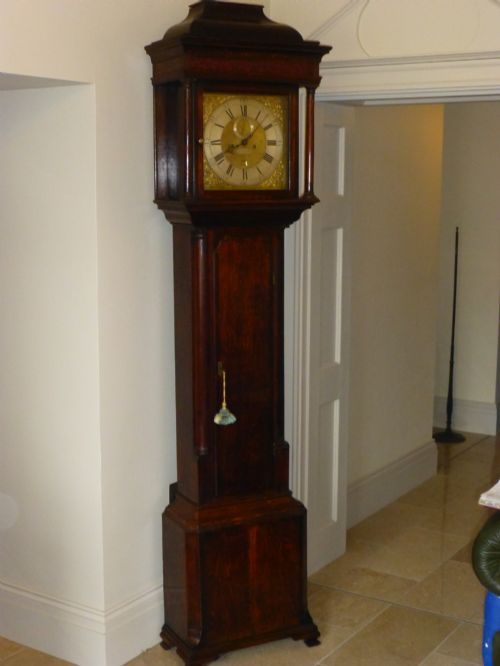
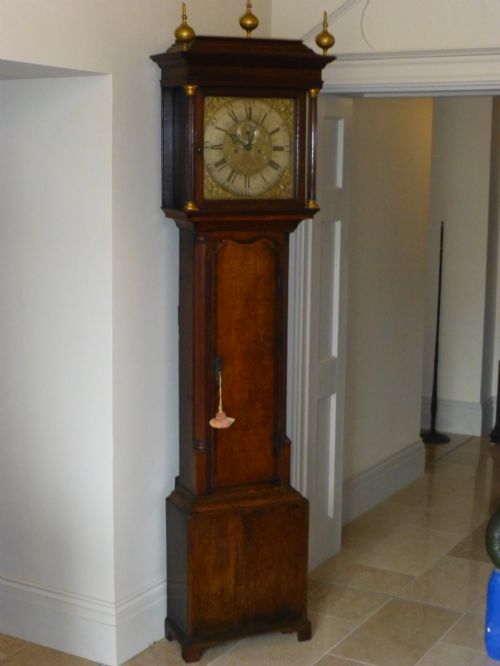
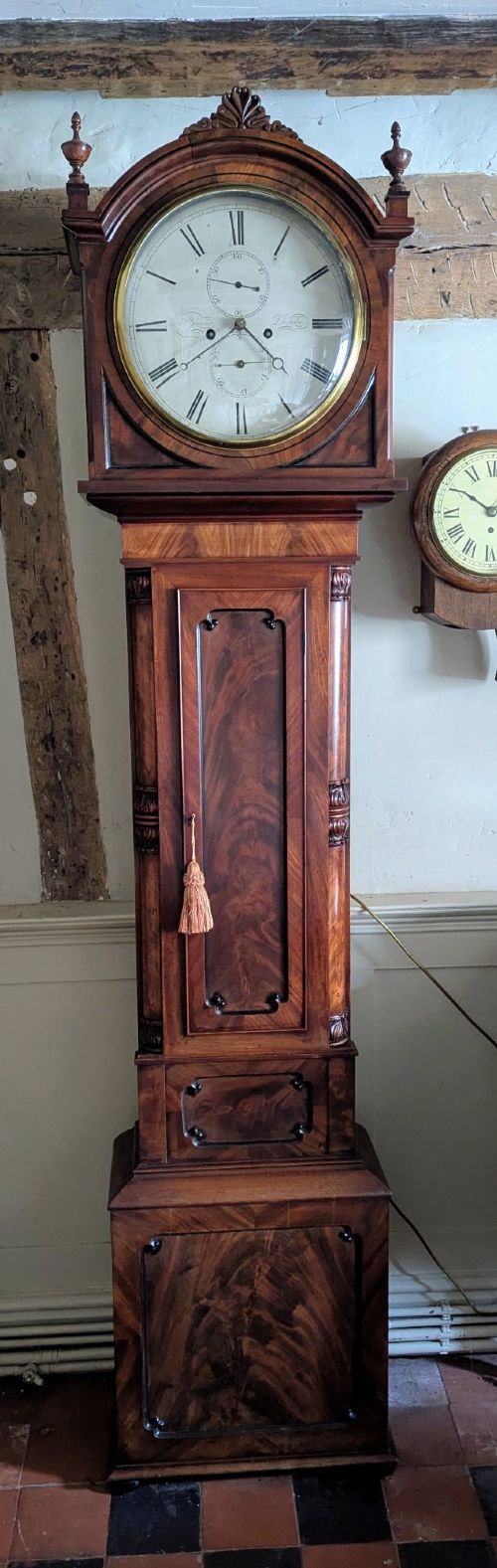
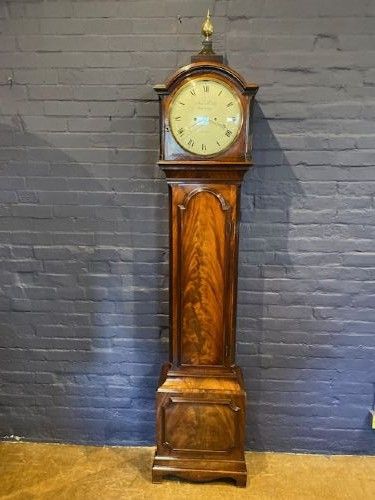
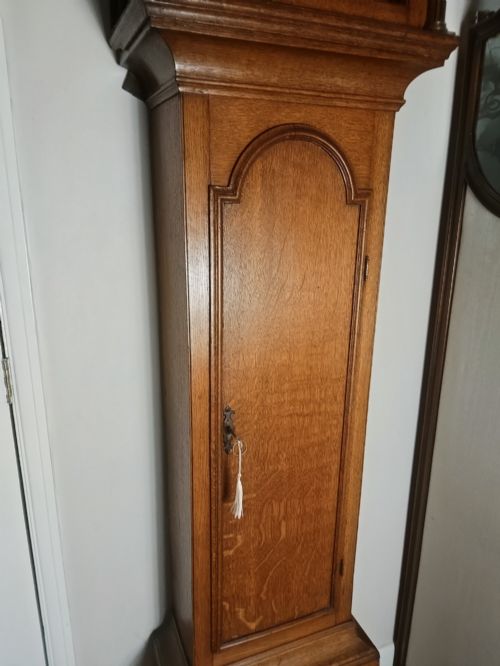
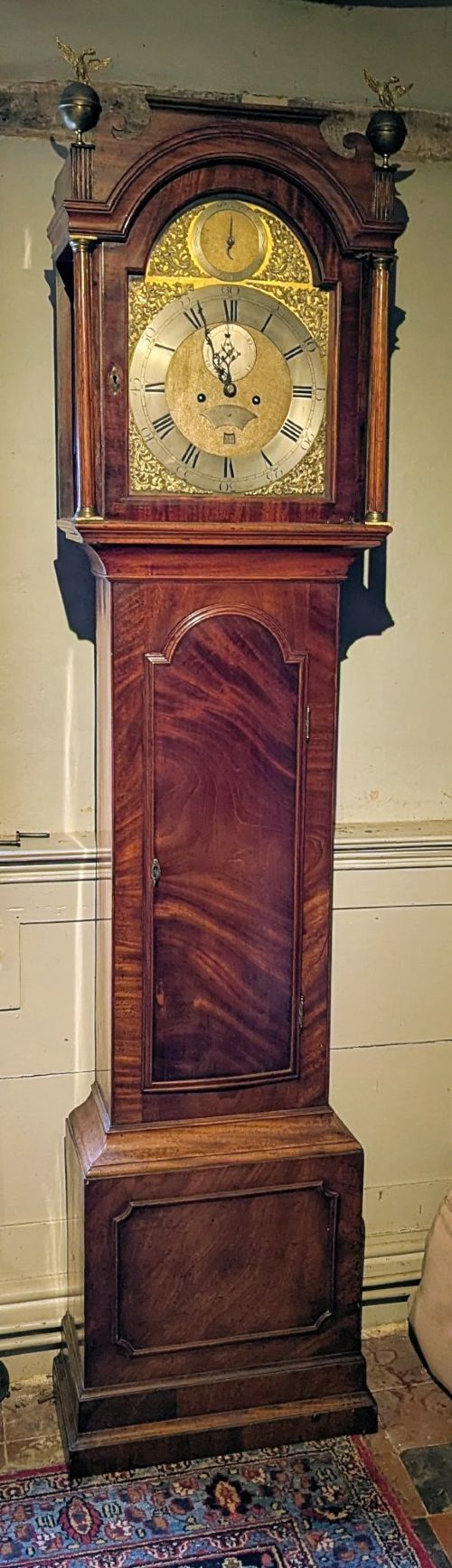
Pendulum Grandfather Clock
A pendulum grandfather clock marks the passing hours with stately weight and rhythmic motion, bringing centuries of mechanical heritage into a room.
Pendulum Grandfather Clock
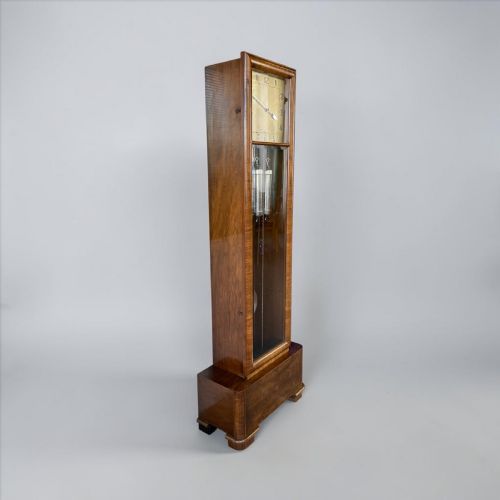
A pendulum grandfather clock, also recorded as a longcase clock, stands as a tall wooden case enclosing the weights, dial, and swinging pendulum that regulate its movement. These pieces trace back through the Georgian and Victorian eras into the twentieth century, encompassing both full-sized grandfathers and smaller grandmother clocks.
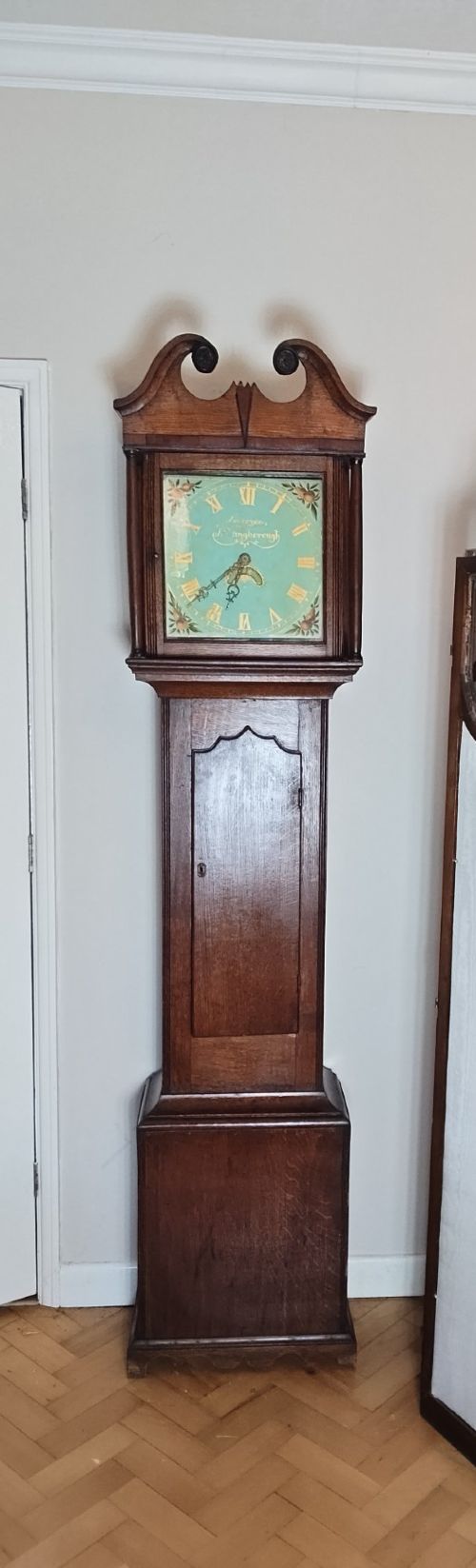
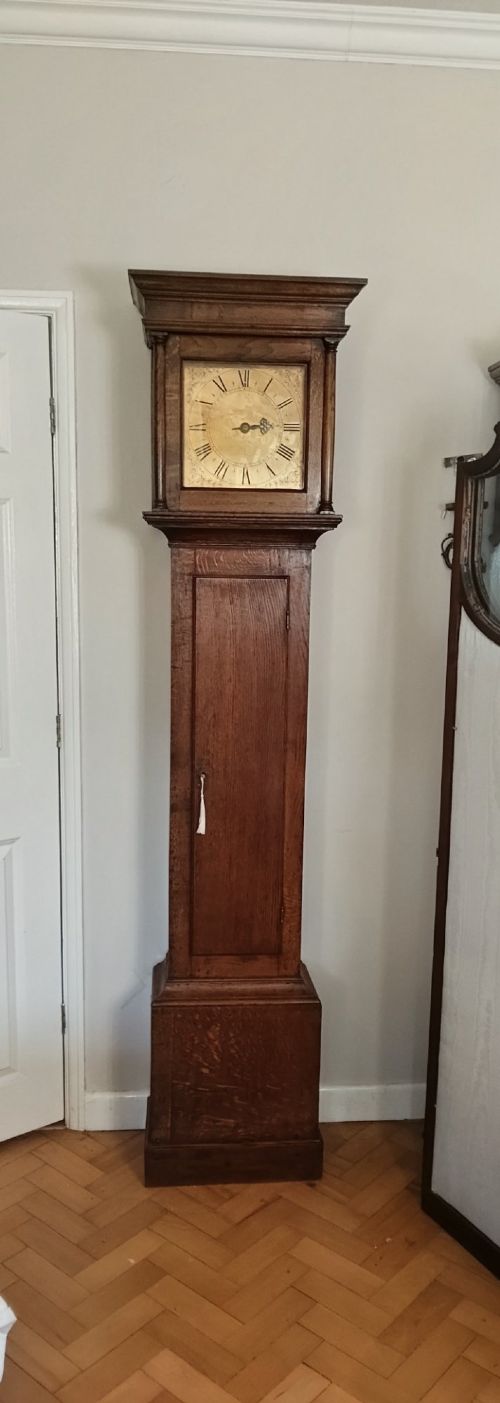
The selection here spans vernacular provincial examples in oak and walnut alongside refined London creations in mahogany, complete with regional signatures from Scotland and England. Buyers encounter movements ranging from simple eight-day timepieces to complex musical regulators with moon phases and strike-silent mechanisms.
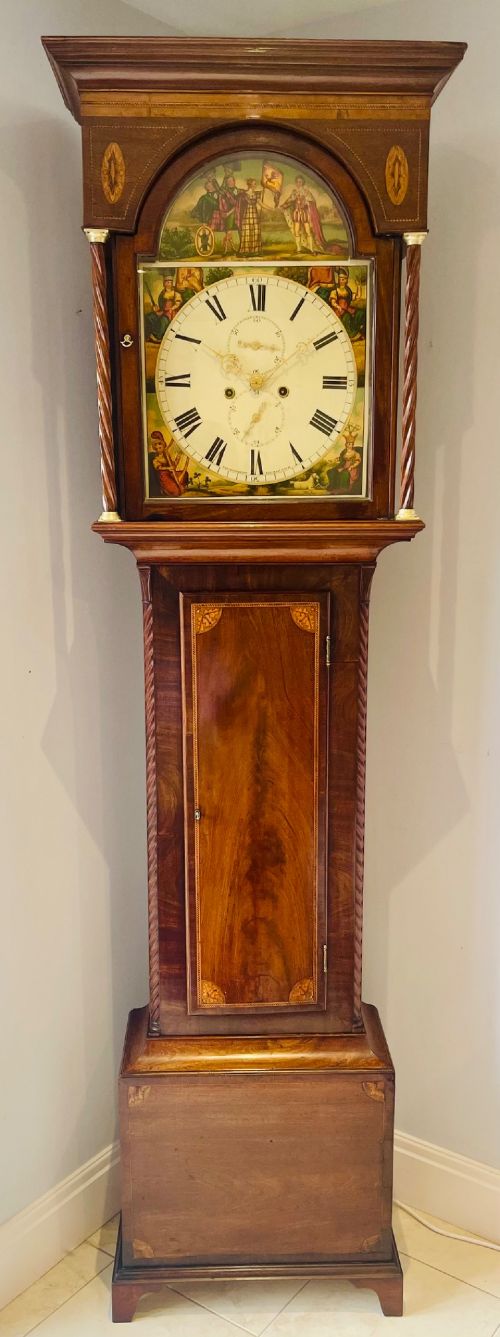
Makers such as Charles Shuckburgh, Gillett & Johnston, and Benjamin Taylor represent the diverse skill found across these longcase clocks. Whether housed in plain timber or figured flame mahogany with paterae inlay, each clock combines cabinetmaking with precision horology.
Materials and construction
Cabinetmakers built these tall cases predominantly in solid oak, mahogany, walnut, and maple, frequently selecting figured veneers or flame mahogany for decorative impact. Brass and painted iron served for the dials and moving phases, while steel and brass formed the complex gear trains and pendulums housed within.
Movements required skilled metalworking to cut brass wheels and fit escapements, often driven by lead or iron weights suspended by cords or cables. Dial faces featured engraved brass, painted numerals, and subsidiary arches for moon rollers or strike-silent indicators, protected behind glass doors.
Some models hide strike-silent levers, letting owners sleep undisturbed while the gears keep turning through the night.
Judging quality
Quality rests in the harmony between the cabinetwork and the sophistication of the clockwork movement. Finer pieces display carefully chosen timber grains like burr walnut or flame mahogany, with crisp carving and well-proportioned hoods that frame the brass or painted dial.
Mechanical complexity also elevates a piece, distinguishing standard time-and-strike movements from quarter-chiming regulators or musical gear trains signed by prominent makers. The integration of moon phases, mercurial pendulums, and signed brass dials marks the upper tier of longcase clockmaking.
Charles Shuckburgh·Gillett & Johnston·D. Straiton·Richard Corless·Benjamin Taylor·Parkinson Bros·Lenzkirch
The Pendulum Grandfather Clock Glossary
- Longcase clock
- Alternative term for a tall pendulum clock housed in a wooden case. These pieces protect the delicate weights and pendulum while serving as architectural furniture.
- Grandmother clock
- A smaller, more compact version of the traditional longcase clock. They emerged in later periods to fit rooms with lower ceilings without sacrificing mechanical complexity.
- Moon phase
- A dial mechanism tracking the lunar cycle through a rotating painted disc. This complication appears on the arch of advanced longcase dials.
- Regulator
- A high-precision clock designed for exact timekeeping and often used as a standard for setting other timepieces. They frequently feature clean dial layouts and heavy pendulums.
- Strike-silent
- A mechanism allowing the striking train to be muted at night. This feature demonstrates the versatility built into better mechanical movements.
Pendulum Grandfather Clock: Frequently Asked Questions
Where should I place a longcase clock?
Position your clock against a solid interior wall away from direct sunlight, heating vents, and damp areas that might warp the wooden case.
A stable floor ensures the case stands plumb, which is essential for keeping the pendulum beat even and the movement running accurately.
How can I tell the period of a grandfather clock?
Examine the timber choices, dial construction, and overall architectural proportions of the hood and waist. Oak cases with brass chapter rings often point to earlier centuries, while refined mahogany veneers and painted iron dials frequently suggest later Georgian or Victorian manufacture.
Signatures on the dial often provide a direct link to a recorded maker and working date.
Why does the clock keep stopping?
Stopping usually happens when the case is not level on the floor, which causes the pendulum swing to become uneven or strike the sides.
Adjusting the feet or leveling screws beneath the base generally restores the correct beat and allows the mechanism to run continuously.