
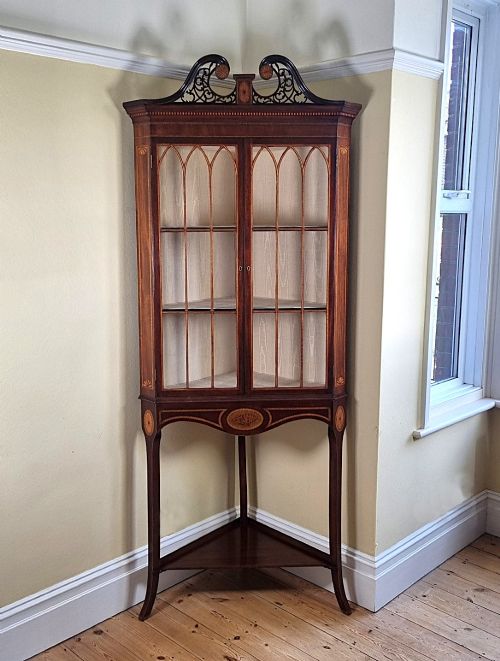
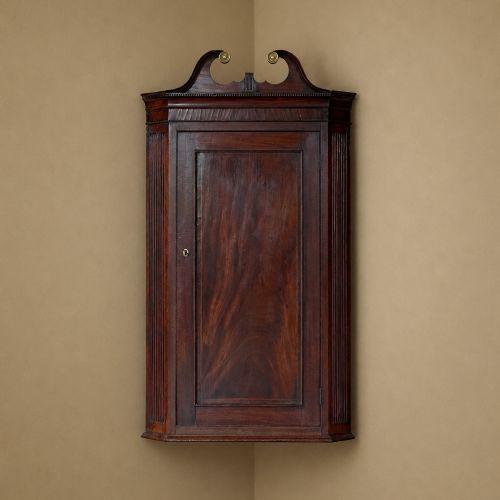
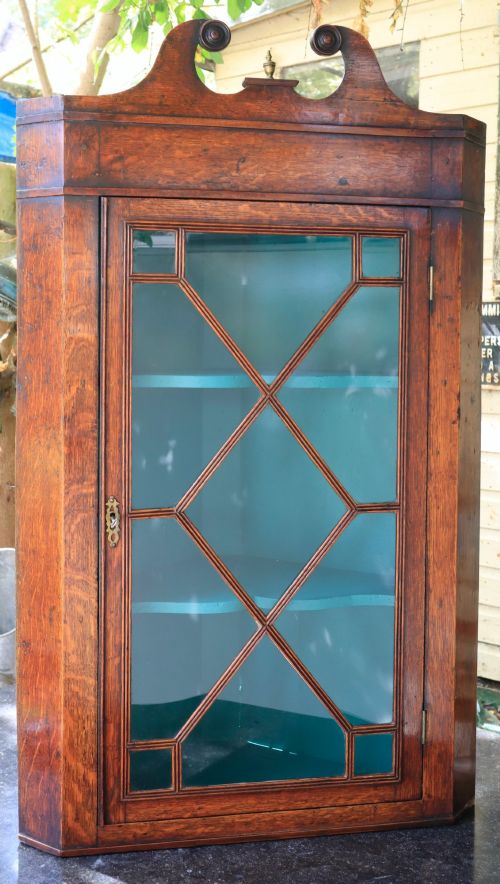
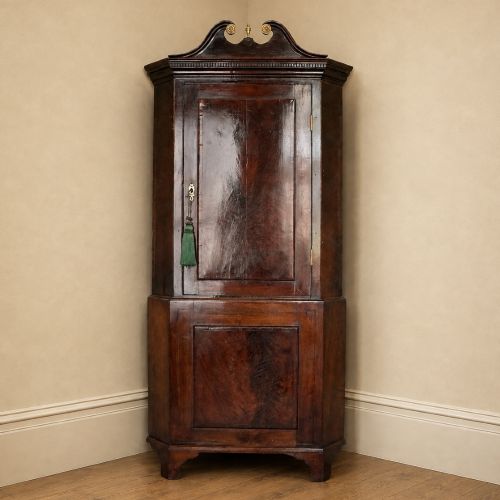
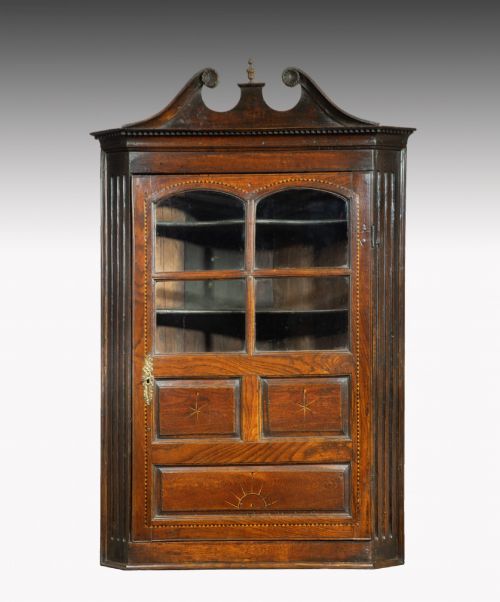
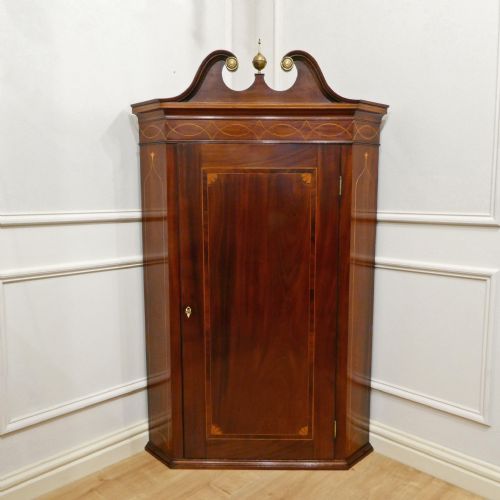


Pediment Corner Cupboard
A pediment corner cupboard uses architectural details to make the most of an awkward room junction while showing off fine cabinetmaking.
Pediment Corner Cupboard
A pediment corner cupboard is a storage piece designed to fit snugly into the meeting point of two walls, making practical use of dead space. The form appears in a variety of regional and stylistic iterations across the Georgian and Edwardian periods.
Most examples seen here are hanging wall units or standing cabinets built from timber. Buyers frequently encounter glazed doors for display or solid wooden panels for concealed storage, often topped with architectural pediments.
The selections span simple provincial oak construction up to refined George III and Sheraton revival pieces featuring intricate inlay. Every version maintains the fundamental triangular footprint intended to anchor a room corner.
What varies in quality
Quality rests upon the choice of timber and the precision of the decorative inlay rather than simple age. Finer pieces display carefully selected flame mahogany veneers and balanced satinwood banding that wrap seamlessly around the angles of the cabinet.
The architectural pediment distinguishes standard storage from superior examples, with hand-carved swan neck details and polished brasses indicating higher workshop standards. Construction depth is also visible in the thickness of the secondary timbers and the crispness of the glazing bars.
Glazed doors appear frequently alongside solid panel variants, particularly in wall-hanging display formats.
The Pediment Corner Cupboard Glossary
- Pediment
- An architectural crowning feature placed above the main body of a cabinet. Common variations in these listings include swan neck and broken arch designs.
- George III
- A British stylistic period spanning the second half of the eighteenth century and the early years of the nineteenth. Furniture from this era often incorporates classical proportions and fine mahogany.
- Sheraton Revival
- A late nineteenth and early twentieth century design movement that reinterpreted the lighter neoclassical furniture of Thomas Sheraton. These pieces frequently feature satinwood inlay and marquetry.
- Flame mahogany
- A decorative wood veneer showing a distinct, fiery grain pattern. Cabinetmakers used it on primary surfaces to catch the light.
- Hanging corner cupboard
- A wall-mounted storage unit designed to be secured directly into room corners. They free up floor space while keeping contents at eye level.
Pediment Corner Cupboard: Frequently Asked Questions
Were these cupboards meant for china?
Many glazed variants served as corner display cabinets to showcase porcelain, glassware, and silver collections. The glass doors kept dust away while permitting visibility from across the room.
Solid wooden door versions were instead utilised for general household storage, holding bottles, linens, or dry goods out of sight.
How do I tell a Georgian piece from an Edwardian revival?
Eighteenth-century Georgian pieces generally show heavier structural timbers, hand-cut secondary woods, and subtle patination developed over centuries of use. The construction methods visible on the interior boards reveal period tool marks.
Edwardian revival cabinets often display brighter mahogany tones, machine-sawn internal components, and very crisp, uniform satinwood inlay typical of early twentieth-century manufacturing.
Can standing corner cupboards hold modern items?
Standing models offer deep internal shelving that accommodates books, tableware, or modern media equipment depending on the interior depth. The triangular shape simply requires arranging items to fit the tapering back angle.
Measuring the internal shelf depth before purchase ensures your specific items will sit comfortably behind the closed doors.