
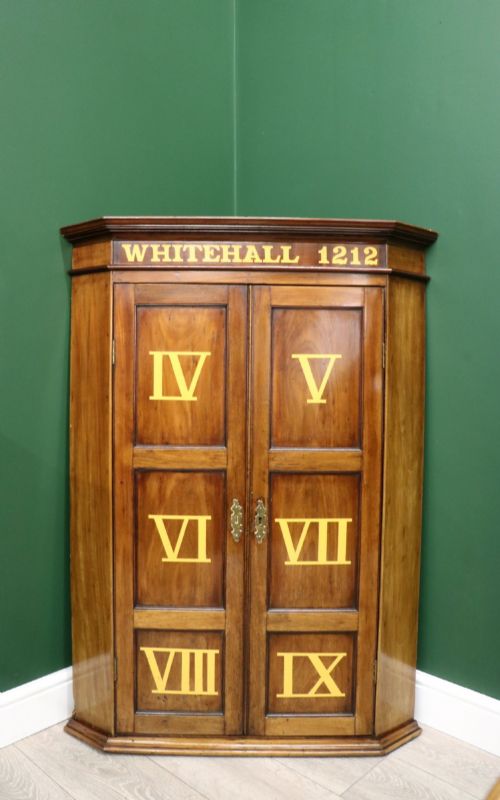

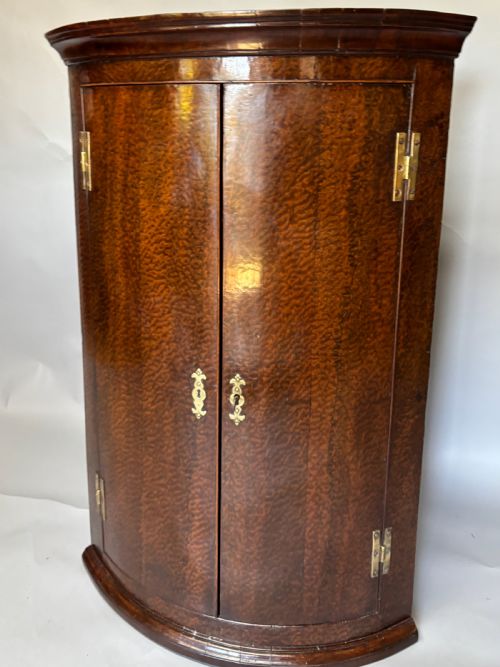


George III Hanging Cabinet
A george iii hanging cabinet turns unutilised room junctions into display space, offering Georgian proportions and fitted shelving for the collector.
George III Hanging Cabinet
A george iii hanging cabinet is a wall-mounted storage piece designed specifically to fit into the corner of a room, saving floor space while displaying contents at eye level. These pieces belong to the Georgian era, with construction dates stretching from the mid-eighteenth century to the early nineteenth century.
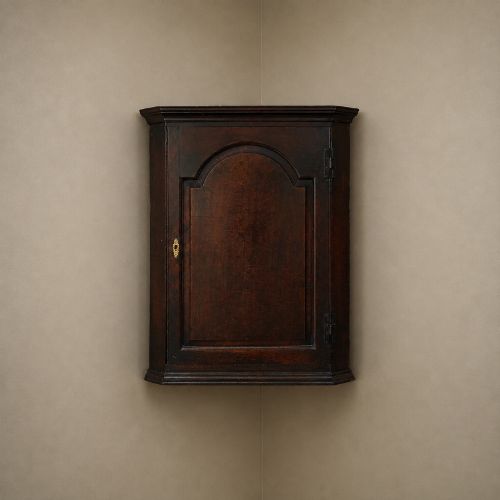
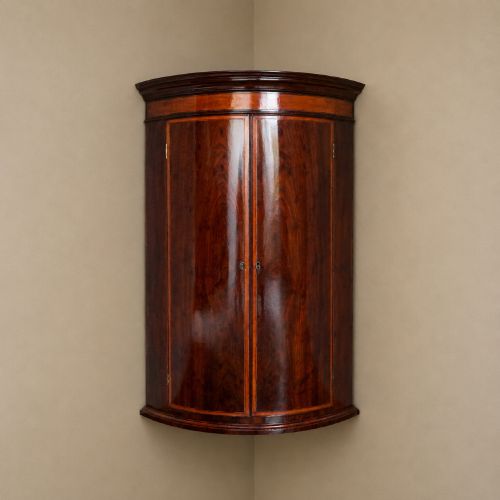
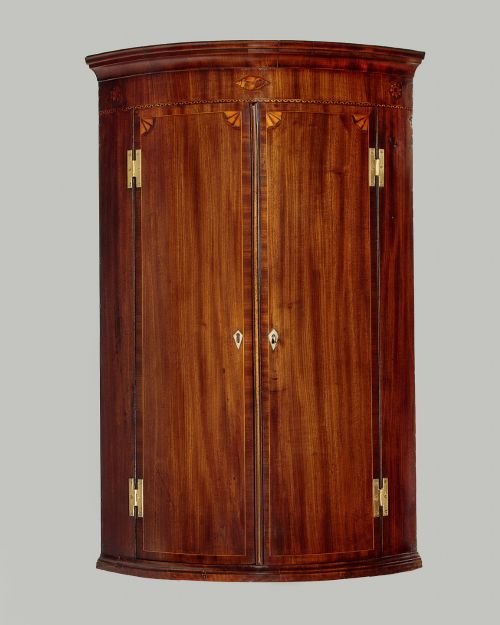
The most common formats on this page are corner cupboards and corner cabinets, built with either flat panels or curved bow fronts. Oak and mahogany dominate the structural forms, frequently enhanced with boxwood stringing, satinwood inlay, and crossbanding.
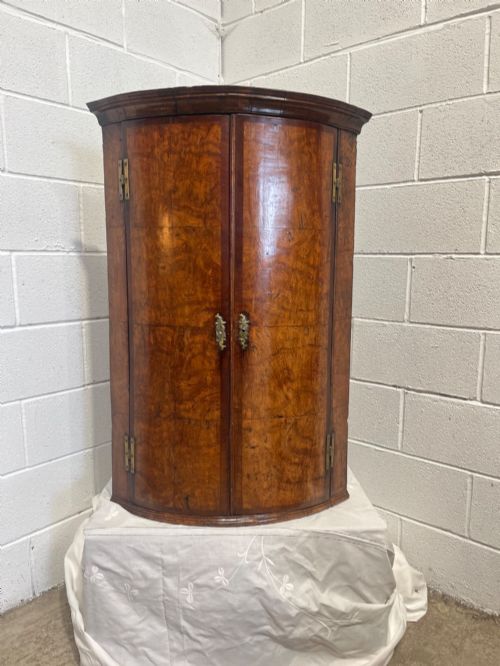
Makers of the period utilised solid timbers alongside figured veneers like burr oak and plum pudding mahogany to create visual depth on the principal door. Wall mounting brackets or internal fixing points allow these heavier timber carcasses to hang securely from domestic walls.
Materials and construction methods
Cabinetmakers constructed the main carcase using native oak for internal bracing and secondary framing, paired with imported mahogany or local burr oak for visible exterior surfaces. Solid timber panels receive support from pegged joints and dovetailing, ensuring stability across seasonal humidity shifts.
Decorative detailing relies on precision inlays, utilising contrasting strips of boxwood, bone, and satinwood to form geometric lines or shell motifs on the door fronts. Brass hardware, including butterfly hinges and escutcheons, secures the door while adding functional metallic contrast to the timber grain.
Glazed variants feature wooden astragal bars arranged in geometric patterns, holding individual panes of glass within the door frame to display porcelain or glassware.
The listings here show a distinct split between utilitarian oak country pieces and highly polished plum pudding mahogany urban examples.
Separating the ordinary from the exceptional
The choice of primary timber sets the baseline for quality, moving from utilitarian plain oak up to highly figured plum pudding mahogany and burr oak veneers. Superior examples display symmetrical grain patterns that wrap continuously across the front elevation and door panels.
Craftsmanship reveals itself in the delicacy of the inlay work and the precision of the mitred joints around the projecting cornice mouldings. Original brass fitments and intact glazed astragals maintain the integrity of the piece, whereas crude timber replacements or altered door configurations lower the status.
The George III Hanging Cabinet Glossary
- Bow front
- A convex curved front elevation that projects outward from the corner walls. This styling requires steam-bent or carved solid timber to achieve the smooth sweep.
- Crossbanding
- A narrow strip of veneer applied perpendicularly to the surrounding grain along the edges of a door or top. It creates a neat border frame using contrasting wood types.
- Astragal
- Moulding bars that divide a glass door into smaller panes. They support the individual glass segments in glazed display versions.
- Satinwood
- A luminous yellowish timber utilised for delicate inlays and stringing lines. Its reflective grain provides sharp contrast against dark mahogany surfaces.
- Cornice
- The decorative moulding that sits at the very top of the cabinet carcase. It finishes the architectural profile against the ceiling line.
George III Hanging Cabinet: Frequently Asked Questions
How do I hang a heavy wooden corner cabinet?
These cabinets mount directly to structural wall studs using internal fixing battens or heavy-duty brackets screwed through the backboards.
Professional installation is recommended due to the combined weight of solid mahogany or oak carcasses and internal shelving.
What is the difference between a cupboard and a cabinet?
Cupboards generally feature solid wooden doors concealing internal storage shelves for private items. Cabinets often incorporate glazed doors and astragal bars designed specifically for displaying porcelain and glassware.
Both forms utilise the same triangular corner footprint to utilise unused room angles.
How do I distinguish oak pieces from mahogany versions?
Oak exhibits a visible open grain with characteristic flecks and a pale golden-brown hue that deepens with age. Mahogany presents a tighter, reddish-brown grain structure that takes a finer polished sheen.
Both timbers were standard during the Georgian period but create distinct visual weights in a modern interior.
Can these cabinets support heavy porcelain collections?
Internal fixed shelves easily bear standard decorative ceramics, though original housing grooves should be checked for stability. Distributing weight evenly across the tiers prevents undue stress on the antique timber frame.