


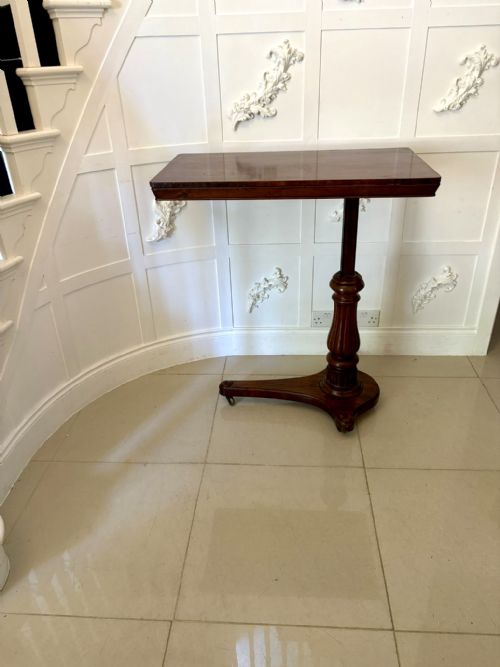


Pedestal Reading Table
A pedestal reading table is a dedicated piece for books and papers, combining adjustable height with a sturdy central pillar.
Pedestal Reading Table
A pedestal reading table serves as a functional surface designed to hold books or writing materials at a convenient angle, often featuring adjustable mechanisms. The examples met on this page span the Regency, Victorian, and Edwardian eras, reflecting changing domestic habits in study rooms and libraries.
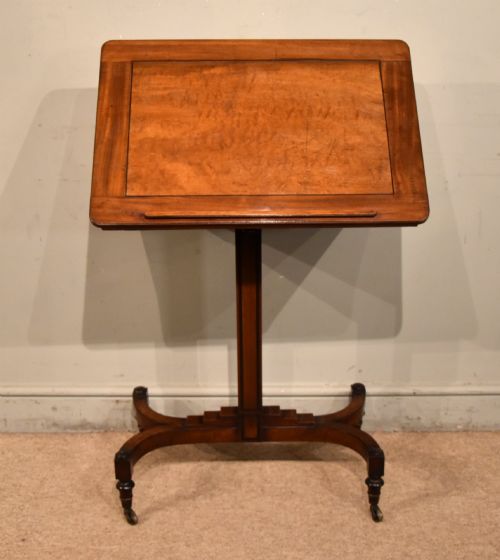
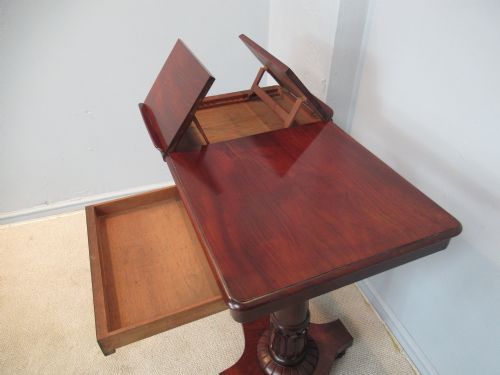
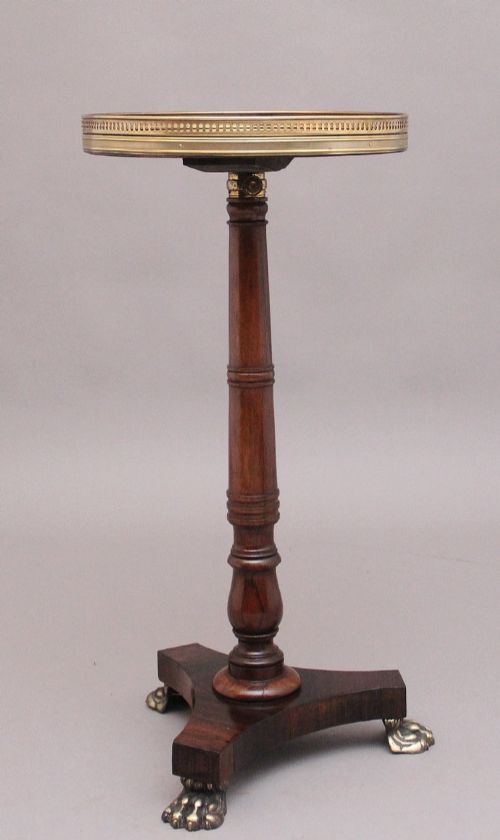
The primary form encountered is a single-pillar wooden stand, frequently rendered in mahogany or rosewood, supporting an adjustable top or reading slope. Pieces from the Regency and early Victorian periods often incorporate brass details and telescopic shafts to alter the height.
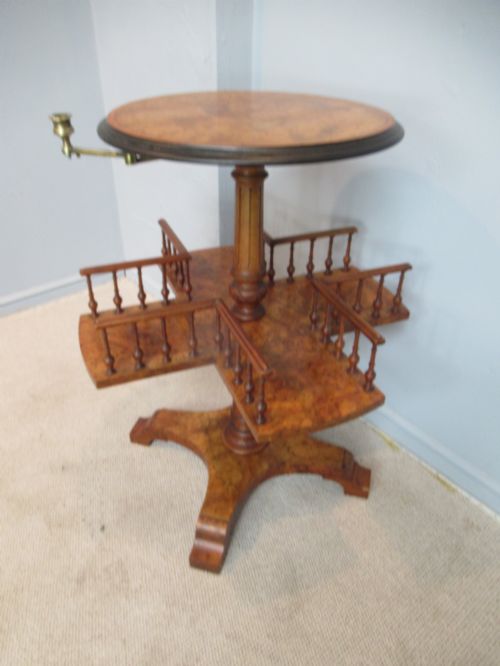
Beyond the standard reading table, related forms such as music stands, revolving bookstands, and occasional tables appear within these records. These variations maintain the central column construction while adapting the top surface for sheet music, folios, or general study.
Materials and construction methods
Cabinet makers utilised dense hardwoods such as mahogany and rosewood for the structural pillars and tops, providing the necessary weight and durability for a pedestal reading table. These timbers were often selected for their rich grain, sometimes enhanced by brass inlay or telescopic brass fittings.
Adjustable mechanisms rely on metal components, including brass and bronze, to permit smooth movement of the reading surface or column height. Leather and fabric inserts occasionally surface on the writing or reading slopes, adding a tactile surface for handling books.
Adjustable reading furniture in the archive frequently pairs timber tops with brass telescopic columns and integrated book rests.
Assessing quality in construction and design
The standard of a pedestal reading table rests largely on the precision of its mechanical adjustments and the stability of its central pillar. Superior pieces exhibit seamless operation in their telescopic mechanisms and tight joints where the column meets the base.
Material selection and decorative restraint also divide the range, with finer examples displaying well-figured mahogany or rosewood alongside refined brass mounts. The integration of functional elements, such as book rests and folding ledges, demonstrates the maker's attention to practical utility.
Gillow
The Pedestal Reading Table Glossary
- Telescopic
- A construction method allowing parts to slide within one another to adjust height. This is commonly found in the central columns of reading stands.
- Book rest
- A hinged ledge or support attached to a table top to hold open volumes at an angle. It prevents books from sliding during consultation.
- Rosewood
- A dense, dark timber featuring pronounced dark grain patterns, frequently utilised in high-status nineteenth-century furniture.
- Regency
- An English design period spanning the early nineteenth century, characterised by classical restraint and frequent use of brass inlay.
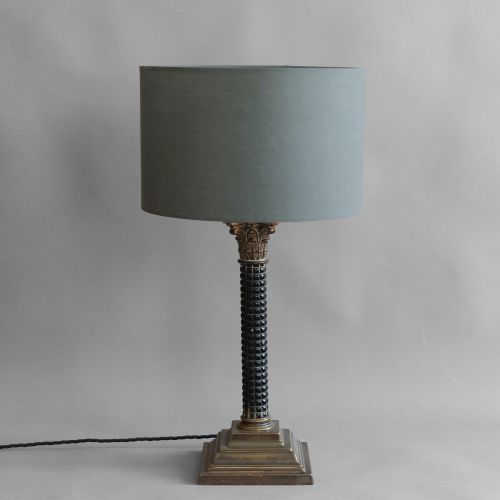
- Column lamp
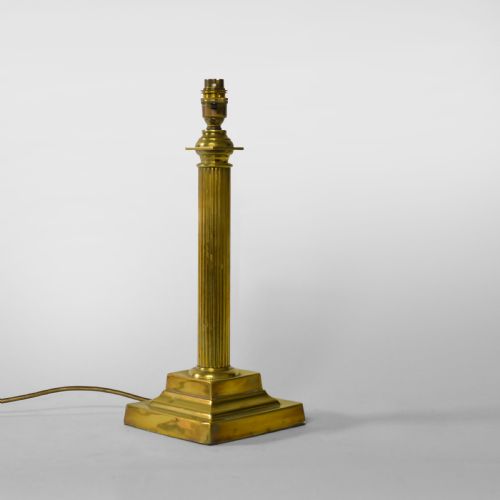
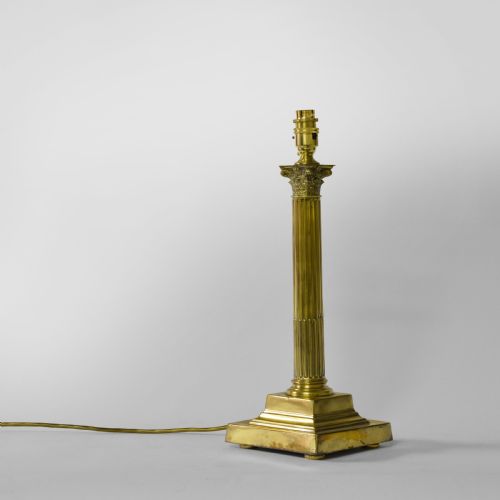
- A lighting standard modelled after classical architectural orders, appearing frequently alongside desk and reading furniture in these records.
Pedestal Reading Table: Frequently Asked Questions
How do I adjust the height?
Many pedestal reading tables use a screw mechanism or a sliding telescopic inner column secured by a thumb screw. Turning or releasing this allows the top to move vertically.
Care should be taken to support the weight of the reading surface while making adjustments to protect the internal wooden or brass components from sudden friction.
Were these used for writing or reading?
These pieces served both purposes, depending on the tilt of the top and the inclusion of auxiliary ledges. Tilting slopes accommodated books and folios, while flat or adjustable surfaces permitted correspondence.
Libraries and private studies utilised them as versatile furniture that could be drawn up to a chair for extended periods of study.
How do I tell Regency from Victorian examples?
Regency pieces often feature clean neoclassical lines, specific brass inlay work, and lighter proportions. They reflect the influence of classical antiquity popular in the early nineteenth century.
Victorian reading tables tend to be heavier in scale, sometimes utilising rosewood or bolder mahogany turnings with more robust pedestal bases and carved details.
What is a metamorphic table?
A metamorphic table is a piece of furniture designed to transform from one form into another, such as shifting from a flat occasional table to an inclined reading stand. Hidden hinges and folding flaps achieve this dual function.
These clever adaptations demonstrate the ingenuity of nineteenth-century cabinet makers in maximising utility within domestic spaces.