
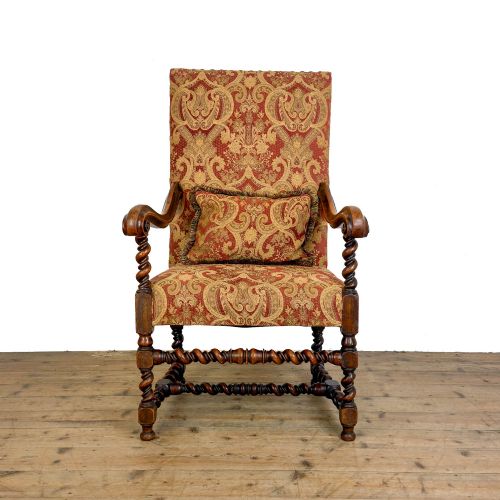
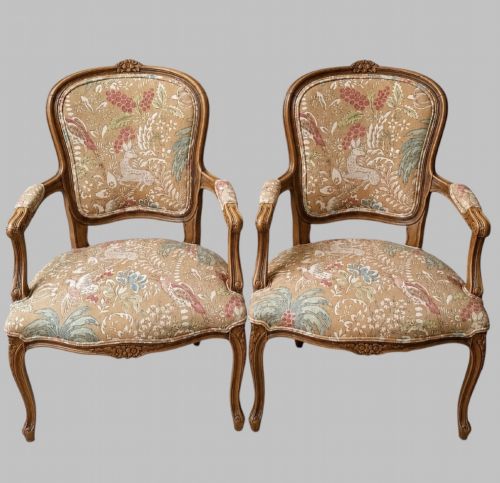

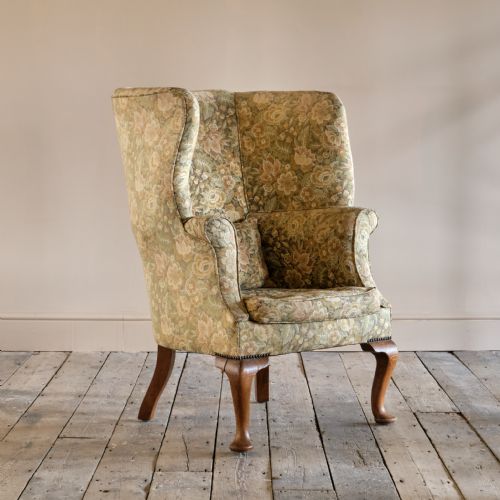


Patterned Tapestry Chair
A patterned tapestry chair brings rich texture and traditional upholstery into a room, offering both comfortable seating and historic character.
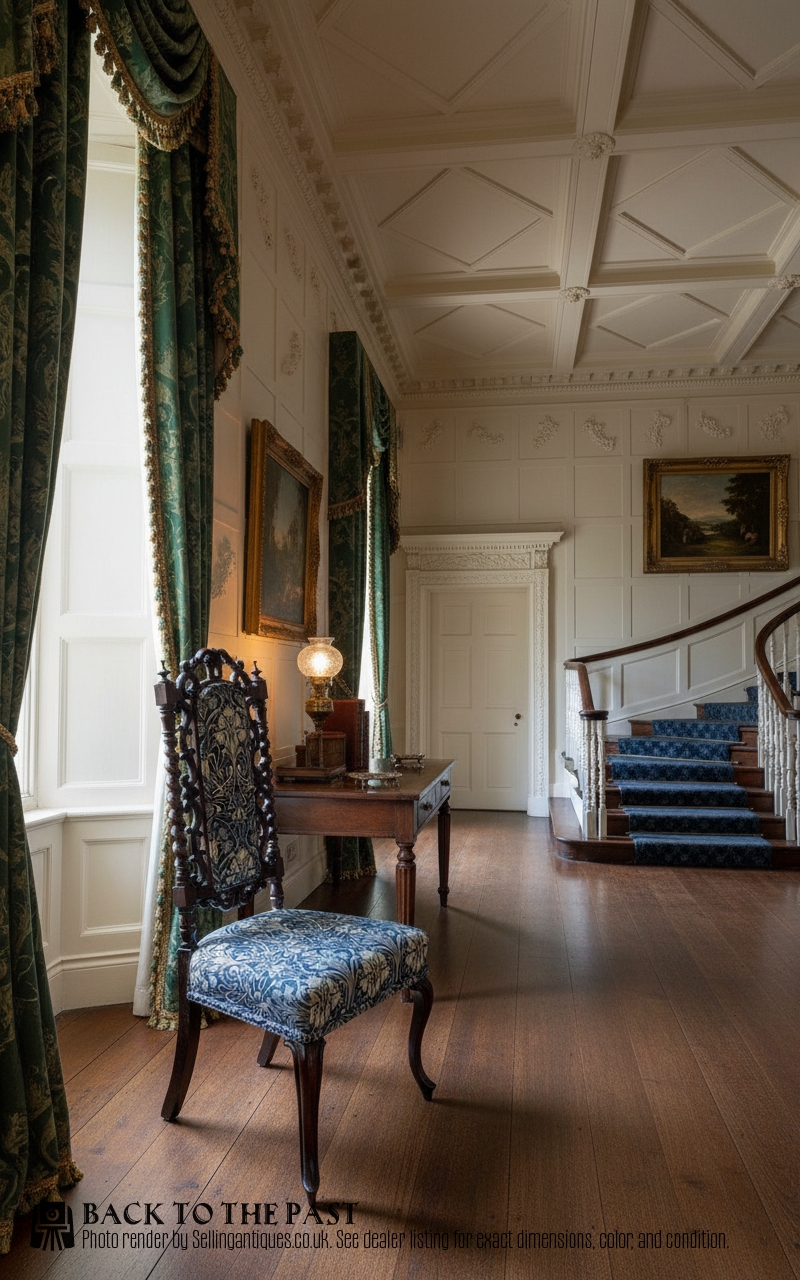
Patterned Tapestry Chair
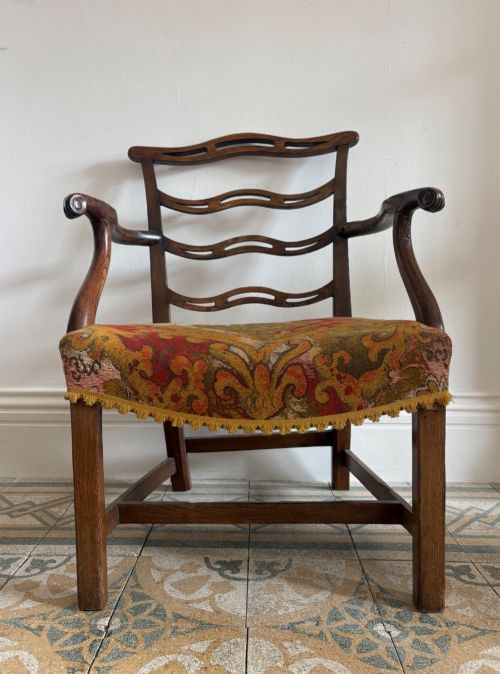
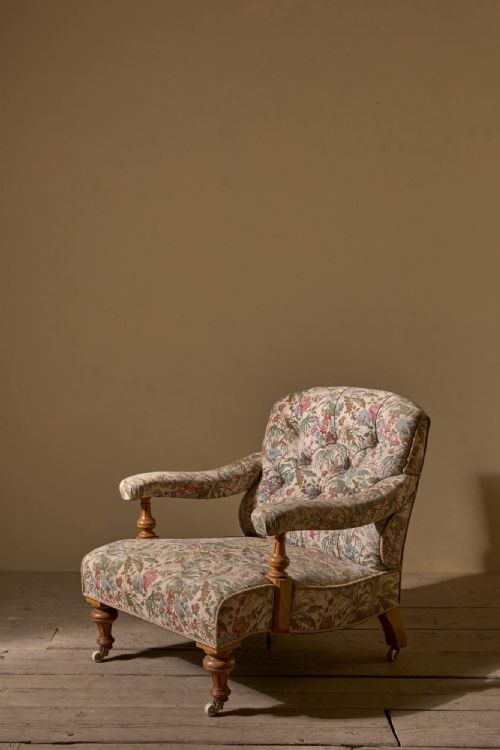
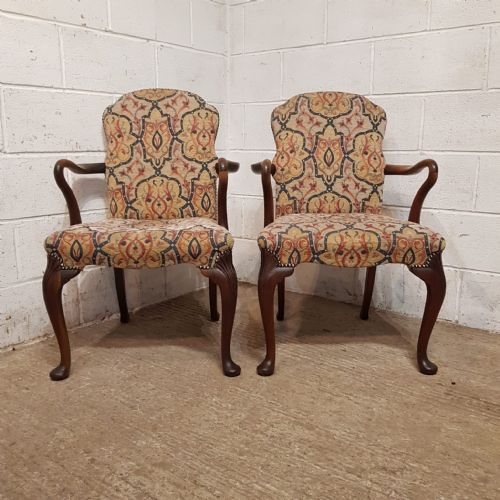
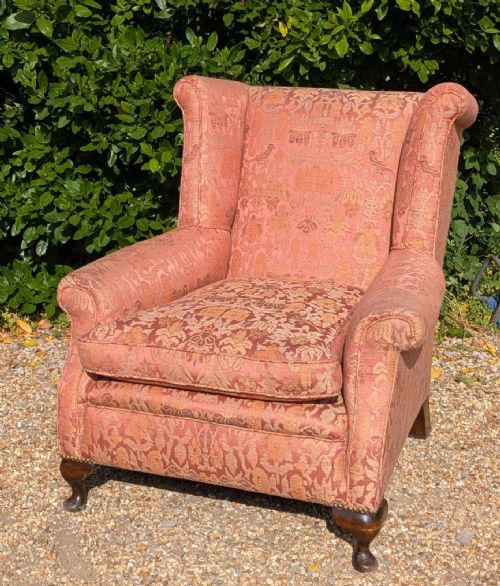
When you search for a patterned tapestry chair, you encounter a diverse group of seating furniture spanning the nineteenth and early twentieth centuries. These pieces range from substantial Victorian wingbacks and library armchairs to delicate salon chairs and country elm ladderbacks.
The most common examples on this page are Victorian and Edwardian upholstered armchairs, often featuring detailed needlework or textile covers. Frames vary widely, incorporating walnut, mahogany, and hardwood alongside styles from Queen Anne revival to Gothic and Arts and Crafts.
How they were made
Frames are constructed from solid timbers such as walnut, mahogany, and elm, frequently shaped with hand-carving or steam-bent techniques. Joinery relies on traditional methods to ensure structural stability across heavy armchairs and lighter side chairs.
Upholstery combines supportive internal stuffing with durable textile covers, including tapestry fabric, needlework, and kilim upholstery. Brass details and exposed woodwork complete the construction of these period seats.
The listings feature walnut, mahogany, and elm frames paired with tapestry fabric, needlework, and kilim upholstery across the nineteenth and early twentieth centuries.
What varies in quality
Quality in these chairs depends upon the integrity of the wooden frame and the precision of the initial carving or turning. Fine examples retain their original structural firmness and display well-proportioned lines.
The standard of the textile work significantly affects the overall character, with finely worked needlework and dense tapestry upholstery distinguishing superior pieces from simpler utilitarian seating.
Heals·William Morris·Howard and Sons
The Patterned Tapestry Chair Glossary
- Tapestry upholstery
- Heavy woven or embroidered fabric applied to furniture seats and backs. This material provides both decorative patterns and durable daily use.
- Wingback armchair
- An upholstered seat featuring protective side panels designed to shield the sitter from draughts. These chairs often sit on carved wooden legs.
- Ladderback
- A chair back constructed with horizontal wooden slats resembling a ladder. This traditional form appears frequently in country vernacular seating.
- Spoonback
- A chair back curved to follow the natural contour of the human spine. This padded form is characteristic of mid-nineteenth-century salon seating.
- Bentwood
- Wood softened by steam and bent into curved structural forms. This technique creates lightweight yet resilient chair frames.
Patterned Tapestry Chair: Frequently Asked Questions
What is a patterned tapestry chair?
A patterned tapestry chair is a historic seat covered in woven or embroidered fabric, ranging from Victorian wingbacks to Edwardian armchairs. These pieces combine functional seating with decorative textile artistry.
They serve as focal points in traditional and eclectic interiors, bringing warmth and historical interest to living spaces.
How do I identify a Victorian armchair?
Victorian armchairs typically feature dark hardwood frames, often in walnut or mahogany, with robust upholstery and carved detailing. Styles span from button-backed buttoning to elaborate spoonback designs.
Examining the woodwork and construction methods helps distinguish these mid-nineteenth-century pieces from later revival items.
Where should I place a tapestry chair?
These chairs suit studies, libraries, and living rooms where their patterned upholstery can complement neutral walls and wooden floors. They work well as standalone reading chairs or paired fireside seats.
Placing them away from direct sunlight helps preserve the colours and integrity of the historic fabric.
Are these chairs comfortable for daily use?
Many period armchairs are built with deep cushioning, sprung seats, and supportive high backs designed for relaxation. Feather-filled and heavily padded variants offer substantial comfort.
Evaluating the internal support ensures the chair suits regular sitting rather than purely decorative display.