



Patterned Slipper Chair
Patterned slipper chairs are low-slung seats designed for comfortable dressing, offering compact elegance and period charm for a bedroom or sitting room.
Patterned Slipper Chair
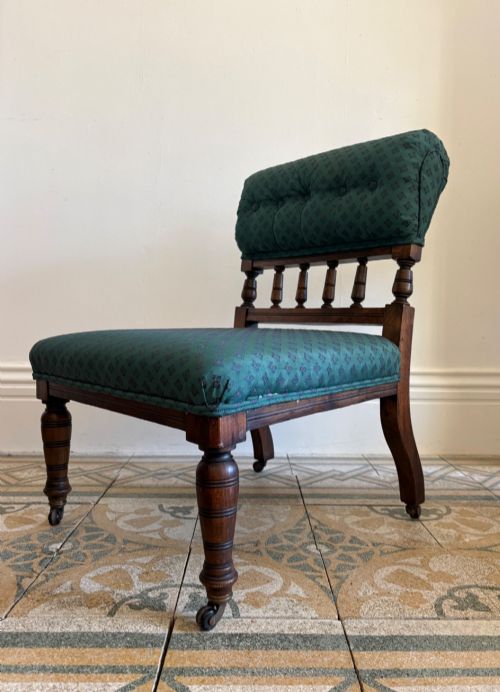
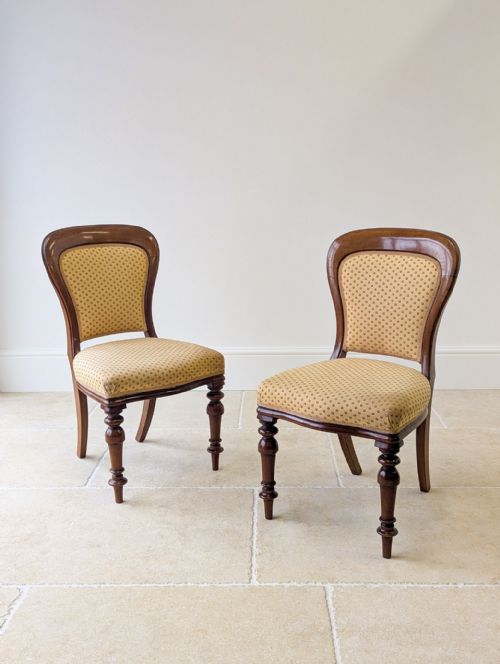
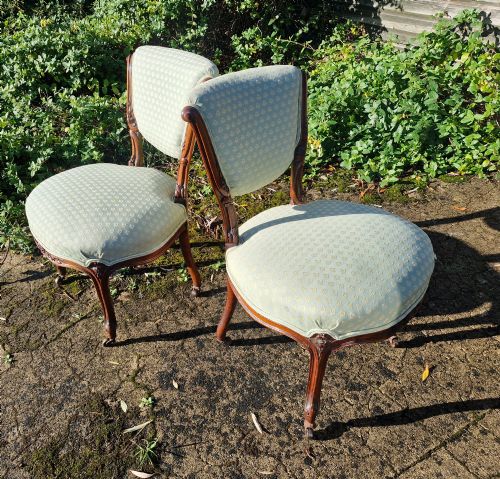
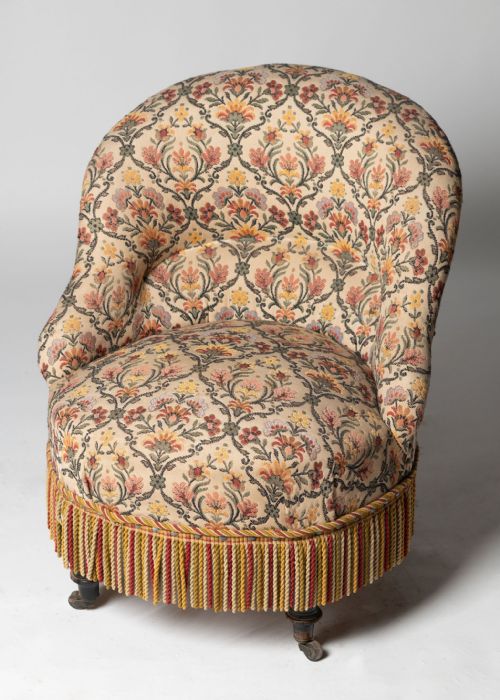
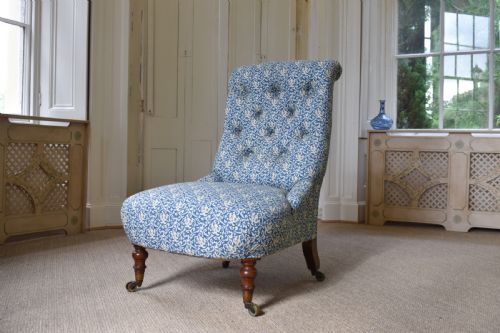
A patterned slipper chair is a low-seated armchair designed historically for a bedroom or dressing room, allowing a lady to sit comfortably while putting on shoes or garments. These pieces appear across the nineteenth century, including Victorian, Edwardian, and Regency periods, alongside French Napoleon III examples.
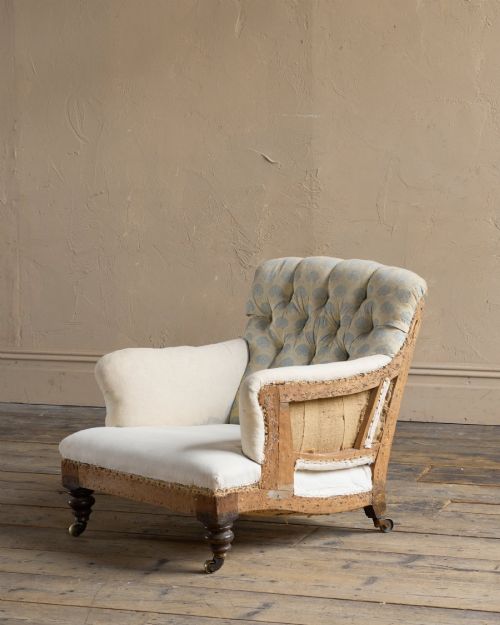
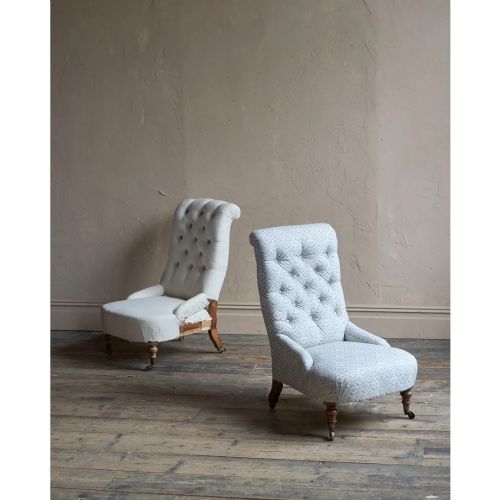
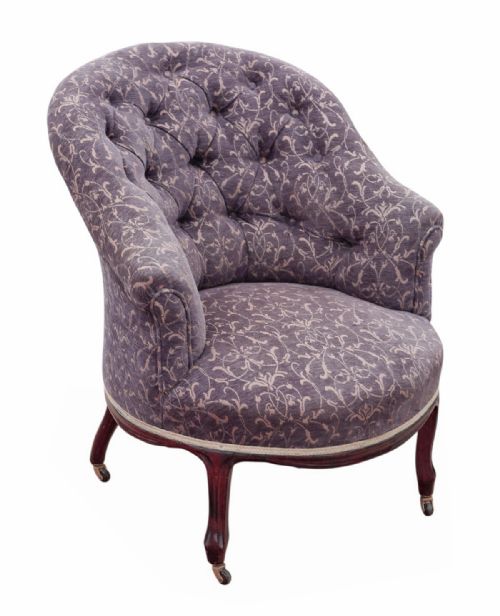
The forms span several related low seating types, such as nursing chairs, bedroom chairs, and tub chairs, often sharing the characteristic low profile. Many feature deep seats, buttoned backs, or scroll backs, reflecting the design preferences of their respective eras.
Makers such as Howard and Sons produced notable versions of these chairs during the nineteenth century, often pairing deep-seated comfort with quality timber frames. Buyers on this page will frequently encounter nineteenth-century English and French pieces ready for upholstery or newly recovered in vintage fabrics.
How They Were Made
Frames rely on sturdy timbers such as mahogany, walnut, and general wood or timber construction, providing the structural foundation for the upholstered body. Exposed legs often incorporate brass details, ebonised finishes, or gilt decoration.
Upholstery forms the primary visual element, utilising fabrics such as cotton, velvet, and vintage French cotton to cover the sprung or padded seats and backs. Craftsmanship is evident in button-backed detailing and carefully shaped scroll backs.
Patterned Slipper Chair Retail Price Guide 2026
Typical asking prices for patterned slipper chair among the pieces listed under this phrase on Sellingantiques today, from the lower quarter to the upper quarter. They describe what is for sale here now, not the wider market.
Some nineteenth-century ladies possessed such elaborate slippers that entire chairs had to be lowered just to accommodate them.
What Varies in Quality
The pedigree of the maker significantly influences the standing of a piece, with firms like Howard and Sons commanding particular attention for their construction standards. Frames attributed to notable makers display superior proportion and durability in the timber structure.
The integrity of the underlying frame and the quality of the timber, whether walnut, mahogany, or carved wood, dictate the longevity of the chair. Original details such as gilt legs, brass fittings, and ebonising separate standard examples from finer ones.
Howard and Sons
The Patterned Slipper Chair Glossary
- Slipper chair
- A low-seated upholstered chair designed without arms for ease of dressing in a bedroom. These chairs typically sit close to the floor.
- Nursing chair
- A low armchair traditionally used for feeding an infant, sharing a similar low profile with slipper chairs. They often feature buttoned or padded backs.
- Tub chair
- An armchair featuring a rounded, enclosed back that curves continuously into the arms. Examples frequently appear with ebonised and gilt legs.
- Napoleon III
- A French stylistic period spanning the mid-nineteenth century, known for eclectic revivals and scroll back armchair designs. Pieces from this era often arrive requiring new upholstery.
- Button back
- An upholstery technique where buttons are pulled deep into the padding to create a quilted diamond pattern. This method provides both structure and visual texture.
Patterned Slipper Chair: Frequently Asked Questions
What is a slipper chair used for?
A slipper chair provides a low, comfortable seat historically kept in a bedroom or dressing room for putting on shoes. Its compact stature makes it practical for smaller spaces today.
These chairs also function well as accent seating in living rooms or studies, adding period character without overwhelming the room.
How do I date a Victorian chair?
Dating a Victorian chair involves examining the timber, construction methods, and upholstery style characteristic of the mid to late nineteenth century. Makers marks, where present, help narrow down the period.
Stylistic cues such as buttoned backs, walnut frames, and ebonised legs further point to specific decades within the Victorian era.
Are these chairs comfortable for daily use?
Many of these chairs offer deep seats and supportive upholstered backs designed for relaxation. Their low height provides a distinct sitting posture compared to standard armchairs.
Comfort often depends on the condition of the internal padding and springing, which may be restored or updated while preserving the antique frame.
What does for upholstery mean?
A piece sold for upholstery requires new fabric and internal padding to be installed by the buyer or a restorer. This allows you to choose a custom fabric that suits your interior.
Listings describing chairs for upholstery focus on the sound condition of the underlying wooden frame rather than the worn exterior cloth.