
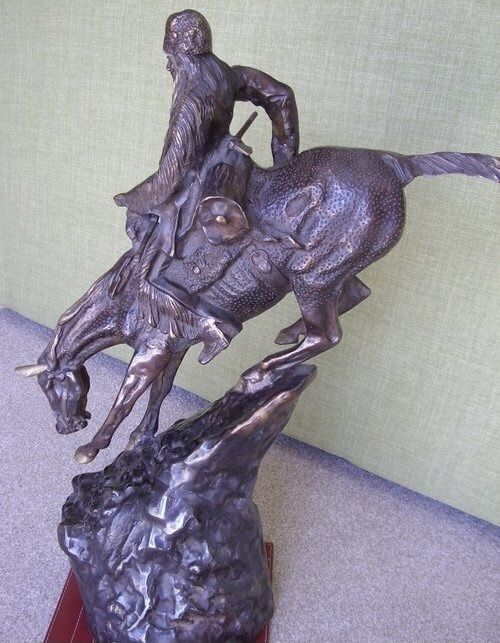
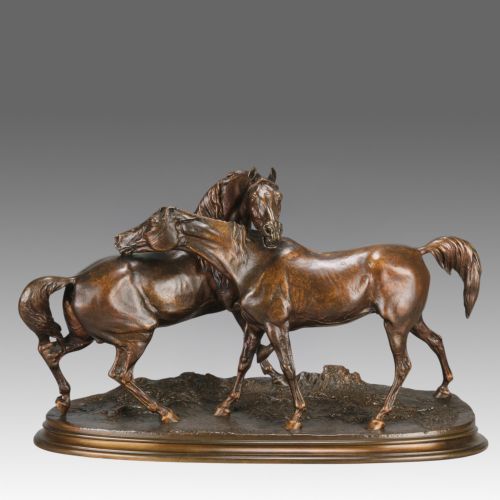

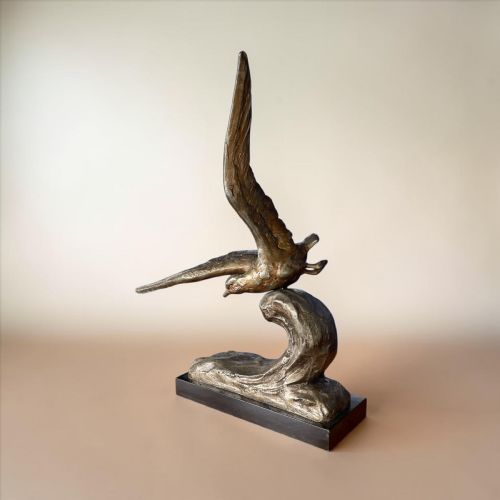
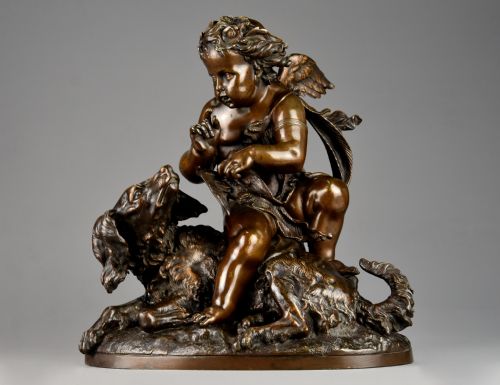


Patinated Bronze Table Statue
A patinated bronze table statue brings cabinet-scale classical form, animalier movement, or sleek modernist line directly onto a desk or mantel.
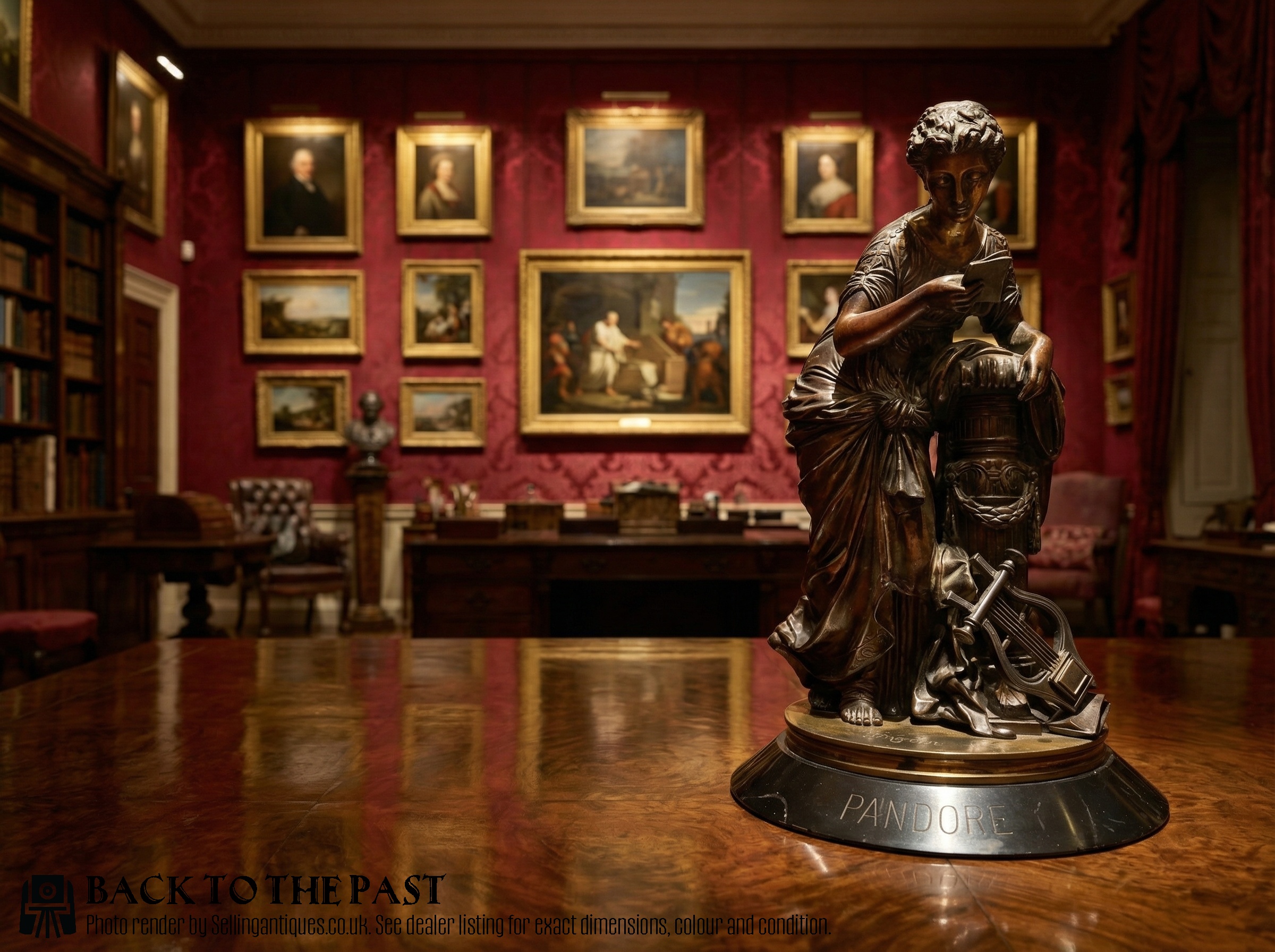
Patinated Bronze Table Statue
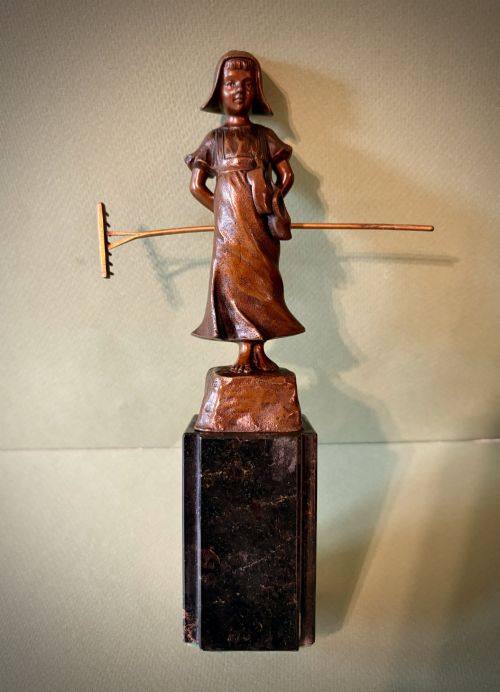
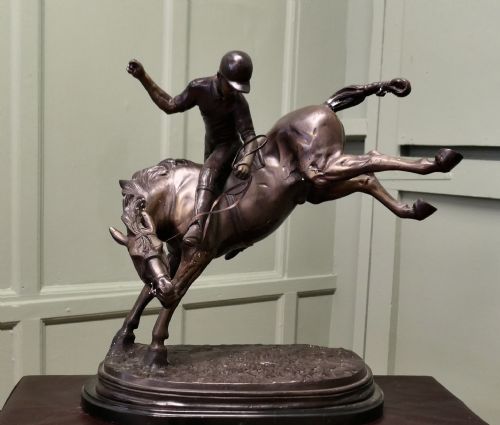
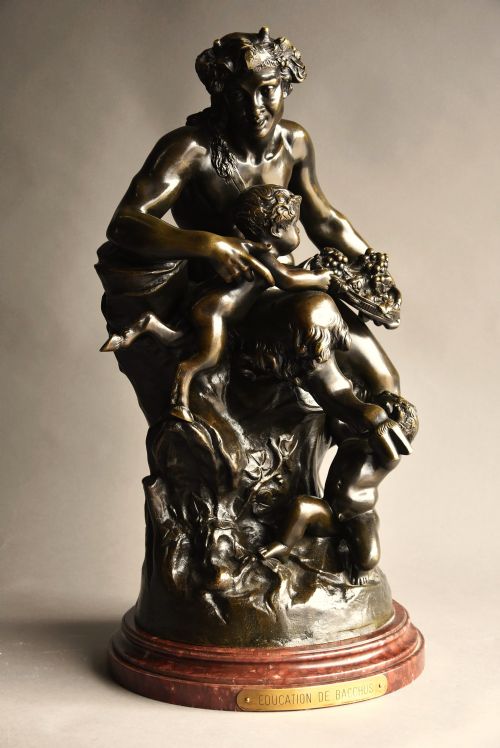
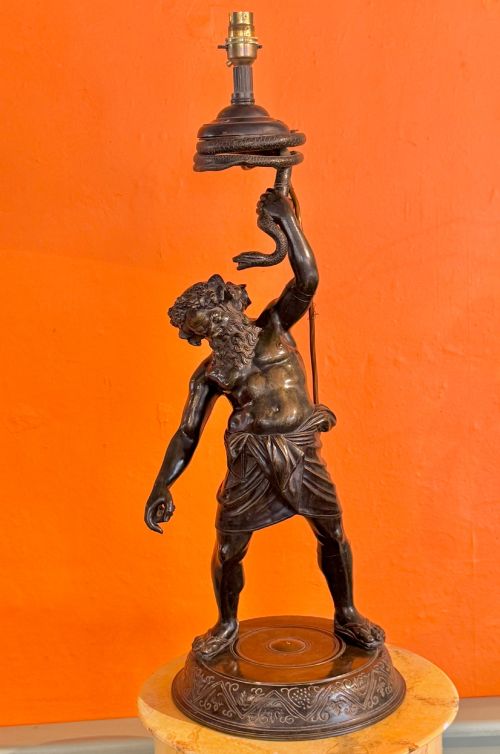
A patinated bronze table statue encompasses compact sculptures, figural lamps, and clock garnitures designed to be viewed at close quarters on a surface. When you search for a patinated bronze table statue, you encounter works spanning the nineteenth-century French schools, Grand Tour souvenirs, Austrian cold-painted animal bronzes, and streamlined Art Deco figures.
The pieces on this page lean heavily toward nineteenth-century French animalier studies, classical mythological figures, and twentieth-century Art Deco dancers mounted on marble bases. Makers and modellers translate human, animal, and architectural subjects into portable bronze castings intended for domestic interiors rather than public monuments.
Materials and casting methods
Foundries utilised the lost-wax method or sand-casting techniques to capture intricate details in molten bronze, frequently combining the metal with sienna marble bases, enamel, or gilt highlights. The resulting dark or chemical patination ranges from deep chocolate brown to greenish verdigris, achieved through applied acids and heat.
Alternative materials such as spelter and brass appear alongside pure bronze, often paired with glass elements in lamps and clock cases. Marble plinths provide substantial weight and architectural contrast to the slender figures standing above them.
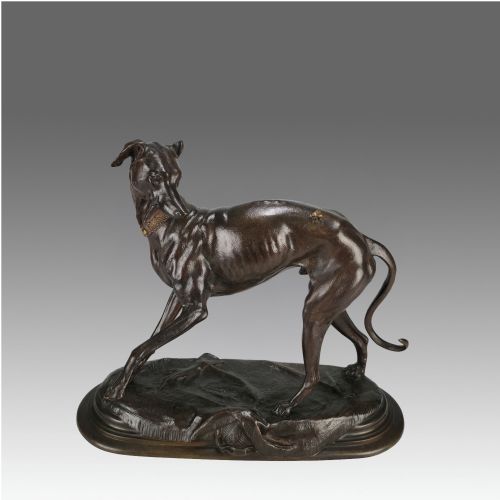
A greyhound caught mid-stride chasing a fly captures the lighter domestic whimsy found among classical figures.
Distinctions in execution
The integrity of the patination and the quality of the marble mounting further separate standard foundry production from exceptional artist-signed works. Signed pieces by established sculptors demonstrate superior anatomical proportion and balanced composition.
G Amodio Naples·Frederic Remington·P J Mêne·Alfred Barye·Masaaki·Hector Lemaire·Colinette·Messina Roma·Bruno Zach·Geo Maxim·Paul Joris·Emmanuel Villanis·Bellenot Paris·P Sega·Adrien Gaudez·Carrier Belleuse·Charles Octave Levy
The Patinated Bronze Table Statue Glossary
- Patination
- The chemical or natural surface coloration applied to bronze to enhance depth and protect the metal. Various acid treatments produce tones from polished gold to dark brown.
- Animalier
- A nineteenth-century artistic genre focusing on the realistic depiction of animals, particularly horses, dogs, and wildlife. French sculptors popularised this dynamic style.
- Grand Tour
- A nineteenth-century cultural tradition where travellers collected miniature bronze copies of classical antiquities in Italy. These souvenirs replicated famous statues found in museums and archaeological sites.
- Lost-wax casting
- A traditional method where a wax model is melted out of a mould and replaced with molten bronze. This technique allows for complex, undercut forms.
- Spelter
- An inexpensive zinc-based alloy frequently used as a substitute for bronze in decorative figures and clocks. It is lighter and softer than true bronze.
Patinated Bronze Table Statue: Frequently Asked Questions
What is the difference between bronze and spelter?
Bronze is a durable copper and tin alloy that accepts chemical patination well and holds crisp casting details over centuries. Spelter is a softer, lighter zinc alloy that was often painted or bronze-plated to mimic genuine metal.
Examining the underside or base often reveals the lighter, silvery grey metal of spelter if the surface finish has worn away. Bronze remains heavier, cooler to the touch, and magnetically inert.
Why are some bronzes mounted on marble bases?
Marble bases provide necessary structural stability and weight to prevent tall or top-heavy statues from tipping over. In Art Deco pieces, contrasting coloured marble plinths also served an aesthetic function, framing the metallic figures.
These integral bases were typically pinned or bolted to the bronze sculpture during assembly. Original period mountings match the stylistic era of the casting above.
How can I identify a Grand Tour bronze?
Grand Tour bronzes typically replicate famous classical sculptures, such as the Farnese Hercules or figures from Pompeii, collected by travellers in nineteenth-century Italy. They often feature deep, dark patination and are sometimes mounted on architectural marble or slate plinths.
Some bear signatures of Italian workshops or foundries like those in Naples or Rome on the base. Their scale was specifically tailored for easy transport home in luggage.