













Patinated Bronze Female Figure
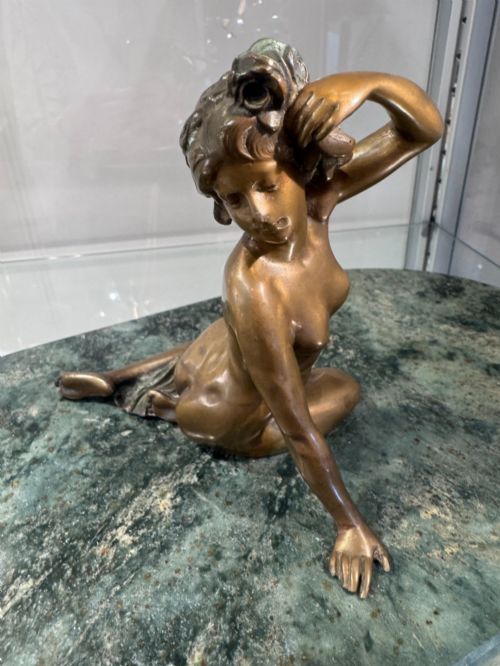
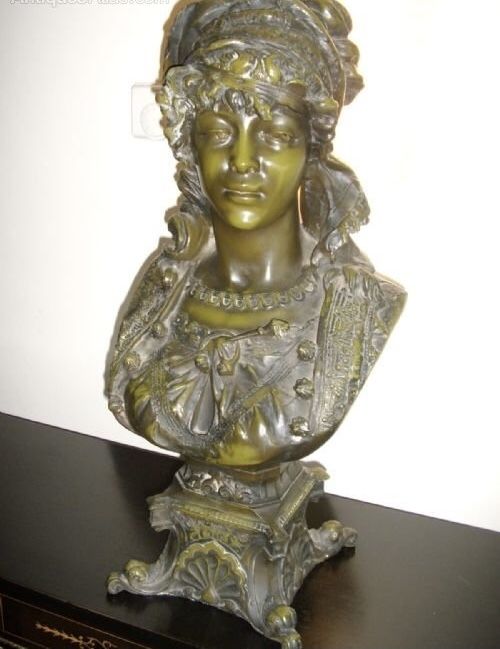
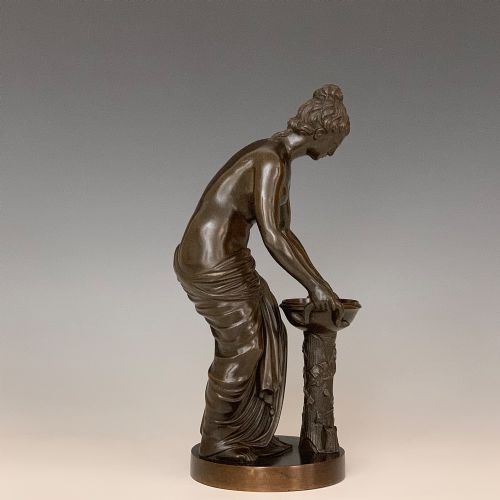
When you search for a patinated bronze female figure, you enter a world of nineteenth and twentieth-century foundry work spanning classical deities, dancers and literary heroines.
Patinated Bronze Female Figure
A patinated bronze female figure represents women through various stylistic lenses, ranging from classical drapery to modernist lines. These sculptures often take the form of standing or seated nudes, dancers, and allegorical representations of spring or water.
The pieces on this page lean heavily into French foundry traditions, encompassing nineteenth-century realism, Art Nouveau curves, and geometric Art Deco styling. Buyers encounter everything from cabinet-sized statuettes to substantial floor or table figures.
Many works combine the metal subject with a heavy stone base such as marble or onyx, elevating the composition both visually and physically. Figures frequently depict specific characters from mythology, history, or literature, including Cleopatra, Salome, and various classical nymphs.
Materials and Casting
Foundries typically employed the lost-wax casting method or sand casting to achieve intricate detail in the molten bronze. Artisans then applied chemical patination treatments to the metal surface to create deep brown, green, or dark tones.
Makers frequently paired the patinated metal with contrasting plinths made from carved marble, onyx, or occasionally wood. Certain functional pieces incorporate carved frosted glass elements, particularly in sculptural table lamps from the interwar period.
Several figures hold items ranging from harps and tambourines to sheaves of wheat and bouquets of flowers.
Evaluating the Cast
The integrity of the foundry mark, signature placement, and the quality of the stone base contribute significantly to the standing of a piece. Heavier, well-balanced bases and tightly fitted mounts indicate careful construction by skilled artisans.
Ferdinand Barbedienne·Emmanuel Villanis·Josef Lorenzl·Demetre Chiparus·Mathurin Moreau
The Patinated Bronze Female Figure Glossary
- Patination
- The chemical treatment applied to the surface of bronze to alter its colour and create aged tones. This process protects the metal while enhancing the visual depth of the sculpture.
- Lost-wax casting
- A historic method of creating metal sculptures from an original model coated in wax. This technique allows for complex undercuts and fine surface textures.
- Spelter
- An alloy of zinc and lead often used as a cheaper alternative to bronze. It frequently receives a bronze-coloured patination to mimic the heavier metal.
- Grand Tour
- A cultural journey undertaken by nineteenth-century travellers who collected small classical bronzes as souvenirs. These pieces often replicate famous antique statues.
- Chasing
- The manual finishing process where artisans refine the metal surface after casting using hammers and punches. Good chasing removes casting flaws and sharpens lines.
Patinated Bronze Female Figure: Frequently Asked Questions
How do I distinguish bronze from spelter?
Bronze is significantly heavier, harder to bend, and rings with a clear tone when struck gently. Spelter is a softer zinc alloy that feels lighter and often shows grey metal beneath chips in the finish.
Examine the underside of the piece where mounting bolts attach, as the underlying metal is usually visible there. Patinated spelter was commonly used for more affordable decorative figures and lamps.
What is an architectural patination?
Patination occurs naturally over decades of exposure to the elements, but artists and foundries apply chemical treatments to accelerate this ageing effect. Controlled heat and acids produce rich browns, greens, and blacks on the bronze surface.
The resulting finish highlights the sculptural contours and provides a stable protective layer. Examining the variations in tone helps reveal the hand of the patinator.
Where were these figures displayed?
Original owners placed these sculptures on mantelpieces, pedestals, and library tables within middle and upper-class domestic interiors. Table lamps integrated art into functional lighting for desks and boudoirs during the Art Deco era.
Larger statues served as focal points in entrance halls and reception rooms. Grand Tour bronzes specifically commemorated European travels for scholarly collectors.