




Bronze Allegorical Female Figure
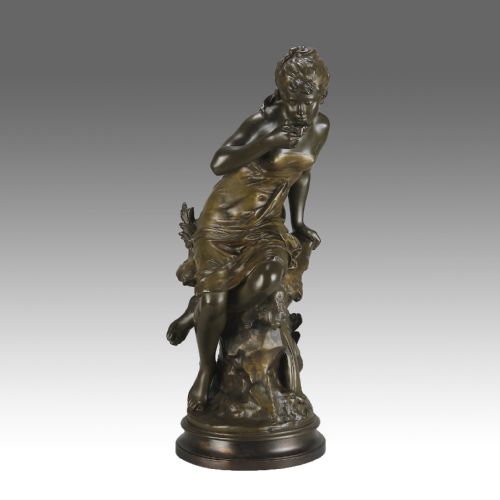
A bronze allegorical female figure brings classical personification and sculptural grace into a room, capturing ideals like peace, nature, and the seasons.
Bronze Allegorical Female Figure
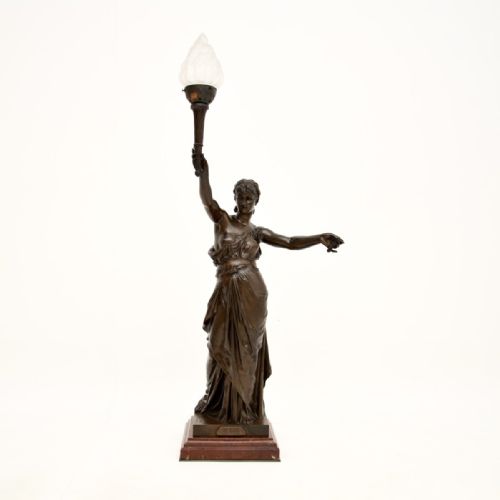
A bronze allegorical female figure represents abstract concepts such as spring, peace, modesty, and the breeze through classical personification. These works appear primarily as standalone sculptures, figurines, and statues, alongside functional forms like table lamps and mantel clocks.
The objects stem predominantly from the nineteenth century and the early twentieth century, spanning periods from Victorian work to Art Nouveau. French origins dominate the available output, alongside related French neoclassical and restoration aesthetic influences.
Makers and sculptors of note include August Moreau, Mathurin Moreau, Auguste Moreau, Ernst Barrias, and Jean-Jules Cambos. Pieces take the form of individual figures, pairs of dancers, and figures mounted as lamp bases or clock adornments.
How they were made
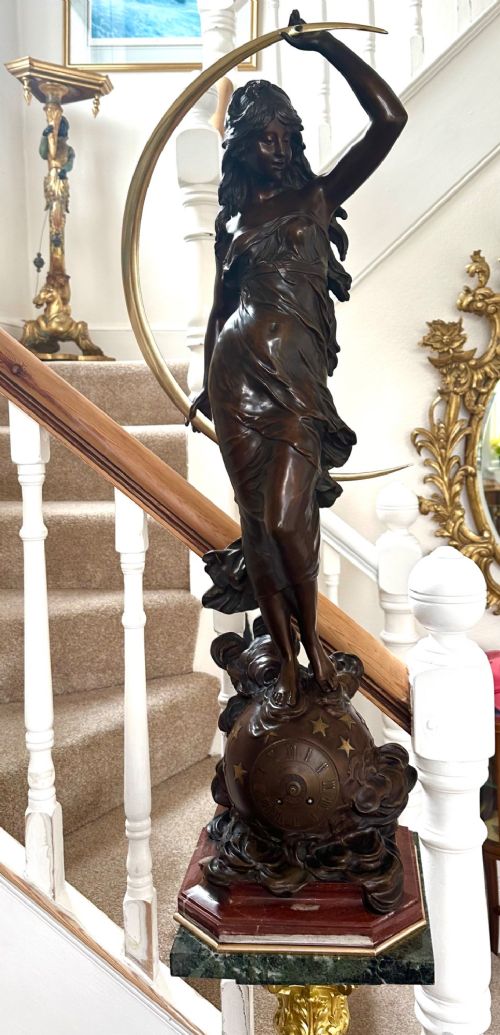
Foundries cast these figures predominantly in bronze, though some examples utilise cast metal or spelter. Gilding appears on ormolu and gilded bronze variations, adding surface brilliance to select figural clock components and statues.
Sculptural compositions frequently incorporate contrasting elements such as marble bases, glass components, and frosted glass. Wood also integrates into specific mounting structures, while secondary materials support functional adaptations like lampbases.
Aurora drives her chariot across the nineteenth century while chastity points firmly at a font of holy water.
What varies in quality
The refinement of the casting and chasing distinguishes superior works from simpler production pieces. Crisp definition in drapery, hair, and facial expression reveals the hand of a skilled sculptor and foundry.
Material integration also dictates overall merit, particularly where bronze meets marble bases, glass inserts, or ormolu mounts. The presence of a signed artist or a recognised foundry mark elevates the standing of an individual sculpture.
August Moreau·Mathurin Moreau·Auguste Moreau·Ernst Barrias·Jean-Jules Cambos
The Bronze Allegorical Female Figure Glossary
- Allegory
- The representation of abstract ideas or qualities through human figures and physical symbols. In these sculptures, female forms personify concepts like nature, peace, and the seasons.
- Spelter
- A zinc alloy used as a less expensive alternative to bronze for sculptural casting. It often received patination to imitate bronze or other metals.
- Ormolu
- Gilded bronze decorative metalwork applied to furniture, clocks, and sculptures. The technique involves coating base metal with a finely ground mercury and gold amalgam.
- Patina
- The surface coloration and sheen developed naturally over time or applied chemically to bronze. It protects the metal and defines the visual depth of the sculpture.
Bronze Allegorical Female Figure: Frequently Asked Questions
What is a bronze allegorical female figure?
A bronze allegorical female figure is a sculptural work that depicts a woman embodying an abstract concept, season, or virtue. These pieces draw heavily on classical mythology and personification.
Subjects range from personifications of the breeze and spring to representations of peace and modesty. They serve as decorative sculptures, lamp bases, and clock components.
How do I identify Art Nouveau examples?
Art Nouveau examples display characteristic flowing lines, naturalistic motifs, and dynamic poses inspired by the natural world. Figures often feature swirling hair and drapery that mimic plant stems and wind currents.
This style emerges prominently in late nineteenth-century and early twentieth-century French pieces. It contrasts with the stricter symmetry of earlier neoclassical works.
Where were these figures placed historically?
Historically, these figures stood in domestic reception rooms, libraries, and grand hallways as refined decorative art. They reflected the owner's appreciation for classical culture and fine craftsmanship.
Functional variations also integrated directly into daily life as mantel clocks and table lamps. This allowed sculptural art to serve a practical purpose within the interior.
How do I care for bronze and marble?
Care for bronze requires gentle dusting with a soft cloth to prevent the accumulation of grit and grime. Avoid harsh chemical cleaners that can strip the original patina.
Marble bases need similarly mild cleaning with a dry or barely damp cloth. Protect the stone from staining and sudden impacts to preserve the integrity of the combined materials.