

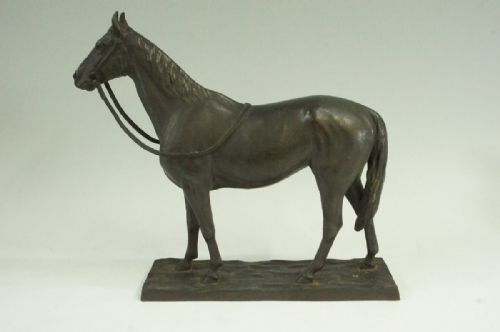
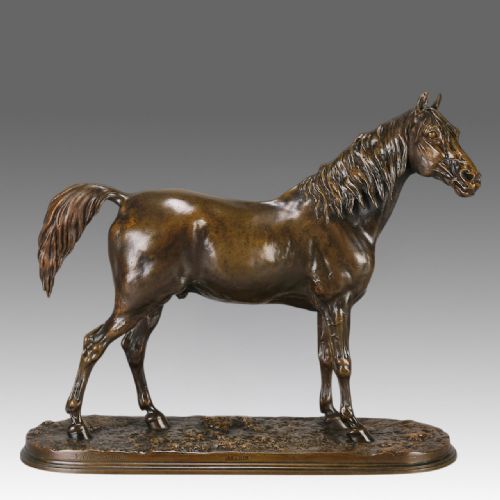


Patinated Bronze Equestrian
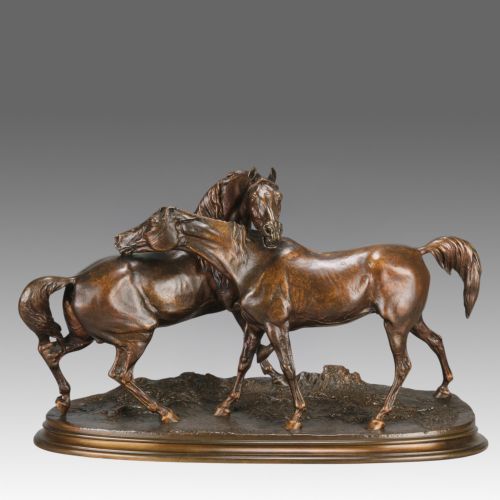
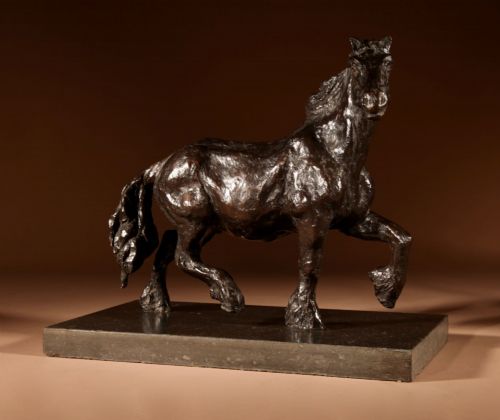
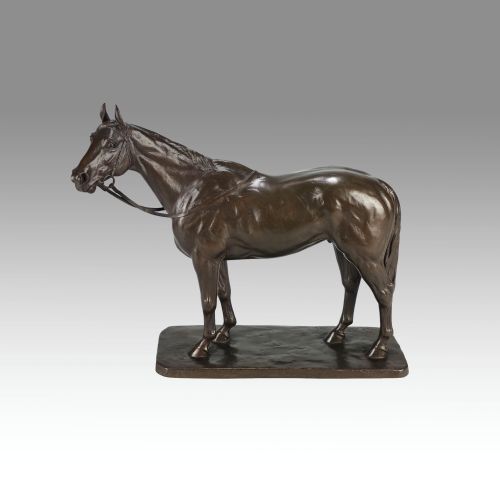
These patinated bronze equestrian figures capture horse and rider with enduring metallic warmth.

Patinated Bronze Equestrian
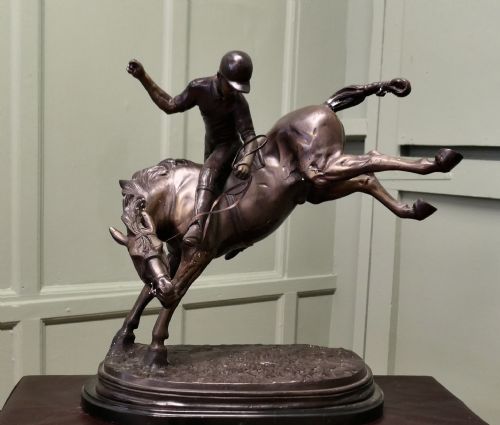
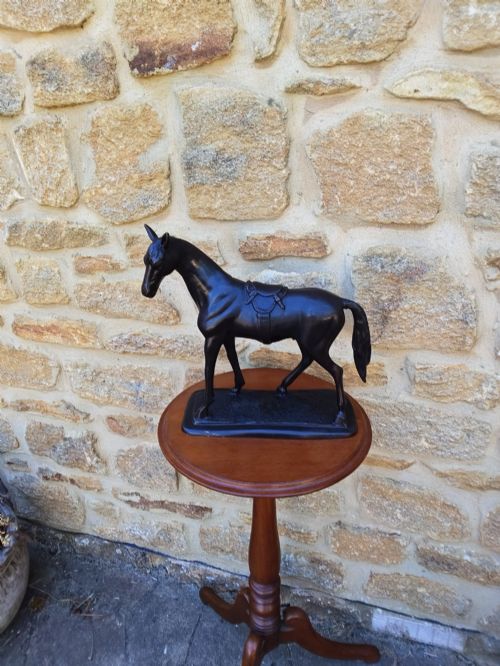
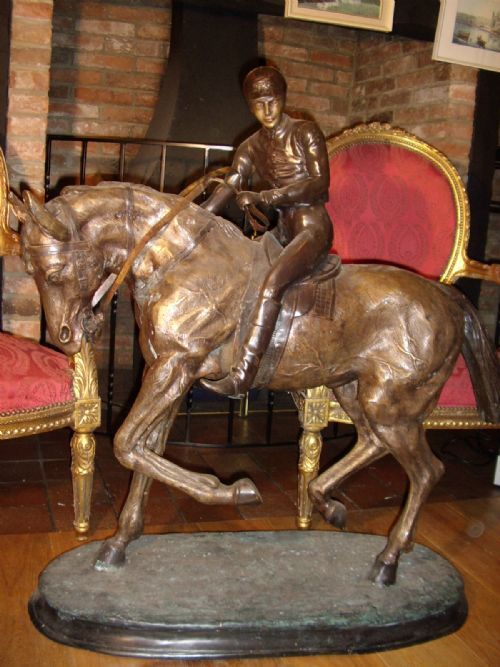
Patinated bronze equestrian works capture horses and riders in metal, spanning diverse global traditions from 17th-century European castings to 20th-century Japanese foundry pieces. You will frequently encounter 19th-century French Animalier sculptures depicting racehorses, hunters, and historical figures on horseback.
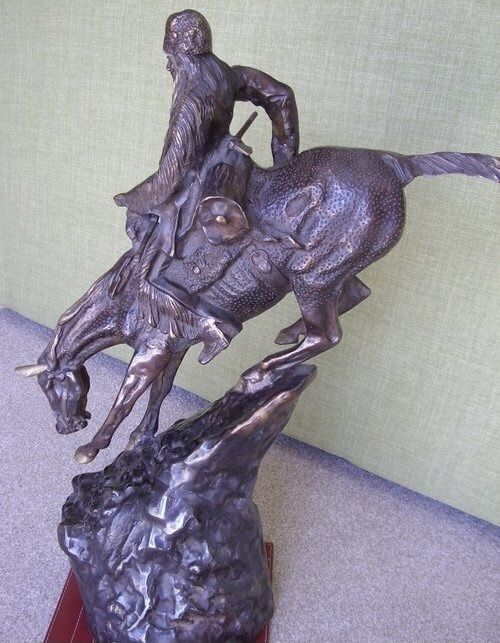
Makers shaped these subjects across distinct styles, ranging from French Neoclassical and Art Deco designs to Western Americana and Grand Tour interpretations. Figures appear mounted on marble bases, stone plinths, and wood supports, occasionally integrated into mantel clocks with gilt and patinated bronze components.
How They Were Made
Foundries shaped these sculptures using traditional metal casting techniques, subsequently applying chemical treatments to achieve darkened or nuanced patinated surfaces on the bronze. Artisans frequently mounted completed metal figures onto heavier stone bases like Sienna marble or standard marble.
Many works incorporate secondary materials such as glass, wood, and gilt bronze, particularly in functional objects like mantel clocks. Signatures and foundry marks were often chased or stamped directly into the metal during final finishing.
The archive records multiple antique patinated bronze equestrian statues depicting historical figures like Napoleon Bonaparte and Bartolomeo Colleoni.
What Varies in Quality
The quality of the mounting base contributes significantly to the overall piece, with dense Sienna or standard marble offering a heavier, more stable foundation than inferior stone or wood. Recognised signatures from established sculptors and documented founders elevate the standing of a bronze.
Pierre Jules Meme·Kunio Itô·Luigi Secchi·Alfred Dubucand·Charles Crozatier·Pierre Lenordez·Sakai Kōzan·Bruno Zach·John Willis Good·Coustou
The Patinated Bronze Equestrian Glossary
- Animalier
- A nineteenth-century artistic movement focused on the realistic portrayal of animals, particularly horses, lions, and hounds. Sculptors in this tradition studied live subjects extensively to capture accurate musculature.
- Patination
- The chemical or natural coloration of a bronze surface resulting from age or applied treatments. This finish protects the metal and creates subtle tonal depths.
- Marly Horses
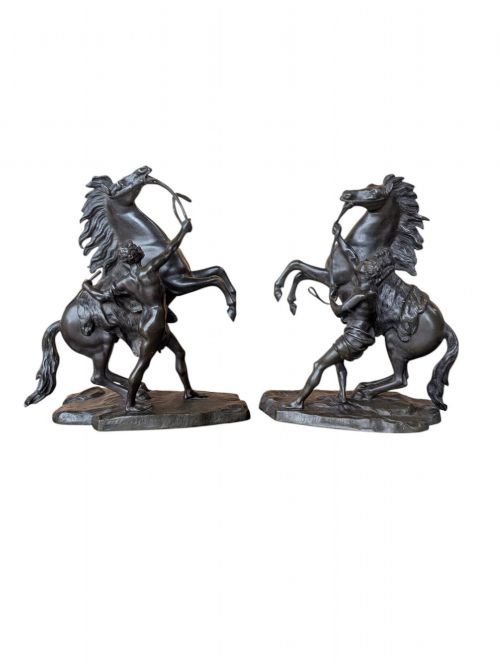
- Monumental sculptural groups depicting rearing horses restrained by grooms, originally created for Louis XV. Numerous nineteenth-century bronze reductions replicate these famous French monuments.
- Grand Tour
- A traditional educational journey through Europe undertaken by upper-class scholars who collected small bronzes as souvenirs. These reduction casts often reproduced classical or Renaissance monuments.
- Chasing
- The manual finishing process where artisans refine raw bronze castings using small hammers and punches. This step restores lost texture and sharpens details after the mould is removed.
Patinated Bronze Equestrian: Frequently Asked Questions
What is patinated bronze equestrian?
These works are metal sculptures depicting horses and riders, treated with chemical agents to produce distinct surface colorations. They range from small tabletop animalier studies to large historical monuments.
Foundries cast these figures in bronze, often mounting them on marble bases or incorporating them into clock housings. The subjects span racing scenes, military leaders, and mythical figures.
How were bronze horses used?
Sculptures served primarily as decorative table objects, mantel ornaments, and artistic tributes to famous animals or historical figures. Wealthy patrons displayed them in studies and reception rooms to demonstrate taste.
Some examples functioned as decorative clock cases or architectural garnitures on marble mantelpieces. Their solid metal construction made them durable fixtures in nineteenth-century interiors.
Where should I display my bronze?
Place figures on stable, level surfaces away from excessive moisture to protect the patinated metal and stone bases. Solid wooden sideboards or mantelpieces provide adequate support for heavier marble-mounted pieces.
Keep bronzes out of direct sunlight to prevent gradual changes to the underlying finish. Minimal handling helps preserve the original surface coloration over time.
How do I identify period pieces?
Examine the casting quality, foundry marks, and style of the base to determine the period of origin. Nineteenth-century works frequently feature heavier bronze walls and naturalistic patination.
Signatures etched into the metal or cast foundry stamps provide direct clues to the maker and date. Stylistic indicators like Art Deco geometries or Victorian animalier realism also help narrow down the era.