

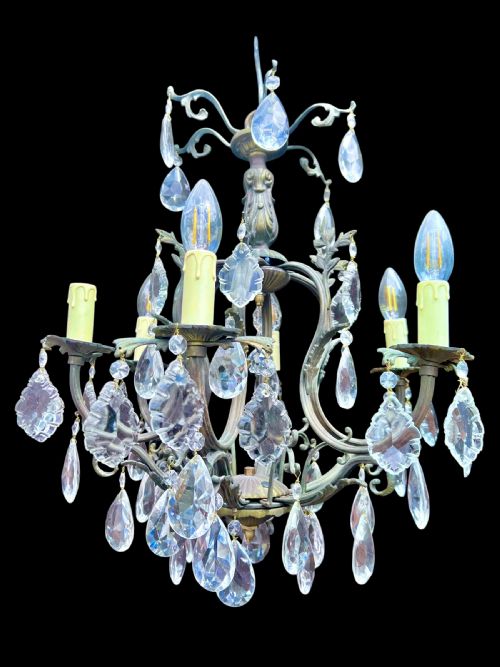
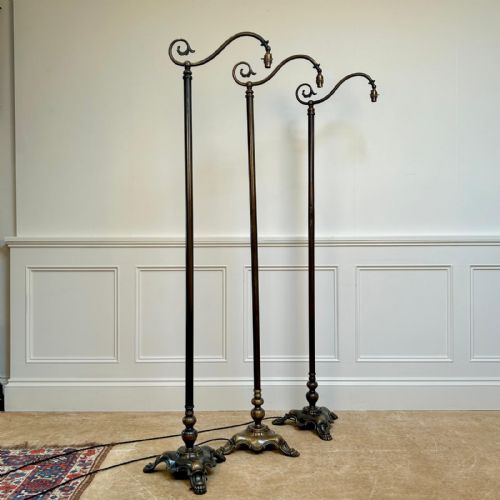
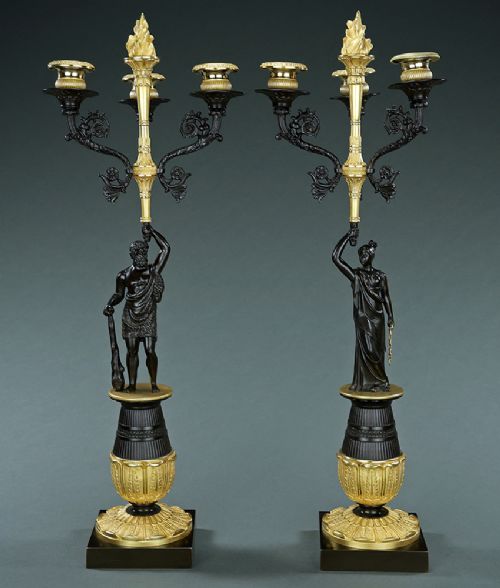
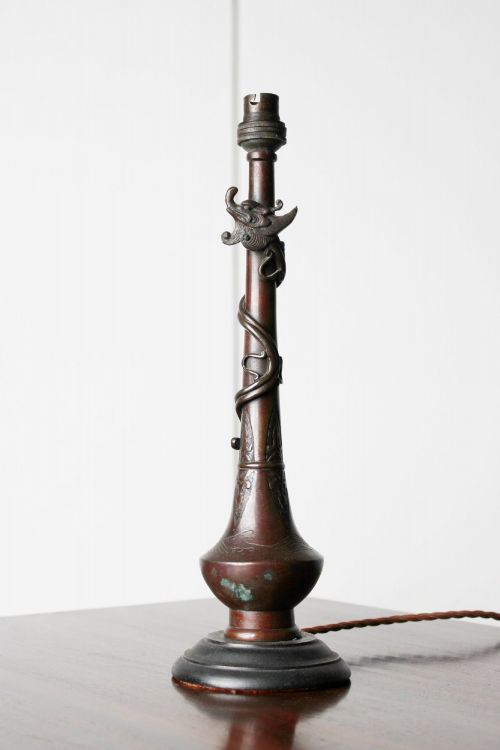
Patinated Brass Lighting
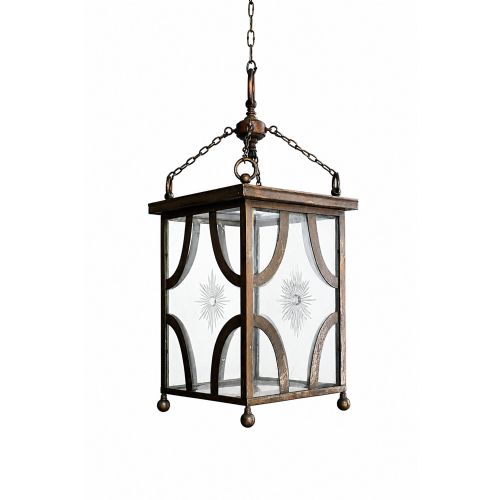
Patinated brass lighting brings dark, aged metal surfaces together with period forms to illuminate interiors with genuine historic character.
Patinated Brass Lighting
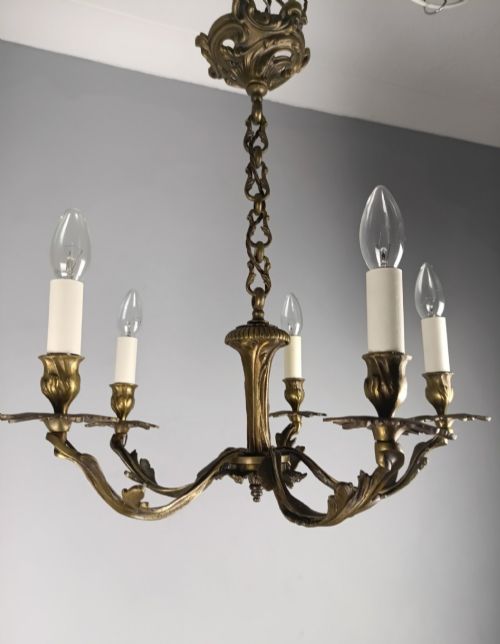
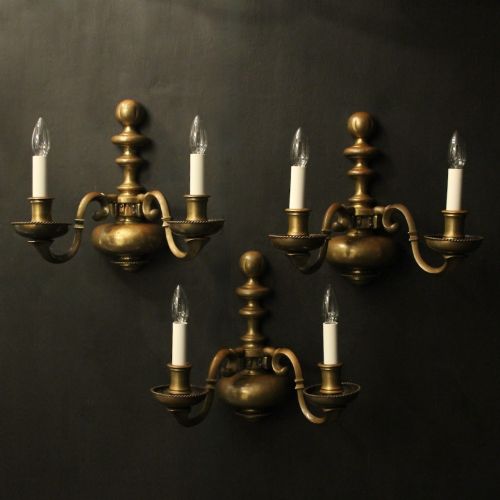
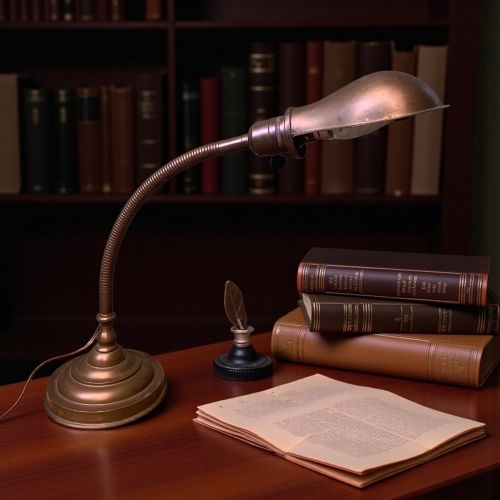
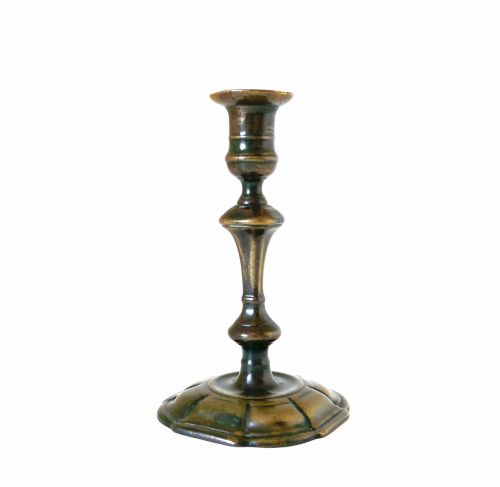
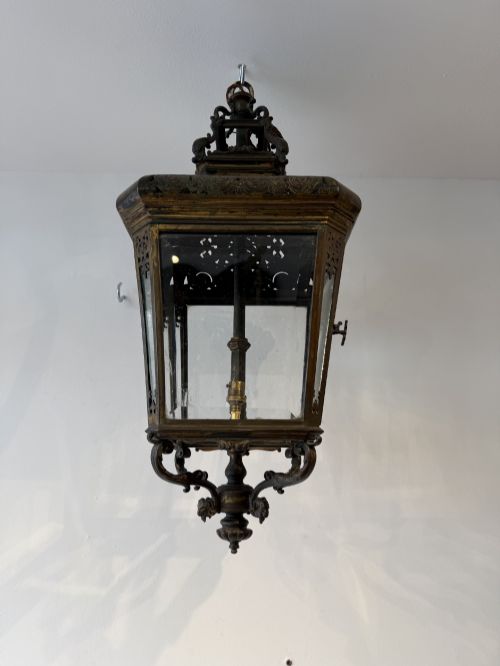
Patinated brass lighting spans domestic essentials like candlesticks and table lamps alongside grander architectural fittings including chandeliers, wall sconces, and hallway lanterns. These pieces originate from English, French, and continental workshops across the eighteenth, nineteenth, and early twentieth centuries.
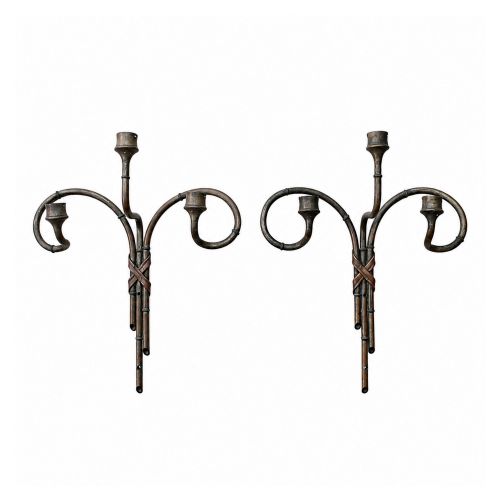
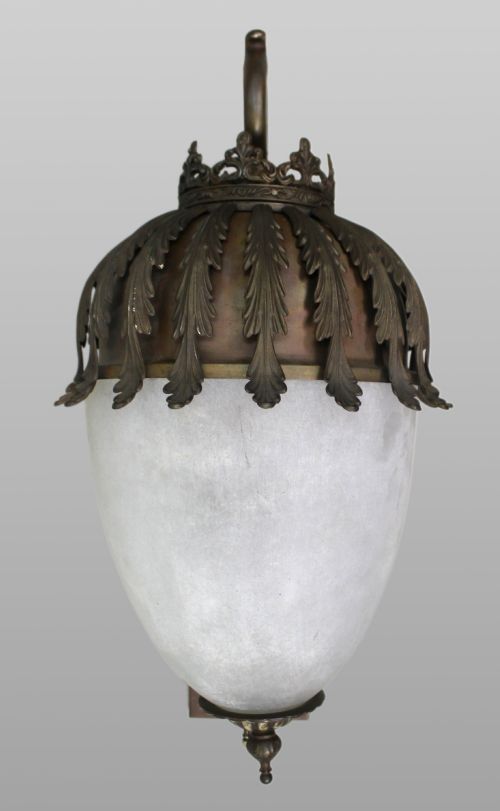
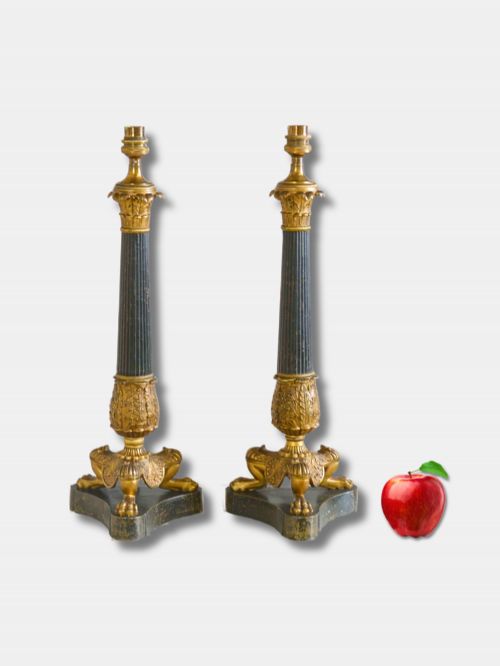
Candlesticks and wall lights dominate the selection, frequently appearing in matched pairs or larger sets intended for formal rooms. Buyers encounter everything from Regency column lamps to Amsterdam School desk lights and hotel wall lanterns.
The periods represented stretch from the eighteen-hundreds through the Edwardian era and into the interwar years, encompassing styles such as French Empire, Victorian, and Art Deco.
Materials and Construction
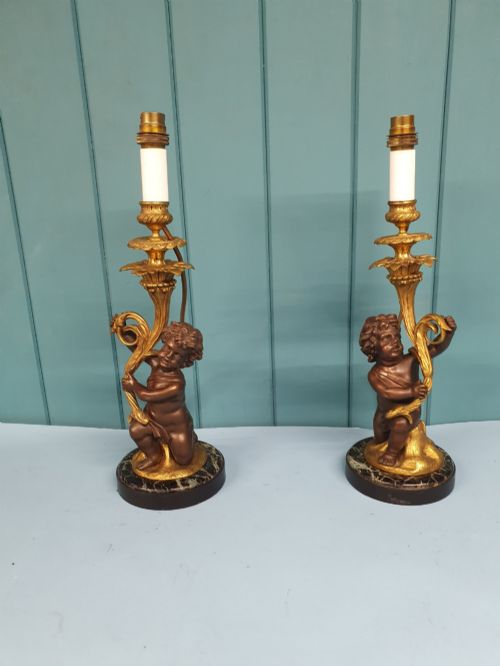
Foundry work relied on casting brass and bronze, often finished with chemical or natural darkening treatments to achieve deep patination across the metal surface. Ormolu and gilt bronze components added contrasting highlights to darker bodies on pieces influenced by French Empire and Rococo designs.
Combinations of patinated copper, glass shades, and opalescent panels appear in later twentieth-century lighting like Amsterdam School and Bauhaus examples. Structural elements were joined through threading, riveting, or soldering depending on whether the item started as a candle holder or an early gas and electric fixture.
Object forms include functional floor lamps, wall brackets, and desk lamps alongside hotel lanterns and searchlights.
Execution and Detail
Quality rests upon the crispness of the original metal casting and the depth of the surviving patination on the brass or bronze surface. Finer examples display meticulous chasing work on figural elements like cherubs, lions' paws, and classical motifs rather than softened, mass-produced outlines.
Integrity of components also separates standard items from exceptional survivals, particularly when original glass shades, burners, or matching sconces remain intact. Heavier gauge metalwork and balanced proportions indicate superior workshop production.
The Patinated Brass Lighting Glossary
- Patination
- The surface coloration and texture developed through age, handling, or chemical treatment on metal. This ageing process creates the characteristic dark tones valued by collectors.
- Pricket candlestick
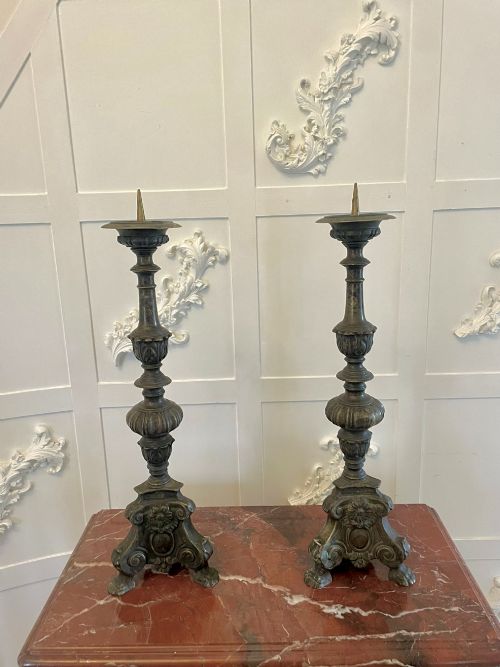
- A candle holder featuring an upward-facing spike that secures the wax candle from the base rather than a socket that surrounds it. These often appear in ecclesiastical or heavy period table designs.
- Ormolu
- Finely ground high-purity gold applied to a bronze base object through mercury amalgamation. This technique produced a durable golden finish seen on French decorative pieces.
- Candelabra
- A branched lighting fixture designed to hold multiple candles or bulbs simultaneously. They range in size from small table ornaments to monumental floor-standing pieces.
- Plafonnier
- A ceiling-mounted light fixture designed to sit close to the plasterwork. These diffuse illumination downwards into a room through glass or metal bowls.
- Gasoliere
- A lighting fixture manufactured specifically to burn coal gas before the widespread adoption of electricity. Many survive converted to modern electrical wiring.
Patinated Brass Lighting: Frequently Asked Questions
How do I clean patinated brass lighting?
Dust surfaces gently with a soft dry cloth to preserve the historic dark finish. Avoid abrasive metal polishes that strip away the patination accumulated over centuries.
Moisture should be kept away from wired components and antique joints during maintenance. Professional restoration may be needed for delicate chased or gilt areas.
Can these antique lamps be rewired safely?
Most pieces wired for electricity can accept modern wiring through existing channels without altering the visible metal structure. Qualified electricians should handle rewiring to ensure compliance with current safety standards.
Retaining original sockets or switches is sometimes possible when they meet modern insulation requirements. Check internal clearance before fitting contemporary bulbs.
What is the difference between ormolu and patinated bronze?
Ormolu uses a mercury-gilt process to impart a bright golden appearance to a bronze substrate. Patinated bronze employs chemical darkening agents to create deep brown, black, or greenish surface tones.
Both treatments were utilised across French Empire and Regency designs to create visual contrast. The choice depends entirely on the aesthetic goals of the period maker.
How do I identify a Amsterdam School light?
Amsterdam School pieces feature expressive geometric forms combined with hammered patinated brass and copper surfaces. They often incorporate naturalistic motifs derived from early twentieth-century Dutch architecture.
These designs bridge the gap between traditional craftsmanship and early modernist abstraction. Table lamps and candlesticks from this movement frequently pair dark metal with contrasting warm tones.