


Green Glass Table Lamp
A green glass table lamp brings vibrant colour and warm illumination to a room, combining tactile mineral tones with period metalwork.
Green Glass Table Lamp
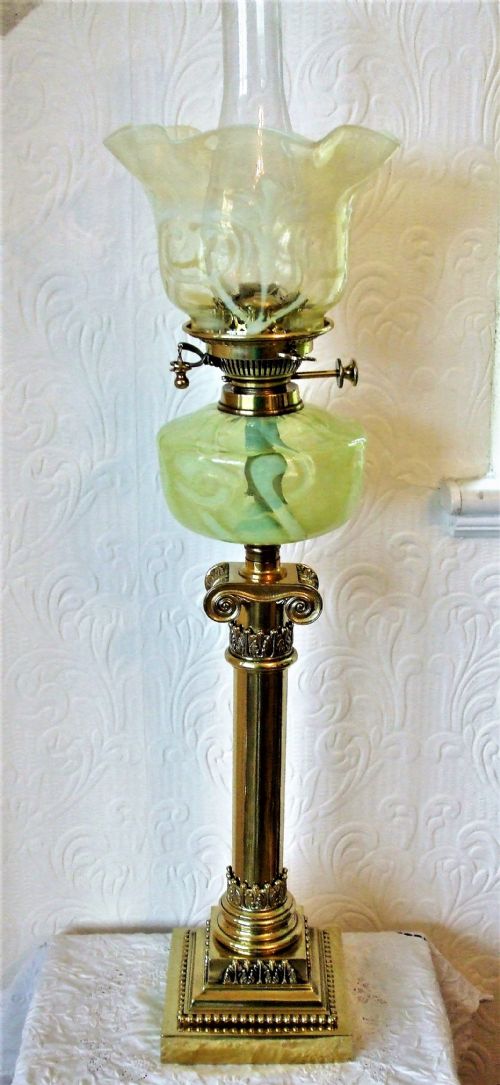
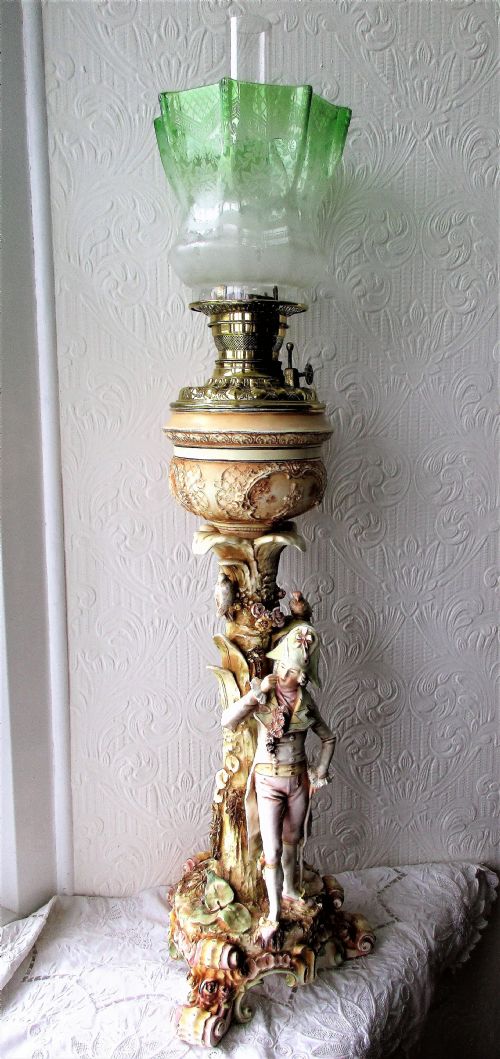
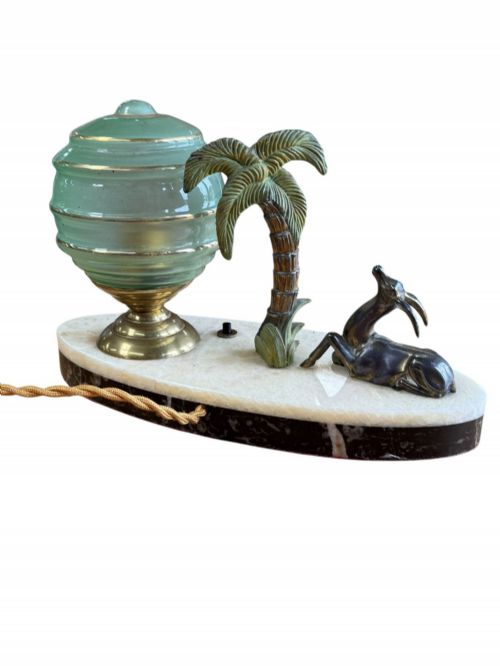
A green glass table lamp is typically found as a converted Victorian oil lamp or a mid-century decorative piece, combining glass reservoirs or shades with brass, bronze, or marble bases. These pieces reflect diverse design movements ranging from Victorian opulence to Art Deco and Art Nouveau aesthetics.
The most frequent examples encountered on this page pair moulded or satin green glass bodies with brass columns, cast metal, or marble plinths. Many originated as functional paraffin or oil lamps before receiving later electrical conversion for modern interiors.
Materials and construction
Makers utilised glass-blowing and pressing techniques to form the vibrant green fonts, shades, and columns, often combining opaline or satin finishes. These glass elements rest upon structural mounts of brass, bronze, or silver plate.
Foundational stability comes from heavy bases in marble, spelter, or ormolu, secured with threaded rods and metal collars. Metal components frequently display patinated brass finishes or cast decorative detailing.
Current listings combine nineteenth-century Victorian oil lamps with twentieth-century Art Deco and Italian glass table lamps.
Assessing quality
Quality rests in the depth and clarity of the green glass, alongside the weight and crispness of the metal casting in the brass or ormolu mounts. Superior examples show careful integration between the glass reservoir and the structural metal base.
Refinement in secondary materials, such as genuine marble plinths rather than cast substitutes, elevates a piece. Original components like matched shades and period burners indicate higher preservation standards.
The Green Glass Table Lamp Glossary
- Font
- The container holding oil or paraffin on older lamps, often formed from coloured glass.
- Opaline glass
- An opaque or semi-opaque glass popular in the nineteenth century, frequently tinted in soft or vivid shades of green.
- Ormolu
- Gilt bronze mounted on decorative objects, providing a rich golden contrast to dark glass and brass.
- Spelter
- A zinc alloy used as a cost-effective alternative to bronze for cast figures and bases.
- Peg lamp
- A small oil lamp fitted with a tapered metal base designed to drop directly into a separate candlestick or urn.
Green Glass Table Lamp: Frequently Asked Questions
Are these lamps safe for modern use?
Most antique lamps on this page have undergone rewiring for modern electrical standards during their conversion from oil or paraffin use.
Buyers should inspect the internal wiring and consult a qualified electrician to ensure compliance with current safety regulations before daily use.
How do I date a green glass lamp?
Dating relies on examining the manufacturing techniques of both the glass and the metal base, alongside any maker marks stamped on the burner mechanism.
Victorian pieces often feature heavy brass columns and floral fonts, whereas Edwardian and later twentieth-century examples shift towards streamlined art deco or minimalist brass frames.
Can I replace missing shades?
Finding a matching replacement shade requires careful measurement of the fitter gallery and matching the exact shade of green opaline or satin glass.
Original period glass shades remain scarce, so many collectors accept sympathetic vintage replacements that match the style of the base.
What is an oil lamp conversion?
An oil lamp conversion is the process of adapting a nineteenth-century paraffin or kerosene lamp to house electrical wiring and bulb holders.
This adaptation allows functional antique lighting to operate safely in contemporary homes while retaining the original brass collar and decorative glass body.