





Pastoral Scene Pottery
Pastoral scene pottery brings rural landscapes and farm life to ceramic plates, jugs, and vases across the Georgian and Victorian eras.
Pastoral Scene Pottery
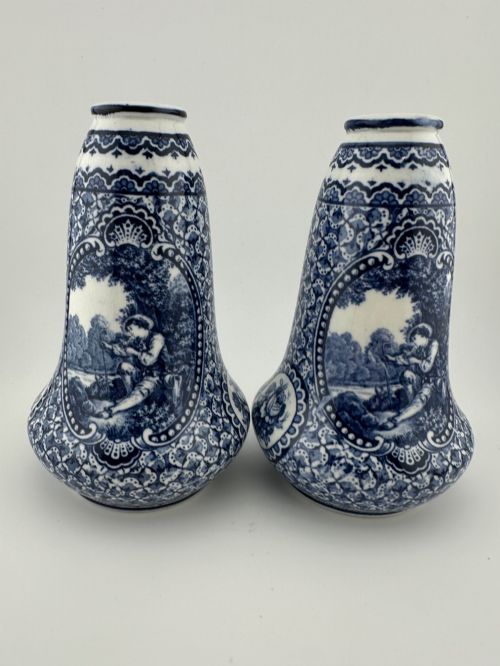
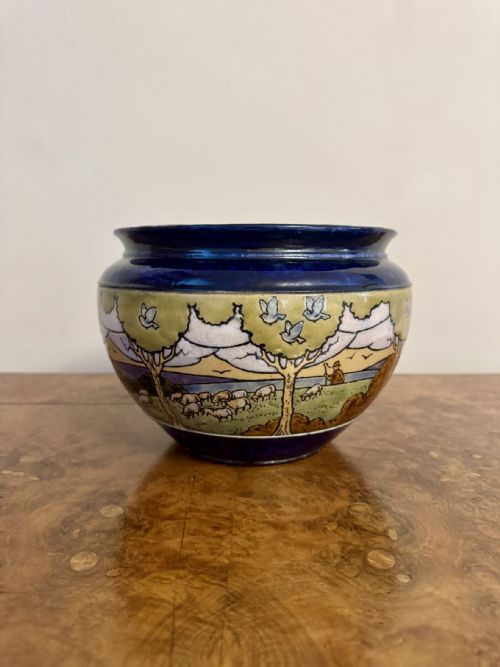
When you search for pastoral scene pottery, you encounter ceramic plates, jugs, vases, and footbaths decorated with rural motifs. These pieces span periods from the eighteenth century through to the early twentieth century, taking forms such as decorative plates, jardinieres, and pitchers.
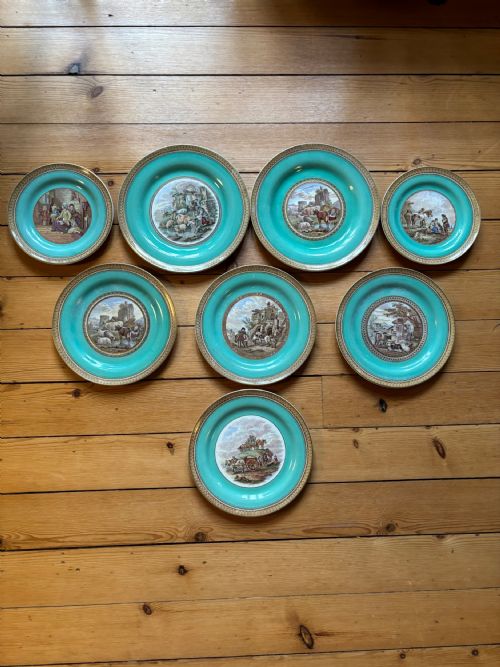
The versions most commonly met on this page include English blue and white transfer-printed earthenware from the Georgian era, alongside Staffordshire printed plates and Dutch Delft polychrome vases. Makers and factories across these periods used pastoral imagery to adorn useful household vessels and display pieces alike.
How pastoral scene pottery was made
Potters utilised earthenware, pearlware, and stoneware as bodies for these vessels, applying tin-glaze or cobalt glaze finishes. Transfer printing allowed intricate rural scenes to transfer cleanly onto the ceramic surface before firing.
Polychrome decoration on Delftware involved hand-painting pigments directly onto the tin-glaze before a final protective firing. Stoneware pieces relied on dense clay bodies suited to larger vessels like jardinieres and footbaths.
Pastoral Scene Pottery Retail Price Guide 2026
Typical asking prices for pastoral scene pottery among the pieces listed under this phrase on Sellingantiques today, from the lower quarter to the upper quarter. They describe what is for sale here now, not the wider market.
Cows make quiet guest appearances across Georgian transfer-printed plates, bringing pastoral farm life straight to the dining table.
What varies in quality in pastoral scene pottery
The clarity and registration of the transfer print separate finer examples from simpler output, as blurred lines obscure the detail of the rural landscape. Richness in cobalt blue application or vibrancy in polychrome palettes also distinguishes superior potteries from standard commercial work.
The weight and balance of the ceramic body, whether earthenware or stoneware, reflect the skill involved in throwing and moulding larger forms such as footbaths and jugs.
Royal Bonn Franz Anton Mehlem·Royal Doulton·Heathcote·3 BELLS Drie klokken Factory·Pettys & Co Leeds·Wedgwood·Prattware
The Pastoral Scene Pottery Glossary
- Earthenware
- A porous ceramic body fired at lower temperatures, commonly used for historical tableware and decorative vessels. It requires a glaze to become impermeable to liquids.
- Transfer printing
- A decoration technique where an engraved copper plate offsets an inked design onto tissue paper, which is then rubbed onto the ceramic surface. This method enabled complex rural scenes to be reproduced consistently.
- Pearlware
- A refined earthenware developed in the late eighteenth century featuring a subtle bluish glaze that pooled in recesses to mimic Chinese porcelain. It served as a primary surface for blue and white pastoral patterns.
- Tin-glazed earthenware
- Pottery covered with a lead glaze made white and opaque by the addition of tin oxide. This surface provided a smooth ground for painted polychrome decoration.
- Stoneware
- A dense, vitreous ceramic fired at high temperatures until the body becomes completely non-porous. It offers high durability for heavy items like jardinieres and large jugs.
Pastoral Scene Pottery: Frequently Asked Questions
What periods do these pieces date from?
The pieces span the eighteenth, nineteenth, and early twentieth centuries, encompassing Georgian, Regency, and Victorian eras.
Specific dates within listings range from eighteenth-century Dutch Delftware up to nineteen-hundreds continental ceramics.
How were the rural scenes applied to the pottery?
Decorations were applied either through copperplate transfer printing in blue and white or via hand-painted polychrome pigments on tin-glazed surfaces.
Transfer printing allowed intricate pastoral details to be stamped onto earthenware plates and jugs with great consistency.
What ceramic materials are used?
Makers utilised earthenware, pearlware, stoneware, and tin-glazed earthenware to form these vessels.
Heavier items like footbaths and jardinieres often used dense stoneware, while plates and smaller jugs typically employed earthenware or pearlware.
What forms do these ceramic pieces take?
The inventory includes decorative plates, vases, jugs, pitchers, jardinieres, and footbaths.
These objects combine functional household vessels with decorative items designed for display in period interiors.