


Art Nouveau Plant Pot
These art nouveau plant pot pieces bring flowing botanical lines into your rooms, offering tactile ceramic and metal vessels for indoor greenery.
Art Nouveau Plant Pot
An art nouveau plant pot encompasses jardinières, planters, cache pots, and plant stands designed during the late nineteenth and early twentieth centuries. These vessels hold potted plants, often resting on matching stands or table surfaces.
The versions most commonly met on this page span the Victorian, Edwardian, and nineteen-hundreds periods. They appear in earthenware, stoneware, glazed ceramic, brass, copper, and mahogany.
Forms range from English ceramic pieces by Royal Doulton and Royal Worcester to Dutch and English metalwork planters. Many pieces combine organic floral motifs with the robust construction typical of the Arts and Crafts movement.
How they were made
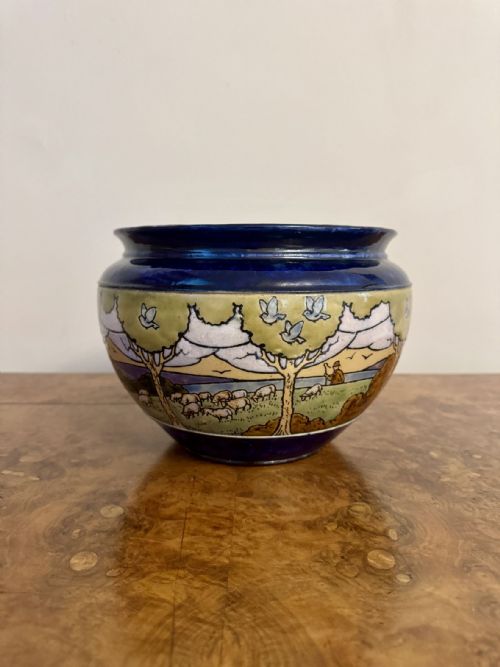
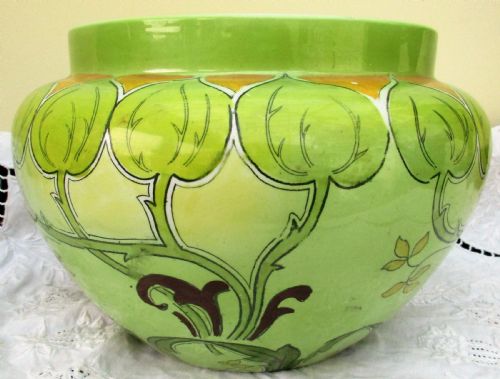
Ceramic vessels combine moulded earthenware or stoneware bodies with applied glazes, sometimes incorporating ivory blush finishes and leaf designs. Potters shaped the clay by hand or mould before firing and glazing.
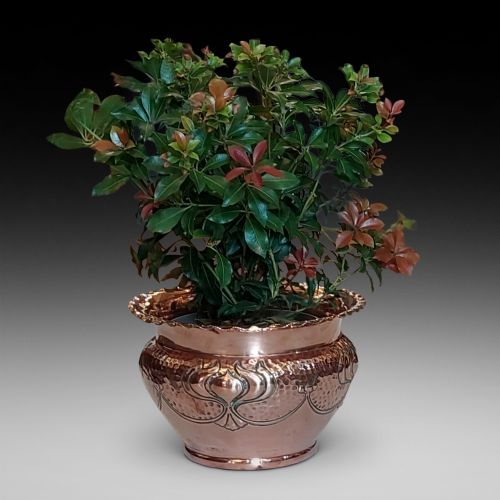
Metal planters utilise sheet brass and copper, shaped through beating, spinning, and riveting. Makers often hammered the metal surface by hand to catch the light and accentuate the organic curves of the style.
Listings feature pieces spanning the late nineteenth century through to nineteen-twenty, encompassing brass, copper, earthenware, and stoneware.
What varies in quality
Quality rests upon the crispness of the modelled or hammered botanical detail and the richness of the glaze or metal patina. Superior ceramic examples show depth in the glazed decoration, while better metalwork displays deliberate hand-hammering rather than uniform mechanical stamping.
Makers and origin also shape distinction, as works bearing clear marks from established potteries or metalwork firms hold greater weight. The presence of original matching stands or bases adds structural integrity and completeness to the piece.
Royal Doulton·W.A. Adderley·J Sankey and Sons·Royal Worcester·Doulton Lambeth
The Art Nouveau Plant Pot Glossary
- Jardiniere
- An ornamental ceramic or metal pot designed to hold a plant or flower arrangement. These vessels often sit directly on tables or floor stands.
- Cache pot
- A decorative flowerpot used to conceal a plain inner plant pot that lacks aesthetic appeal. It holds no drainage hole at the base.
- Stoneware
- A robust, vitrified ceramic pottery fired at high temperatures until impervious to liquids. This material provides durability for holding damp soil and water.
- Earthenware
- Porous pottery fired at lower temperatures, typically finished with an opaque or transparent glaze. It forms the base for many decorative nineteenth-century planters.
- Ivory blush
- A ceramic decorative technique producing a soft, creamy, matte finish resembling tinted ivory. It frequently serves as a background for painted or raised floral motifs.
Art Nouveau Plant Pot: Frequently Asked Questions
What is an art nouveau plant pot used for?
These vessels house indoor potted plants and ferns, serving both a functional role and a decorative purpose in period interiors. They act as ornamental cache pots or direct planters.
Historically, they sat upon tables, sideboards, or dedicated wooden plant stands to bring botanical elements into domestic living spaces.
How do I distinguish brass from copper planters?
Brass planters present a brighter, yellow-gold metallic hue, whereas copper pieces exhibit a distinct warm reddish-brown colouration. Both metals were hammered and shaped during the period.
Over time, each metal develops a natural surface patina that reflects its age and handling history.
Are these pots waterproof?
Glazed ceramic and stoneware vessels generally hold water well due to their vitrified or glazed interiors. However, metal planters may have riveted or soldered joints that can weep moisture.
Using an inner plastic liner protects the antique material from prolonged contact with damp soil and standing water.
How do I date an art nouveau plant pot?
Dating relies upon maker marks, material combinations, and stylistic traits typical of the late nineteenth and early twentieth centuries. Ceramic bottom stamps often point to specific registration years or factory periods.
Construction methods, such as hand-riveted metal seams or specific glaze palettes, further narrow down the decade of manufacture.