




Pastoral Countryside Painting
A pastoral countryside painting captures nineteenth and early twentieth-century rural life through skilled brushwork and tranquil pastoral scenes.
Pastoral Countryside Painting
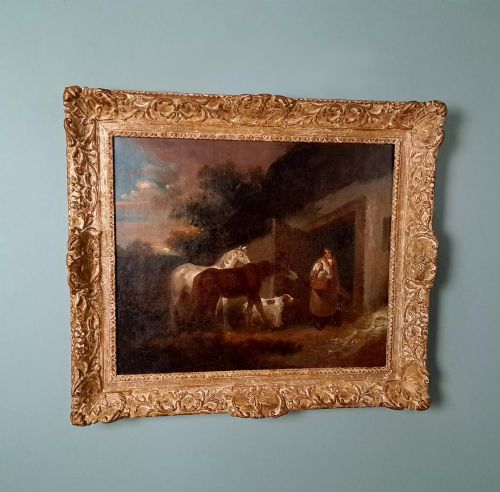
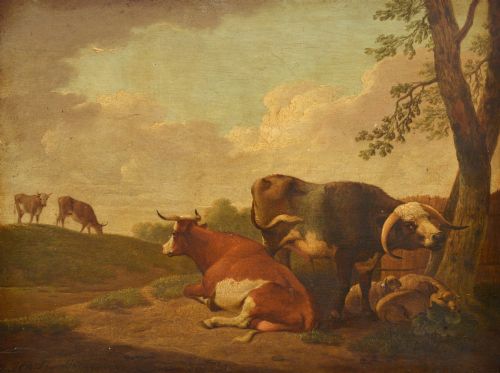
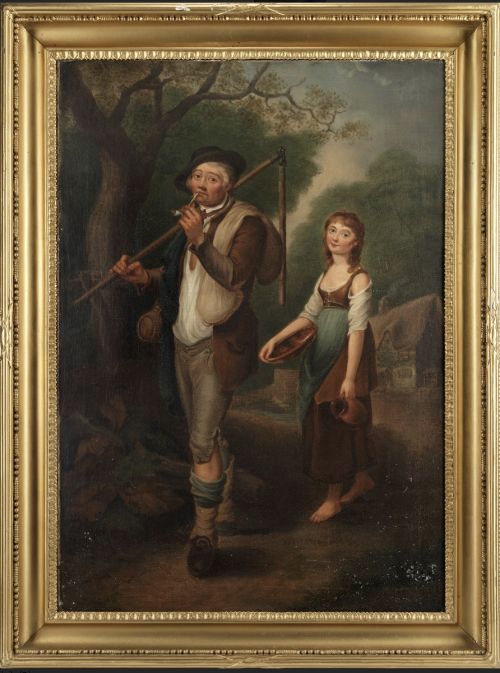
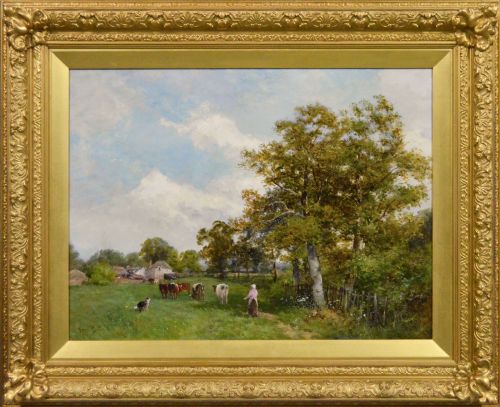
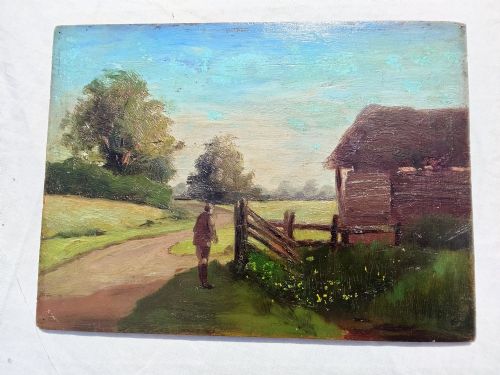
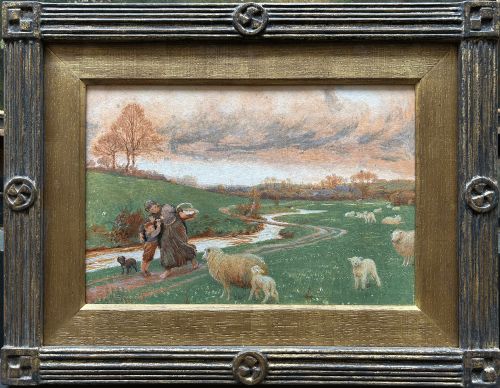
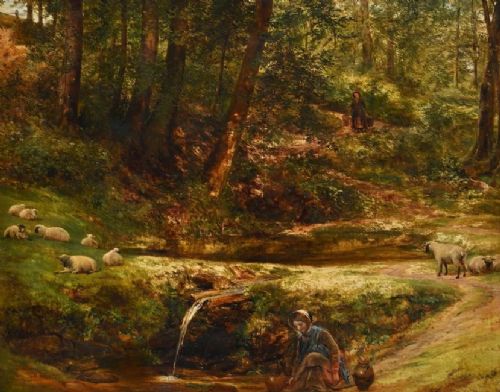
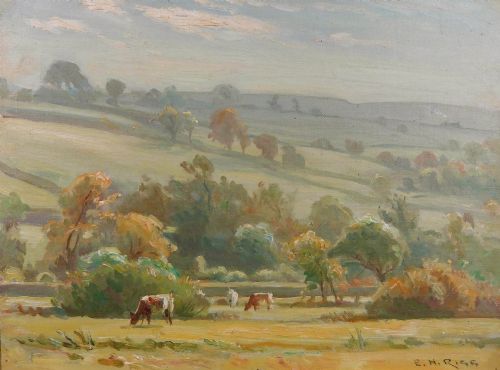
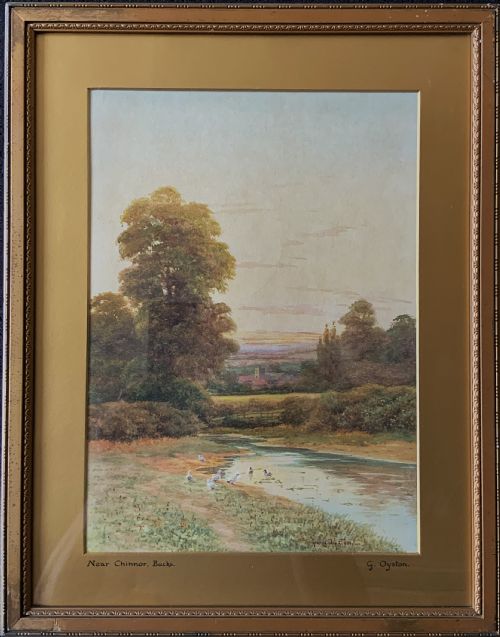
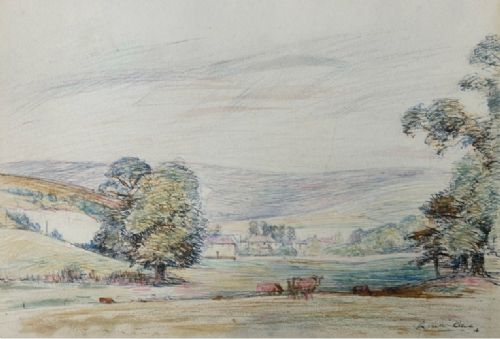
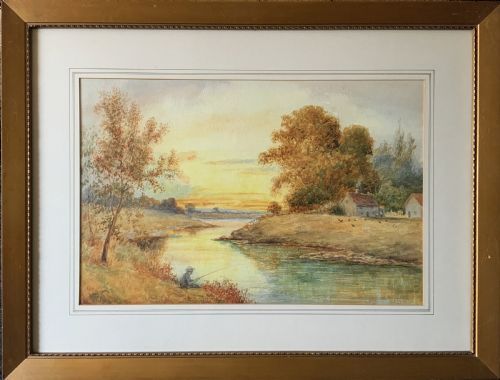
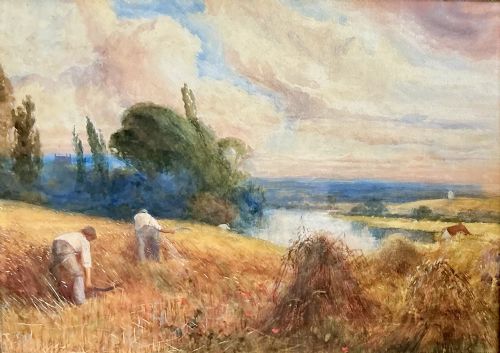
A pastoral countryside painting presents historical rural views populated by livestock, farmworkers, and quiet riversides. These artworks reflect nineteenth and early twentieth-century ideals of agrarian life, frequently showcasing cattle, sheep, and thatched cottages. Buyers encounter both expansive oil canvases and delicate watercolours originating from British and European schools.
The selections available range from detailed Victorian oils to lighter Edwardian watercolours created by regional artists. Many compositions concentrate on familiar rural tasks such as harvesting, fishing, and driving sheep along rural lanes. Such pieces offer a direct visual connection to historical landscape traditions.
Makers represented in these selections include named nineteenth and twentieth-century painters alongside anonymous English School contributors. Styles span from traditional realism to early British impressionist interpretations of natural light and weather. Each format preserves a specific historical perspective on the changing rural terrain.
Materials and Construction
Artists relied primarily on oil paint applied to stretched canvas or wooden board, alongside watercolour pigment worked onto paper. These media allowed creators to build rich textures for foliage, water, and livestock. Canvas supports provided durability for larger framed compositions.
Pigments were mixed with oils or water to achieve naturalistic tones suited to woodland and river scenes. Framing typically involved gilt or wooden surrounds that protected the fragile painted surfaces over decades of display. Support structures utilised traditional joinery and stretched linen.
Several sheep manage to wander into multiple fields across different centuries without ever losing their wool.
Evaluating Quality and Execution
Quality rests upon the artist's handling of light, anatomical precision in figures and animals, and atmospheric depth within the landscape. Superior examples demonstrate confident brushwork and balanced composition that draw the viewer into the rural setting. Weaker works often display rigid forms and uninspired colour harmonies.
The condition of the pigment and the originality of the mounting also influence the overall standard of a piece. Well-preserved surfaces retain vibrant tones without extensive overpainting or structural damage to the canvas or paper. Framed presentation matching the period enhances the integrity of the work.
William H Myers·George Graham·William Joseph Shayer Senior·Hendrik Willem Schweickhardt·Thomas Barker of Bath·David Bates·Frederick Walker·Richard Redgrave·Ernest Higgins Rigg·George Oyston·Russell Sidney Reeves·Frederick Hines·John Horace Hooper·Owen Bowen·Charles Clair·Henry Charles Fox·William Henry Mander·John Sanderson Wells·James William Booth·Frederick Septimus Lewis·Alfred Augustus Glendening Jnr·William Sydney Cooper·Thomas Hunn·Robert John Hammond·Giulio Cecchini
The Pastoral Countryside Painting Glossary
- Oil on Canvas
- A traditional painting method utilising pigments suspended in drying oils applied to a woven fabric support. This technique allowed artists to blend colours smoothly and build rich surface textures.
- Watercolour Pigment
- Finely ground colour particles mixed with a water-soluble binder for application on paper. It yields translucent washes ideal for capturing shifting atmospheric effects in rural scenes.
- British Impressionism
- A late nineteenth and early twentieth-century painting movement focusing on natural light and loose brushstrokes. Practitioners sought to capture momentary visual impressions of everyday countryside subjects.
- English School
- A historical designation for artists working within British artistic traditions without formal membership in a specific academy. It groups together diverse talents producing regional landscapes and portraits.
- Gilt
- A thin layer of gold leaf applied to wooden frames or decorative surfaces for ornamentation. This finish provides a reflective border that separates the artwork from its surroundings.
Pastoral Countryside Painting: Frequently Asked Questions
What subjects appear in these paintings?
These artworks commonly display rural scenes featuring livestock, riverbanks, farmworkers, and rustic cottages.
Compositions often capture daily agricultural activities and peaceful countryside vistas from past centuries.
How should I display a delicate watercolour?
Watercolours require placement away from direct sunlight to prevent fading of the pigments on paper.
Proper framing behind protective glass ensures the preservation of these sensitive works in domestic interiors.
How do I identify the period of a piece?
Dating relies upon stylistic clues, artist signatures, framing materials, and the canvas support construction.
Comparison with documented works by known painters from the same era helps confirm creation dates.
What is the difference between oil and watercolour?
Oil paintings utilise heavy pigments on canvas or board, creating rich textures and deep tones.
Watercolours employ translucent pigments on paper, offering lighter and more delicate atmospheric effects.