


Victorian Style Landscape Painting
Victorian style landscape painting captures the atmospheric charm and natural beauty of the nineteenth century through detailed brushwork and evocative scenery.
Victorian Style Landscape Painting
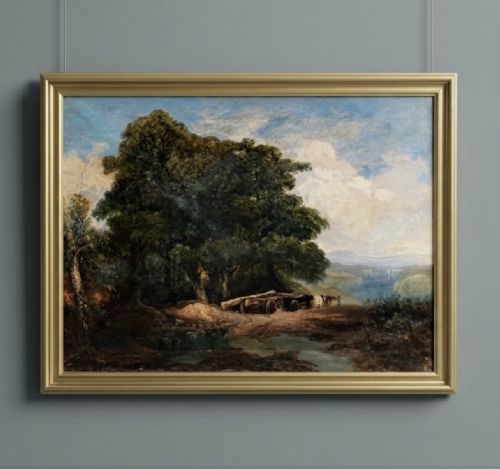
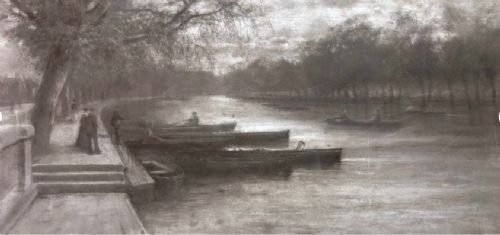
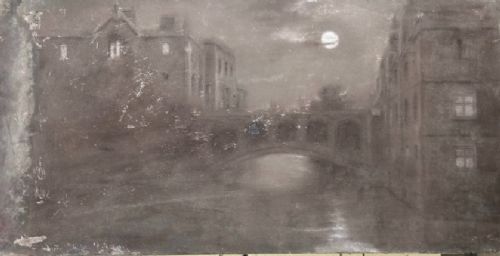
A Victorian style landscape painting depicts scenic countryside views, rivers, coastal settings, and rural life typical of nineteenth-century art. These works range from romantic vistas and pastoral scenes featuring cattle and sheep to moody twilight watercolours and oil paintings.
Buyers encounter oil on canvas and watercolour paintings originating predominantly from the nineteenth century, alongside pieces influenced by later movements such as Post-Impressionism and Tonalism. Common subjects include British riversides, Venetian landmarks, and quiet rural cottages.
How They Were Made
Artists built these works primarily using oil paint on canvas or board, applied with brushes to create textured layers of light and shadow. Watercolour on paper was equally common, often finished with delicate pencil or charcoal underdrawing.
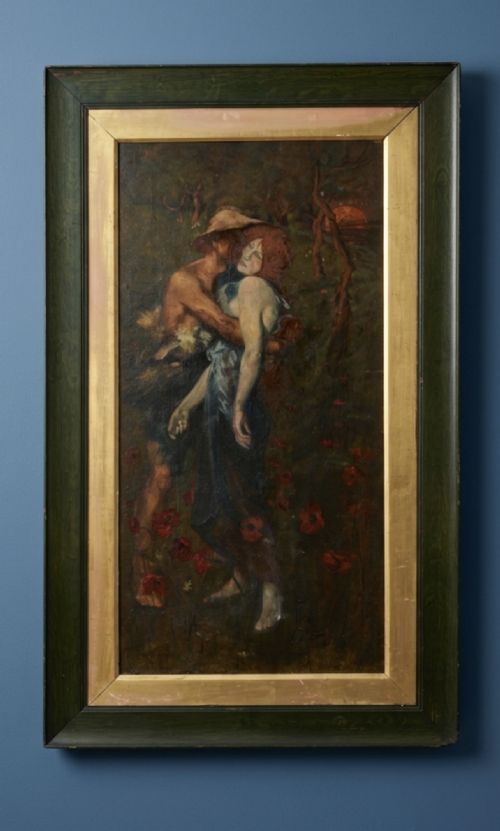
Many of these paintings reside within their original frames constructed from gilt wood or carved gesso, providing a heavy decorative border that complements the pastoral or architectural subject matter.
Listings feature works spanning the nineteenth century, including charcoal drawings, watercolours, and oil paintings on canvas and board.
What Varies in Quality
Quality rests upon the confidence of the brushwork and the artist's ability to render light, atmosphere, and perspective convincingly across the canvas. Stronger examples demonstrate careful anatomical drawing in animal figures and deliberate control over tonal gradients in sky and water.
The condition of the original gilt wood frame and the stability of the canvas surface contribute significantly to the overall integrity of the piece. Works retaining their untouched nineteenth-century presentation offer greater visual coherence than those with heavy later interventions.
Richard Sebastian Bond·Philip Richard Morris·Thomas Sidney Cooper·Frederick Waters Watts·Alfred Pollentine·John Charles Maggs·Wilhelm Alexander Meyerheim
The Victorian Style Landscape Painting Glossary
- Oil on Canvas
- A traditional painting medium where coloured pigments suspended in oil are applied to a stretched woven fabric support. This combination allows for rich colour blending and textured impasto application.
- Watercolour Painting
- Artwork created using water-soluble pigments on paper, valued for its translucent washes and luminous effects. It was frequently utilised for topographical and landscape sketches during the Victorian period.
- Giltwood
- Wood carved and coated with a thin layer of gold leaf or metallic powder, commonly utilised for ornate nineteenth-century picture frames. It adds reflective warmth around the perimeter of the artwork.
- Barbizon Influence
- A stylistic approach derived from the French landscape painters who worked in the forest of Fontainebleau, focusing on realism, natural light, and unidealised rural scenery.
- Tonalism
- An artistic style that emerged in the late nineteenth century where artists painted landscapes with an overall dominant tone or mistiness, prioritising mood and shadow over sharp detail.
Victorian Style Landscape Painting: Frequently Asked Questions
What subjects appear in these paintings?
These artworks typically display pastoral scenes with livestock, quiet riverbanks, coastal cliffs, and architectural landmarks such as Venetian canals and historic castles.
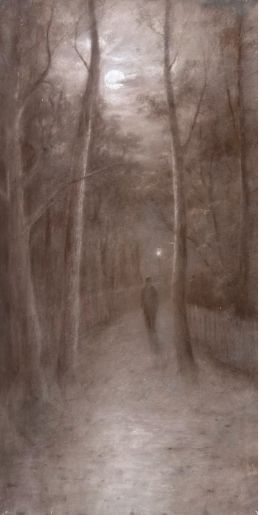
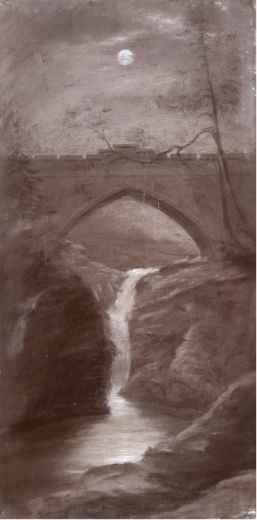
Winter scenes featuring frozen lakes and stagecoaches also appear frequently alongside moody moonlight compositions.
How do I identify a Victorian landscape?
Victorian landscapes generally exhibit realistic or romantic depictions of nature, often incorporating detailed trees, rolling hills, and domestic animals like sheep or cattle.
Many examples feature muted earth tones contrasted with atmospheric lighting effects influenced by nineteenth-century realism and Tonalism.
Are these paintings original or copies?
The selection includes original signed and unsigned works by nineteenth-century artists, alongside period copies and pieces created in the manner or circle of well-known painters.
Attributions in the titles indicate whether a work is an original composition or executed after a prominent historical master.
How should I frame and hang them?
Many of these pieces retain their original gilt wood or carved frames, which suit traditional interiors and provide the correct historical context for the artwork.
They should be displayed away from direct sunlight and damp environments to protect the oil paint, canvas, and paper from degradation.