


British Pastoral Watercolour Painting
When you buy a British pastoral watercolour painting, you are acquiring a framed piece of the nineteenth or early twentieth-century English countryside, ready to hang.
British Pastoral Watercolour Painting
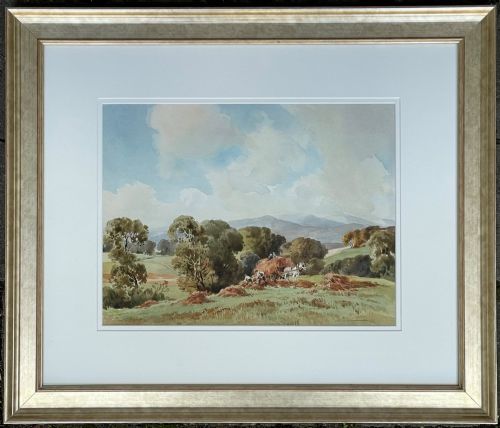
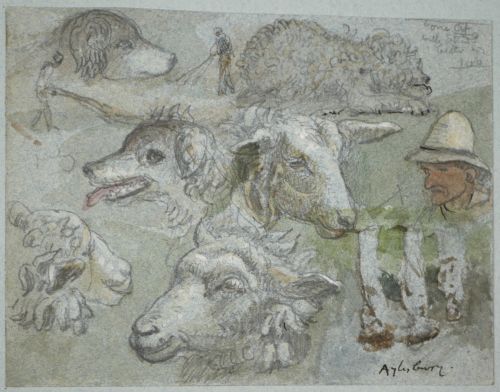
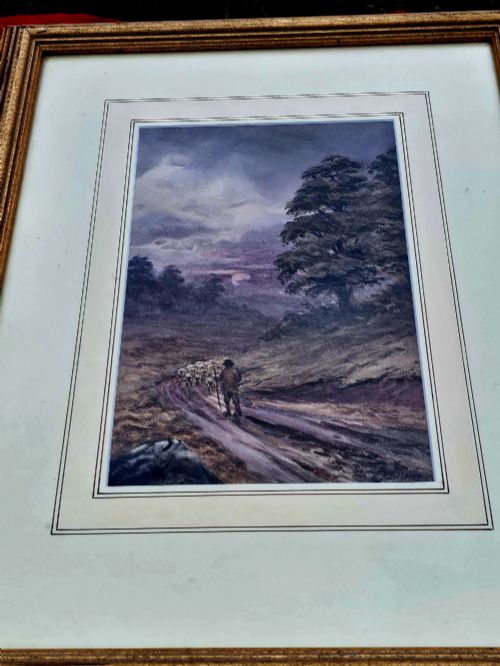
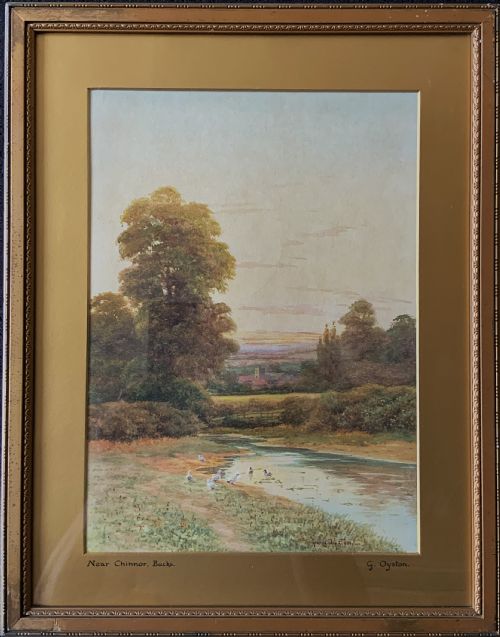
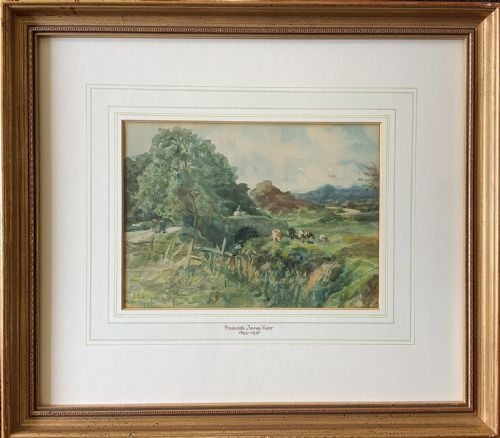
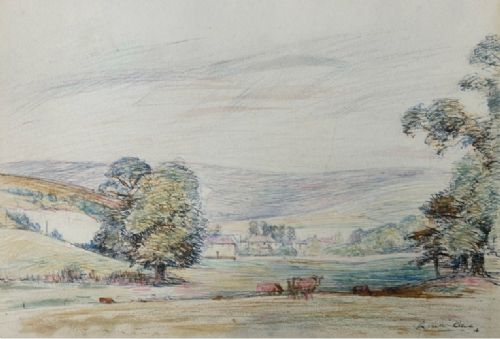
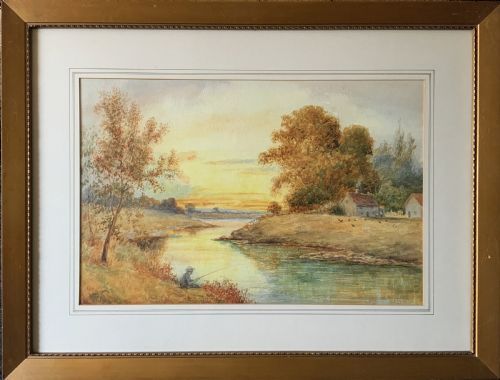
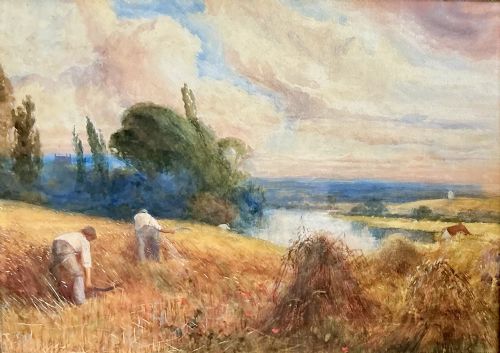
A British pastoral watercolour painting depicts rural life, farming scenes, riverscapes, and agricultural landscapes from the Victorian and Edwardian eras. You will encounter works showing cattle herding, sheep shearing, harvest fields, and thatched cottages by streams.
Most pieces date from the nineteenth century through the early twentieth century, spanning periods like the Victorian and Edwardian eras. The artists typically worked on paper, capturing local topography across counties from Berkshire to Yorkshire.
These works function primarily as fine art wall art, usually preserved behind glass in traditional wood or gilt frames. They represent a distinct traditional British aesthetic focused on agrarian tranquility.
How they were made
Artists painted primarily with watercolour pigment on paper surfaces, often building transparent washes to establish atmospheric light in skies and water. They applied fine brushwork to delineate figures, foliage, and livestock.
Finished watercolours were secured behind protective glass to prevent pigment degradation from light and moisture. Makers mounted the paper within wood or gilt wood frames, sometimes retaining the original period housing.
Several Victorian pastoral scenes meticulously record cows standing patiently in rivers while farmers tend to distant haystacks.
What varies in quality
The distinction between standard works and master pieces lies in the precision of the draughtsmanship and the handling of atmospheric light. Finer paintings capture subtle shifts in weather and natural texture across fields and rivers.
Provenance and documentation elevate certain pieces, particularly when a painting bears a signature and a specific named location such as a Sussex mill or a Welsh estuary. The preservation state of the paper and the retention of the original gilt wood frame also influence the standing of an artwork.
Percy Lancaster·James Smetham·George Oyston·Frederick James Kerr·Russell Sidney Reeves·Frederick Hines·Oswald Garside·Cornelius Pearson·Henry Charles Fox·Henry John Kinnaird·Ernest Pile Bucknall·Thomas Hunn·James Orrock·Robert Thorne Waite·John Atkinson·George Soper·Bernard Walter Evans·Edmund George Warren·William Stephen Coleman·Harry Sylvester Stannard·Will Anderson·Robert Hollands Walker·Thomas James Lloyd·Thomas Sydney Cooper·James H Hulse
The British Pastoral Watercolour Painting Glossary
- Watercolour pigment
- The finely ground colour medium suspended in a water-soluble binder used on paper. It allows for translucent washes and delicate layering.
- Gilt wood
- Timber framing finished with a thin layer of gold leaf. This material provides a traditional decorative border common in period framing.
- Victorian pastoral
- An artistic style depicting idealized rural scenes and agricultural labour during the nineteenth century. These subjects celebrate traditional countryside life.
- Wash
- A thin, fluid layer of watercolour pigment applied across the paper to create skies, water, or distant backgrounds. It forms the atmospheric foundation of the painting.
British Pastoral Watercolour Painting: Frequently Asked Questions
How should I hang my watercolour?
Keep watercolours away from direct sunlight to prevent the pigments from fading over time. Position them on interior walls where room temperature and humidity remain stable.
Ensure the frame is securely hung from picture hooks rather than simple wire if the piece is heavy. Glass cleaner should be applied to the cloth rather than the glass directly to protect the antique wood frame.
Are these paintings original?
The listings comprise original hand-painted works on paper created by individual artists rather than modern reproductions. Each piece is a unique creation executed with watercolour pigments.
Signatures, artist dates, and contemporary framing often corroborate the authenticity of these nineteenth and early twentieth-century works.
What subjects are most common?
Agricultural scenes dominate the selection, including figures herding sheep, ploughing teams of bulls, and farm hands harvesting crops. Riverscapes, rural cottages, and fenland views also appear frequently.
These subjects reflect a widespread nineteenth-century artistic interest in documenting traditional rural industries and vanishing country life.
How do I identify the period?
Period attribution relies on a combination of artist biographical dates, framing styles, and stylistic conventions associated with Victorian and Edwardian fine art. Handwritten inscriptions on the reverse or mount often record specific dates and locations.
Examining the paper type and framing materials provides additional physical evidence for dating an artwork to the nineteenth or early twentieth century.