
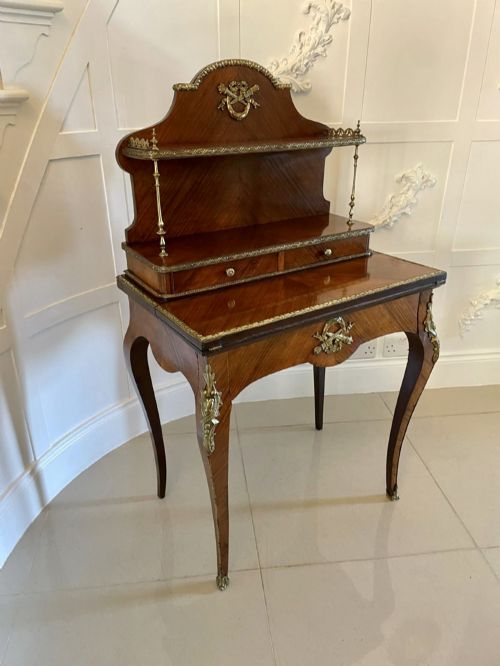
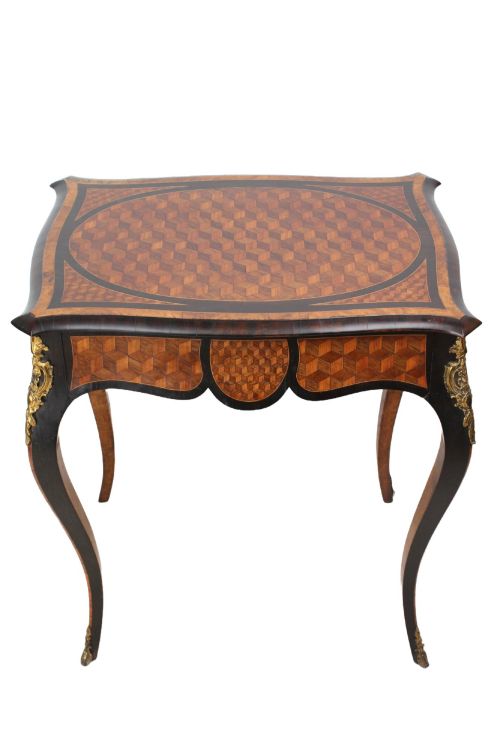
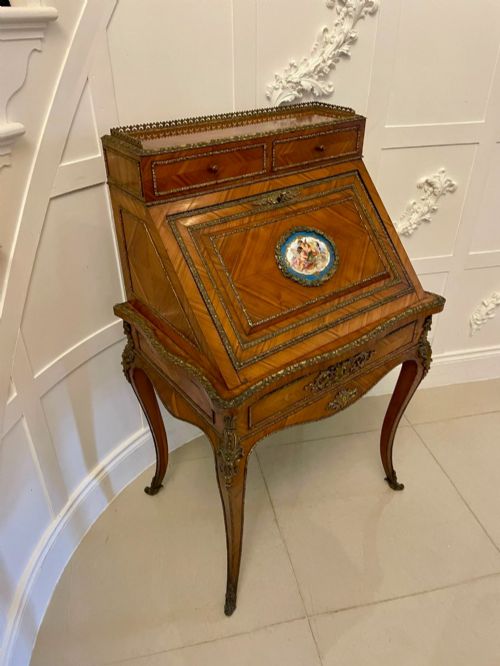
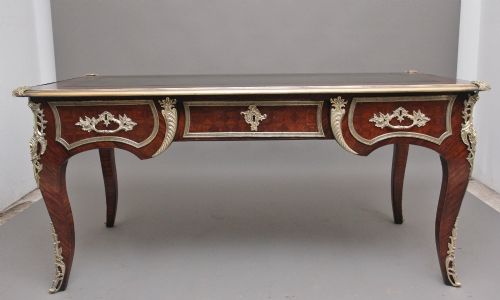
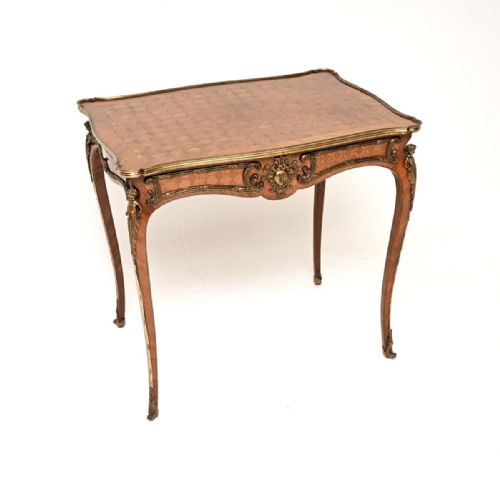
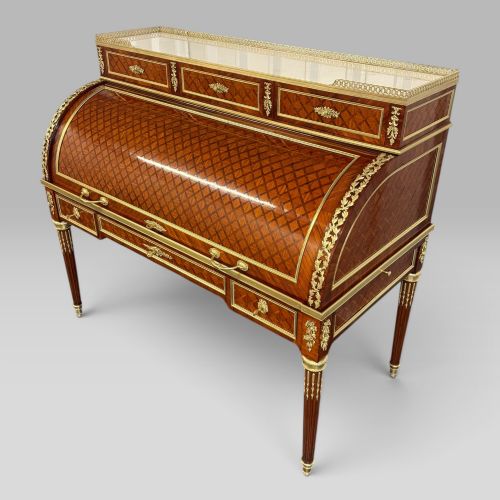
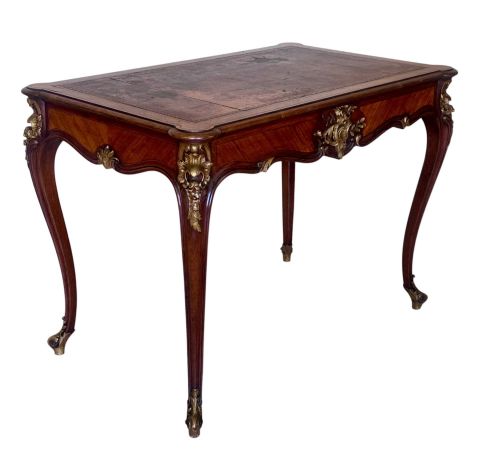
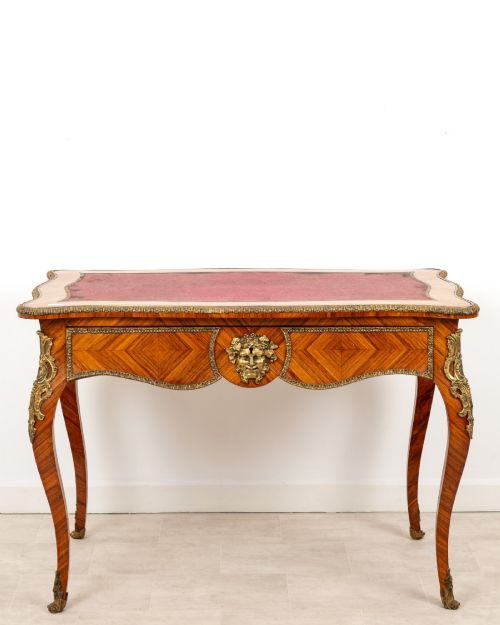

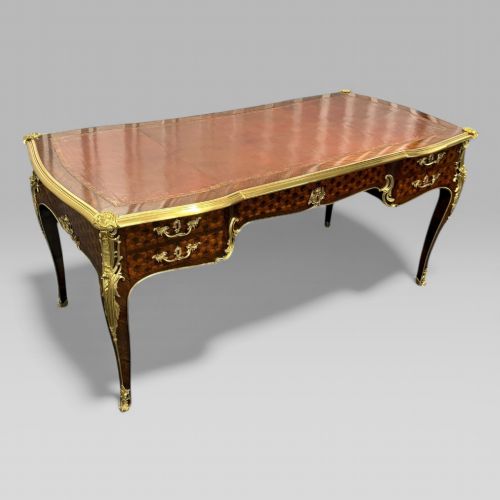
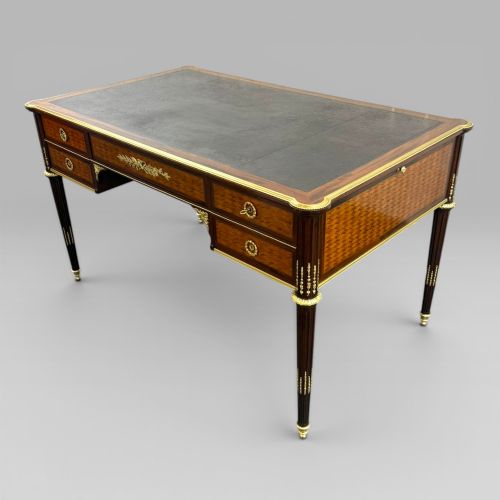
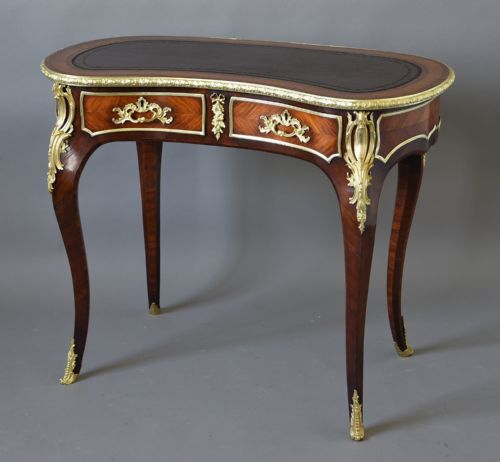
Parquetry Writing Bureau
A parquetry writing bureau brings together geometric wood veneers and practical writing surfaces.
Parquetry Writing Bureau
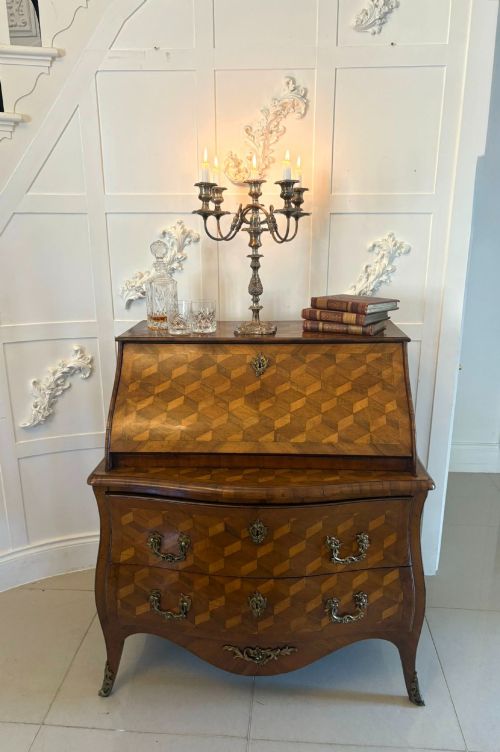
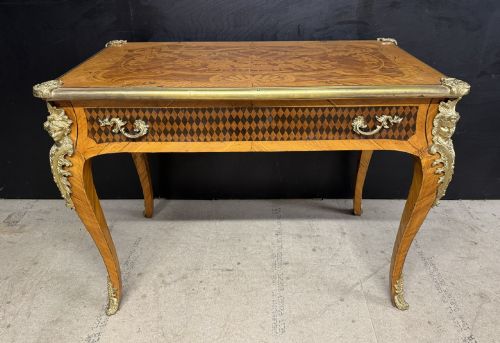
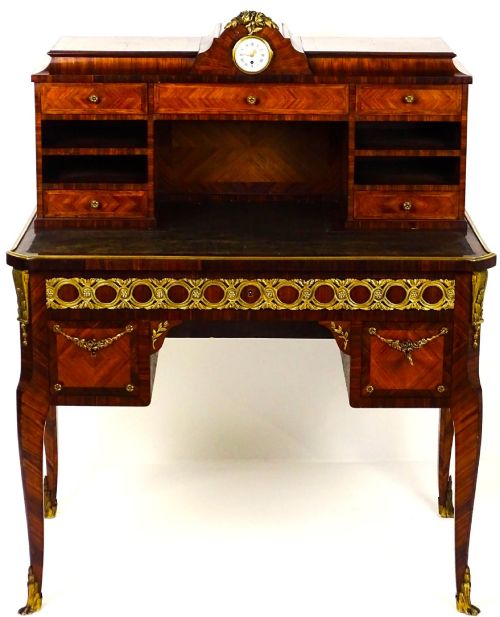
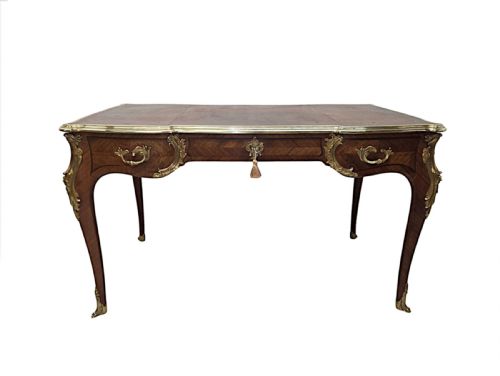
A parquetry writing bureau combines geometric wood patterns with a dedicated writing surface, often taking the form of a bureau plat, a bonheur du jour, or a secrétaire abattant. These pieces date predominantly from the nineteenth century, with strong representation from the Victorian era and eighteenth-century examples.
Most items on this page originate from French workshops adhering to Louis XV, Louis XVI, and Rococo revival styles. They range from small kidney-shaped ladies' desks to grand cylinder desks and writing cabinets.
Makers and designers from London and Paris feature heavily, providing either cylinder mechanisms, drop-front writing compartments, or open table designs suited to formal reception rooms.
Materials and Construction
Craftsmen built these pieces using foundational timbers like walnut, mahogany, and oak, then applied intricate geometric veneers of kingwood, tulipwood, rosewood, and satinwood. Parquetry relies on precise cutting of small wood blocks to form patterned surfaces across the writing top and drawers.
Ormolu and gilt-bronze mounts reinforce the corners, legs, and borders, cast and chased in French revival styles. Many writing surfaces incorporate inset leather writing panels, while select cabinets include marble tops and porcelain plaques.
Listings feature eighteenth and nineteenth-century pieces built from kingwood, tulipwood, rosewood, and walnut, accented with ormolu and leather.
Assessing Quality
Quality rests on the precision of the geometric wood parquetry and the crispness of the cast ormolu mounts. Finer examples display tight, seamless wood grain alignment across complex curves like bombe shapes and cylinder fronts.
The weight and depth of the gilt bronze or ormolu detailing separate standard workshop production from master cabinetmakers. Superior pieces also retain signed stamps or numbered plates from prominent makers.
JAS Shoolbred·Paul Sormani·CH Jeanselme Co·François Linke·Blake London·Donald Ross·Tahan of Paris
The Parquetry Writing Bureau Glossary
- Parquetry
- Geometric mosaic woodwork formed by small veneer tiles arranged in repeating patterns. It covers flat and curved surfaces on desks and tables.
- Ormolu
- Gilded bronze mounts applied to furniture edges and legs. Makers used it extensively on French revival pieces to accent the woodwork.
- Bonheur Du Jour
- A light lady's writing desk featuring a small cabinet or shelving superstructure above the main writing surface. It became popular during the nineteenth century in revival styles.
Parquetry Writing Bureau: Frequently Asked Questions
What is a parquetry writing bureau?
A parquetry writing bureau is a desk decorated with geometric wood veneer patterns, designed for correspondence and paperwork.
These pieces range from flat writing tables to drop-front cabinets with fitted internal compartments.
How do I identify Louis XV style?
Louis XV style furniture is marked by asymmetrical curves, cabriole legs, and elaborate ormolu mounts. It draws heavily on eighteenth-century French design motifs.
Revival versions from the nineteenth century often combine these organic shapes with intricate kingwood and tulipwood parquetry.
Where should I place a bureau plat?
A bureau plat is finished on all sides, making it suitable to float in the centre of a room rather than against a wall.
Its finished back and decorated ormolu mounts allow it to serve as a freestanding centrepiece.
What is the difference between a bureau and a bureau plat?
A bureau often includes an enclosed cabinet or drop-front writing flap, whereas a bureau plat is an open writing table with drawers beneath the top.
Both utilise parquetry veneers, but they serve different structural and functional roles in a room.