

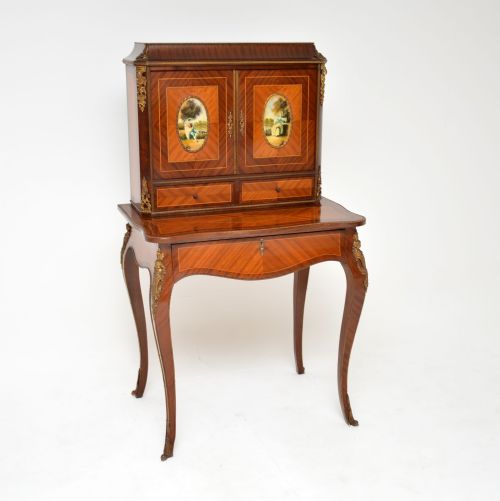


Parquetry Small Writing Desk
A parquetry small writing desk is a decorative workspace inlaid with geometric veneers, designed for correspondence and light study.
Parquetry Small Writing Desk
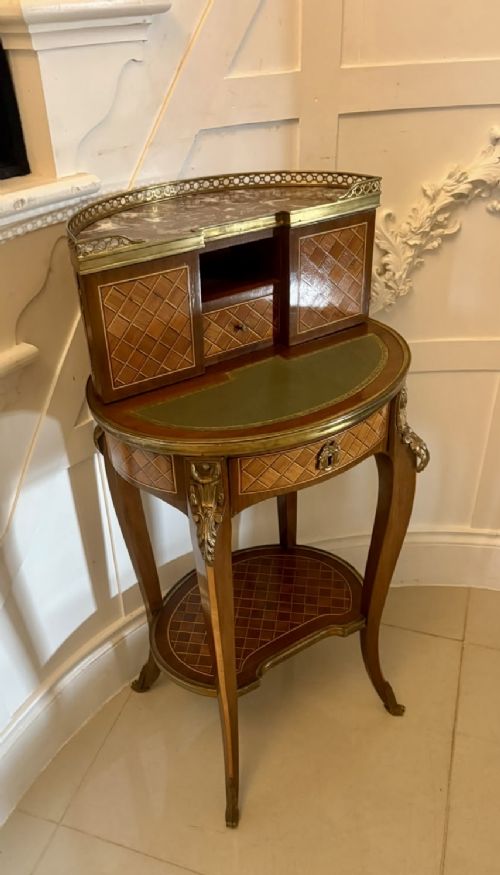
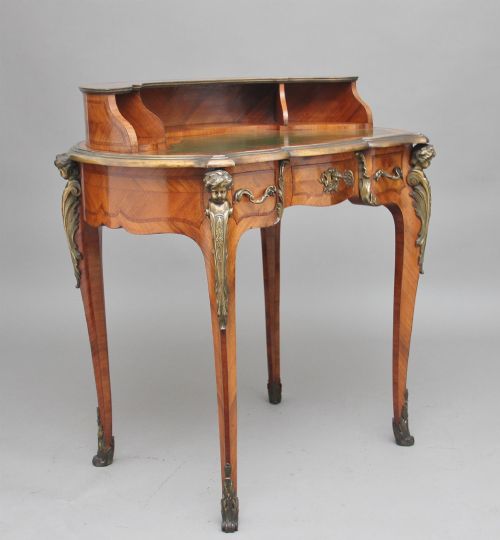
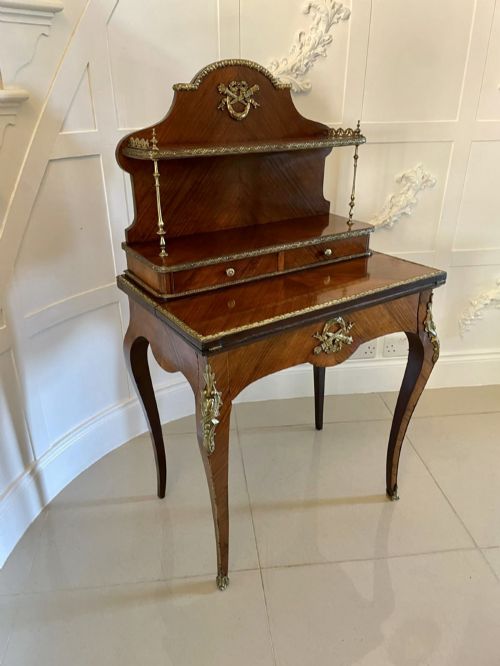
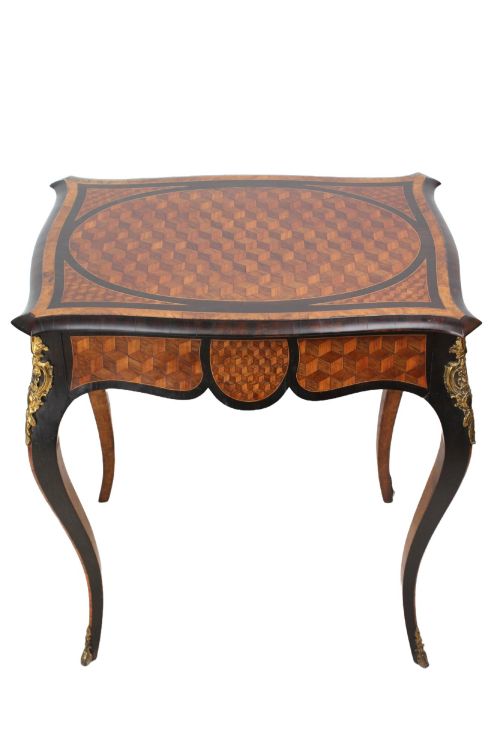
When searching for a parquetry small writing desk, you encounter nineteenth-century French and Victorian forms designed for domestic correspondence. These pieces commonly manifest as bonheur du jours, bureaus, and writing tables.
The prevailing style on this page is the Louis XV Revival, frequently mounted with ormolu or porcelain plaques. They serve as compact writing surfaces with integrated compartments for stationery.
How They Were Made
Cabinetmakers utilised kingwood, rosewood, and walnut as foundational timbers, arranged in precise geometric parquetry patterns across the surfaces. Secondary woods such as oak provide internal structure to drawers and carcases.
Cast ormolu and gilt bronze mounts frame the woodwork, complemented occasionally by inset porcelain plaques and brass detailing. These metal elements require careful chasing and fire-gilding before being fixed to the timber.
Parquetry Small Writing Desk Retail Price Guide 2026
Typical asking prices for parquetry small writing desk among the pieces listed under this phrase on Sellingantiques today, from the lower quarter to the upper quarter. They describe what is for sale here now, not the wider market.
Several desks include tiny internal drawers behind lockable doors, perfect for hiding secret love letters.
What Varies in Quality
Quality rests in the precision of the timber veneer cutting and the tightness of the geometric parquetry joints. Finer examples display harmonious grain alignment across complex curves rather than flat veneer sheets.
The weight and crispness of the ormolu mounts distinguish workshop tiers. Superior metalwork shows sharp relief and secure attachment, whereas lesser pieces display softer casting details.
JAS Shoolbred
The Parquetry Small Writing Desk Glossary
- Parquetry
- Geometric wood inlay forming decorative patterns on furniture surfaces. It creates tessellated designs using contrasting timbers.
- Bonheur du jour
- A small lady's writing desk featuring a tiered superstructure with shelves or small drawers above the writing surface. This form gained popularity during the eighteenth century and continued through the nineteenth century.
- Ormolu
- Gilt bronze mounts applied to furniture for decorative enrichment. The technique involves coating bronze with a gold amalgam.
- Kingwood
- A dense South American timber prized for its rich brown colour and striking figured grain. It appears frequently in nineteenth-century French cabinetmaking.
Parquetry Small Writing Desk: Frequently Asked Questions
Where did people use these desks?
These compact desks were typically placed in private sitting rooms, boudoirs, or drawing rooms for writing letters and managing personal correspondence. Their diminutive scale allowed them to sit comfortably against walls or windows without dominating the interior space.
Unlike heavy library tables, they were designed for intimate domestic settings rather than formal studies or offices.
How do I care for kingwood veneer?
Protect kingwood surfaces by keeping them away from direct sunlight and maintaining stable room humidity. Excessive heat causes timber to dry and veneers to lift from their carcase.
Apply a traditional beeswax polish sparingly and buff with a soft cloth to nourish the wood without building up heavy residues.
What is a bonheur du jour?
A bonheur du jour is a small writing desk featuring a tiered superstructure with pigeonholes, shelves, or miniature drawers above the main writing surface. The term translates from French as happiness of the day.
Victorian makers adopted the form extensively, combining it with parquetry inlay and ormolu mounts.
How do I identify Louis XV revival pieces?
Louis XV revival pieces are characterised by asymmetrical curves, cabriole legs, and flowing rococo scrollwork. Makers of the nineteenth century drew inspiration from eighteenth-century French designs.
They applied kingwood veneers in geometric parquetry and added gilt bronze mounts to echo the luxurious aesthetic of the earlier French court.