




Ormolu Mahogany Writing Desk
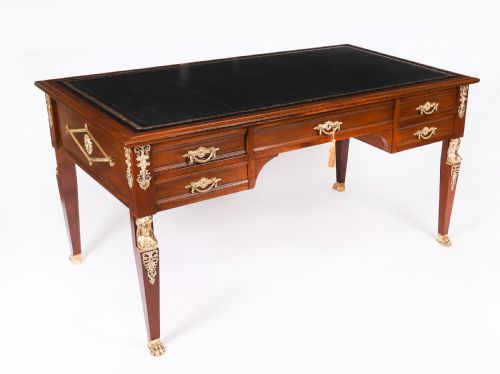
An ormolu mahogany writing desk combines rich timber with gilded bronze mounts, offering a sophisticated surface for correspondence that anchors a room with presence.
Ormolu Mahogany Writing Desk
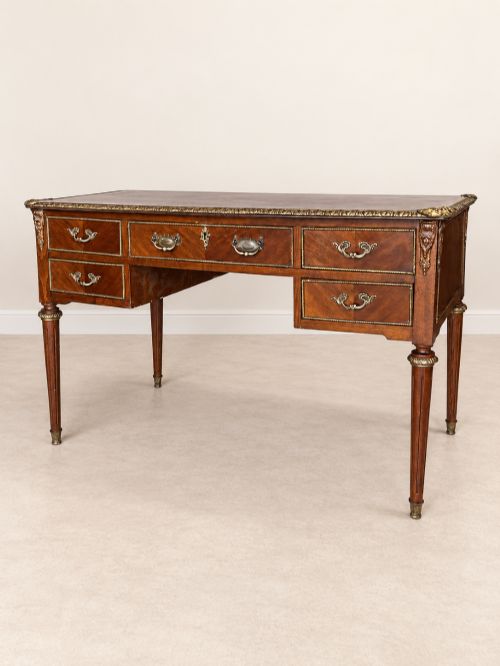
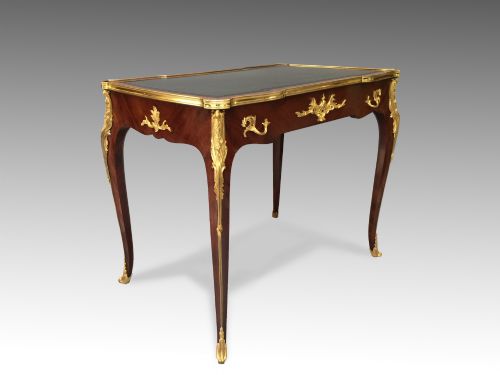
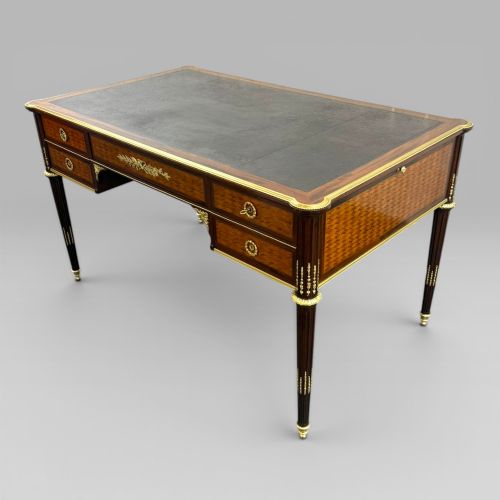
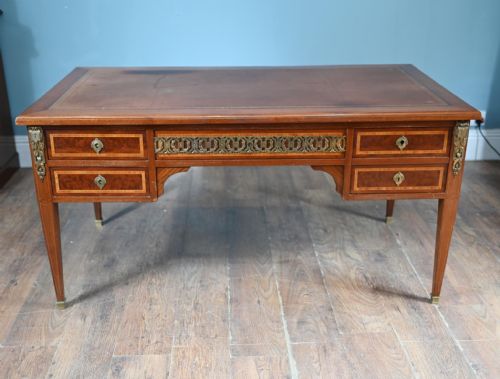
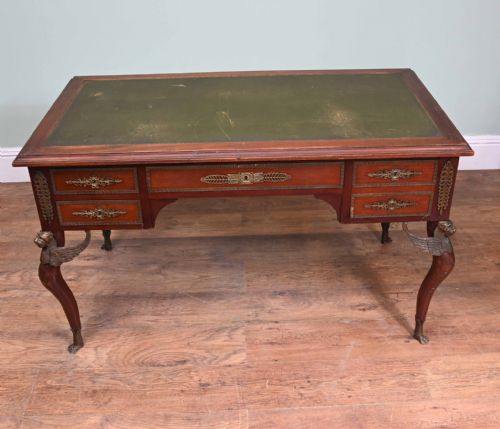
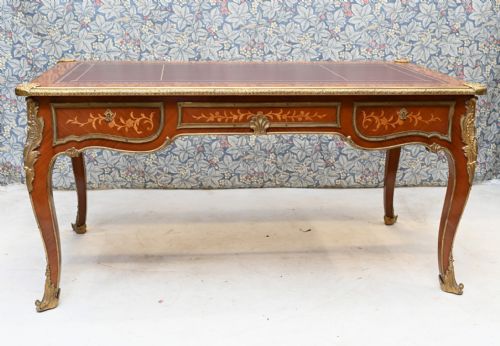
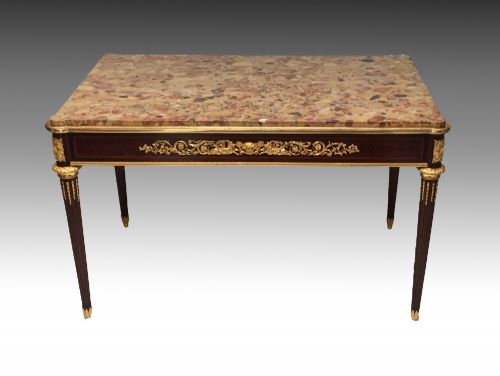
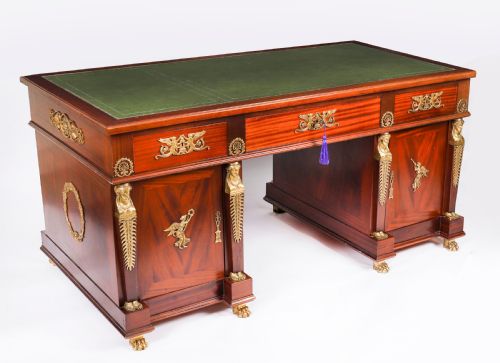
When you search for an ormolu mahogany writing desk, you encounter pieces primarily originating from nineteenth century France, often adopting revival styles such as Louis XVI, Louis XV and French Empire. The bureau plat form dominates this selection, presenting a freestanding writing table designed to sit away from the wall.
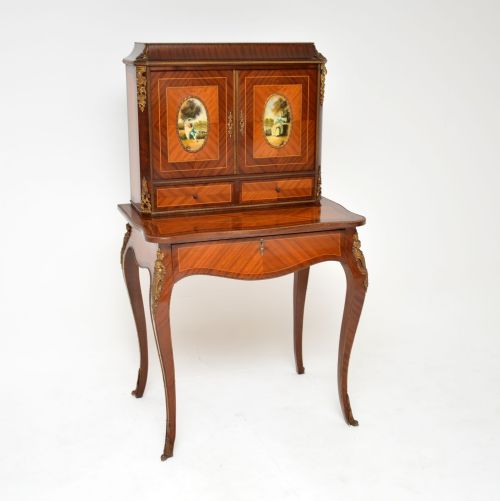
Beyond the standard bureau plat, the evidence shows variations including cylinder desks, escritoires, and secretaire abattants incorporating leather writing inserts and brass or gilt bronze details. These pieces span the Victorian era, the Edwardian period, and specific decades from eighteen forty through to nineteen thirty.
Makers and retailers represented across the pieces include François Linke, Edwards and Roberts, Henry Dasson, and Alphonse Tahan, alongside unmarked examples attributed to French or Russian workshops. The forms range from large flame mahogany cylinder desks to compact occasional and side tables fitted with ormolu mounts.
Materials and construction methods
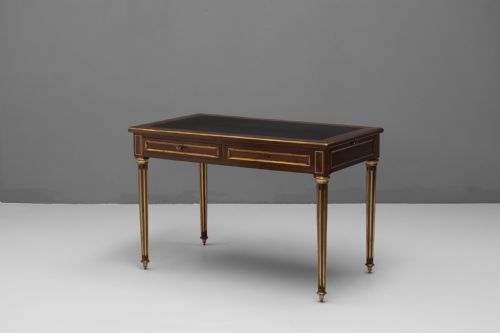
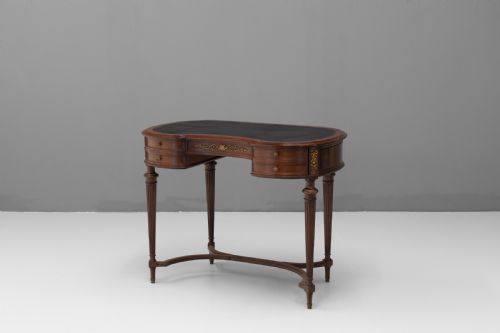
The primary construction relies on mahogany, frequently enhanced by secondary timbers such as satinwood, kingwood, walnut, and parquetry or marquetry inlays. Craftsmen integrated tooled leather inserts into the writing surfaces, providing a durable and refined texture for daily use.
Cast ormolu and gilt bronze mounts decorate the angles, drawers, and legs, secured to the mahogany carcass with precision. Brass accents and marble tops appear on specific revival pieces, complementing the metalwork and adding weight to the upper surfaces.
Listings feature mahogany, kingwood, walnut, marble, and gilt bronze across nineteenth-century French Empire and Louis XVI revival styles.
Distinctions in execution and detail
Quality separates through the crispness of the ormolu casting and the depth of the mahogany grain selection, such as flame veneer. Master makers like François Linke demonstrate superior chiselling on bronze mounts and precise parquetry alignment compared to standard workshop output.
The integration of secondary details, including finely tooled leather writing surfaces, well-fitted internal drawers, and structurally sound cabriole or tapered legs, defines the upper tier of these writing tables.
François Linke·Edwards and Roberts·Henry Dasson·Alphonse Tahan
The Ormolu Mahogany Writing Desk Glossary
- Bureau plat
- A freestanding writing table, typically with drawers along the frieze, designed to be viewed from all sides. This form represents the majority of desks in the selection.
- Ormolu
- Gilt bronze mounts applied to furniture edges, corners, and legs for decoration. The term derives from the French for milled or ground gold.
- Parquetry
- Geometric patterns formed by inlaying small pieces of wood veneer into a surface. It frequently appears alongside mahogany on revival desks.
- Cylinder desk
- A desk featuring a curved, quarter-cylinder roll top that conceals the writing surface and interior pigeonholes when closed.
- Secretaire abattant
- A tall cabinet with a drop-front writing flap that opens to reveal a fitted interior of drawers and compartments.
Ormolu Mahogany Writing Desk: Frequently Asked Questions
How do I use a bureau plat today?
A bureau plat functions effectively as a freestanding partner's desk or a central table in a study. Its finished back allows it to float in the middle of a room rather than push against a wall.
The writing surface, typically lined with leather, provides a durable area for modern correspondence or laptop use while maintaining historical character.
What is the difference between Empire and Louis XVI styles?
Louis XVI style pieces lean towards neoclassical restraint, featuring straight tapered legs, subtle parquetry, and symmetrical ormolu mounts. They emphasise architectural proportion and lighter woods.
Empire style desks, by contrast, display heavier proportions, dramatic flame mahogany veneers, and robust military or classical bronze motifs reflecting nineteenth-century French design.
Are these desks suitable for daily writing?
These desks suit regular daily writing provided the tooled leather insert and wooden joints remain stable. Many feature spacious frieze drawers for storing modern stationery and writing instruments.
Care should be taken with moisture and direct heat to protect the nineteenth-century mahogany finish and the applied gilt bronze mounts.
How do I identify a signed piece?
Makers like François Linke or Henry Dasson often stamped their signatures directly onto the bronze mounts, drawer frames, or wooden carcasses. Signatures usually appear near the edge of the ormolu mounts or inside the primary drawers.
Unsigned pieces from the same period often reflect the construction methods and aesthetic standards of major Parisian workshops without bearing a stamp.