

Parquetry Marble Commode
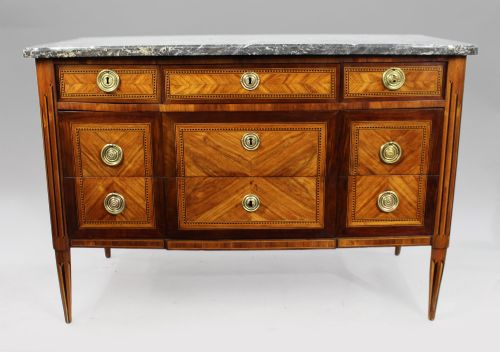
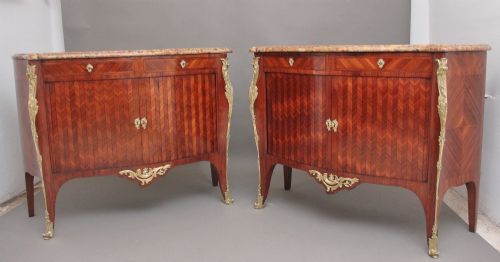
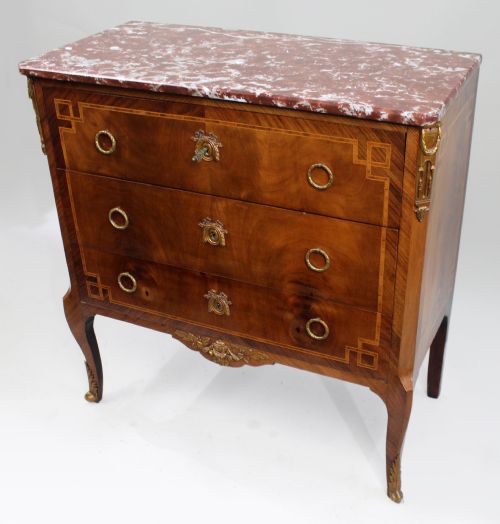
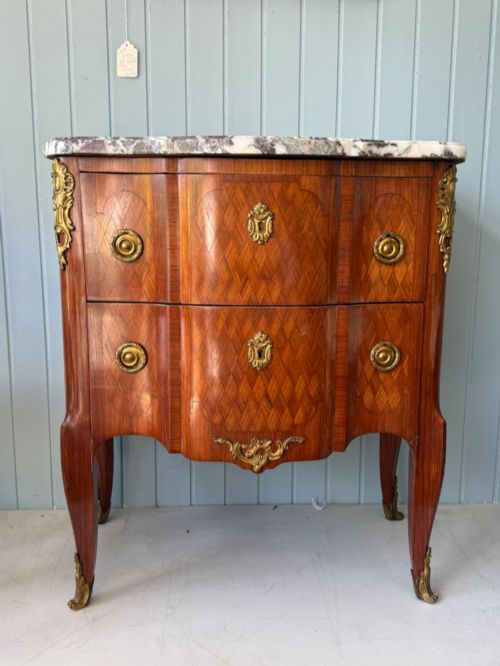
When you encounter a parquetry marble commode, you are looking at a fitted storage piece that combines geometric wood veneers with a heavy stone surface.
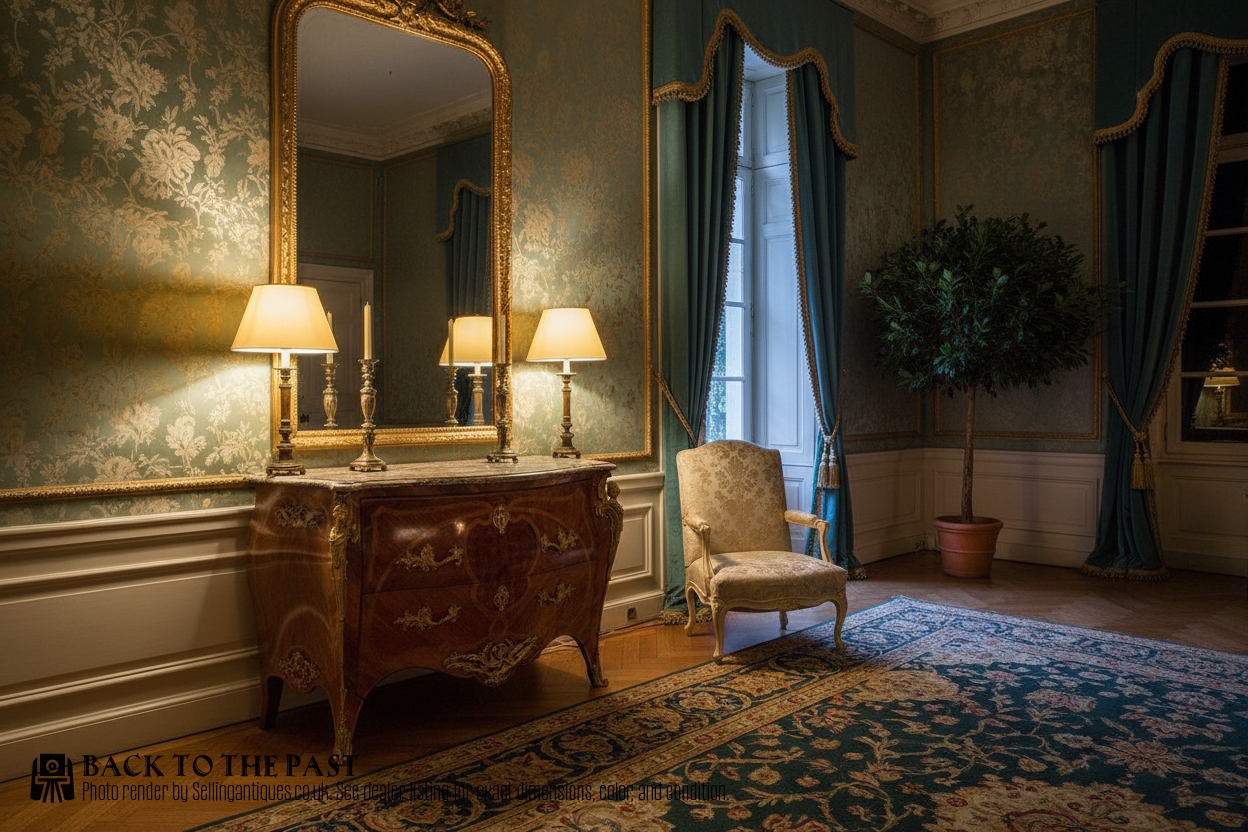
Parquetry Marble Commode
A parquetry marble commode functions primarily as a decorative chest of drawers or side cabinet, topped with a fitted slab of marble. The search phrase covers examples spanning from the eighteenth century through later revival periods, with French Louis-style designs appearing most frequently among the listings.
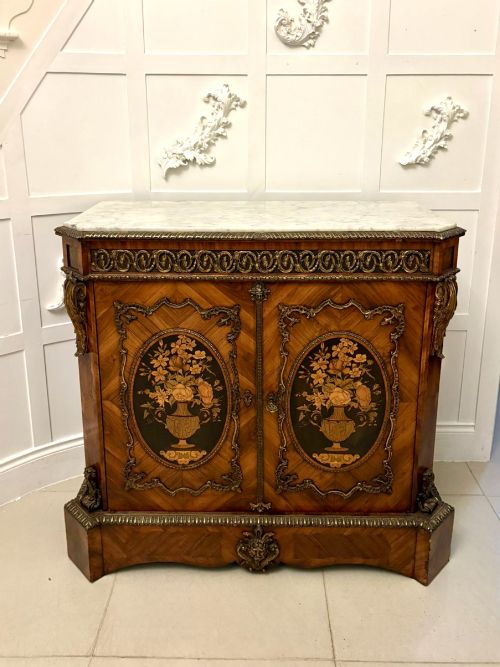
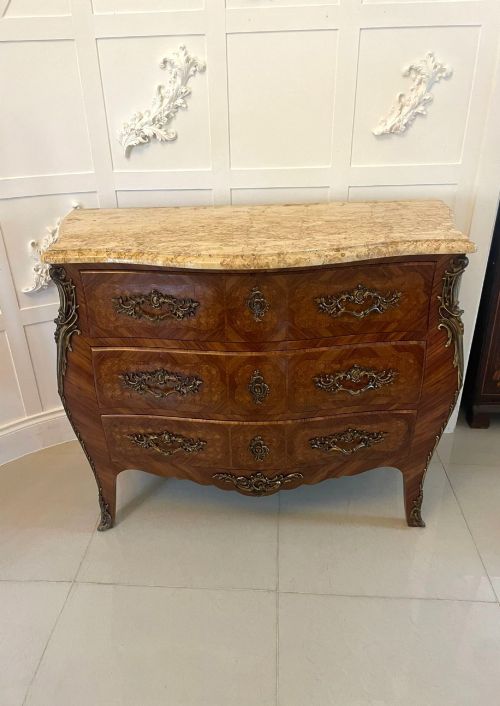
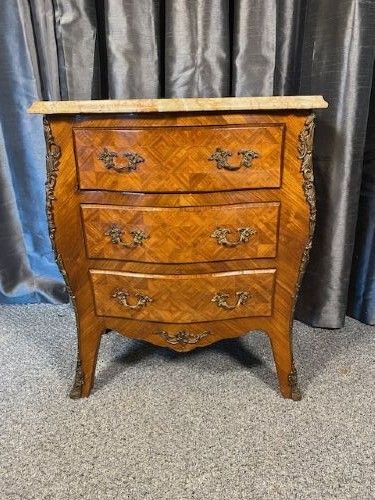
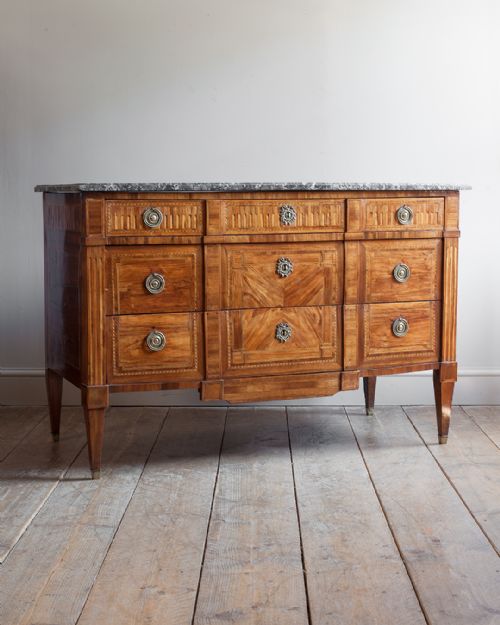
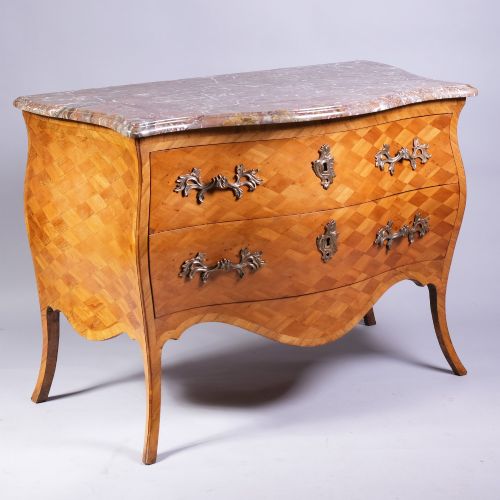
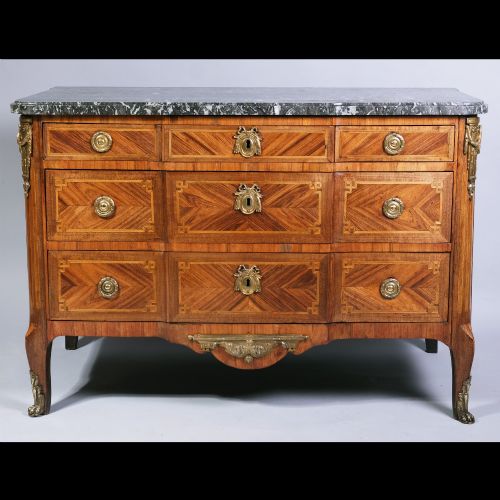
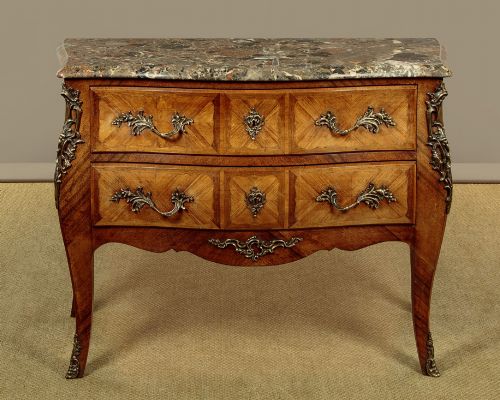
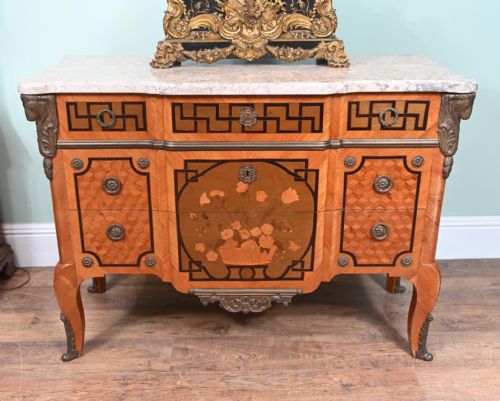
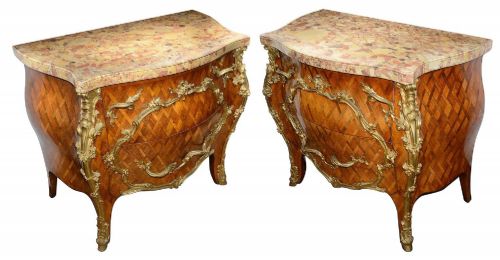
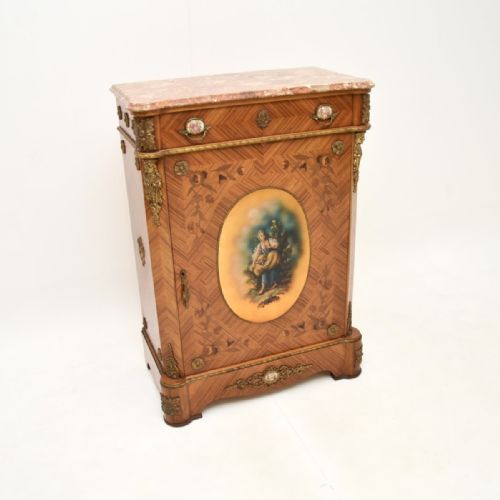
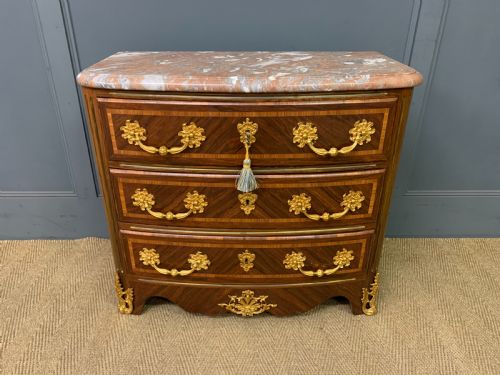
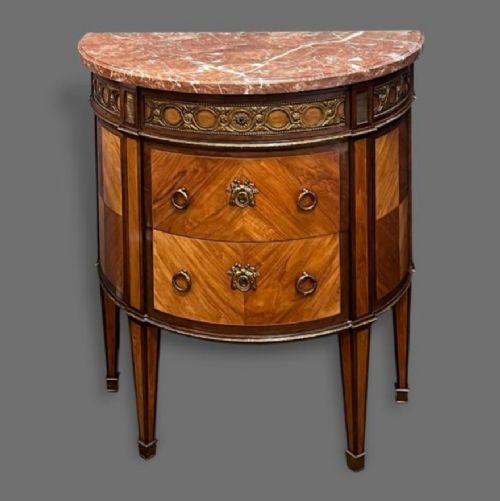
The body of the cabinet typically presents a rectangular, serpentine, or bombe silhouette configured with drawers or small cupboard doors. Walnut, kingwood, and tulipwood supply the foundational timber for geometric veneer patterns across the front and sides.
Origin points skew heavily toward French workshops, alongside occasional Italian and Swedish examples recorded in the archive. Buyers encounter full-sized chests as well as smaller bedside cabinets matching the same material combination.
Materials and construction techniques
Cabinetmakers constructed the carcass from secondary softwoods or hardwoods before applying thin decorative veneers of kingwood, walnut, or tulipwood arranged in geometric parquetry and floral marquetry motifs. Ormolu, bronze, and gilt-bronze mounts were cast and applied to corners, handles, and apron mounts to accent the contours.
Heavy marble slabs, sometimes in rouge or scagliola varieties, were shaped to follow the precise serpentine or breakfront outline of the wooden top and bedded onto the carcass. Brass and copper stringing frequently outlined individual veneer panels to heighten the visual contrast of the wood grain.
Parquetry Marble Commode Retail Price Guide 2026
Typical asking prices for parquetry marble commode among the pieces listed under this phrase on Sellingantiques today, from the lower quarter to the upper quarter. They describe what is for sale here now, not the wider market.
Listings feature walnut, kingwood, and tulipwood combined with marble, ormolu, and bronze across various eighteenth-century and revival periods.
Differentiating quality across examples
The precision of the parquetry geometry and the selection of figured timbers set the baseline for a piece's execution. Tighter grain matching and complex wood combinations indicate higher workshop input.
The weight and crispness of the bronze or ormolu mounts signal the tier of manufacture, as finely chased metalwork required substantial hand-finishing after casting. The thickness and geological character of the marble top, along with its precise edge profiling, further separate standard production from superior output.
Maison Millet
The Parquetry Marble Commode Glossary
- Parquetry
- Geometric wood veneer work arranged in repeating patterns such as cubes, chequers, or herringbone. This technique defines the primary surface decoration of the cabinet body.
- Bombe
- A swelling, outward-curving contour found on the front and sides of certain cabinet designs. This curved profile requires specialised shaping of both the wooden carcass and the overlying marble top.
- Ormolu
- Gilded bronze applied as decorative mounts to the feet, corners, and handles of furniture. The alloy provides a bright metallic contrast against dark tropical veneers.
- Serpentine
- A furniture front or top shaped with a double-curved line, curving inward centrally and outward at the ends. It demands careful hand-cutting of both timber and stone.
- Marquetry
- Pictorial veneer work using various coloured woods to form floral, scroll, or landscape designs. Unlike parquetry's rigid geometry, marquetry allows for flowing, organic motifs.
Parquetry Marble Commode: Frequently Asked Questions
What is a parquetry marble commode?
A parquetry marble commode is an ornamental chest of drawers or cabinet featuring geometric wood veneer patterns on the exterior and a fitted stone slab on top. Originating primarily as formal domestic storage in European residences, these pieces combined utility with decorative display.
Over subsequent centuries, various revival movements reproduced these forms using traditional techniques and materials. Today they serve as statement storage furniture in traditional and eclectic interiors.
How were these commodes used originally?
These cabinets served as principal storage furniture in bedrooms, salons, and formal hallways for clothing, linens, and personal possessions. The stone top provided a durable surface for displaying decorative objects, lighting, or washing basins.
Their placement shifted depending on the size of the room, with larger serpentine chests anchoring main walls and smaller bedside cabinets positioned beside sleeping quarters.
How do I care for a marble top?
Marble surfaces require protection from acidic liquids, oils, and harsh chemical cleaners that can etch or stain the stone polish. Routine cleaning involves wiping the surface with a damp cloth and mild neutral soap.
Placing felt pads beneath heavy objects prevents scratching, while periodic professional sealing maintains the stone's natural lustre against moisture absorption.
How can I tell the period?
Dating relies on examining construction methods, secondary timbers inside the drawers, and the style of the bronze mounts. Eighteenth-century examples display hand-cut dovetails and specific regional woods, whereas nineteenth-century revival pieces often incorporate machine-sawn elements and heavier cast mounts.
Stylistic cues such as Louis XV curves or Louis XVI neoclassical straight lines provide initial indicators of the design era.