
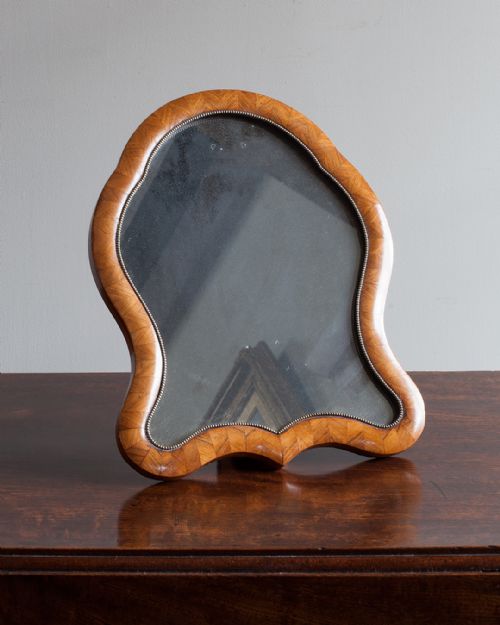
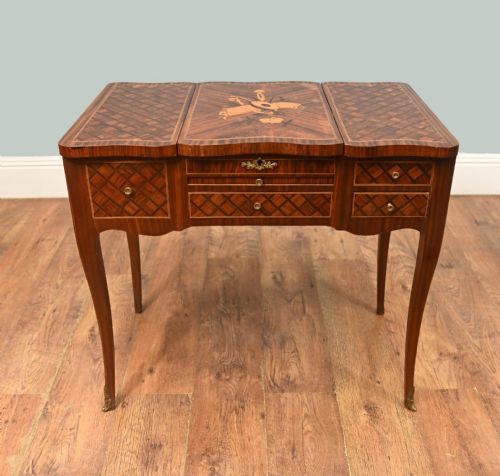


Parquetry Dressing Table
A parquetry dressing table brings geometric wood-mosaic surfaces and refined 19th-century or early 20th-century French revival styling into a bedroom.
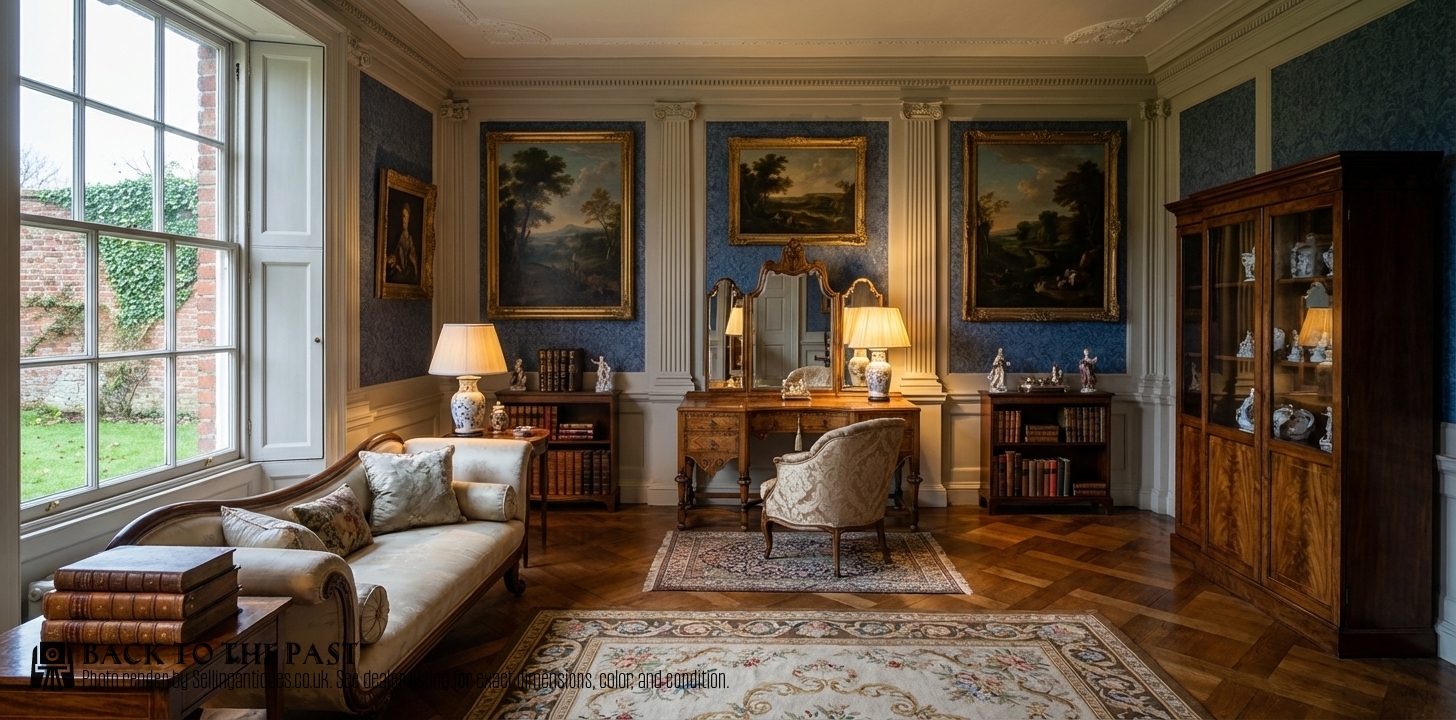
Parquetry Dressing Table
A parquetry dressing table combines practical surface space with geometric inlaid wood patterns across the top, drawer fronts, and body. When you search for a parquetry dressing table, you encounter pieces spanning the 19th century through the early 20th century, heavily influenced by French Louis XV and Louis XVI revival styles.
These items frequently overlap in function with poudreuses, work tables, and bonheur du jour forms that incorporate mirrors, drawers, and fitted compartments. The most common examples on this page date from the 19th century and the decades around 1880 to 1930, utilising continental timbers and classical revival outlines.
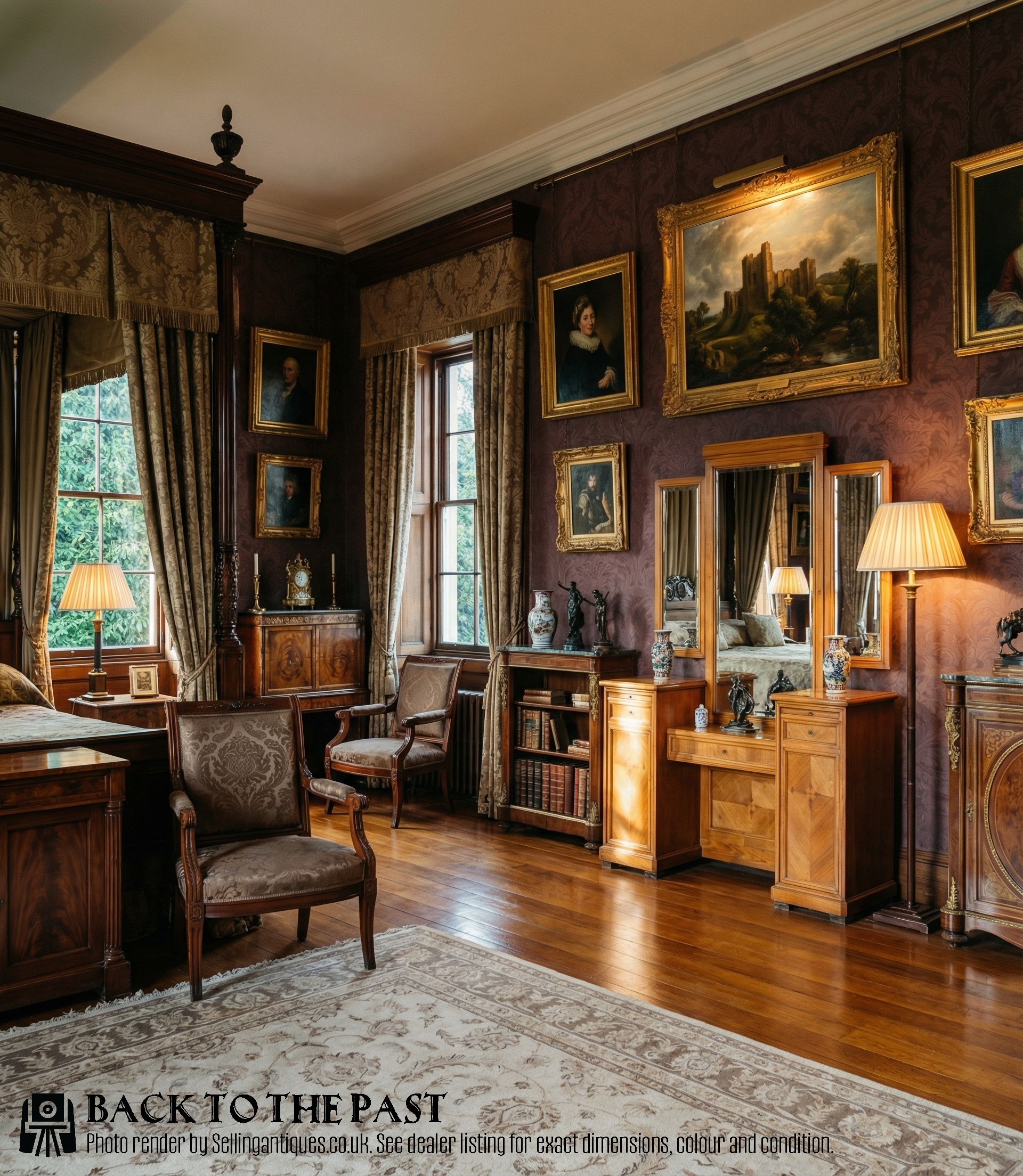
How they were made
Cabinetmakers constructed these pieces using solid carcases faced with delicate timber veneers such as kingwood, tulipwood, satinwood, and walnut, arranged precisely to form geometric parquetry patterns. Ormolu mounts, brass details, and glass components were integrated to accent the contours of Louis XVI and French Rococo Revival designs.
Surfaces were frequently finished to highlight the natural grain contrasts of contrasting woods like sycamore and olive wood. Structural stability relied on traditional joinery methods suited to multi-timber veneering, ensuring the geometric mosaic remained flush over decades of use.
Some tables double as work spaces, keeping sewing gear neatly hidden beneath geometric wood patterns while you powder your nose.
What varies in quality
The precision of the wood-mosaic work dictates much of the distinction between standard examples and finer items, with tight joints and deliberate timber selection showing superior craft. The crispness of cast ormolu mounts and the choice of secondary woods also indicate the grade of the original workshop.
Maples
The Parquetry Dressing Table Glossary
- Parquetry
- A geometric mosaic of wood veneers arranged in repetitive patterns like cubes, lozenges, or herringbone to decorate furniture surfaces. It requires meticulous cutting and fitting of different timber species.
- Kingwood
- A dense, richly figured South American timber with dark brown and violet stripes, widely utilised in fine 19th-century French furniture veneers. It provides strong visual contrast in parquetry designs.
- Ormolu
- Gilt bronze mounts cast and chased to ornament the corners, legs, and aprons of revival furniture. It adds metallic highlights to timber surfaces.
- Poudreuse
- A French dressing table featuring a folding top that opens to reveal a mirror and compartmented interior for cosmetics. The form gained popularity in the 18th century and returned in later revival periods.
- Bonheur du jour
- A small, light ladies' writing desk featuring a tiered superstructure with shelves, drawers, or a small cupboard above the main surface. These often double as dressing or boudoir tables.
Parquetry Dressing Table: Frequently Asked Questions
What is a parquetry dressing table?
A parquetry dressing table is a decorative furniture piece featuring geometric wood veneer patterns on the top and body, typically designed for a bedroom or boudoir.
They often incorporate folding lids, mirrors, and small drawers for personal items, following French stylistic traditions from the 19th and early 20th centuries.
How do I date a parquetry dressing table?
Dating relies on identifying the revival style, such as Louis XV or Edwardian forms, alongside the types of woods and construction methods used in the drawers.
Nineteenth-century examples frequently feature ormolu mounts and exotic veneers like kingwood or tulipwood, while later pieces from the 1920s and 1930s adopt simpler structural lines.
Where were these tables used?
These tables served primarily in private bedrooms, dressing rooms, and boudoirs for grooming and writing correspondence.
Their finished backs and compact proportions allowed them to sit away from walls as decorative centrepieces in period interiors.
How do I care for kingwood veneer?
Kingwood veneer requires stable indoor humidity away from direct sunlight and heat sources to prevent the timber from drying and splitting.
Routine maintenance involves dusting with a dry cloth and occasionally applying appropriate wax polish to preserve the finish.