
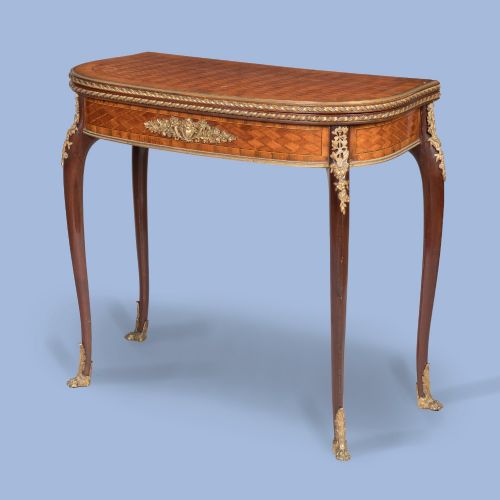


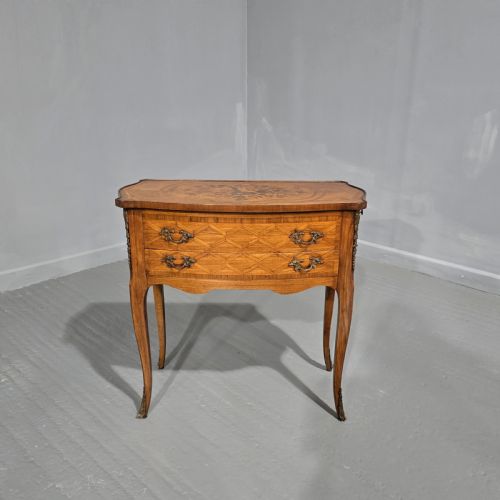


Parquetry Console Table
A parquetry console table brings geometric wood mosaic and decorative bronze mounts into a hallway or reception room with undeniable presence.
Parquetry Console Table
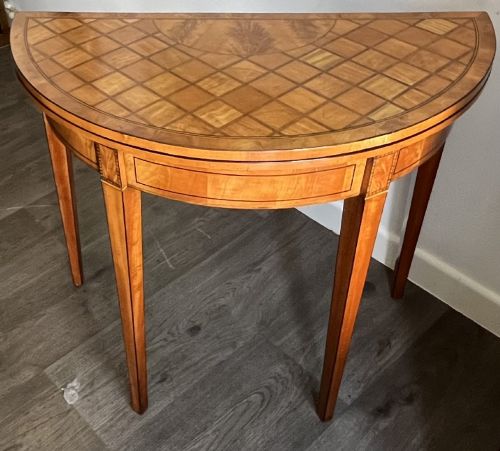
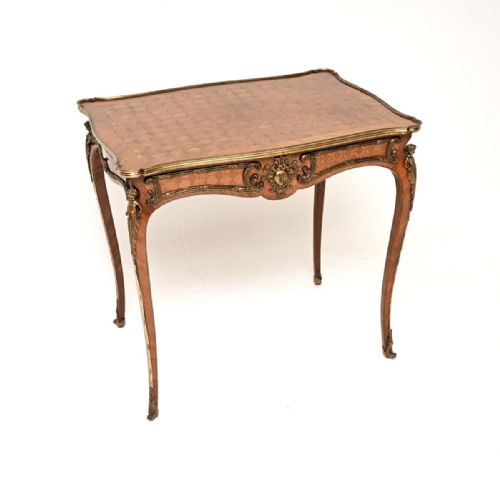
A parquetry console table combines geometric wood veneer patterns with forms designed to sit against a wall, frequently appearing alongside related card, games, and side tables. These pieces span from eighteenth-century Italian walnut and kingwood designs to nineteenth-century French revivals in the Louis XV and Louis XVI styles.
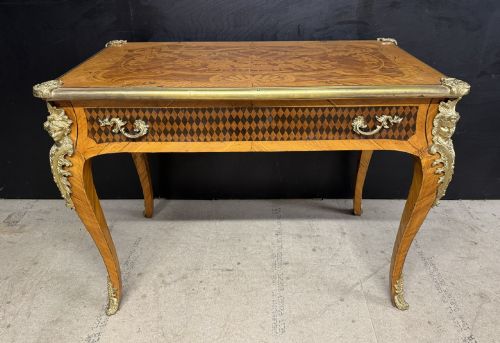
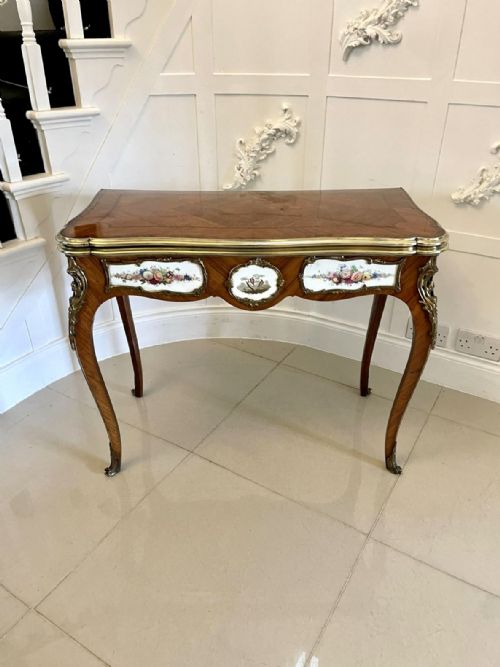
The selection on this page demonstrates how makers adapted these geometric surfaces across different centuries, moving from eighteenth-century proportions to Victorian interpretations and twentieth-century revivals. Buyers encounter demi-lune games tables, card tables, and writing desks that share the defining patterned top.
While true console tables are meant for wall placement, the surviving forms often include versatile side tables and convertible card tables that served multiple functions in period interiors. The underlying construction shifts according to the era, yet the geometric wood mosaic remains the constant visual anchor.
Assessing quality and execution
The distinction between ordinary and exceptional pieces lies in the precision of the veneer work and the crispness of the cast ormolu mounts. Finer tables display tightly fitted geometric patterns with minimal filler, using dense timbers like kingwood and rosewood that hold sharp lines over time.
Makers working at the highest level, such as François Linke or Maison Mottheau, integrated their bronze mounts seamlessly with the wooden structure, ensuring the hardware complemented rather than overpowered the parquetry design. Lesser examples rely on repetitive stamping and simpler timber selections without the same depth of hand-chasing.
Parquetry Console Table Retail Price Guide 2026
Typical asking prices for parquetry console table among the pieces listed under this phrase on Sellingantiques today, from the lower quarter to the upper quarter. They describe what is for sale here now, not the wider market.
Listings feature eighteenth-century Italian walnut consoles alongside nineteenth-century French revival card tables in kingwood, mahogany, and satinwood.
G T Morant·François Linke·Maison Mottheau·Joseph-Emmanuel Zwiener·Donald Ross
The Parquetry Console Table Glossary
- Parquetry
- Geometric mosaic woodwork formed by small pieces of veneer arranged in patterns such as cubes, chequers, orlozenges. This technique creates a durable and visually striking decorative surface on table tops.
- Ormolu
- Gilded bronze mounts applied to furniture for decorative enrichment. The process involves treating brass or bronze with gold amalgam and firing it to achieve a rich metallic lustre.
- Kingwood
- A dense, richly grained tropical timber used extensively for high-end eighteenth and nineteenth-century veneering. Its deep brown colour and distinctive figuring made it a favourite for geometric parquetry.
- Demi-lune
- Half-moon or semicircular shape common in console and games tables designed to fit flat against a wall. This profile allows the table to occupy minimal floor space while offering a useful surface.
- Bureau plat
- A freestanding flat-topped writing desk, often fitted with drawers and ornamented with parquetry and ormolu. These desks share construction methods and decorative vocabularies with console tables.
Parquetry Console Table: Frequently Asked Questions
What is a parquetry console table?
A parquetry console table is a decorative surface featuring geometric wood veneer patterns, traditionally designed to stand flat against a wall in a hallway or principal room. These tables often incorporate contrasting timbers like kingwood, walnut, and satinwood arranged in precise repeating motifs.
Over the centuries, makers adapted the form into versatile side tables and convertible card tables while retaining the signature mosaic top. They serve both a decorative function and a practical purpose for displaying objects or hosting guests.
How do I distinguish Louis XV and Louis XVI styles?
Louis XV style furniture is characterised by flowing serpentine lines, asymmetric curves, and cabriole legs that sweep outward. The ornament leans toward naturalistic floral motifs and fluid ormolu mounts.
In contrast, Louis XVI style embraces neoclassical symmetry, straight tapered legs, and geometric restraint. The parquetry patterns and bronze mounts on these later pieces reflect a turn towards classical order and architectural balance.
Where should I place a console table?
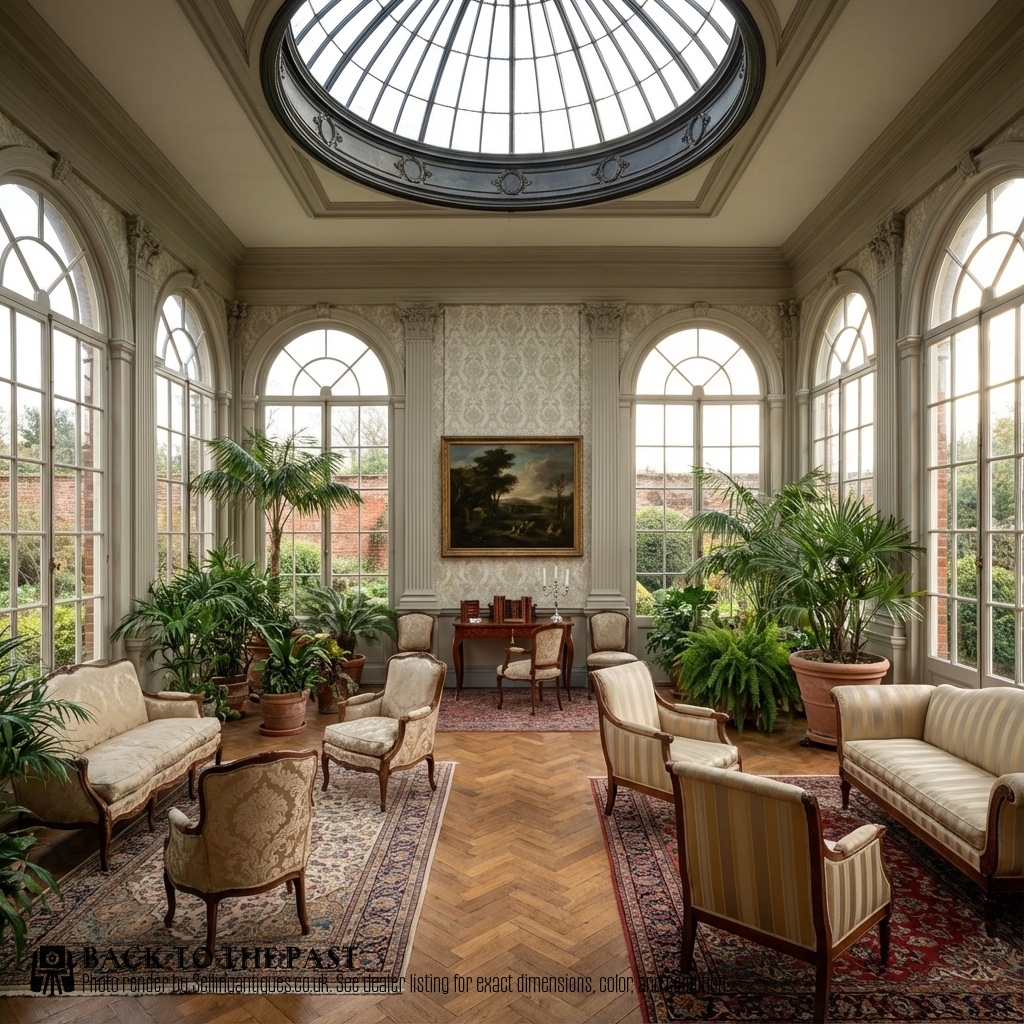
A console table is traditionally positioned against a wall in an entrance hall, beneath a mirror, or in a reception room to anchor the space visually. Because many surviving examples feature finished backs or serve as side and card tables, they can also float closer to the centre of a room.
When pairing the table with a wall, consider the scale of any hanging artwork to ensure the composition feels balanced. The geometric parquetry top provides a natural focal point that rewards close viewing from above.
How do I care for antique parquetry?
Protect antique parquetry by keeping it away from direct sunlight and sudden changes in humidity, which can cause the delicate wood veneers to lift or split. Dust the surface regularly with a soft, dry cloth and avoid harsh chemical polishes.
Occasional application of appropriate wax helps nourish the timber and maintain its natural lustre without building up heavy residues. Handle ormolu mounts with care to preserve their original gilt finish.