


Parquetry Bedside Cabinets
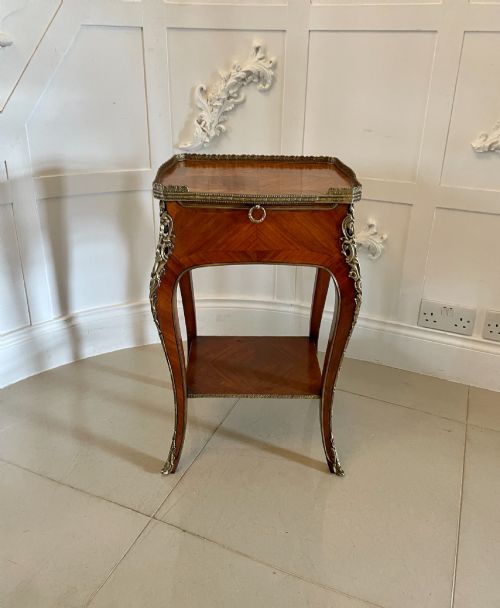
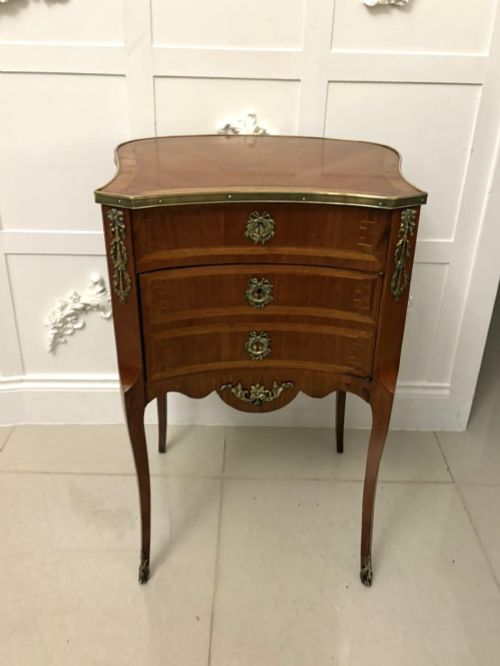
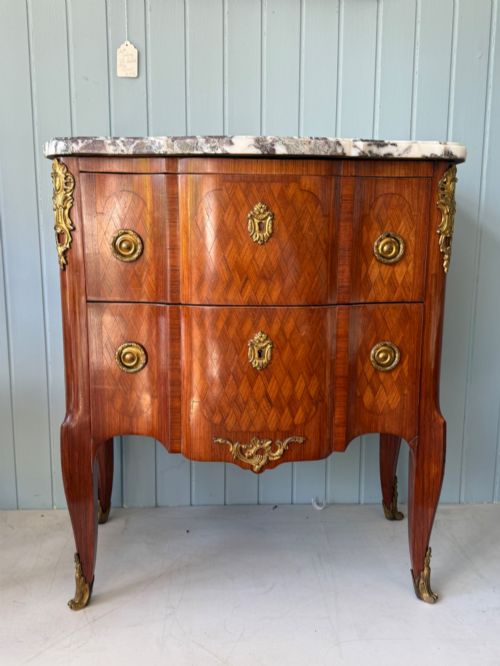
These parquetry bedside cabinets offer geometric timber work and French style, bringing decorative surface patterns beside the bed.
What parquetry bedside cabinets are
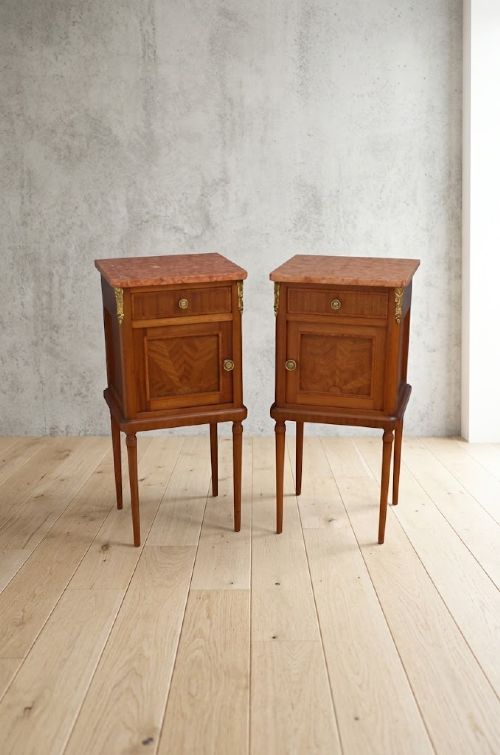
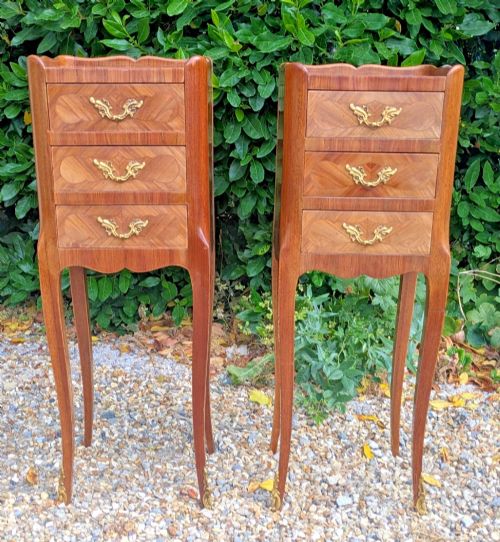
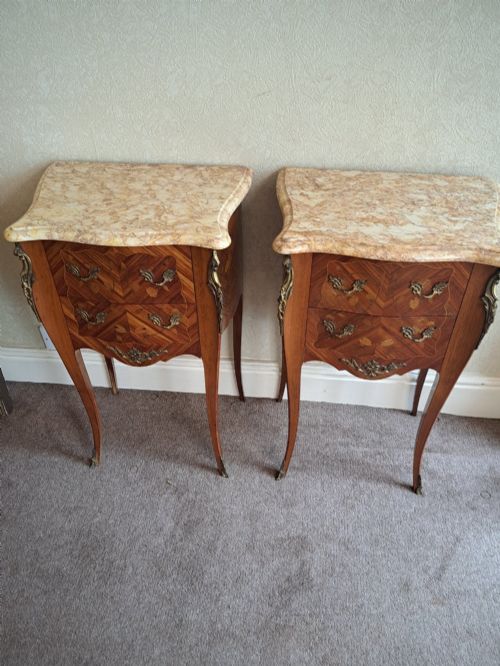
Parquetry bedside cabinets are small tables designed for the bedroom, featuring patterned wood veneer surfaces arranged in geometric designs. When searching for parquetry bedside cabinets, buyers typically encounter matched pairs originating from France, dating from the nineteenth century into the nineteen-thirties.
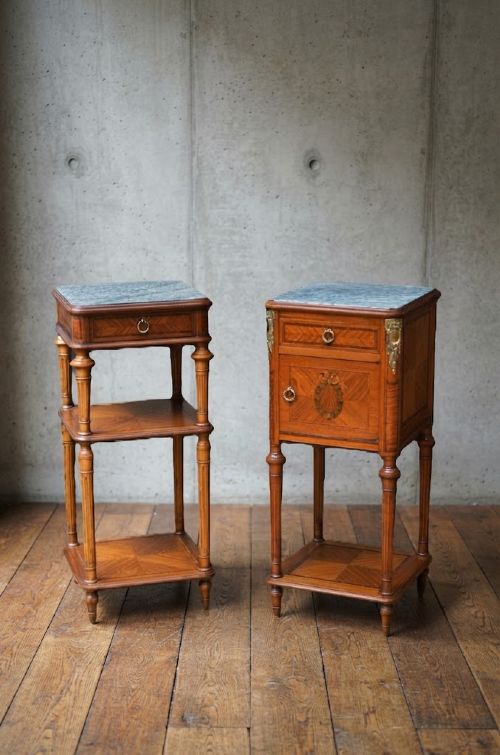
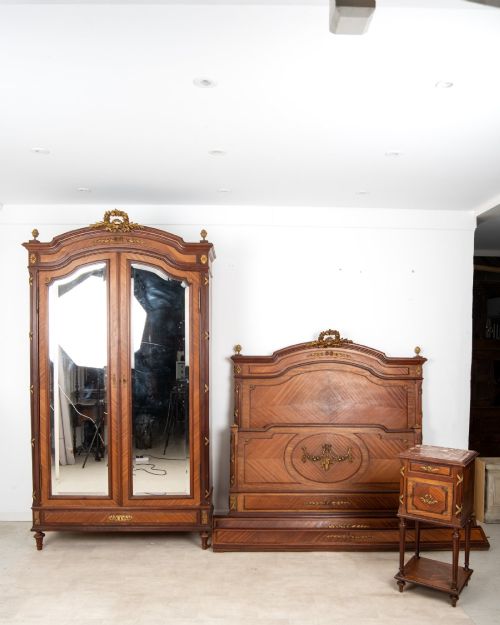
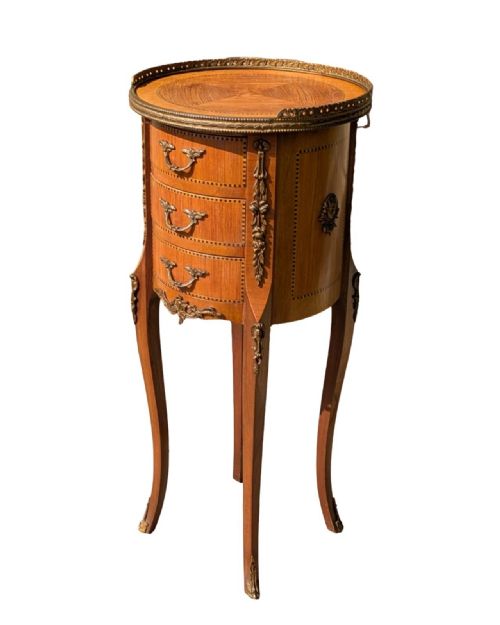
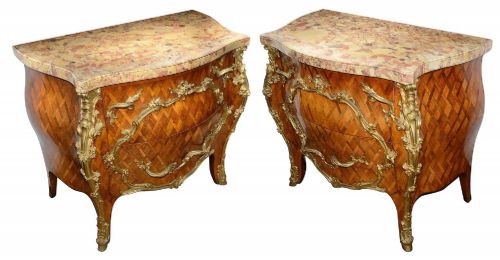
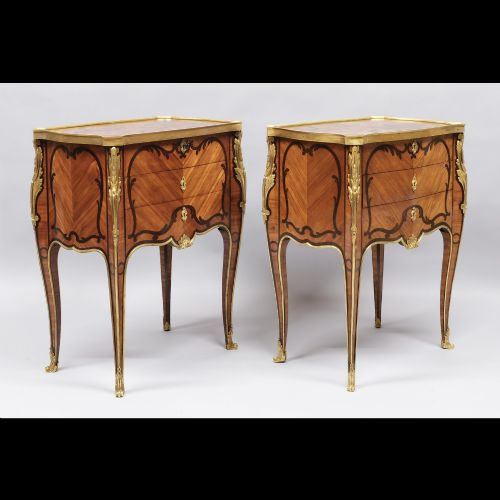
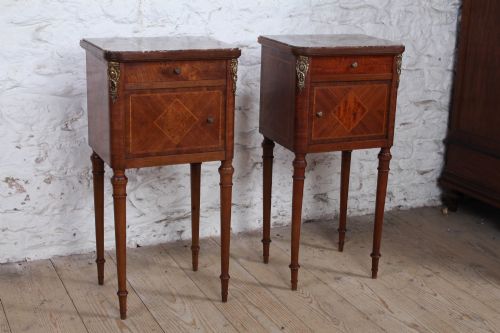
The inventory includes pieces executed in the Louis XV style and French Rococo manner, alongside Neo-Classical interpretations. These items function as bedside tables or nightstands, frequently incorporating marble tops or concealed compartments.
Forms vary from serpentine chests to simple bedside tables, reflecting the preferences of various periods including nineteen hundred and nineteen thirty. Most examples appear as pairs rather than single items.
How they were made
Cabinetmakers constructed these pieces using solid timber carcases overlaid with fine wood veneers such as kingwood, tulipwood, bois de violette, walnut, oak, and mahogany. Skilled artisans arranged these thin veneer sections meticulously by hand to form the characteristic geometric parquetry patterns across the surfaces.
Mounts and decorative details utilise cast brass, gilt bronze, and ormolu, fixed to corners, handles, and sabots. Many examples incorporate fitted marble slabs inset into the top surface for durability and contrast.
Retail Price Guide 2026
Typical UK retail prices for parquetry bedside cabinets, calculated from the Sellingantiques database of over a million retail prices indexed since 2003. This retail price guide relies exclusively on Sellingantiques data; no external sources or auction records are used, so the figures do not describe the wider market.
At least one pair comes equipped with a secret compartment, hiding your midnight secrets behind geometric wood veneers.
What varies in quality
The standard of a piece rests upon the precision of the timber matching and the complexity of the veneer geometry. Superior examples display seamless alignment across opening drawers and doors, whereas simpler items show less intricate grain selection.
Mounts also distinguish the range, with chased gilt bronze and heavy ormolu fittings marking out finer commissions compared to simpler cast brass hardware. The integration of high-grade rose marble tops elevates certain specimens above standard timber-topped variants.
The Parquetry Bedside Cabinets Glossary
- Parquetry
- A mosaic of wood veneer pieces arranged in geometric patterns on a surface. This technique creates decorative floors and furniture panels.
- Kingwood
- A dense, richly figured exotic timber utilised frequently in fine French cabinetmaking. It displays dark brown and violet striping.
- Ormolu
- Gilt bronze ornamentation applied to furniture mounts and decorative hardware. The process involves coating bronze with a mercury-gold amalgam.
- Serpentine
- A furniture front or top curving inward and outward in a continuous wave. This shape requires advanced woodworking skill to execute properly.
- Louis XV Style
- A revival design movement drawing on the asymmetrical curves and natural motifs of the French eighteenth century. It influences many nineteenth-century pieces.
Frequently Asked Questions
Are these cabinets sold individually?
Most of the listed pieces and archive examples appear as matched pairs rather than single bedside chests. This reflects how they were originally commissioned for twin beds.
Buyers seeking a single nightstand will find that the inventory consists primarily of these paired sets.
What woods are used in the parquetry?
The surface veneers utilise exotic and native timbers including kingwood, tulipwood, walnut, oak, mahogany, and bois de violette. These woods are selected for contrasting grain and colour.
Artisans cut and fit them together to form geometric patterns across the top and sides.
Do they feature marble tops?
Several versions incorporate fitted marble slabs inset into the upper surface. These are often rose marble or similar decorative stone.
Other variants feature plain wood veneer tops or inlaid marquetry designs instead of stone.
How do I date these cabinets?
Dating relies on the recorded periods of nineteen hundred, nineteen twenty, and nineteen thirty, alongside nineteenth-century examples. Stylistic indicators like Louis XV or Neo-Classical motifs also help determine the era.
Construction methods and timber choices further clarify the age of each piece.