


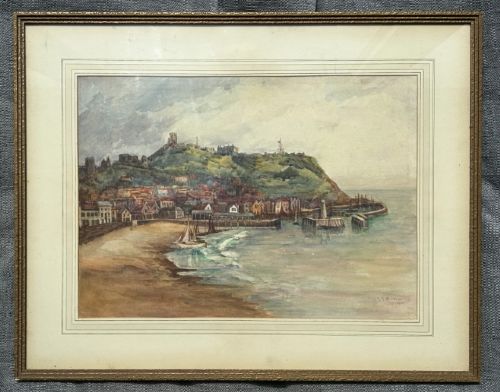

Paper Maritime Watercolour Painting
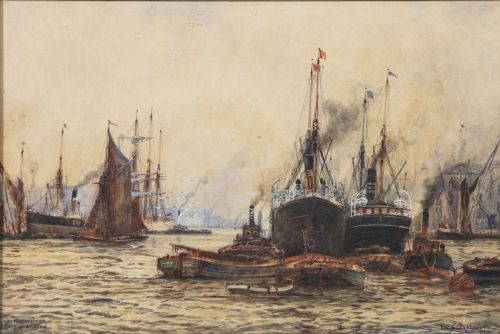
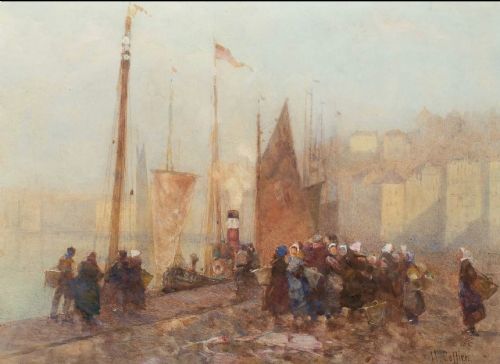
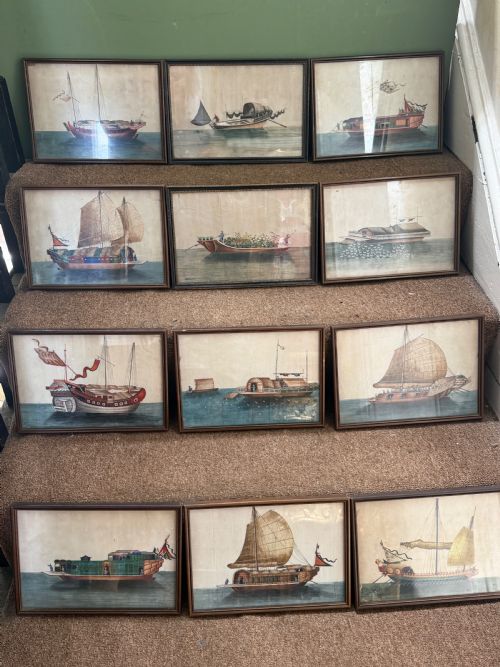
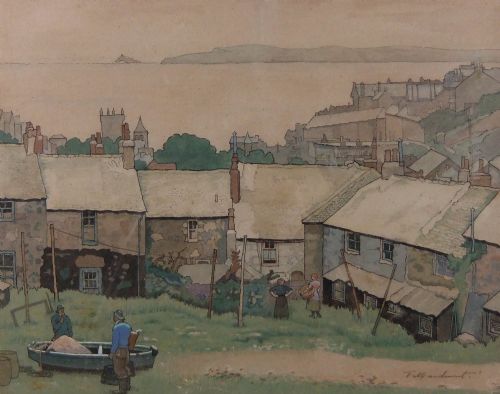
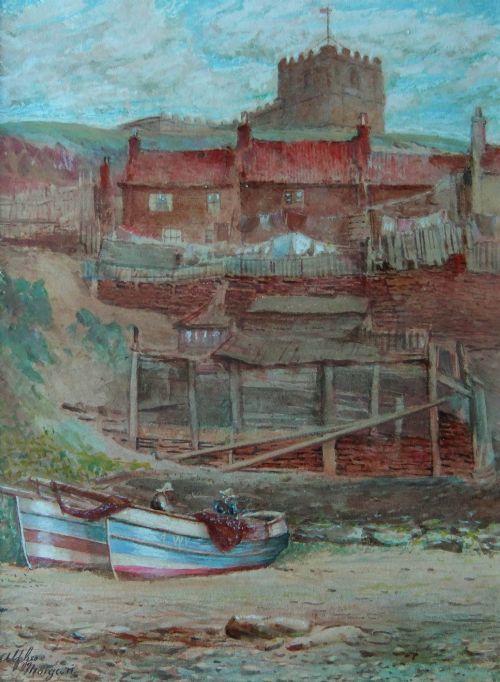
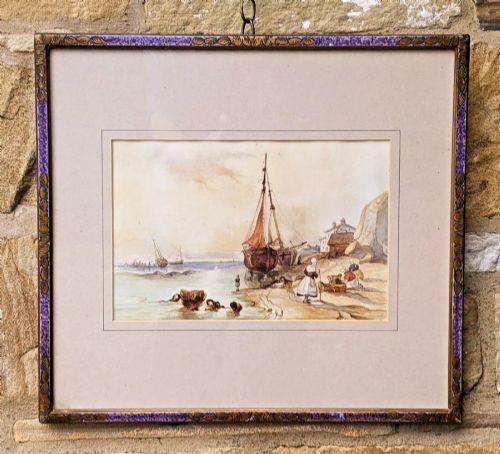
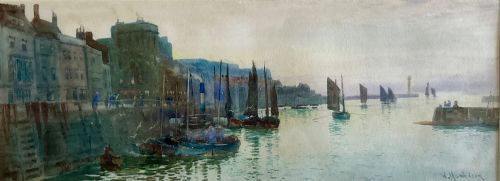
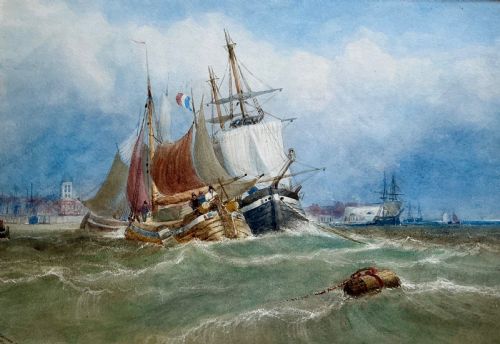
These paper maritime watercolour painting works capture coastal shores, bustling harbours and naval vessels on delicate grounds.
Paper Maritime Watercolour Painting
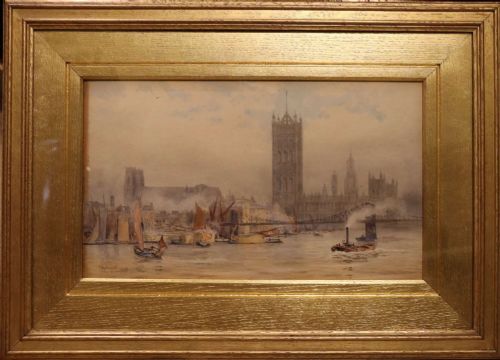
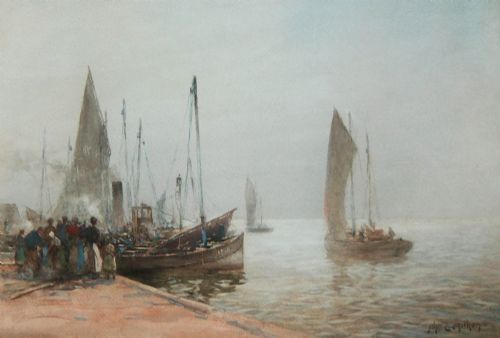
A paper maritime watercolour painting presents coastal scenes, harbour views, fishing vessels and deep-water shipping executed with fluid pigments. These works span the Victorian era, the Edwardian period and into the mid-twentieth century, capturing sea and shore across Britain and beyond.
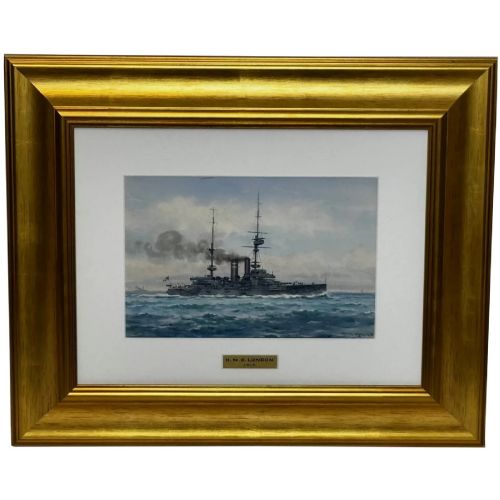
The selections encountered here range from detailed nineteenth-century depictions of naval men-of-war to early twentieth-century coastal studies of Yorkshire and Norfolk fishing ports. Artists often worked en plein air or recorded bustling harbour scenes directly onto paper supports.
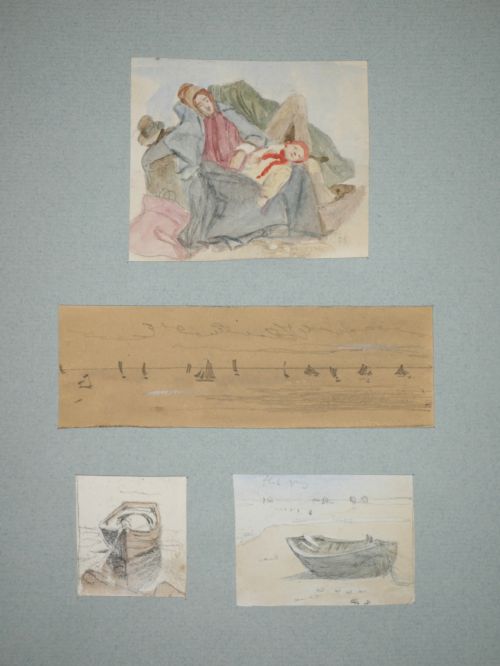
Works of this genre vary from intimate marine sketches to larger framed gallery pieces finished with ink outlines or gouache highlights. They record a maritime history through the changing light of coastal tides and working ports.
Materials and Technique
Artists applied watercolour pigment and ink onto various grades of paper, frequently utilising white paper reserves to create the glare of open water and bright skies. Some compositions incorporate gouache bodycolour to build opaque highlights on sails, cresting waves and vessel hulls.
Framed works generally incorporate wood mouldings and protective glass to preserve the sensitive paper supports from atmospheric moisture and light degradation. Early pieces often feature tonal washes laid down with broad brushes before fine details are added with sharper nibs.
Artists frequently chased shifting tides along the Yorkshire coast, returning from harbours with salt spray dried directly onto their paper sheets.
Judging Quality
Quality rests upon the artist's command of water and light, where confident brushwork conveys the movement of the sea without excessive reworking. The handling of atmospheric perspective distinguishes accomplished marine artists from competent topographical recorders.
Condition remains paramount, as paper supports are vulnerable to foxing, fading and water damage that diminish the clarity of the original pigment. Works retaining their crisp paper tones and distinct artist signatures command greater consideration.
James Orrock·James Smetham·Frank Watson Wood·Frank William Scarbrough·Hector Caffieri·Thomas Maidment·Alfred G. Morgan·William Matthison·Henry Barlow Carter·William Frederick Settle·Thomas Bush Hardy·Edward Seago·Samuel Owen·Charles Harmony Harrison
The Paper Maritime Watercolour Painting Glossary
- Foxing
- Brown spots on paper caused by chemical reactions in the pulp or damp storage conditions over decades. These age marks appear frequently on nineteenth-century sheets.
- Gouache
- An opaque water-based paint containing pigment, water and a binding agent such as gum, often used alongside transparent watercolour for bright highlights.
- Wash
- A thin, fluid layer of transparent watercolour pigment brushed across the paper to establish skies, water surfaces or broad tonal areas.
- Plein air
- The practice of painting outdoors directly from the subject, allowing artists to capture fleeting coastal light and changing weather conditions on the spot.
- Provenance
- The documented history of ownership or the recorded origin of an artwork, helping to confirm attribution and authenticity.
Paper Maritime Watercolour Painting: Frequently Asked Questions
How should I display a paper watercolour safely?
Keep works away from direct sunlight to prevent the pigments from fading across the paper surface. Ultraviolet-filtering glass provides essential protection when framing antique watercolours.
Position pieces on interior walls where room temperature and humidity remain relatively stable throughout the seasons. Avoid hanging watercolours in damp spaces such as unheated kitchens or bathrooms.
Are these paintings original works?
The selections consist of original one-off paintings executed by hand rather than mass-produced prints or mechanical reproductions. Each sheet reveals the unique brushstrokes and tonal layering of the individual artist.
Signatures, monograms or contemporary inscriptions often appear directly on the paper surface or within the original mount. These details link the work to a specific hand from the Victorian or mid-century periods.
What subjects appear most frequently?
Coastal fishing fleets, harbour docksides, and sailing vessels dominate the compositions across these nineteenth and twentieth-century works. Scenes frequently record specific British coastal locations such as Whitby, St Ives, Scarborough and the Thames.
Open seascapes featuring racing yachts, merchant shipping and naval men-of-war also recur throughout the selection. Artists recorded both tranquil tidal estuaries and heavy weather off the coast.
How do I identify the period of a watercolour?
Paper characteristics, framing materials and stylistic conventions help narrow down the date of execution alongside any visible signatures or dated inscriptions. Victorian works often display tighter topographical detail, while later twentieth-century pieces adopt freer impressionistic brushwork.
Costumes of figures on quaysides and the types of vessels depicted provide additional historical markers. Comparative study of known artist working dates refines the timeline further.