


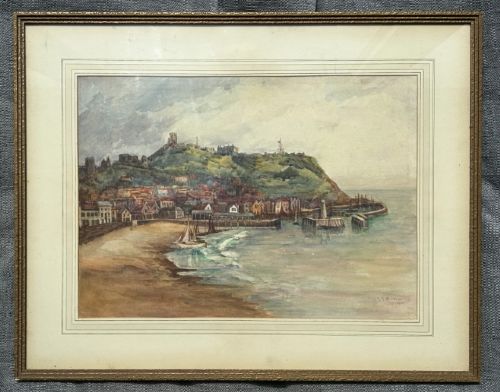

British Marine Watercolour Painting
British marine watercolour painting captures the changing light of harbours and coasts through the nineteenth and twentieth centuries.
British Marine Watercolour Painting
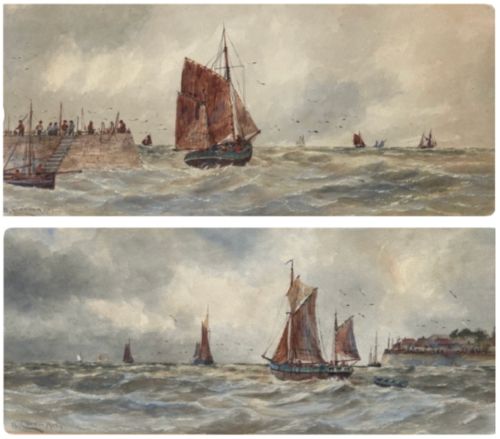
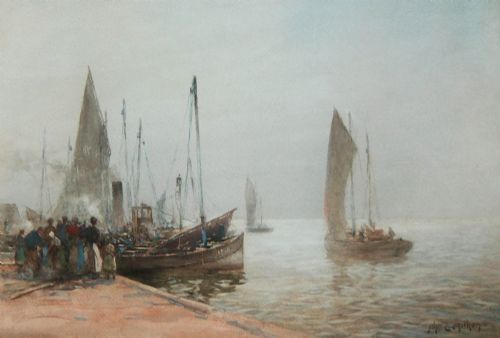
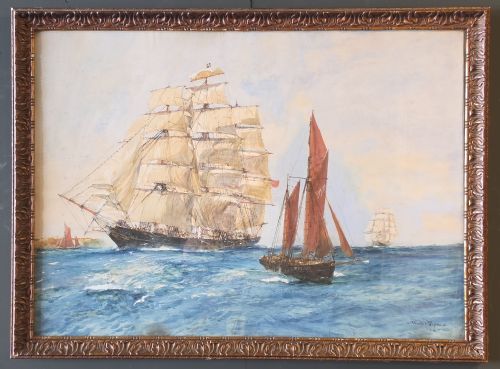
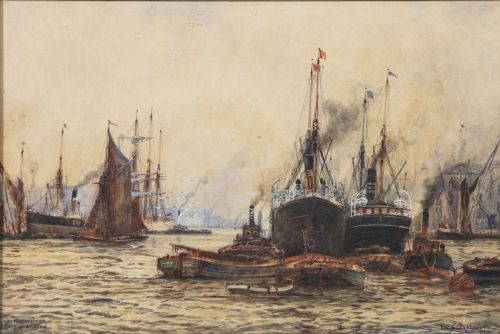
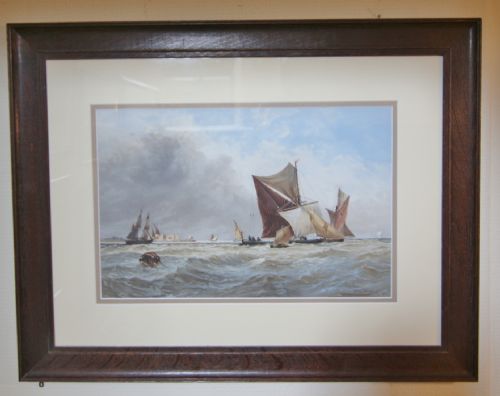
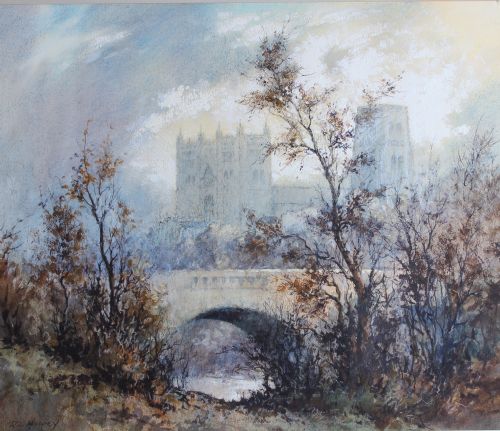
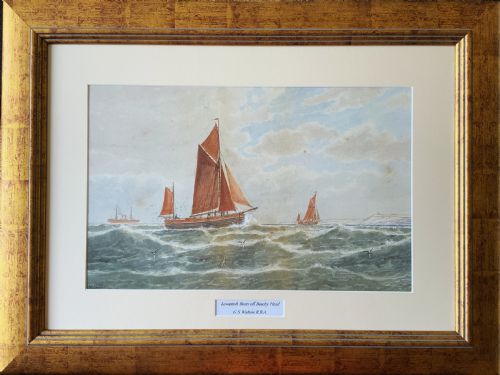
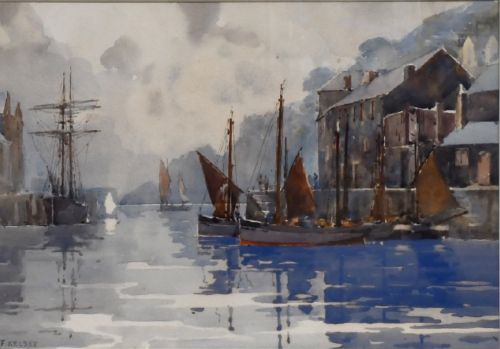
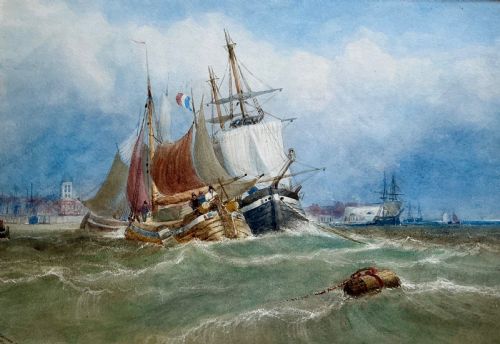
A british marine watercolour painting records coastal scenes, fishing harbours, and shipping across the nineteenth and twentieth centuries. You will most frequently encounter Victorian and Edwardian works on paper that depict specific locations such as Whitby, Scarborough, and St Ives. These paintings range in form from intimate harbour studies to broader seascapes featuring clippers and fishing boats.
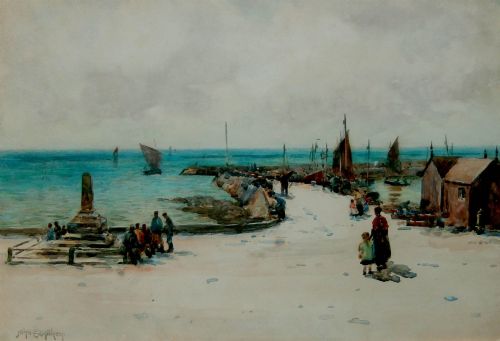
The subjects reflect a maritime nation deeply connected to its coastal trade and fishing fleets. Artists recorded everyday harbour life, boatyards, and estuaries from Cornwall to Scotland. Many pieces carry precise local titles, identifying specific quaysides, beaches, and weather conditions.
How they were made
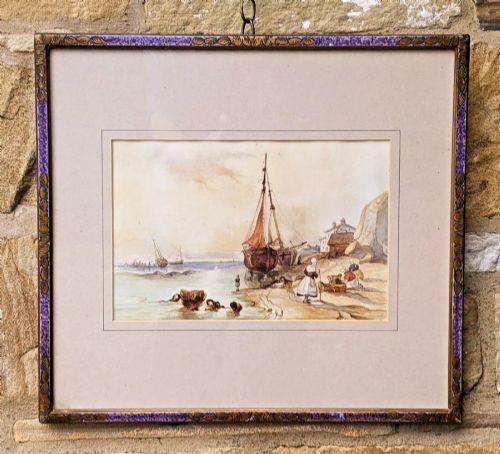
These works rely upon watercolour pigment applied to paper, often framed behind glass within wood or gilt wood surrounds. The medium allowed artists to capture transparent washes of sea and sky alongside detailed pencil or ink underdrawing.
Makers utilised the white of the unpainted paper to create highlights on breaking waves and sails. Pigments were layered to build depth in coastal atmospheres, moving from pale morning light to heavy overcast skies above northern harbours.
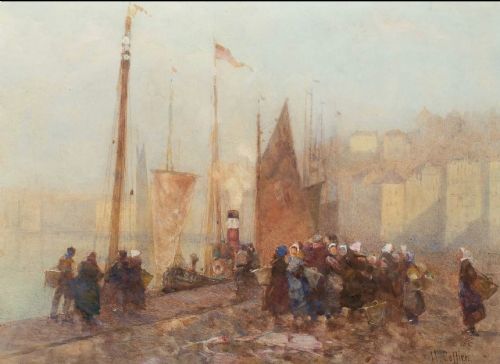
Several artists recorded the exact moment fishing fleets hauled their catches ashore under changeable British skies.
What varies in quality
Quality rests upon the artist's handling of atmospheric light and tonal balance within the composition. Stronger works convey the weight of water and movement of shipping with confident brushwork, avoiding rigid or stiff line work.
The preservation of the paper and pigment integrity also separates examples. High quality pieces retain their original luminosity without heavy fading from light exposure or acidic mount damage.
James Orrock·William Cannon·Charles Edward Dixon·Thomas Bush Hardy·George Stanfield Walters
The British Marine Watercolour Painting Glossary
- Watercolour pigment
- Finely ground colour particles mixed with a water-soluble binder for application on paper. This medium provides the characteristic transparency and fluidity seen in coastal views.
- Seascape
- A work depicting the sea, coastline, or marine activity. These subjects formed a major focus for British artists working near busy ports and fishing communities.
- Gilt wood
- Timber framing finished with a thin layer of gold leaf or metallic paint. Many period watercolours retain these traditional reflective surrounds.
- Wash
- A thin, fluid layer of diluted pigment spread across the paper to create expansive areas of sky or water. Painters controlled the moisture to suggest changing weather and sea states.
British Marine Watercolour Painting: Frequently Asked Questions
How should I frame and hang a vintage watercolour?
Keep these works out of direct sunlight to prevent the watercolour pigments from fading on the paper. Use conservation-grade mounts and glass that blocks ultraviolet light.
Ensure the painting does not touch the glass directly, as trapped moisture can damage the paper surface over time.
What subjects appear most often in these paintings?
Fishing boats, harbour walls, and coastal trading vessels dominate the subjects. Artists frequently recorded specific ports in Yorkshire, Cornwall, and along the River Medway.
Many works show daily maritime labour, including spreading nets and landing the daily catch.
How do I distinguish Victorian from later works?
Victorian examples often feature detailed rigging, narrative human elements, and heavier gilt wood framing. The palette tends toward rich, traditional tones suited to late nineteenth-century interiors.
Later pieces from the twentieth century often adopt a looser application of colour, influenced by British Impressionism.
Why do some marine watercolours include specific place names?
Artists often inscribed the exact location on the mount or reverse to document working ports and coastal landmarks. These titles provide a precise record of British maritime geography.
Named views help historians trace changes to harbour architecture and coastal shipping over decades.