
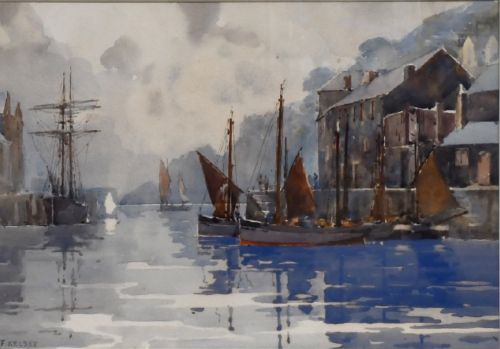
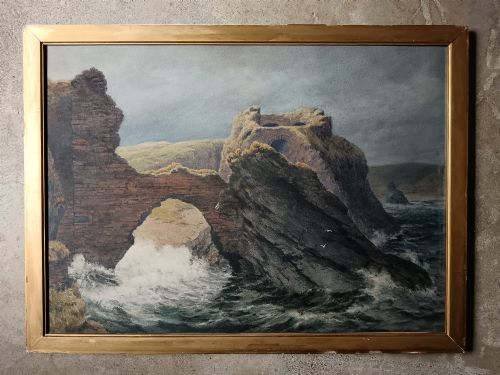


Grey Seascape Watercolour Art
Grey seascape watercolour art captures coastal movement and atmospheric weather through the fluid transparency of pigment on paper.
Grey Seascape Watercolour Art
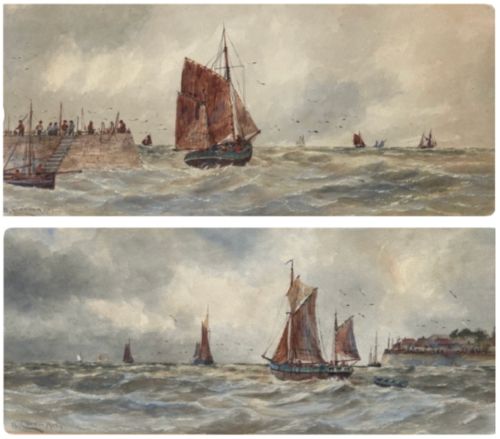
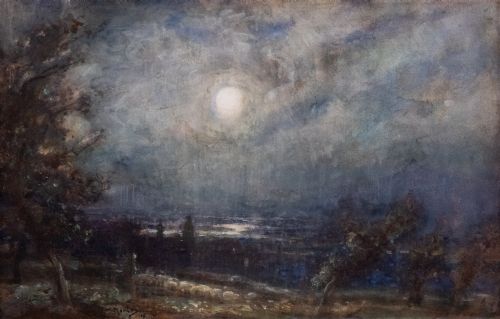
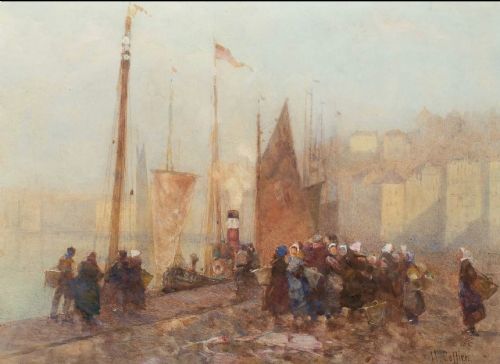
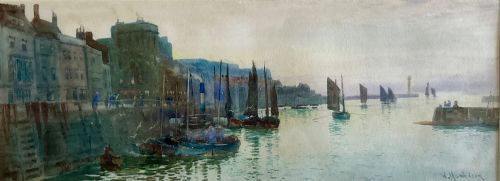
Grey seascape watercolour art focuses on maritime scenes, coastal villages, and harbour views rendered in muted monochrome tones or restrained palettes. These works capture atmospheric weather, choppy waters, and shipping activity along British and European shores during the nineteenth and early twentieth centuries.
The pieces on this page are predominantly framed original works on paper, varying from small intimate sketches to large exhibition pieces. Buyers encounter depictions of fishing cobles, steam vessels, and dramatic cliffs originating from Victorian, Edwardian, and early twentieth-century periods.
Materials and construction
Artists applied watercolour pigment and ink onto absorbent paper supports, often utilising the white of the unpainted paper to capture luminous highlights on grey water and foam. Washes were layered to build depth in stormy skies and turbulent seas.
Finished works are typically housed behind protective glass within timber frames, preserving the water-soluble pigments from atmospheric moisture and handling.
Listings feature works executed on paper using watercolour pigment and ink, spanning the Victorian era through to the mid-twentieth century.
Determinants of quality
Quality rests upon the artist's ability to handle fluid pigment with confident brushwork, conveying the weight of the sea and the play of light on overcast days without overworking the paper. Strong compositional balance and a distinct sense of atmosphere distinguish accomplished marine works from routine topographical sketches.
The preservation of the paper surface and the freshness of the watercolour washes also influence the standing of a piece, as fading or heavy acidification diminishes the visual impact of the original hues.
Thomas William Morley·Hector Caffieri·William Matthison·Frank Kelsey·John Moxon·Charles William Adderton·Vincenzo D Esposito·Thomas Bush Hardy·Ernest Dade·Robert Leslie Howey·Frank H Mason·John Mitchell·Samuel Owen·Ernest F Hill·Don Wilson·Frederick Stuart Richardson·Percy Brooke·William Kay Blacklock·Arthur Wilde Parsons·Frank Wasley·Fred Mayor·Joseph Newington Carter·William Boyce·Rowland Henry Hill·Harry Wanless
The Grey Seascape Watercolour Art Glossary
- Watercolour pigment
- Finely ground colour particles suspended in a water-soluble binder, applied to paper with water.
- Coble
- A traditional open fishing boat with a high bow and flat stern, commonly found along the northeast coast of England.
- Monochrome
- A painting executed in a single colour or shades of a single colour, such as grey and white.
- Wash
- A thin, transparent layer of diluted watercolour pigment spread evenly across the paper to create skies or water.
- Maritime
- Depicting ships, shipping, and coastal scenes as the primary subject matter of the artwork.
Grey Seascape Watercolour Art: Frequently Asked Questions
What subjects appear in grey seascape watercolours?
These works depict coastal harbours, fishing fleets, beached boats, and open waters under overcast or stormy skies. Scenes frequently feature specific locations such as Yorkshire fishing ports, Scottish coastal towns, and European harbours.
Ships range from traditional sailing vessels and steam tugs to naval craft and working cobles navigating choppy coastal waters.
How should I frame and hang watercolour art?
Watercolours require framing behind glass with a mount that keeps the paper from touching the surface. This prevents moisture damage and preserves the delicate pigments over time.
Display these pieces away from direct sunlight to prevent the watercolour pigments from fading or the paper from yellowing.
How do I date a nineteenth-century maritime watercolour?
Dating relies on stylistic clues, artist signature records, and the type of vessels depicted in the composition. Victorian and Edwardian works often carry artist signatures, dates, or titled mounts written in contemporary ink.
The framing materials, backing boards, and historical labels on the reverse also offer reliable evidence for the period of creation.
What is British Impressionism in marine art?
British Impressionism in this context refers to late nineteenth and early twentieth-century painters adopting loose brushwork and a focus on atmospheric light. Artists sought to capture fleeting weather conditions and the movement of water rather than strict topographical accuracy.
Grey palettes were frequently employed to render mist, rain, and overcast seas along the British coastline.