




Paper County Map
A paper county map brings historical geography into the room, offering detailed cartography from centuries past.
Paper County Map
A paper county map documents local geography, settlement layouts and regional boundaries through historical cartography. These works originate from periods spanning the seventeenth century to the nineteenth century, encompassing Georgian and Victorian iterations.
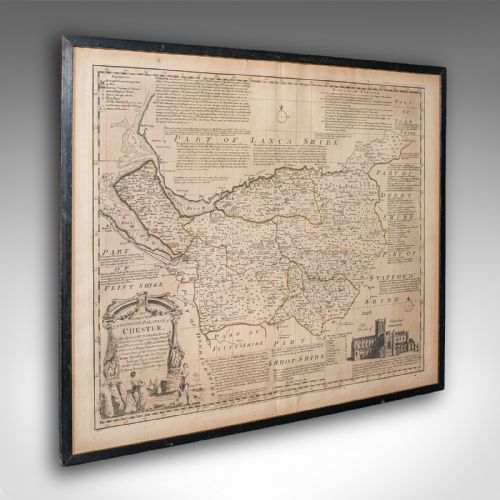
The selections available here emphasise framed cartography, wall art and atlas engravings depicting specific regions. Pieces from seventeenth-century Dutch publishers sit alongside English atlas sheets by notable cartographers of the period.
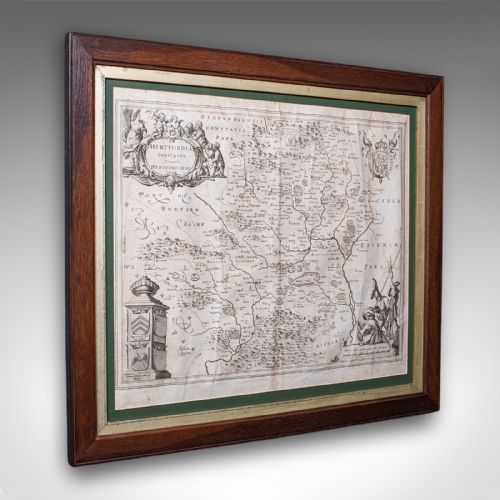
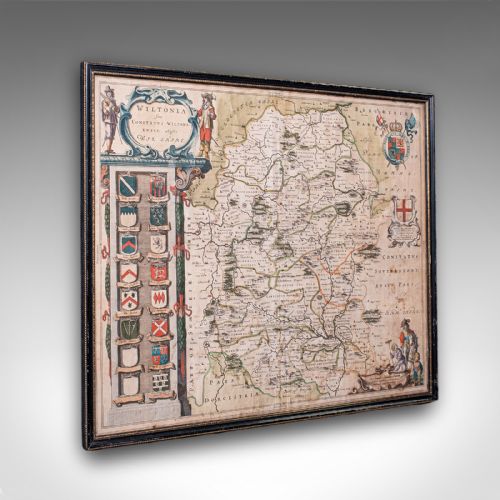
Buyers encounter regional depictions ranging from Hertfordshire and Wiltshire to Surrey and Wales. These sheets typically present engraved lines on paper, frequently housed behind glass within wooden frames.
Materials and production methods
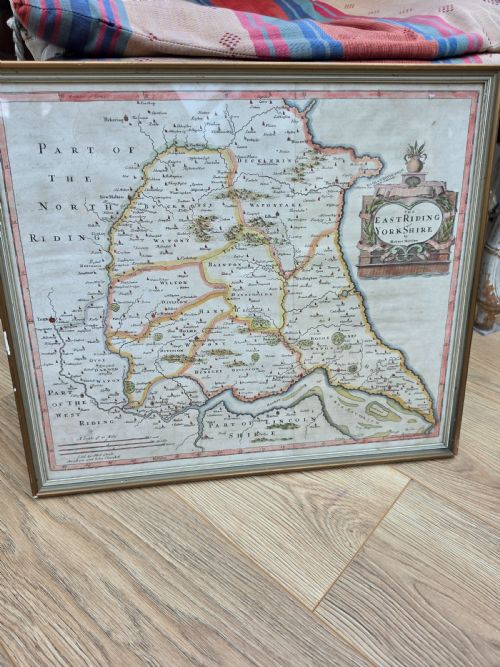
Makers produced these maps using paper as the primary support, applying ink through engraved metal plates or woodblocks. Many examples incorporate hand-applied watercolour washes to delineate boundaries, counties and decorative cartouches.
Framed pieces utilise timber mouldings such as oak, often complemented by gilt wood accents or protective glass panels. Earlier examples frequently display Latin or English text on the reverse, reflecting their origins in bound atlases.
Early mapmakers thoughtfully populated empty sea spaces with magnificent sea monsters and sailing ships to keep wandering navigators entertained.
Factors of distinction
The grade of a paper county map rests upon the clarity of the engraving, the crispness of the impression and the precision of any applied colour. Early printings from well-maintained plates yield sharper cartographic detail than later impressions.
The condition of the paper surface and the completeness of the margins influence the standing of an individual sheet. Original binding creases, contemporary hand colouring and historical provenance further distinguish finer examples from standard items.
Blaeu·John Speed·Robert Morden·Janssonius·Emanuel Bowen·John Cary·Christopher Saxton
The Paper County Map Glossary
- Cartography
- The science or practice of drawing maps. This encompasses the historical study and collection of antique printed maps.
- Atlas engraving
- An engraved map plate originally produced for inclusion in a bound atlas volume. These sheets were frequently removed later for individual framing.
- Cartouche
- A decorative frame or tablet on a map enclosing the title, scale bar or publisher details. Seventeenth-century cartouches often incorporate elaborate heraldic or allegorical motifs.
- Hand-coloured
- A map decorated with watercolour applied by hand after the printing process. This technique enhanced both the visual appeal and geographical clarity of the sheet.
Paper County Map: Frequently Asked Questions
How do I date a paper county map?
Dating relies upon internal evidence such as cartographer signatures, publication dates within the title cartouche and stylistic indicators of the engraving. Typography and spelling variations also provide reliable clues to the decade of production.
Comparison with known atlas editions helps narrow the timeframe further, distinguishing seventeenth-century impressions from Georgian or Victorian reissues.
Why do some maps have text on the back?
Many early maps were originally printed as pages for bound books and atlases. Printers applied descriptive text in Latin or English to the reverse side to accompany the geography.
When these volumes were later disassembled, the resulting sheets retained this printed text, which often serves as proof of period origin.
Are these maps original or reproductions?
The pieces listed originate from the periods stated, utilising period paper, plate marks and early printing techniques. Close inspection reveals the indentation of the printing plate into the paper fibres.
Modern photographic reproductions lack these physical characteristics and the genuine patination accumulated over centuries.
How should I care for a framed map?
Protect the paper from direct sunlight to prevent fading of the ink and any watercolour washes. Maintain stable humidity levels to avoid paper distortion within the frame.
Ensure framing materials are acid-free to prevent degradation of the antique paper over time.