
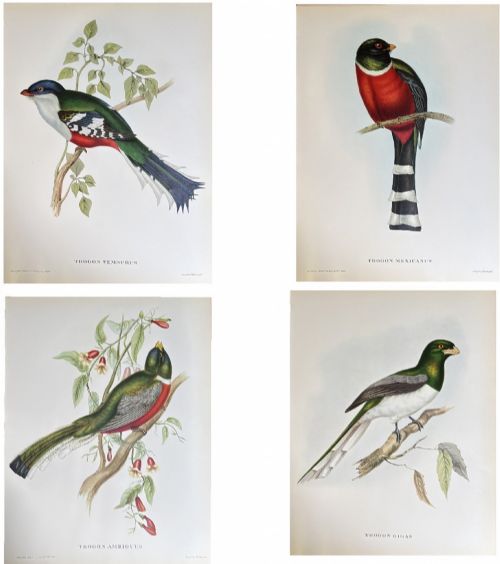
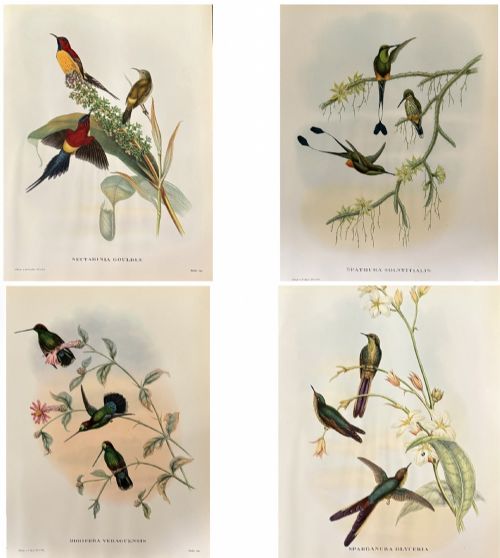
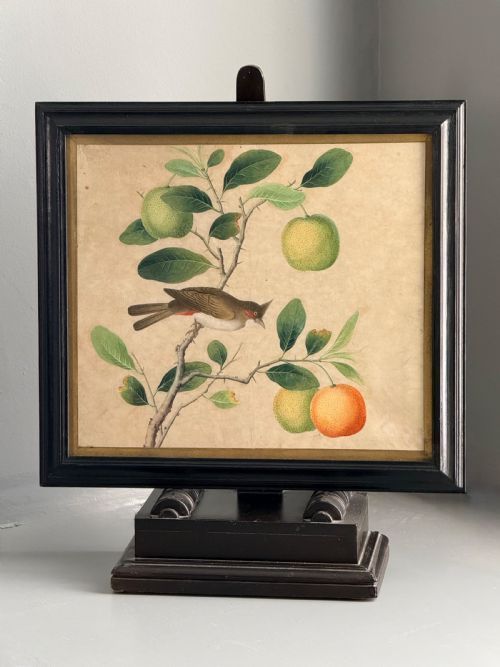
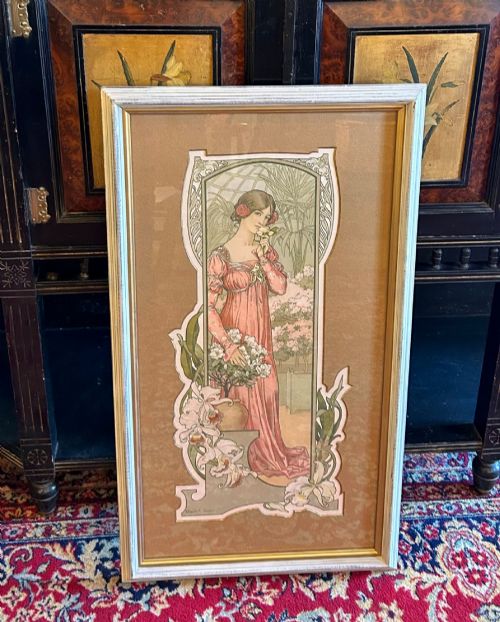


Paper Botanical Artwork
Paper botanical artwork captures plants and flowers on delicate grounds, offering collectors a subtle study of natural forms through historical paintings, watercolours, and prints.
Paper Botanical Artwork
Paper botanical artwork encompasses detailed watercolours, gouache paintings, prints, and cut paper pictures depicting flora across multiple decades. These pieces record scientific interest alongside decorative floral studies, focusing on individual blooms, garden views, and still life arrangements.
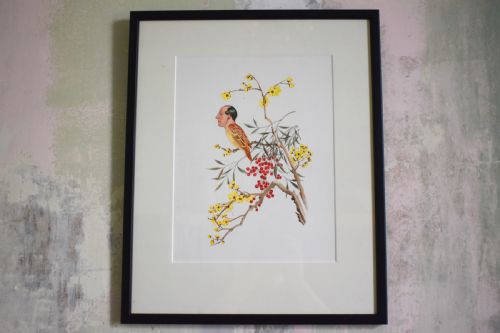
The selections span from the 18th century through the mid-20th century, capturing Victorian and Edwardian aesthetics as well as 20th-century British interpretations. Examples range from hand-painted gouache on pith paper to lithographs and framed engravings.
Buyers encounter works featuring specific floral subjects like roses, azaleas, and pansies, often presented as framed wall art. These illustrations reflect shifting artistic styles, moving from precise botanical recording to looser modernist compositions.
Materials and Techniques
Watercolour pigment and gouache form the primary colouring agents applied to paper supports, providing varying degrees of opacity and fine detail. Artists also utilised ink, pencil, and pastel to define contours and build texture within floral studies.
Specialised grounds such as pith paper and silk appear alongside standard cellulose papers, offering distinct surface textures that absorb pigments differently. Many works incorporate protective glass within period framing to safeguard fragile paper surfaces from atmospheric moisture and handling.
Listings feature 19th-century engravings alongside mid-century gouache paintings on paper.
Quality Variations
Quality rests upon the precision of the brushwork and the artist's ability to render botanical structures with anatomical accuracy. Finer examples display nuanced colour blending and confident line work that brings three-dimensional depth to flat blooms.
The condition of the paper surface significantly impacts the stature of a piece, with superior works retaining vibrant pigment saturation without excessive fading. The harmony between the original artwork and its period mount or frame further distinguishes finer compositions.
James Tower·John Curtis·Elisabeth Sonrel·Lester Sutcliffe
The Paper Botanical Artwork Glossary
- Gouache
- An opaque water-based paint that produces heavier, more saturated colour fields than traditional watercolour. It allows artists to build bright highlights over darker washes.
- Lithograph
- A print produced by drawing an image on limestone or a metal plate with a greasy medium, then applying ink to transfer the design. This technique enables subtle tonal gradations in botanical plates.
- Pith paper
- A delicate material formed from the spongy interior of the Tetrapanax papyrifer plant, historically used for miniature painting. It accepts watercolour and gouache with a velvety matte finish.
- Engraving
- A printmaking method where lines are cut directly into a metal plate with a sharp tool to hold ink. These plates produce fine, crisp botanical illustrations.
Paper Botanical Artwork: Frequently Asked Questions
How should I frame these works?
Protect delicate paper by using acid-free mounts that prevent the artwork from touching the glass directly. Keep framed pieces away from direct sunlight to prevent the watercolours and gouache pigments from fading.
Choose simple wooden frames that complement the historical period of the artwork without overpowering the botanical subject matter.
What periods do these pieces represent?
The available selection spans from the 18th century through the Victorian and Edwardian eras, extending into mid-century 20th-century British modernism. Each period brings distinct approaches to colour, framing, and botanical accuracy.
Earlier pieces often focus on scientific precision, while later 20th-century works lean towards expressive still-life compositions.
Are these works hand-painted?
The inventory includes both original hand-painted watercolours or gouache pieces and printed works like lithographs and engravings. Individual listings specify whether an item is a unique painting or a period print.
Hand-painted examples show distinct brush texture, whereas prints reveal fine ink dot patterns or plate marks under close examination.
Where were these botanical studies created?
Many pieces originate from British studios, recording domestic gardens, Kew Gardens, and local flora. Other examples include continental European works and Chinese export paintings created on silk or pith paper.
These varied geographical origins introduce different aesthetic traditions to the depiction of natural subjects.