



Paper Ship Painting
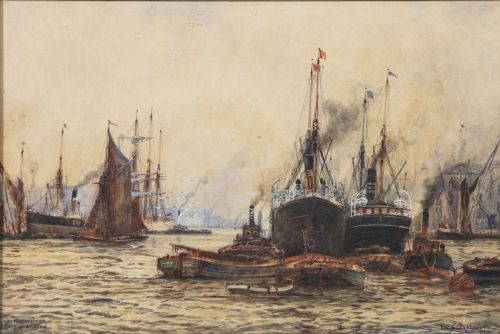
A paper antique ship painting captures the movement of tall masts and coastal harbours through delicate washes that require protective framing.
Paper Ship Painting
A paper antique ship painting brings together maritime scenes executed on paper supports, originating mostly across the nineteenth and early twentieth centuries. These works record ports, estuaries, and open seas under varying conditions from calm river waters to choppy tides.
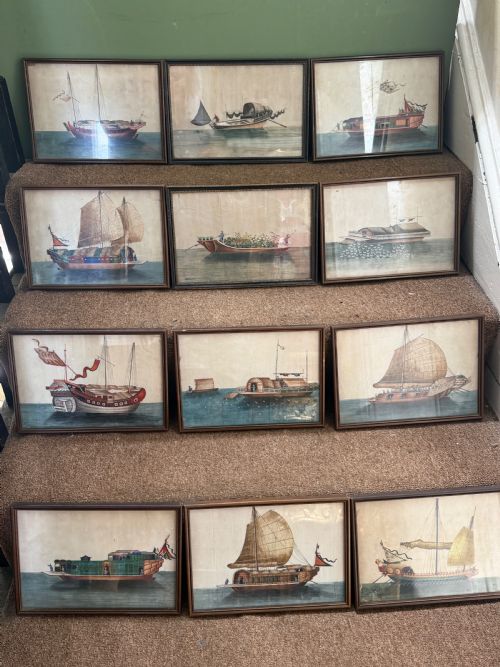
The pieces on this page appear predominantly as watercolours and gouache works framed under glass with wooden mouldings. Collectors encounter individual framed paintings alongside sets depicting junks and coastal shipping.
Materials and construction
Artists painted these marine scenes using watercolour pigments, gouache, and ink applied directly to paper sheets. Painters built up transparent washes for skies and water while adding opaque touches of gouache to highlight foam and sail canvas.
The resulting works survive beneath glass panes within wooden frames designed to protect the fragile paper surface from atmospheric moisture and handling.
The listings span the nineteenth century through the 1940s, utilising paper, watercolour, gouache, and ink.
Assessing quality
Quality rests upon the handling of light and water by the artist, distinguishing works with precise rigging and atmospheric depth from hurried sketches. Master hands capture the weight of a hull and the motion of wind in sails through controlled brushwork.
The preservation of the paper itself dictates the standing of a piece, as clean grounds without heavy toning or foxing preserve the intended contrast of the maritime scene.
Frank William Scarbrough·William Frederick Settle·Thomas Bush Hardy·Samuel Owen·William Wyld·Rowland Henry Hill·Arthur Wilde Parsons·Lieutenant Harold E Frecker·William Boyce·Frederick William Booty·J Syer·Edward Aubrey Hunt·Alfred Leyman·Henry Scott Tuke
The Paper Ship Painting Glossary
- Gouache
- An opaque watercolour paint that dries to a matte finish. Artists utilise it to build dense highlights on paper.
- Foxing
- Brown spots that develop on paper over time due to chemical reactions. Collectors monitor these marks when assessing condition.
- Watercolour
- A paint consisting of pigment suspended in a water-based solution. It forms the primary medium for these maritime depictions.
- Maritime art
- Works depicting ships, harbours, and the sea. This genre encompasses the various port scenes and shipping views found here.
Paper Ship Painting: Frequently Asked Questions
How should I hang a paper antique ship painting?
Keep these framed works away from direct sunlight to prevent the watercolour pigments from fading across the paper surface. Stable indoor humidity protects both the antique wood frame and the paper support.
Ensure the painting hangs securely using appropriate wall fixings suited to the weight of the wood and glass assembly.
What subjects appear in these maritime paintings?
The works depict tall ships, clippers, and steam vessels navigating rivers, ports, and open coastal waters. Scenes range from bustling London dockyards to quiet overseas harbours.
Specific locations such as the River Humber, Portsmouth, and the Port of London frequently ground the compositions in maritime history.
How do I identify the period of a ship painting?
Examine the style of the vessels and the clothing of any figures depicted within the harbour or deck scenes. Nineteenth-century works often show detailed rigging on sailing craft, while Edwardian pieces introduce early steam vessels.
The framing materials and backing boards frequently provide additional clues regarding the age of the piece.
Why are these paintings executed on paper?
Paper offered artists a portable surface suited to capturing transient effects of light and weather while travelling near ports and coastal towns. Watercolour and gouache worked rapidly on paper sheets to record shifting tides and skies.
Framing under glass provided the necessary protection for the delicate medium once the painting reached completion.