


Georgian Naval Artwork
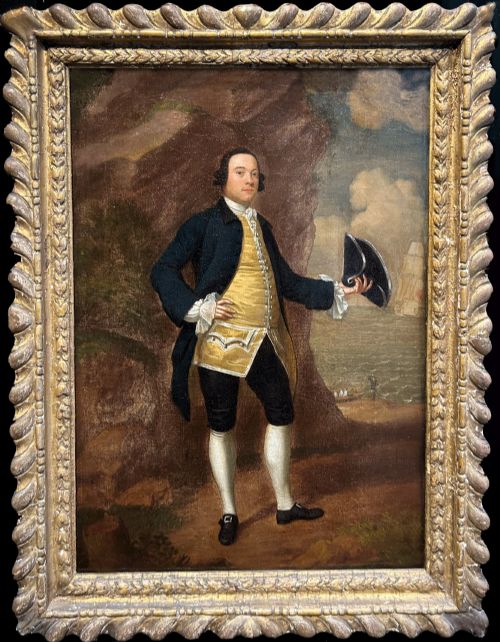
Georgian naval artwork brings maritime history to life through portraits of officers and depictions of sea battles on canvas and paper.
Georgian Naval Artwork
Georgian naval artwork encompasses oil paintings, watercolours, engravings, and portrait miniatures depicting ships, harbours, and commanders of the fleet. These pieces record maritime engagements and naval personnel from the eighteenth and nineteenth centuries.
You are most likely to encounter oil paintings on canvas depicting warships and sea battles, alongside framed portraits of naval officers in uniform. Harbour scenes and coastal shipping views also appear frequently across the selection.
The objects span periods from the mid-eighteenth century through the Regency era and into the Victorian period. Formats range from large oil paintings to small portrait miniatures on agate panels and reverse glass prints.
How They Were Made
Artists painted primarily with oil paint on canvas or worked in watercolour on paper, capturing intricate details of rigging, cannon, and uniform insignia. Portrait miniatures utilised specialised surfaces such as agate panels housed in gold frames.
Framing materials included wood, giltwood, and maple, sometimes incorporating divided sections or glass to protect delicate prints and watercolours. Craftsmanship focused on durable supports designed to preserve pigment over centuries.
Listings feature works spanning the eighteenth and nineteenth centuries, including the Regency and Victorian periods, executed in oil, watercolour, and engraved print formats.
What Varies in Quality
Quality depends on the precision of the maritime details, such as the accurate depiction of ship rigging, naval uniforms, and coastal topography. Works by named artists demonstrate superior handling of light, atmosphere, and human likeness compared to anonymous studio output.
The integrity of the original medium influences value, with untouched oil paintings on canvas and well-preserved watercolours holding greater visual clarity. Fine auxiliary elements, including period giltwood frames and gold mountings, elevate the overall standard of the piece.
Francis Hayman·John Simmons·Samuel Owen·Sir Thomas Lawrence·Sir William Charles Ross·Francis Holman·Robert Ker Porter·Ambrosini Jerome
The Georgian Naval Artwork Glossary
- Man-of-war
- A powerful armed sailing warship of the Royal Navy used during the eighteenth and nineteenth centuries. These vessels formed the backbone of naval fleets.
- Reverse glass print
- An image applied to the back of a piece of glass so it is viewed through the transparent front. This technique protected the delicate paper print beneath.
- Portrait miniature
- A small, highly detailed painting on a portable panel or card. They were often encased in precious metal frames for personal wear or keeping.
- Giltwood
- Wood carved and coated with a thin layer of gold leaf. It provided opulent borders for important maritime paintings and mirrors.
- Regency
- The period from 1811 to 1820, or the broader stylistic era associated with the early nineteenth century. Works from this time display distinct classical influences.
Georgian Naval Artwork: Frequently Asked Questions
What is georgian naval artwork?
Georgian naval artwork consists of period paintings, prints, and miniatures depicting ships, sea battles, and naval officers. These pieces record maritime history from the eighteenth and nineteenth centuries.
They capture specific vessels like HMS Swift and notable figures such as admirals and captains. The works serve as historical documents of naval power and maritime trade.
How were these paintings displayed?
Original artworks were typically displayed in the homes of naval officers, merchants, and gentry who had ties to the sea. They were mounted in substantial wood or giltwood frames to command attention in reception rooms.
Smaller items like portrait miniatures were often kept privately in cases or worn on the person. Larger canvas works anchored the decor of maritime households.
What materials were used?
Artists used oil paint on canvas as the primary medium for large naval engagements and formal officer portraits. Watercolours and engraved prints on paper also documented coastal scenes and individual ships.
Specialised items utilised unusual supports, including agate panels for miniatures and reverse glass prints paired with maple frames.
How do I date a piece?
Dating relies on uniform styles, ship design, and documented historical events depicted in the scene, such as specific naval engagements. Artist attribution and recorded exhibition dates provide precise chronological markers.
Frame construction and the material of the support panel also offer reliable clues to the period of manufacture.