



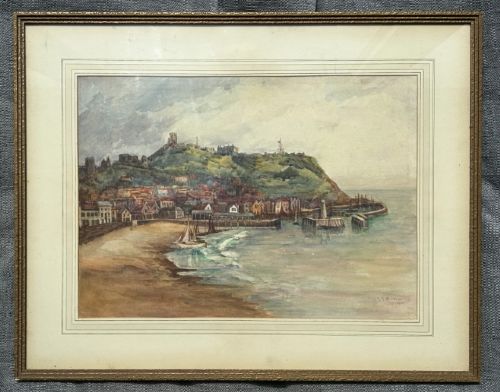
Framed Marine Watercolour Painting
A framed marine watercolour painting captures the changing mood of the sea, from working harbours to open waters.
Framed Marine Watercolour Painting
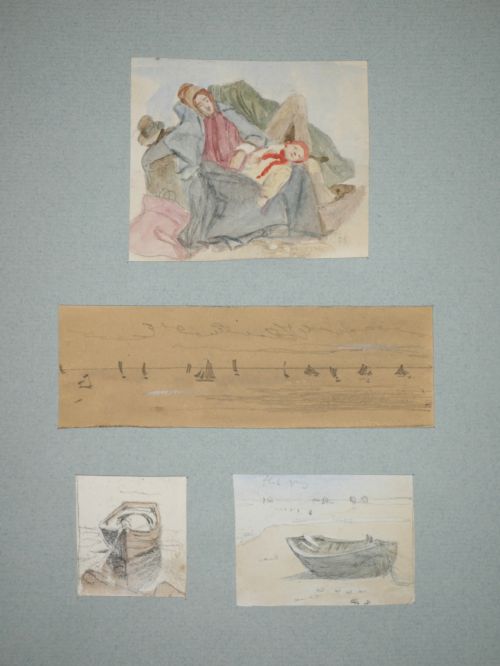
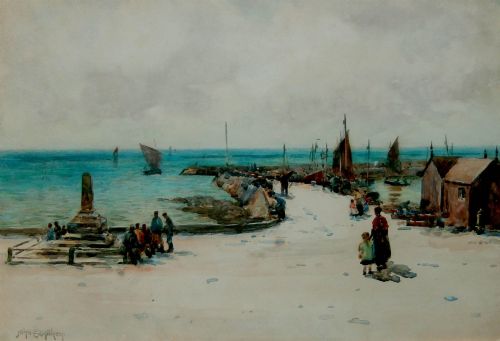
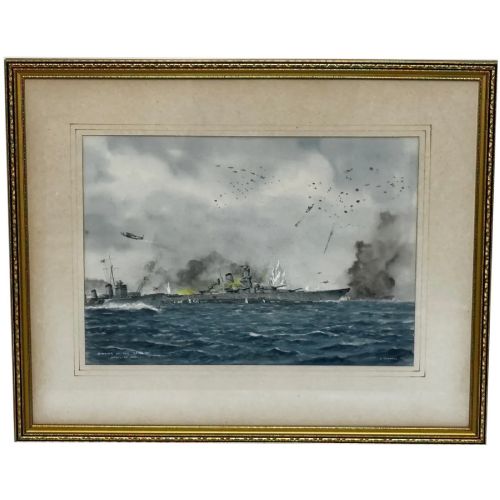
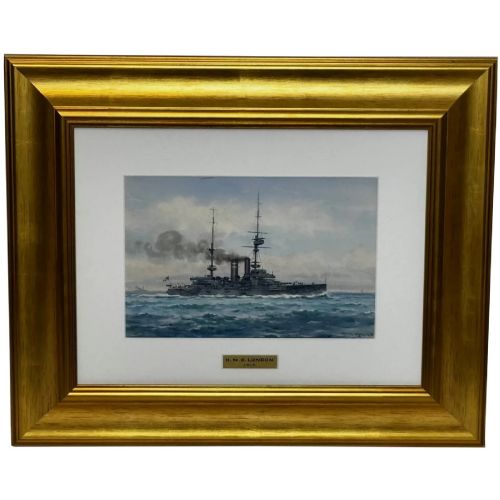
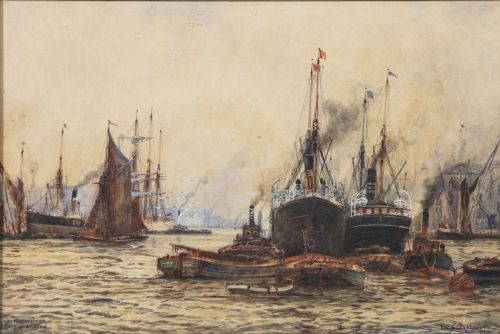
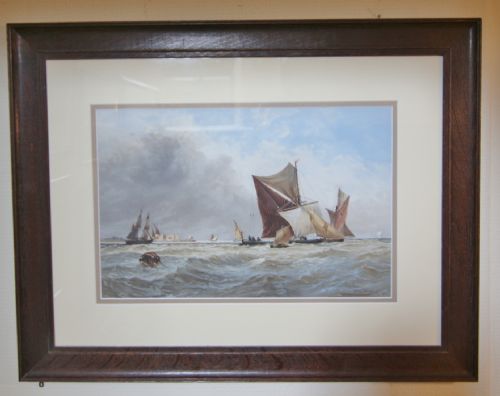
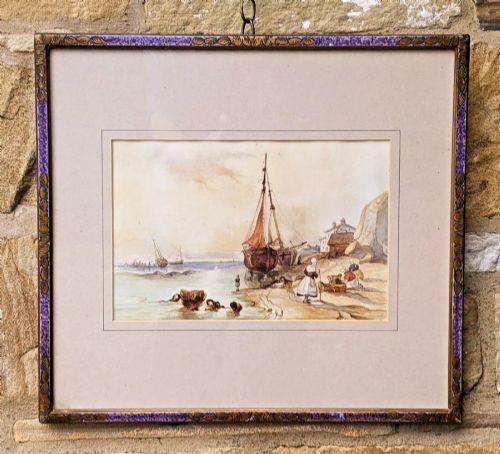
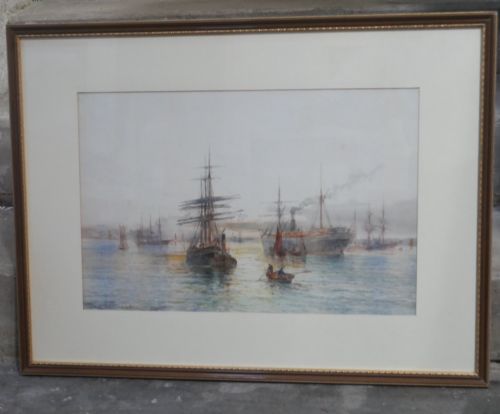
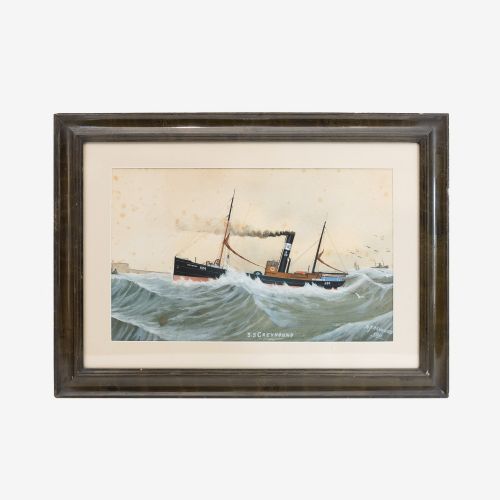
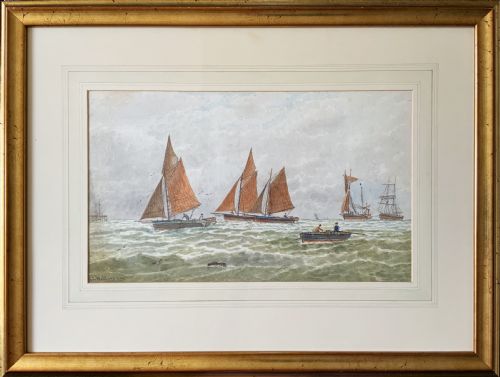
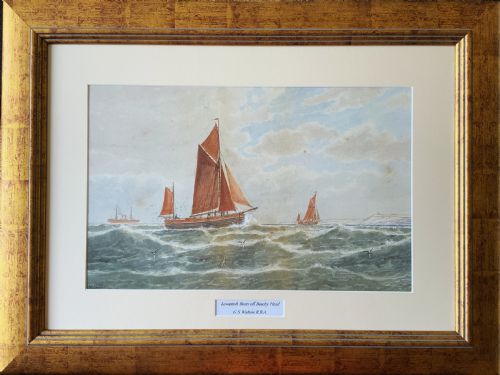
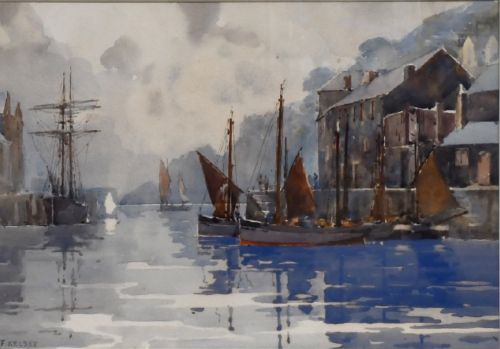
A framed marine watercolour painting depicts coastal scenes, shipping vessels, and harbour views created on paper. These works document maritime life, naval vessels, and coastal topography across multiple decades.
The pieces on this page span the nineteenth century through the mid-twentieth century, encompassing Victorian, Edwardian, and mid-century British and European coastal art. Smaller sketches sit alongside larger finished exhibition pieces.
Subjects range from quiet tidal estuaries and fishing boats returning to port to dramatic naval engagements and bustling international harbours. Artists recorded specific locations from Cornwall and Yorkshire to Venice and Normandy.
How They Were Made
Artists applied watercolour pigment and occasional gouache to paper sheets using fine brushes to capture translucent washes of sky and sea. Paper provided a bright, reflective ground that gave watercolours their characteristic luminosity.
Works were protected behind glass within wooden or gilt wood frames to shield the delicate pigments from moisture and light damage.
Sailors occasionally commissioned sentimental paintings of their ironclad warships as floating tributes to shipmates.
What Varies in Quality
Quality rests in the handling of light, atmospheric perspective, and the precise depiction of rigging, hull forms, and coastal architecture. Master painters convey movement and weather with economical brushwork.
Condition varies according to the stability of the paper support and the preservation of original pigments against fading from sunlight exposure over generations.
James Orrock·James Smetham·Charles Edward Dixon·John E. Aitken·Eric Tufnell·William Banks Fortescue·Frank Watson Wood·Frank William Scarbrough·Thomas Bush Hardy·Alexander Harwood·George Stanfield Walters·Frank Kelsey·F A Roylance·John Moxon·Alfred George Morgan·Lionel Horsnell·John Bedloe Goddard·Charles William Adderton·Richard Harry Carter·Vincenzo D’Esposito·William Lee Hankey·William Frederick Settle·Fred Lawson·Ernest Dade·William Tuck
The Framed Marine Watercolour Painting Glossary
- Watercolour pigment
- Finely ground colour particles mixed with a water-soluble binder, applied in thin layers to create transparent effects.
- Gouache
- An opaque water-based paint often combined with watercolour to add highlights and solid areas of colour.
- Lugger
- A traditional two-masted fishing vessel equipped with lug sails, frequently seen in West Country coastal scenes.
- Ironclad
- A steam-propelled warship protected by iron or steel armour plates, appearing in late nineteenth and early twentieth-century naval works.
Framed Marine Watercolour Painting: Frequently Asked Questions
How should I hang a watercolour painting?
Hang paintings away from direct sunlight and damp environments to protect the paper and pigments from fading or foxing over time.
Ensure stable wall fixings that support the weight of the timber frame and glass glazing securely.
What subjects do marine watercolours show?
These works display working fishing boats, naval warships, coastal towns, lighthouses, and open seascapes recorded by contemporary artists.
Many depict specific regional harbours and named vessels operating during the Victorian and Edwardian eras.
How do I date a marine painting?
Artists often signed and dated their work directly on the front of the paper or recorded dates within archival inscriptions on the reverse.
Clothing styles of figures, vessel architecture, and framing materials also provide strong chronological indicators.
Why is gouache used with watercolour?
Artists utilised gouache alongside translucent watercolour to introduce opaque highlights, sparkling wave crests, and bright ship details.
This mixed technique added depth and contrast to maritime scenes.