





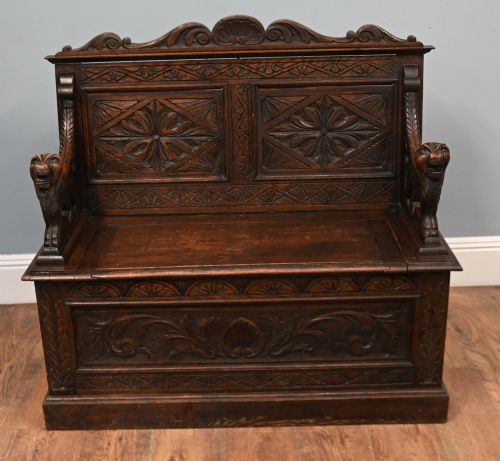

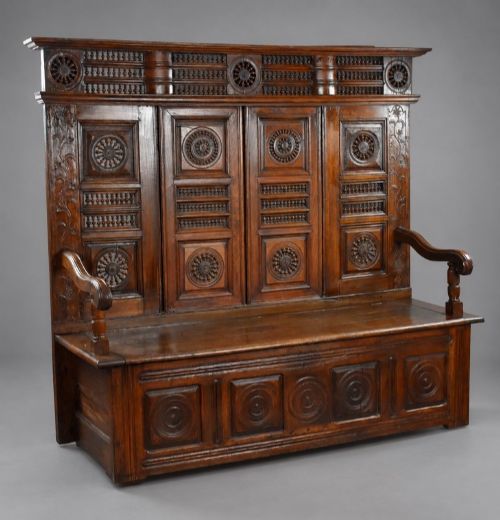
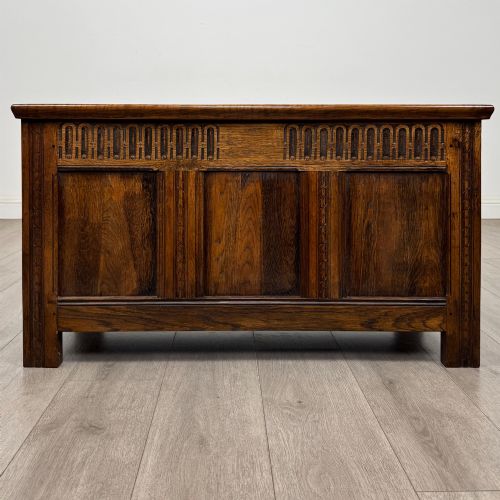
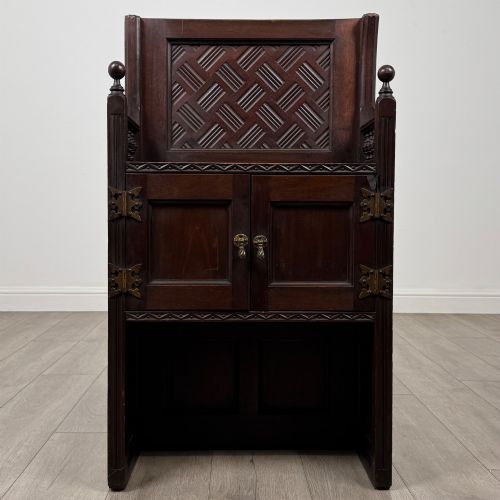
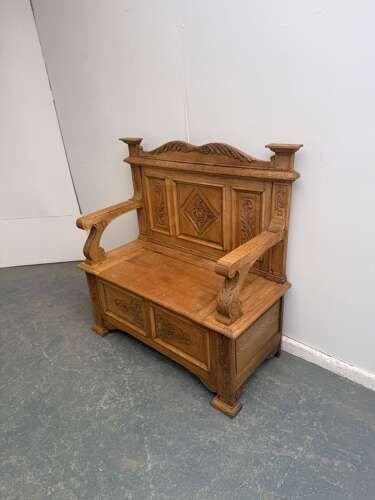
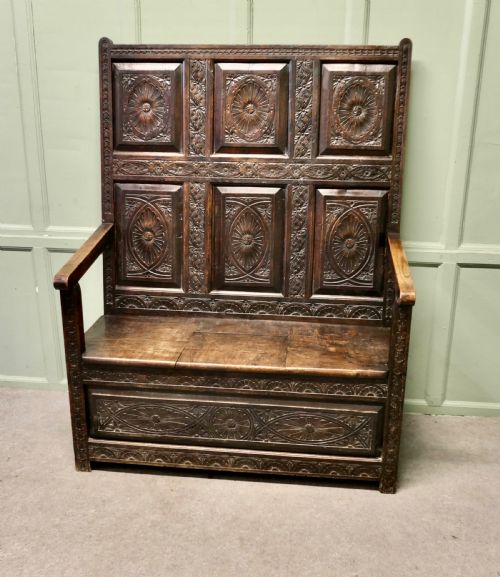
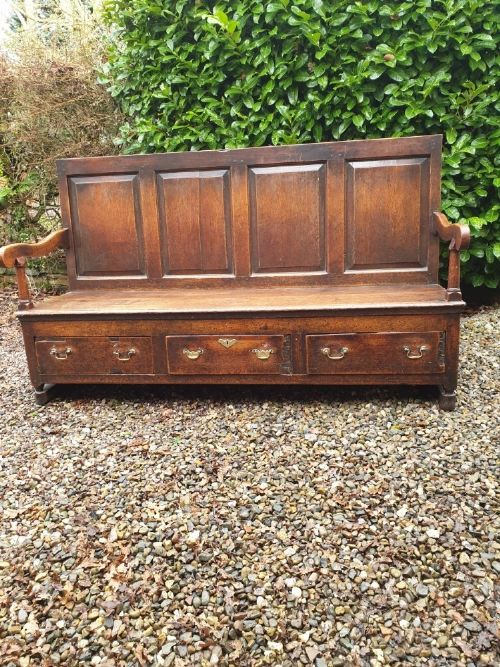
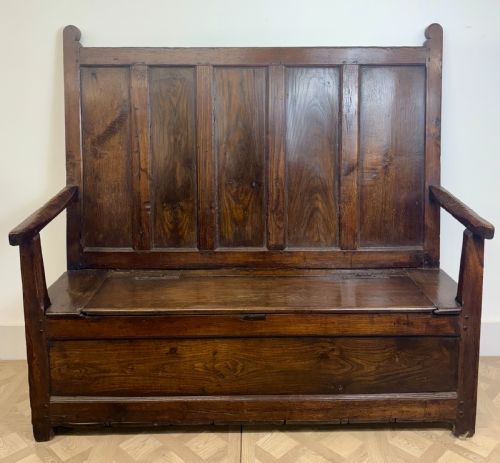
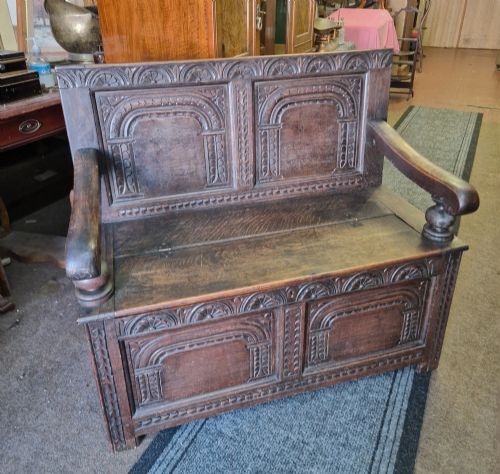
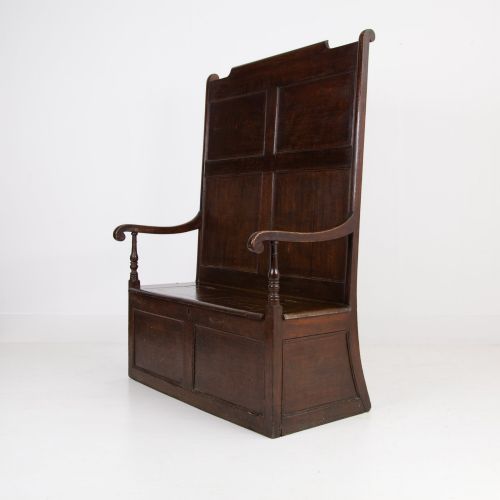
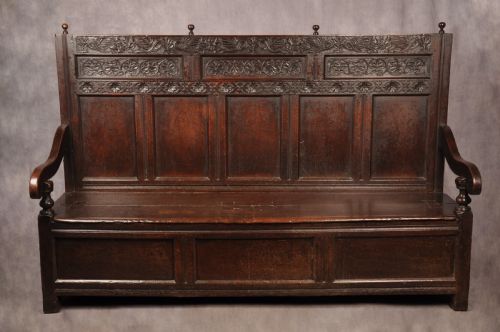
Panelled Storage Bench
A panelled storage bench brings centuries of solid vernacular craftsmanship into a hallway, offering hidden depth beneath a practical seat.
Construction and Materials
Cabinetmakers constructed these benches using traditional frame-and-panel techniques in timber such as oak and elm, allowing the wood to expand and contract naturally without splitting. Iron and brass hinges, cleats, and occasional painted finishes complete the construction of these storage forms.
Joinery relied on pegged mortise and tenon joints to bear the considerable weight of daily seating while protecting the interior dry goods or blankets stored within the base.
Judging Quality
Quality rests in the integrity of the timber, the crispness of any carved panels, and the originality of the structural frame, including the base boards and lid hinges. Heavy later alterations or replaced floorboards diminish the integrity of an early vernacular piece.
Proportion and timber figure separate standard utility benches from exceptional country house or provincial examples, where skilled hands shaped high panelled backs and shaped wing arms.
Panelled Storage Bench Retail Price Guide 2026
Typical asking prices for panelled storage bench among the pieces listed under this phrase on Sellingantiques today, from the lower quarter to the upper quarter. They describe what is for sale here now, not the wider market.
Early bench backs were built tall enough to trap precious peat smoke heat around the sitter's ears while keeping cold floor draughts at bay.
The Panelled Storage Bench Glossary
- Settle
- A wooden bench with a high back, solid arms, and a box base for storage. It was designed to keep draughts away from the hearth in older houses.
- Mule chest
- A traditional chest featuring a drawer or drawers beneath the main lift-up lid compartment. This form bridges the gap between a standard coffer and a chest of drawers.
- Frame-and-panel
- A method of construction where a central thin panel floats within a grooved outer frame. This technique prevents warping as the wood responds to humidity.
- Vernacular furniture
- Practical items made by local tradesmen for everyday use rather than high urban workshops. These pieces utilise regional timbers and traditional local designs.
- Wingback
- A seating design featuring extensions on the upper sides of the backrest. These wings shielded the occupant from cold draughts in unheated rooms.
Panelled Storage Bench: Frequently Asked Questions
Where should I put a panelled storage bench?
These benches sit naturally in hallways, boot rooms, and large kitchens where their dual function provides seating and concealed storage for shoes or linens. Their solid backs help define open spaces or shelter an entryway.
Ensure the placement accounts for the swing of the lift-up seat or lid, leaving enough clearance against hallway walls or radiators.
How do I tell an 18th century bench from a Victorian copy?
Eighteenth-century examples display natural timber patination, hand- cut peg fastenings, and signs of genuine wear around the footrests and seat edges. Tool marks left by pit saws and adzes provide clues to their age.
Revival pieces from the Victorian era often feature machine-sawn timber uniformity and crisper, shallower carving styles characteristic of nineteenth-century workshops.
Did these benches always have storage underneath?
Traditional box settles incorporated a lidded compartment beneath the seat for blankets, fuel, or provisions. Other variations functioned simply as open benches or hall seats with under-seat cabinets.
The inclusion of storage distinguished the box settle from standard open-framed forms found in country dwellings.
How do I care for antique oak storage benches?
Maintain the timber by applying traditional beeswax periodically to nourish the dry grain and preserve the surface sheen. Avoid placing the bench near direct heat sources or in damp environments.
Keep interior storage compartments aired to prevent moisture accumulation within enclosed wooden spaces.