


Panelled Door Corner Cupboard
These panelled door corner cupboard examples transform awkward room junctions into display space, built from oak, mahogany and pine across Georgian and Victorian eras.
Panelled Door Corner Cupboard
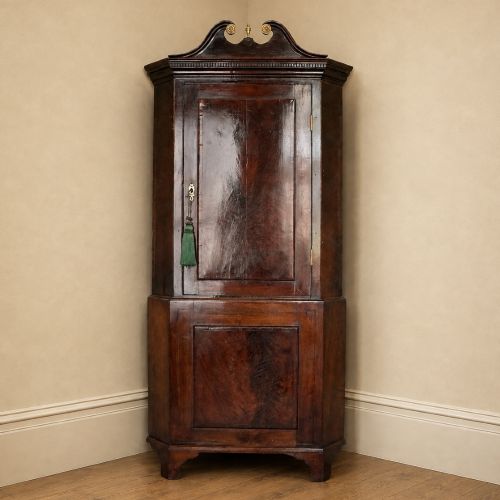
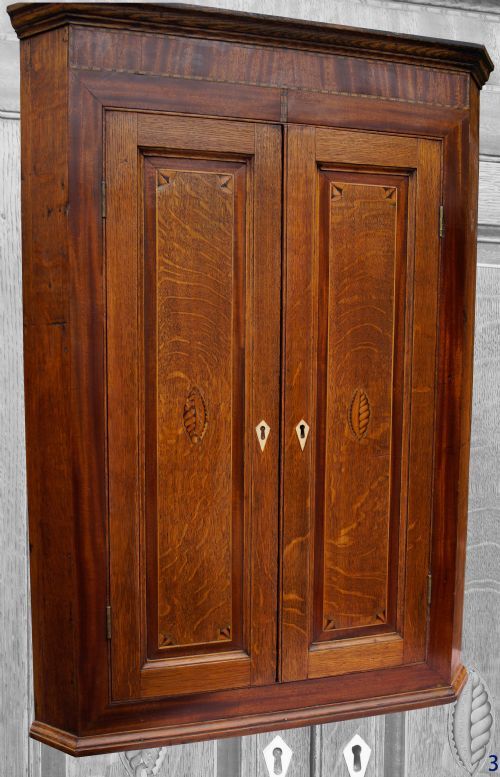
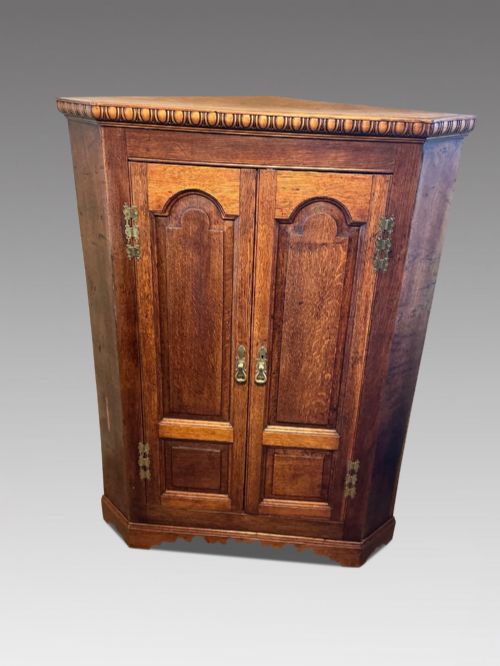
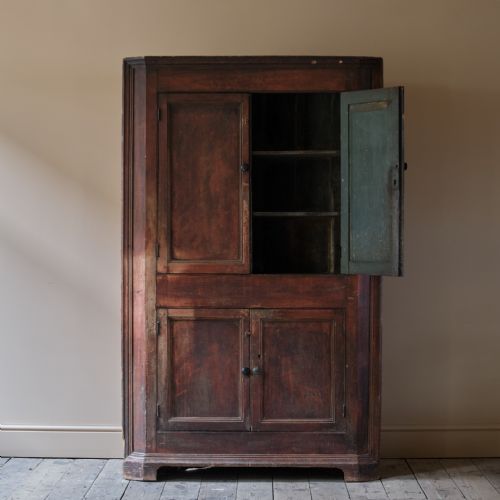
When you search for a panelled door corner cupboard, you encounter timber furniture designed to fit flush into room angles. The selection on this page centres primarily on Georgian and Victorian pieces, spanning the eighteenth and nineteenth centuries.
Most items you meet here take the form of oak or mahogany cupboards, split between hanging wall models and tall floor-standing versions. They serve to utilise neglected wall space while concealing or displaying contents behind timber panels.
How they were made
Cabinet makers built these cupboards using solid timbers such as oak, mahogany, pine and fruitwood, jointed to withstand the seasonal movement of wood. Brass and iron hardware, including hinges and escutcheons, secure the panelled doors and keep the frames square.
Surfaces receive different treatments depending on the period and origin, ranging from polished mahogany and waxed oak to historic layers of paint. Interior shelves and backs utilise secondary softwoods like pine, shaped to fit the triangular footprint of the cabinet.
Several cupboards are described as drinks cabinets, proving that awkward corners have solved social refreshment problems for centuries.
What varies in quality
The distinction between standard utility furniture and superior examples lies in the selection of timber and the precision of the joinery. Pieces featuring figured mahogany or well-figured oak display greater ambition in their construction than plain painted pine versions.
Proportion and scale dictate the visual success of the cupboard, where tall standing pieces with well-balanced door panels command a stronger presence than simpler hanging variants. The retention of original brass hardware and working locks adds substance to the build.
The Panelled Door Corner Cupboard Glossary
- Panelled door
- A door construction where a central timber panel floats within a grooved frame to allow for wood expansion. This technique prevents warping in solid timber cupboards.
- Hanging corner cupboard
- A wall-mounted cabinet designed to be secured directly to intersecting walls. These pieces free up floor space while providing upper-level storage.
- Standing corner cupboard
- A floor-standing cabinet that fills a room angle from base to cornice. They often feature multiple tiers or separate upper and lower sections.
- Escutcheon
- A protective plate surrounding a keyhole, usually made of brass. It prevents the wood around the lock from splintering through repeated use.
- Cornice
- The decorative moulding that crowns the top of a cabinet. It finishes the architectural profile of tall standing cupboards.
Panelled Door Corner Cupboard: Frequently Asked Questions
Where do I place a corner cupboard?
These cupboards fit directly into the ninety-degree angle where two walls meet, making use of space that standard rectangular furniture cannot occupy.
Standing models rest firmly on the floor across the junction, while hanging versions mount securely to the wall studs at eye level or above.
How do I date a corner cupboard?
Dating relies on timber choice, construction methods, and stylistic cues from the Georgian and Victorian periods. Oak and fruitwood often point towards eighteenth-century country workshops, while specific moulding profiles indicate the reigning taste.
Secondary woods at the interior and the style of the brass hinges provide further evidence of the manufacturing era.
What is the difference between hanging and standing models?
Hanging models attach to walls to provide elevated storage without claiming floor footprint. They suit smaller rooms or kitchen areas where low furniture is impractical.
Standing models rise from the floor as a single tall unit, offering greater capacity and a heavier architectural presence in a room.
Can these cupboards hold heavy items?
Solid timber construction in oak and mahogany provides strong load-bearing capacity for everyday storage needs. Interior fixed shelving bears weight according to the thickness of the boards and how securely the shelf supports are fixed into the cabinet sides.