
Paired Walnut Armchairs
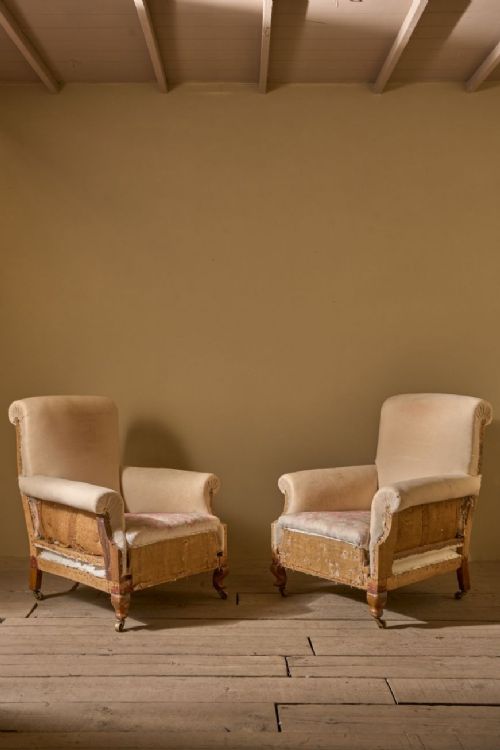
Paired walnut armchairs bring balance to a room, offering matching seating created across centuries from the 17th onwards.
Paired Walnut Armchairs
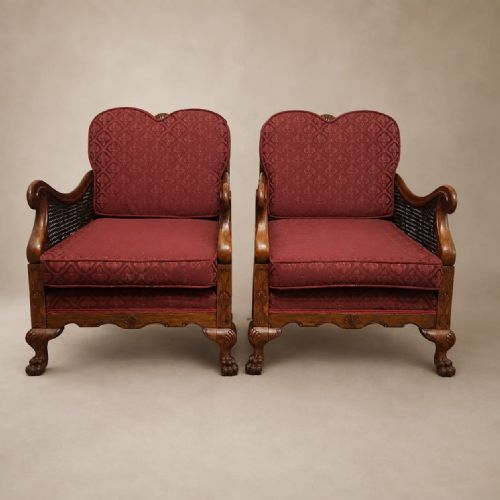
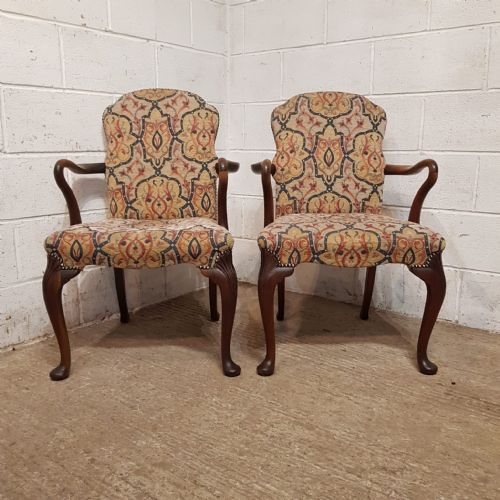
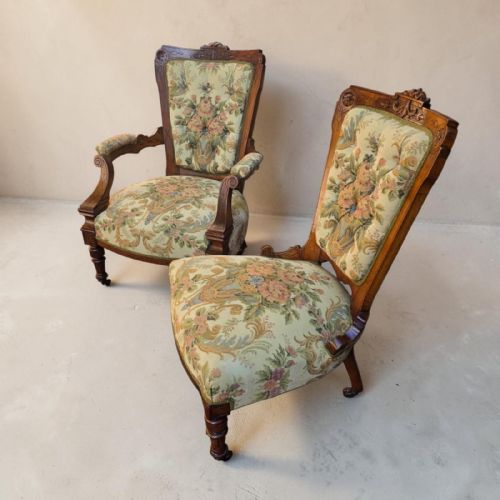
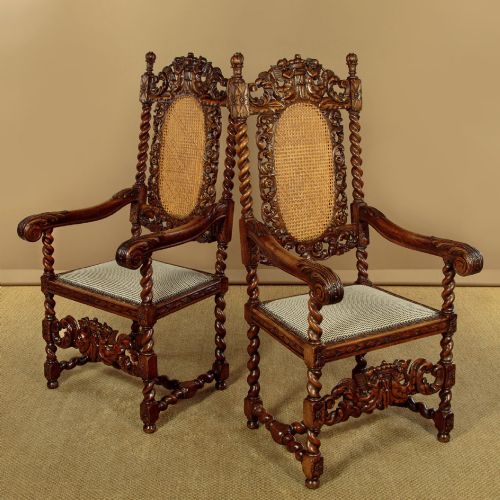
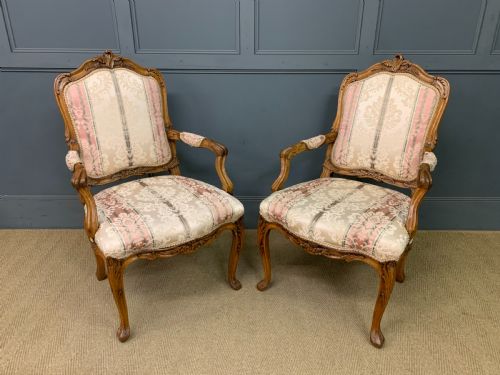
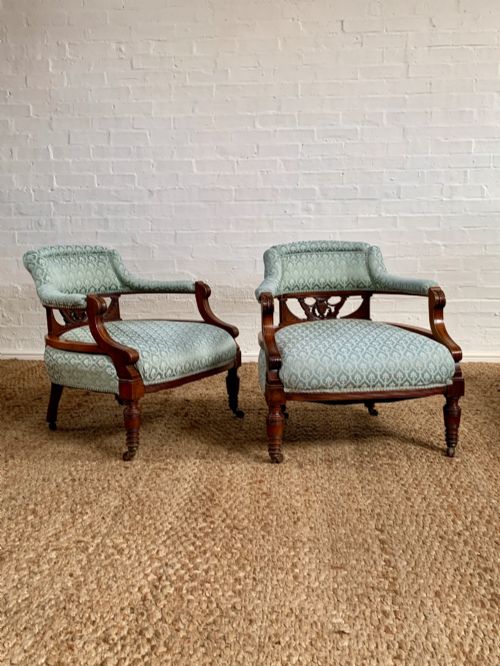
Paired walnut armchairs appear in numerous forms across this selection, spanning centuries of domestic seating from the 17th century through the Victorian and Edwardian eras to the 1930s. Buyers searching for paired walnut armchairs encounter matching sets intended for salons, libraries, and bedrooms, executed in regional British and continental idioms.
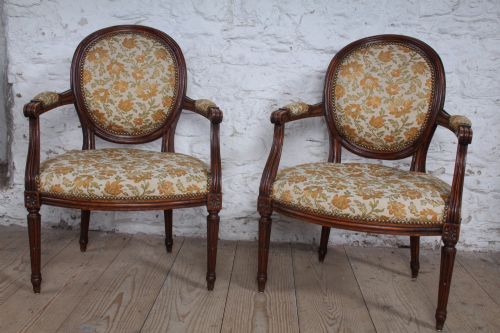
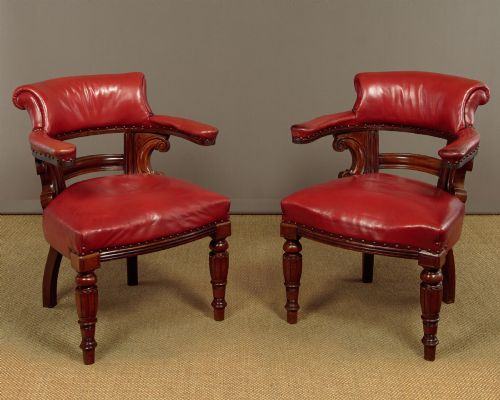
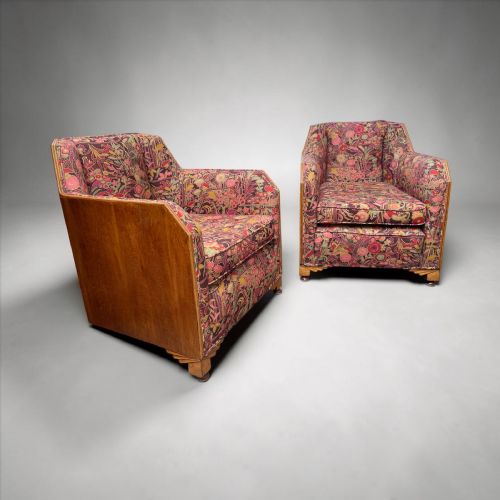
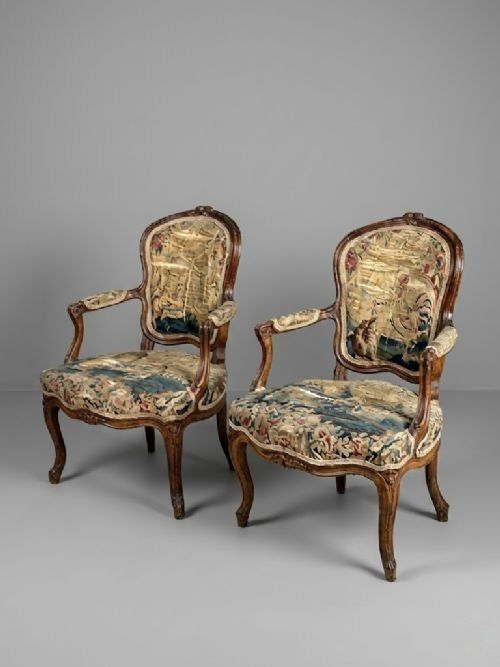
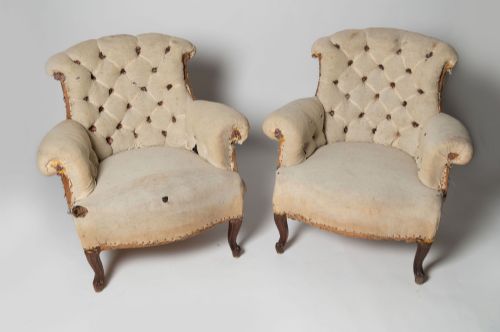
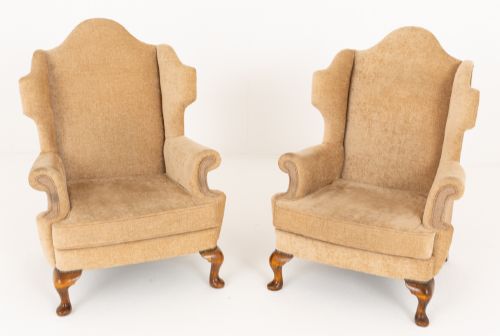
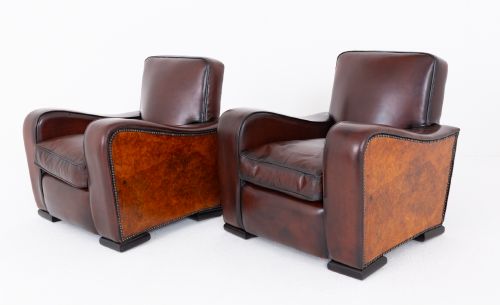
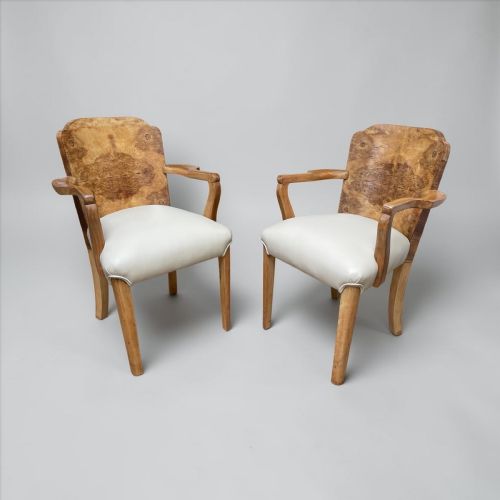
The inventory ranges from high Victorian spoonback and salon chairs to geometric Art Deco club chairs and French Louis XV style open armchairs. Many examples reflect revivalist tastes such as Queen Anne style tub chairs and Neo-Rococo seating, alongside practical library and desk chairs.
Matching pairs survive less frequently than single chairs, making matched sets desirable for symmetrical interior schemes. The timber frames unite these diverse stylistic periods, showing walnut in various tones from pale French polish to darker Victorian finishes.
How they were made
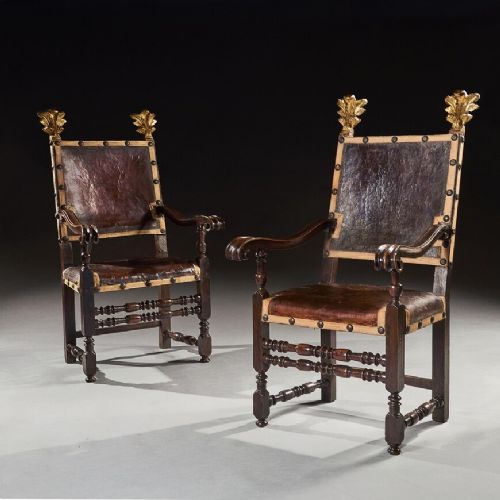
Makers shaped structural frames from solid walnut, sometimes utilising parcel-gilding or parquetry inlay to enrich the timber surfaces. Carved ornament appears on many frames, particularly in French Louis XV style and Victorian examples displaying detailed foliage and scrollwork.
Upholstery methods vary by period, employing traditional stuffing beneath coverings of leather, silk, velvet, textile, or Aubusson tapestry. Certain variants incorporate split cane panels within the walnut frames, notably on bergere and tub armchairs from the early 20th century.
Several pairs survived centuries of daily sitting only to remain inseparable companions in the modern room.
What varies in quality
Quality rests primarily in the crispness of the timber carving and the architectural integrity of the walnut frame. Superior pairs exhibit tight joinery that resists movement, while lesser examples show looseness or heavy remedial intervention in the wood.
The choice and execution of the covering material significantly influence the standard of a pair. Hand-stitched tapestries, supple leather, and correctly tensioned cane work elevate the piece far above standard commercial upholstery replacements.
Hille·Howard and Sons
The Paired Walnut Armchairs Glossary
- Bergere
- An enclosed upholstered armchair with wooden framing exposed around the sides and back, often incorporating cane panels. This form gained popularity in France and spread through British Edwardian design.
- Spoonback
- A Victorian chair style featuring an oval upholstered backrest shaped to resemble the bowl of a spoon. The walnut frame curves gently to support the sitter's spine.
- Tub armchair
- A comfortable seat with a continuous curved back and arms forming a single enclosed shell. These appear frequently in Edwardian and Queen Anne revival forms.
- Parquetry
- Geometric wood inlay work used to create patterned surfaces on furniture. Levantine examples utilise this technique on structural elements.
- Parcel-gilt
- Partially gilded with gold leaf or powder to highlight specific carved details on the walnut frame. This treatment frequently distinguishes baroque and revivalist pieces.
Paired Walnut Armchairs: Frequently Asked Questions
How do I style paired armchairs?
Place matching chairs opposite a fireplace or flanking a central window to create visual symmetry in a formal room. Their matching profiles also suit bedroom corners or opposite ends of a long library table.
Allow sufficient space around the frames so the walnut woodwork and upholstery remain visible from multiple angles within the interior scheme.
Are these chairs comfortable for daily use?
Comfort varies considerably by period, with 1930s Art Deco club chairs and Victorian reclining models offering deep cushioning. Earlier antique armchairs prioritise upright posture over modern lounging depth.
Consider whether the interior padding has retained its supportive tension or if modern use requires professional reupholstering with traditional stuffing materials.
How do I identify a 19th-century armchair?
Nineteenth-century walnut chairs often display Victorian revival styles, deep buttoning, or elaborate carved walnut frames such as spoonbacks. Examining the joinery beneath the seat reveals period construction methods.
Look for tool marks and timber ageing that align with Victorian and Edwardian manufacturing practices rather than modern machine production.
Can I mix these with modern furniture?
Walnut tones blend naturally with contemporary interiors, providing warmth and historical contrast against minimalist backgrounds. Pairing antique seating with clean modern lines prevents a room from looking pastiche.
Focus on matching the wood finish or fabric texture to existing decor elements to anchor the antique frames within a contemporary setting.