
Pair Walnut Bedside Tables
Pair walnut bedside tables offer matched bedside storage and surface space, bringing rich wood grain and period character directly to the bedroom.
Pair Walnut Bedside Tables
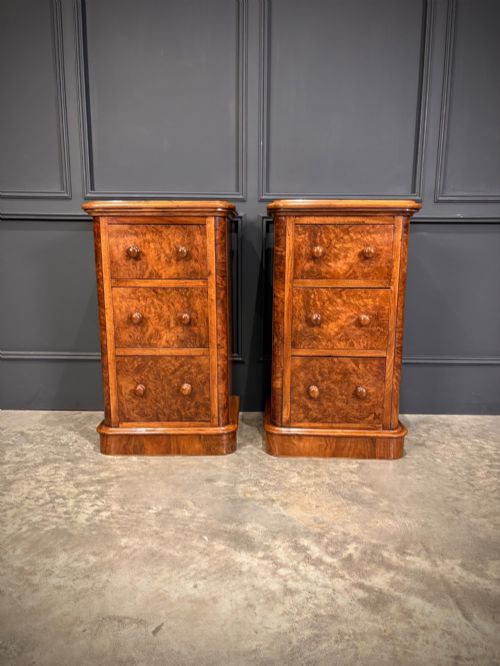
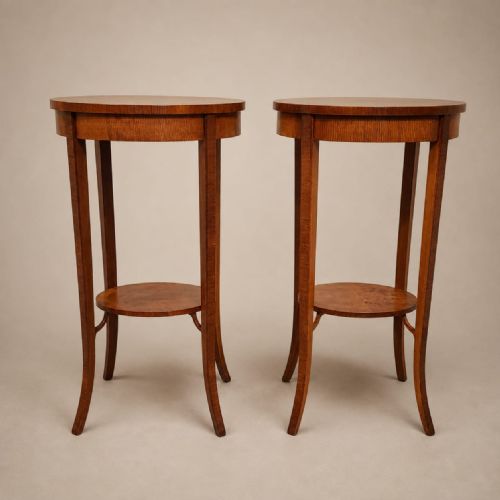
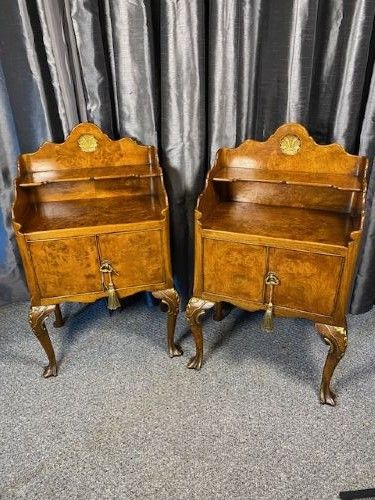
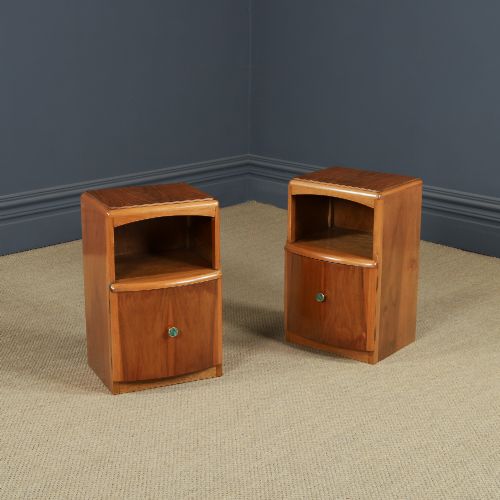
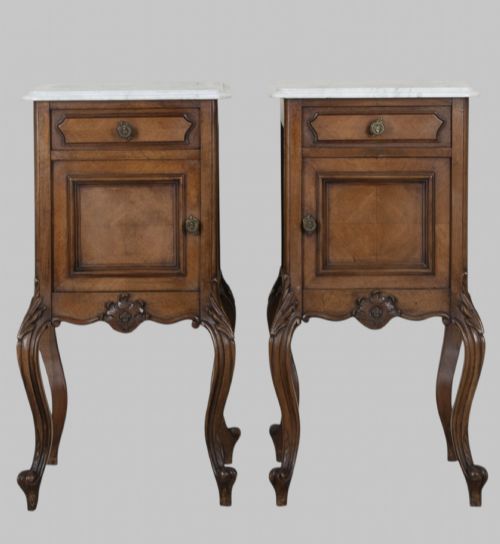
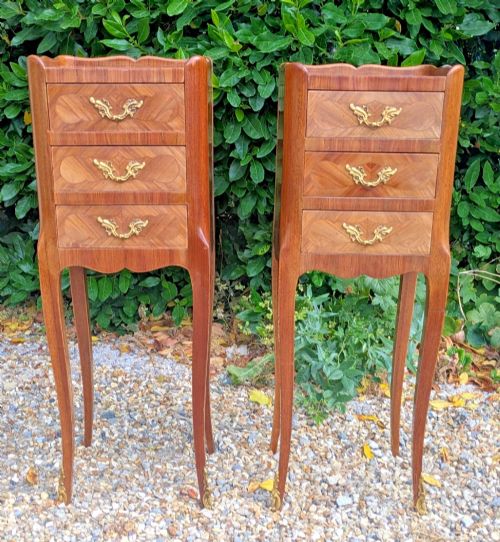
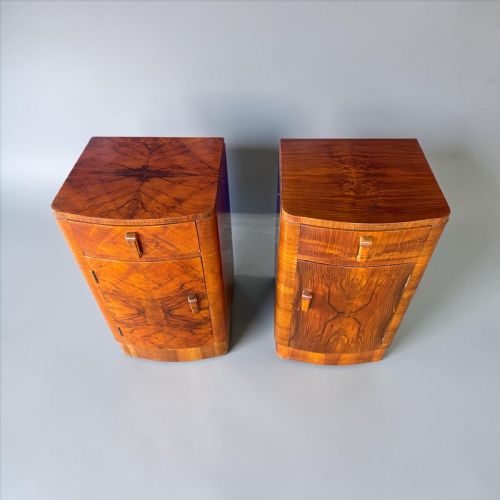
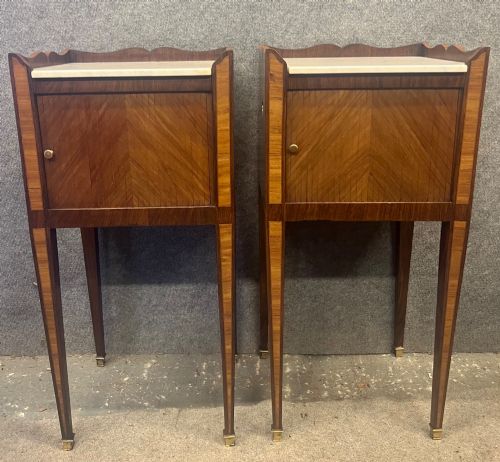
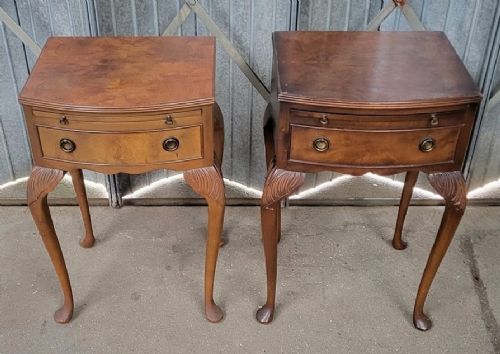
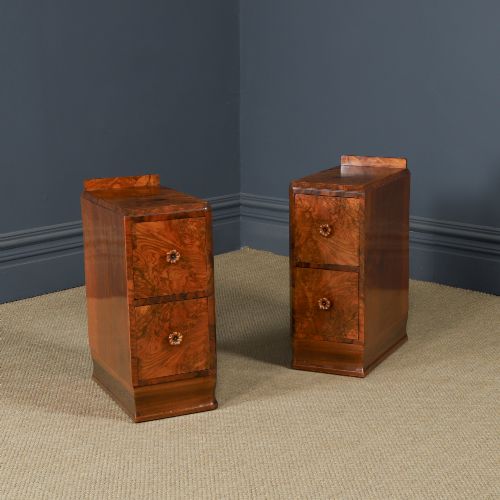
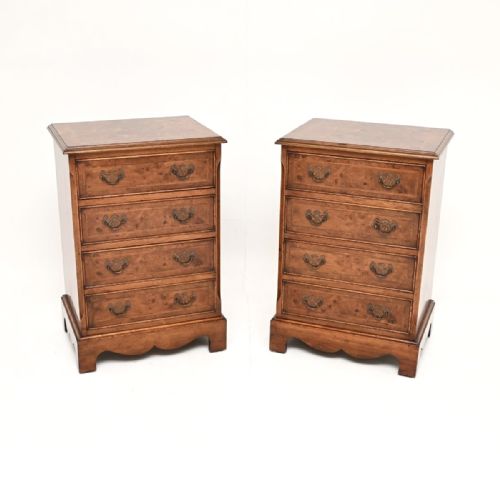
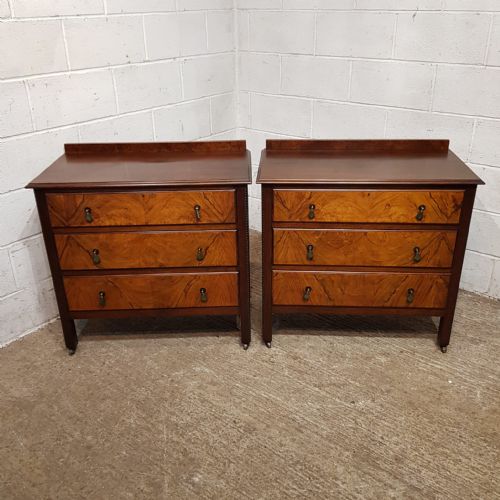
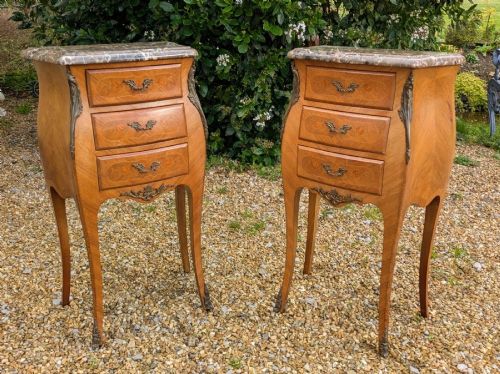
Pair walnut bedside tables appear across Victorian, Edwardian, and Art Deco periods, serving as functional night storage alongside a bed. The most frequent examples met on this page belong to the 1920s and 1930s, often adopting French or Art Deco forms with enclosed cupboards, open display areas, or stacked drawers.
Makers designed these small chests and cabinets to sit neatly beside a bed, providing a surface for lamps and personal items while concealing nighttime essentials within pedestals or drawers. French interpretations frequently incorporate marble tops and slender cabriole legs, whereas English iterations lean towards clean geometric lines and figured veneers.
The enduring appeal of these matching pairs lies in their symmetrical balance and rich timber tones, which complement various interior schemes from vintage to contemporary. Finding them as a matched pair rather than a single unit makes them particularly sought after for balanced bedroom layouts.
Materials and Techniques
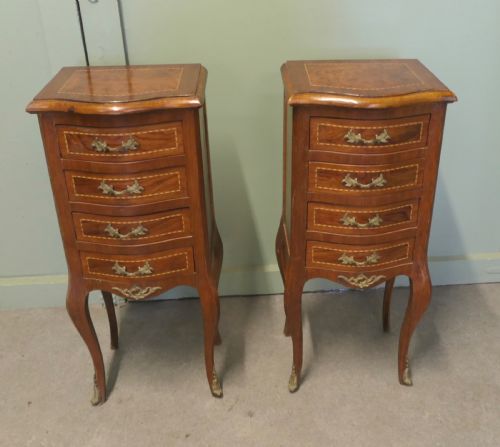
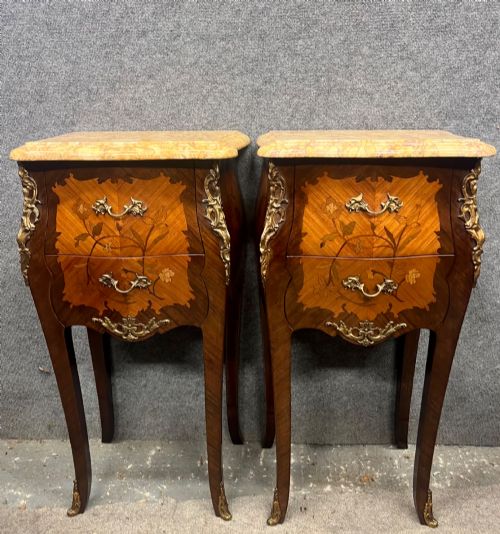
Cabinet makers utilised solid walnut frames combined with intricate veneers such as burr walnut and figured walnut to create striking grain patterns across door fronts and drawer panels. Marquetry and inlay techniques frequently added contrasting bands of satinwood or kingwood into the surface designs.
Marble slabs in white or veined varieties were heavily employed as durable, inset table tops on French cabinets, secured within rebated wooden frames. Ormolu mounts, brass handles, and galleried edges provided functional metallic accents that completed the construction of finer examples.
Listings feature walnut bedside tables spanning the Victorian, Edwardian, and Art Deco periods, incorporating marble, brass, and ormolu details.
What Varies in Quality
The selection of veneer grain pattern dictates much of the visual hierarchy, where swirling burr figures or book-matched panels command greater presence than plain timber surfaces. Precision in marquetry inlay and the crispness of carved or cast ormolu mounts further distinguish standard production from exceptional cabinet work.
Structural integrity relies on the quality of timber seasoning and joint construction, ensuring drawers glide smoothly and cabinet doors hang true without warping. Original marble tops free from heavy staining or repair represent higher tier survivals from the nineteenth and early twentieth centuries.
Waring & Gillows
The Pair Walnut Bedside Tables Glossary
- Burr walnut
- A specialised timber cut from the wart-like growths on walnut trees, yielding highly decorative, swirling grain patterns. Cabinet makers prized this wood for veneering prominent surfaces like drawer fronts and cabinet doors.
- Ormolu
- Gilded bronze ornamentation applied to furniture, popular in French stylistic revivals. These metallic mounts decorate corners, feet, and drawer pulls.
- Marquetry
- The art of applying decorative pieces of veneer to a structure to form intricate pictorial designs or geometric patterns. Artisans used contrasting woods like satinwood and kingwood for shading.
- Chevets
- The French term for small bedside tables or cabinets used for night storage. These pieces frequently feature marble tops and enclosed cupboards.
- Pedestal cupboard
- A tall, narrow freestanding cabinet with a single door enclosing interior shelving or storage space. They provide vertical storage where floor space beside the bed is restricted.
Pair Walnut Bedside Tables: Frequently Asked Questions
What is the difference between a bedside table and a bedside cabinet?
Bedside tables generally provide open surface areas, low shelves, or simple pull-out drawers for immediate access to nighttime items.
Bedside cabinets feature enclosed doors forming a cupboard, offering concealed storage for bulkier bedroom items and a tidier appearance.
How do I tell Art Deco bedside tables apart from earlier styles?
Art Deco pieces dating around 1930 display symmetrical geometric forms, waterfall edges, and dramatic figured walnut veneers without historical revival ornamentation.
Earlier Victorian and Edwardian examples incorporate traditional period detailing such as carved cabriole legs, panelled cupboard doors, and marquetry inlay.
Are marble-topped bedside cabinets practical for daily use?
Marble surfaces provide a naturally heat-resistant and wipe-clean area that easily withstands water rings from drinking glasses and nighttime lamps.
Users should avoid exposing the stone to acidic liquids like citrus juice, which can etch the polished surface over time.
How do I match antique bedside tables with modern beds?
The neutral brown tones and rich grain of walnut bridge historical and contemporary furniture styles, allowing these pieces to anchor modern bedroom schemes.
Matching the height of the bedside table to the top of the modern mattress remains the most important functional consideration.