
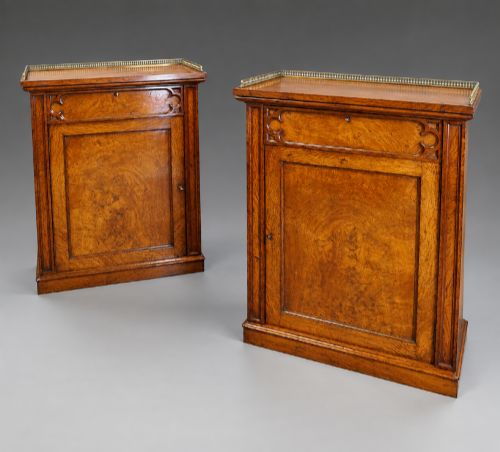
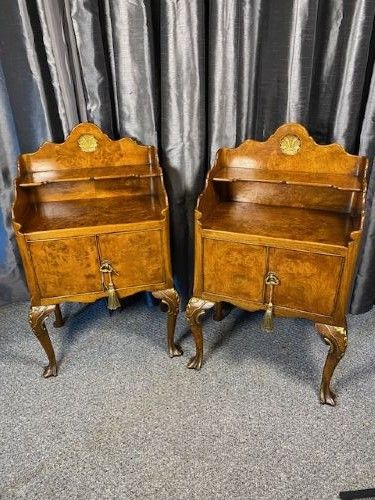
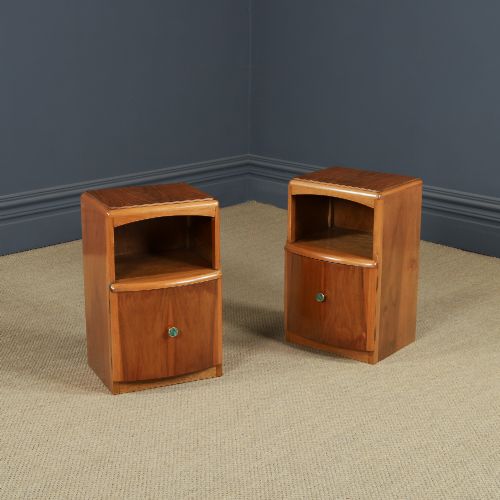
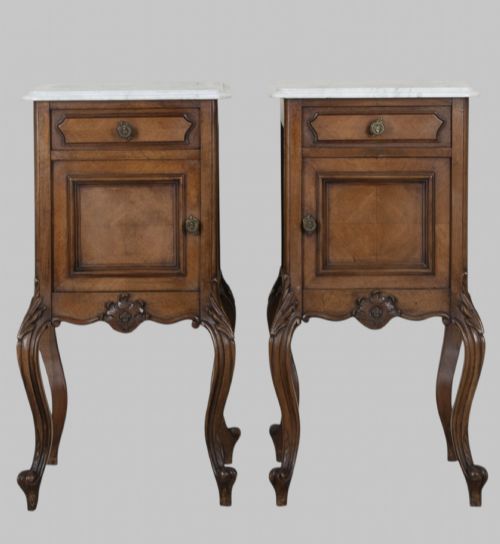

Pair Walnut Bedside Cupboards
When choosing pair walnut bedside cupboards, collectors select matching cabinets that anchor a bedroom scheme while offering enclosed bedside storage.
Pair Walnut Bedside Cupboards
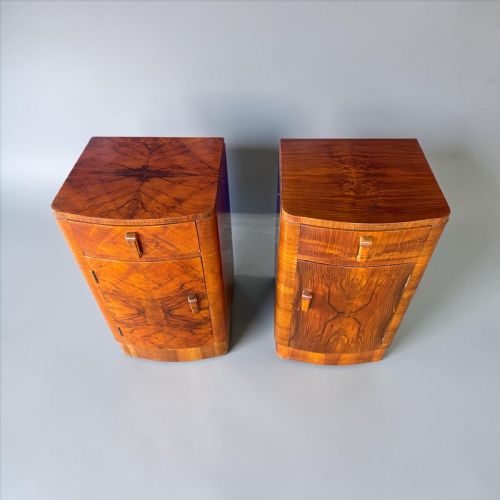
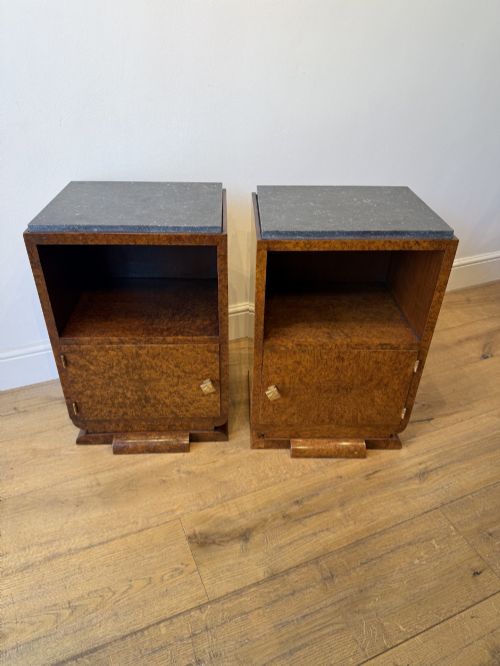
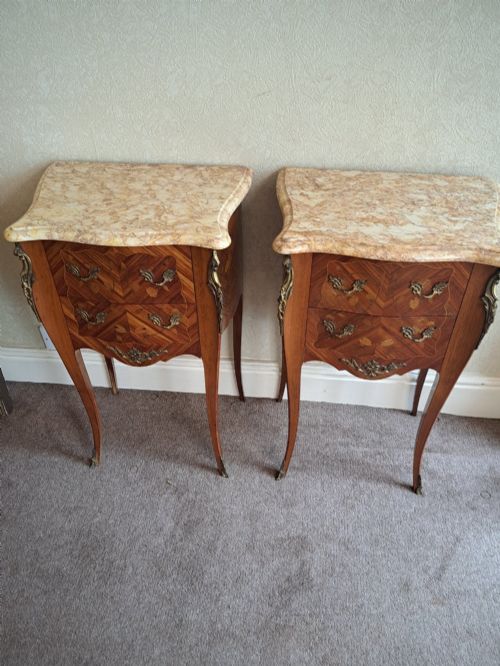
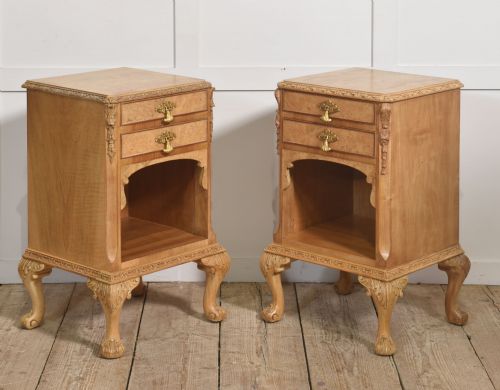
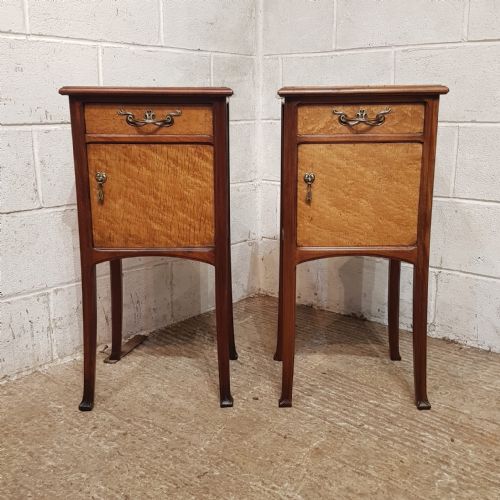
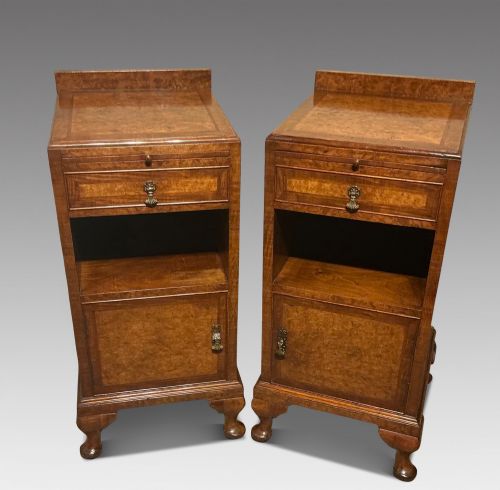
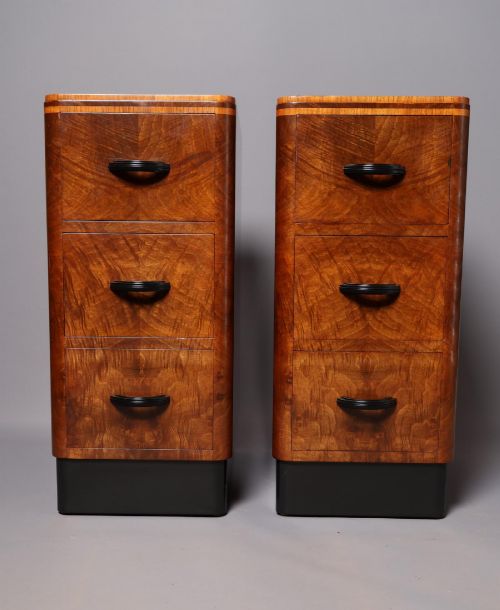
Pair walnut bedside cupboards span periods from the Victorian era through the Edwardian years to the Art Deco epoch of the 1930s. These pieces take the form of enclosed pedestal cabinets, small chests of drawers, and open-shelf nightstands designed to sit beside a bed.
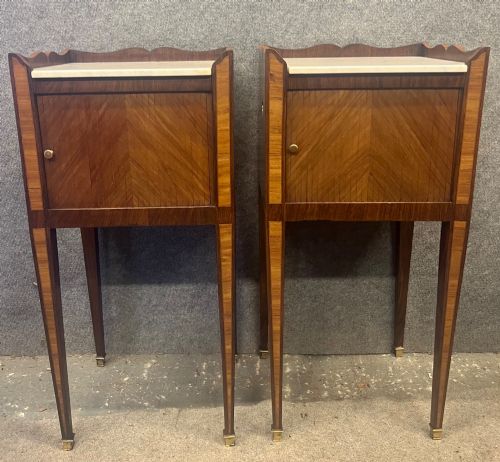
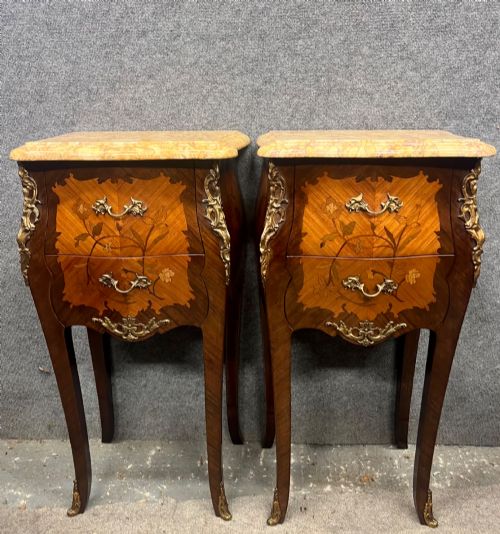
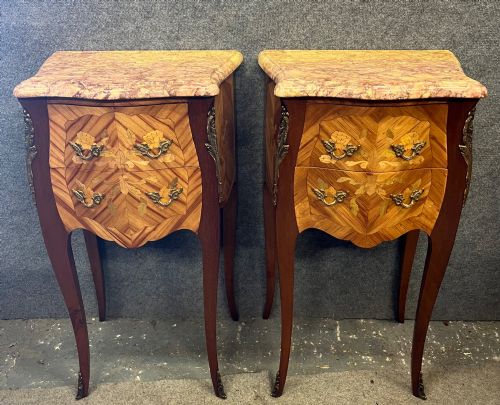
The versions most frequently met on this page belong to the French Louis XV style and the clean-lined geometric designs of the 1930s. Makers also produced serpentine fronts, marble-topped variants, and bombe shapes influenced by continental cabinet-making traditions.
Materials and Construction
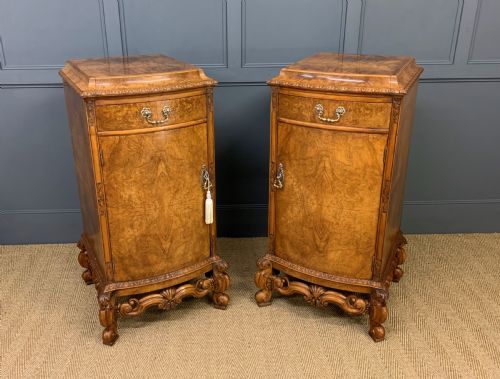
Cabinet-makers utilised solid walnut alongside striking burr walnut veneers to construct carcases with rich, swirling grain patterns. Marquetry, parquetry, and subtle stringing inlay decorate many drawer fronts and doors, demonstrating meticulous hand-cutting techniques.
Heavy slabs of Belgian Sainte-Anne and white marble form the tops of numerous continental pieces, paired with cast brass handles, ormolu mounts, and occasionally satinwood or birds-eye maple secondary woods.
Listings feature walnut, burr walnut veneer, brass, ormolu, and Belgian Sainte-Anne marble across Victorian and Art Deco periods.
Standards of Execution
The distinction between ordinary and superior pieces rests upon the selection of timber and the precision of the grain matching across the pair. Symmetrical burr walnut veneers require considerable skill to apply evenly to two matching doors.
Refined execution appears in the crispness of hand-carved details, the smooth movement of dovetailed drawer boxes, and the integrity of applied ormolu mounts. Lower-grade examples display simpler flat timbers and heavier, less harmonious proportions.
Maple and Co·Maurice Adams
The Pair Walnut Bedside Cupboards Glossary
- Burr walnut
- A figured wood grain obtained from the gnarled growths of walnut trees, prized for its complex, swirling patterns.
- Ormolu
- Gilded bronze mounts and decorative trimmings applied to furniture, frequently seen on French revival pieces.
- Bombe
- A swollen, convex shape characteristic of continental furniture styles, swelling outward before tapering toward the base.
- Parquetry
- Geometric wood mosaic patterns assembled from small veneer tiles to form decorative surfaces on tabletops and doors.
- Chevets
- The French term for bedside tables or small night cabinets, often featuring marble surfaces and cupboard doors.
Pair Walnut Bedside Cupboards: Frequently Asked Questions
Are these cupboards sold as exact pairs?
Most entries comprise symmetrical pairs designed to flank a bed, though occasional listings describe matched pairs assembled from similar period pieces.
Buyers should examine the dimensions and grain patterns closely to confirm that both cabinets share identical origins.
How do I care for marble-topped tables?
Marble surfaces require gentle wiping with a damp cloth and mild soap, avoiding acidic cleaning agents that etch the stone.
Natural stone can stain if liquids remain on the surface for extended periods, so coasters protect the polished top.
What is the difference between Art Deco and Victorian pieces?
Victorian models often feature carved details, panelled doors, and heavy timber proportions reflecting traditional revival styles.
Art Deco versions favour streamlined curved shapes, contrasting veneers, and minimal ornamentation typical of the 1930s.
Can these cabinets serve as lamp tables?
Many examples function well as lamp tables or small side chests in sitting rooms as well as bedrooms.
Their compact footprints and enclosed storage make them versatile accents for hallways and compact spaces.