


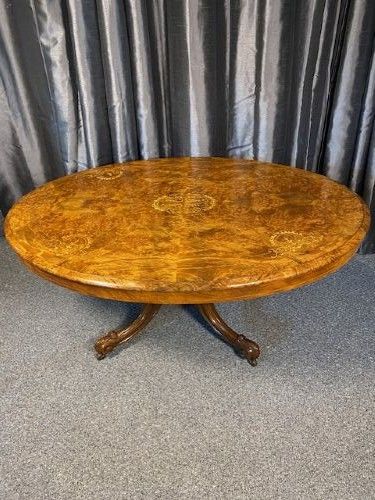
Victorian Burr Walnut Pedestals
Victorian burr walnut pedestals and related pieces deliver rich timber grain and architectural presence suited to traditional and modern interiors alike.
Victorian Burr Walnut Pedestals
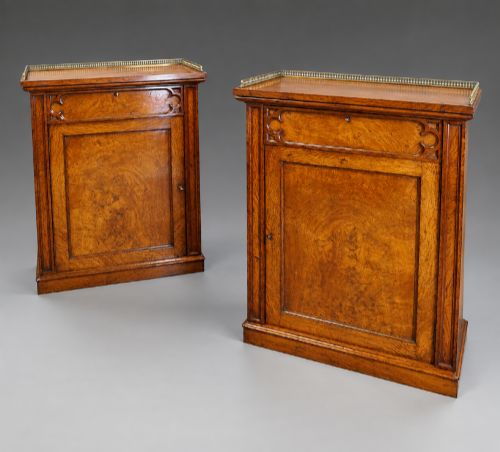
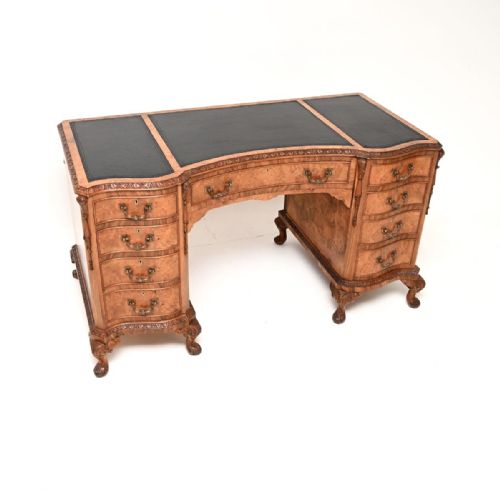
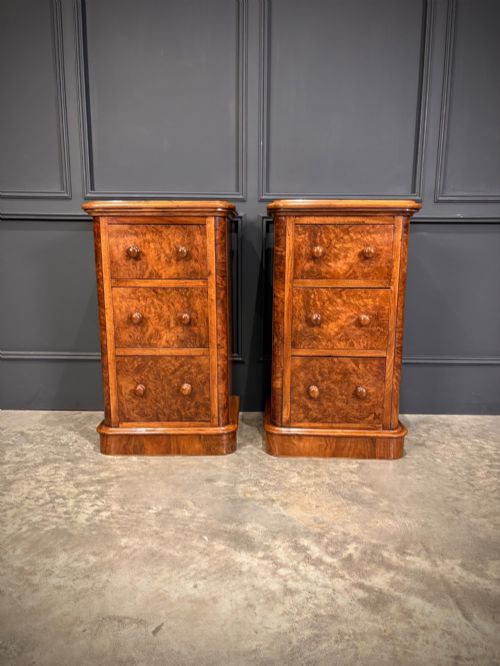
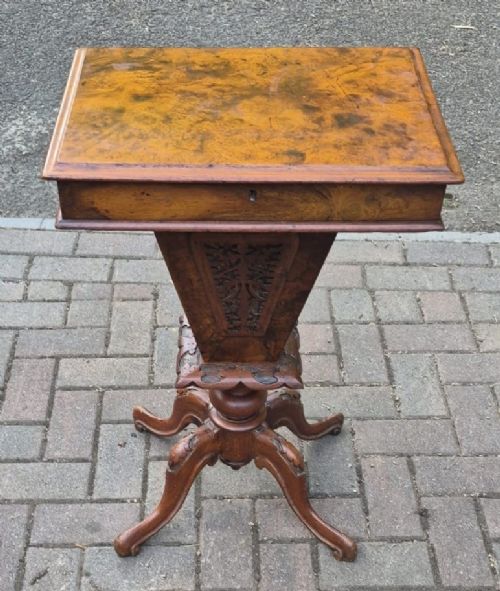
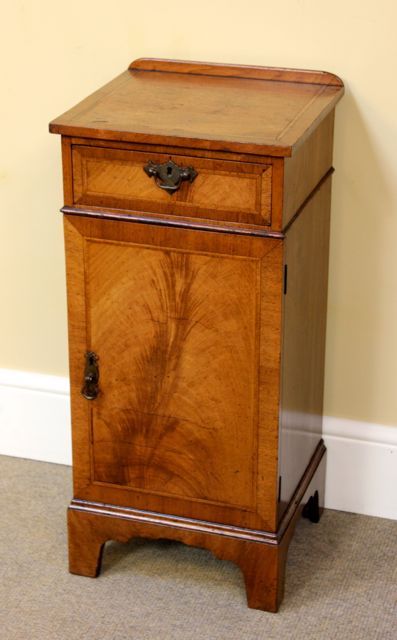
Victorian burr walnut pedestals encompass bedside cabinets, side lockers, and substantial multi-drawer office desks designed to anchor a room. The items found here span the nineteenth century, including specific dates from the eighteen-fifties through to nineteen hundred, alongside pieces marked broadly as Victorian.
Makers recorded in the broader evidence include Holmes Baldock and Maple and Co, showing the high commercial standing these items held during the period. Buyers most frequently encounter tables and desks exhibiting the characteristic figured grain patterns.
Materials and Construction
Makers utilised burr walnut and figured walnut veneers applied over secondary woods such as oak and pine to achieve striking decorative grain patterns. Boxwood inlay, brass fittings, and inset leather writing surfaces frequently complete the construction of desks and tables.
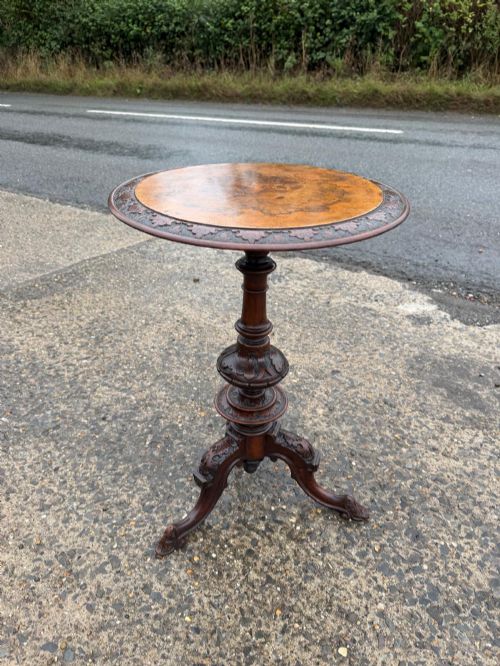
Carved elements appear on bases, quadrapod supports, and pedestals, often fashioned from solid walnut to match the veneered top sections. Joinery relies on traditional nineteenth-century methods, visible in multi-drawer pedestal desks and tilt-top mechanisms.
A Scottish revolving bookstand from eighteen-seventy proves that Victorians took their reading rotation seriously.
Assessing Quality in Burr Walnut
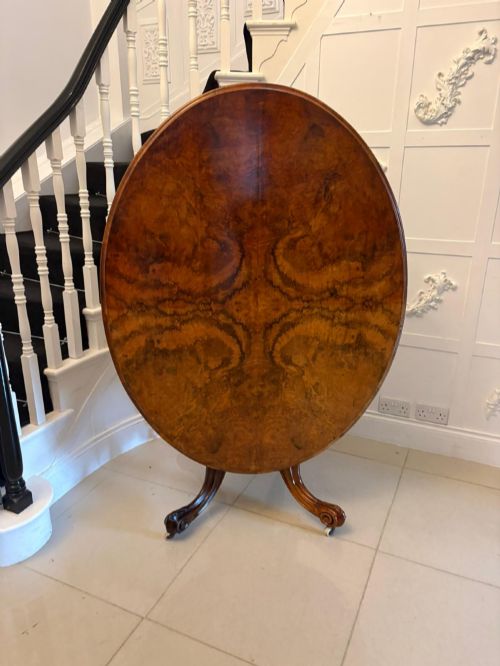
Quality rests principally on the density and liveliness of the burr walnut figuring across the primary surfaces. Pieces featuring intricate marquetry, boxwood inlay, and finely carved pedestal bases demonstrate superior craftsmanship.
The integrity of the secondary timbers, such as oak drawers and sturdy framing, separates standard workshop production from exceptional commissions by firms like Maple and Co. Original leather inserts, brass hardware, and sound mechanical actions for tilt-tops or revolving bookstands further elevate a piece.
Maple and Co·Holmes Baldock
The Victorian Burr Walnut Pedestals Glossary
- Burr Walnut
- A timber harvested from walnut tree growths, producing swirling, highly figured grain patterns prized for decorative veneering. Cabinet makers select these sections for the main surfaces of tables and desks.
- Pedestal Desk
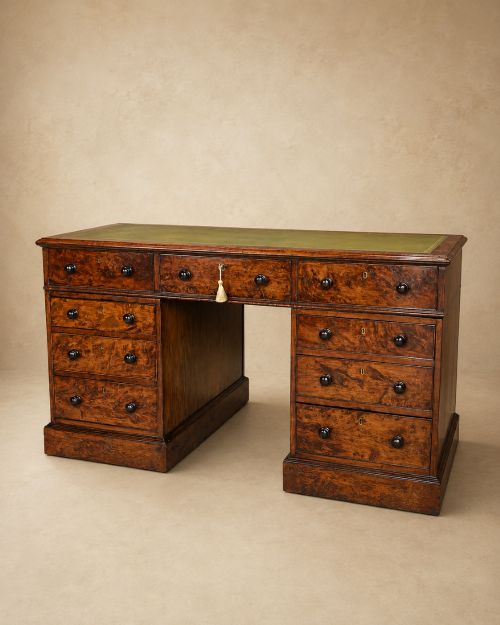
- A large freestanding writing table supported by two vertical banks of drawers. These items typically feature inset leather tops and panelled sides.
- Tilt-Top Table
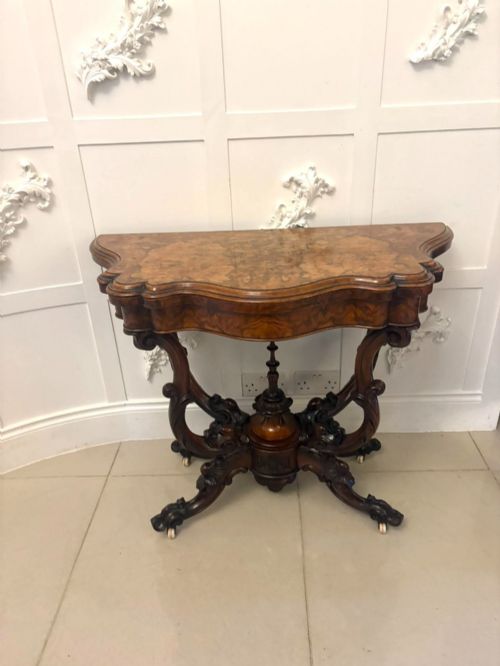
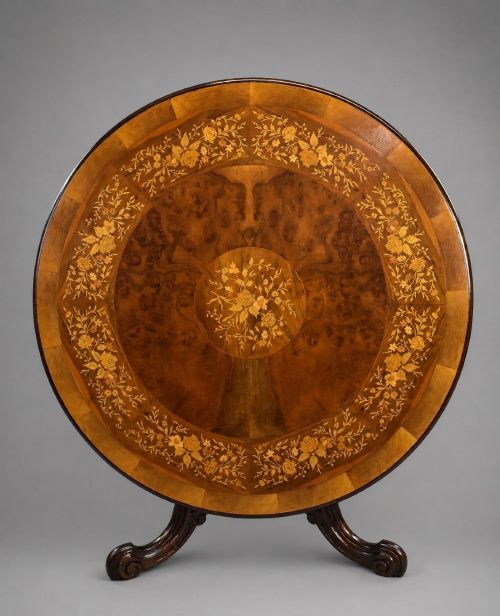
- A table mechanism allowing the top to pivot vertically for storage against a wall when not in use. This construction is common in Victorian loo and breakfast tables.
- Marquetry
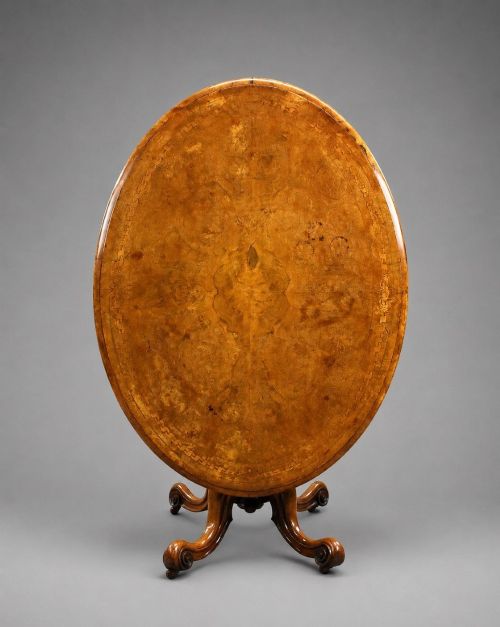
- The art of applying pieces of veneer to a structure to form decorative patterns and pictures. It appears frequently on Victorian table tops.
- Partners Desk
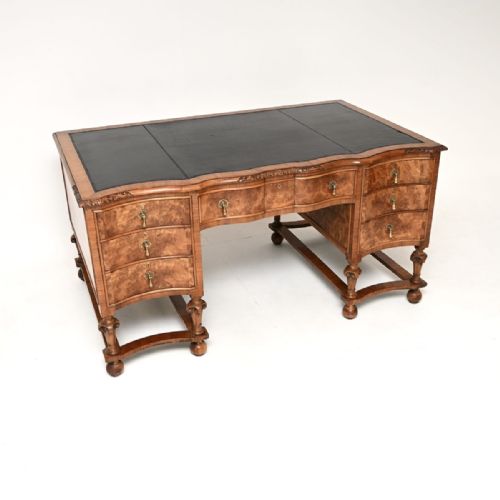
- A large double-sided desk designed for two people to work opposite one another. These incorporate drawers and cupboards on both elevations.
Victorian Burr Walnut Pedestals: Frequently Asked Questions
How do I clean burr walnut?
Dust surfaces regularly with a soft, dry cloth to prevent particulate buildup on the delicate veneer.
Apply a quality beeswax polish periodically to nourish the timber and maintain the natural lustre of the grain.
Where should I place a pedestal desk?
Position the desk away from direct sunlight and heat sources to prevent the walnut veneer from drying out or splitting.
Freestanding models look best positioned centrally in a study where the panelled reverse remains visible.
How do I identify nineteenth-century walnut?
Examine the secondary timbers inside drawers and underneath tabletops, as nineteenth-century pieces commonly utilise oak, pine, or mahogany framing.
Look for hand-cut dovetails and traditional finishing methods rather than modern mechanical fasteners.
What is a loo table?
A loo table is a large circular or oval table originating in the Victorian period, frequently designed with a tilt-top mechanism.
These pieces served multipurpose roles in drawing rooms for social gatherings and card games.