


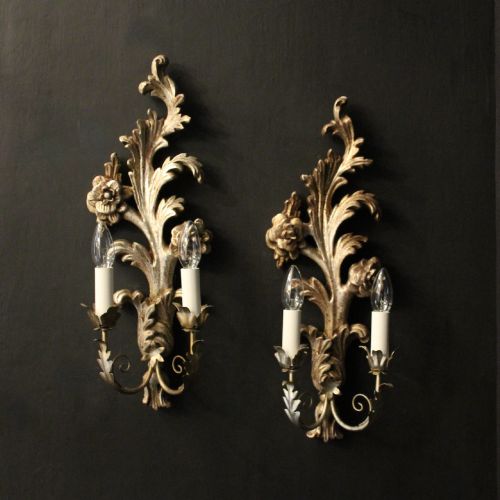
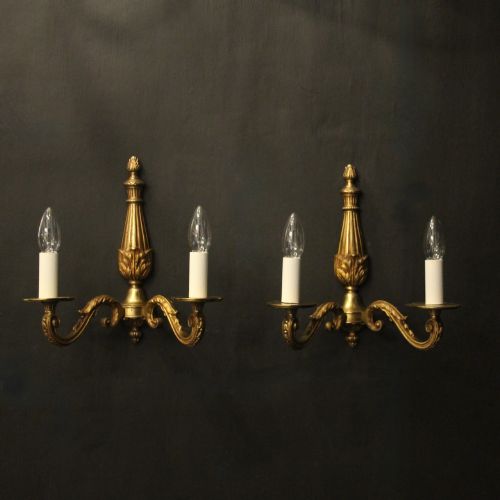
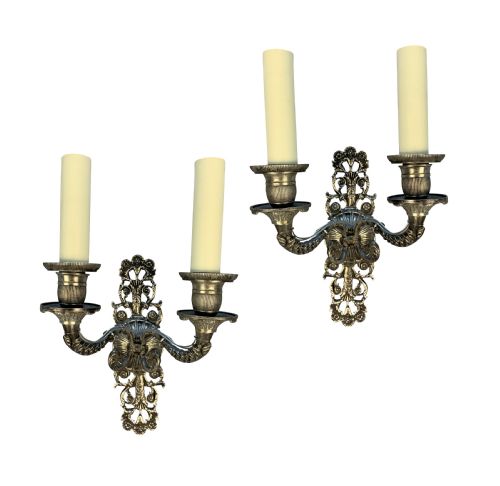
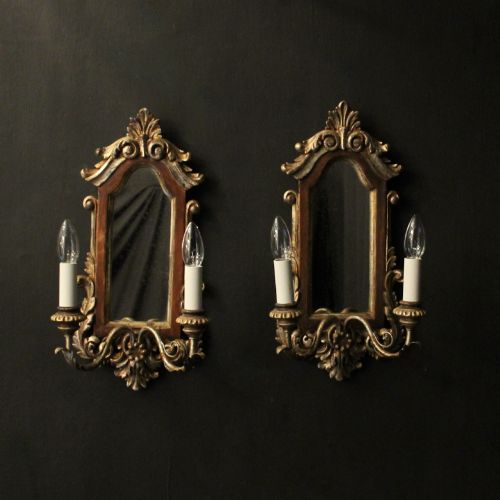
Pair Wall Sconce Lights
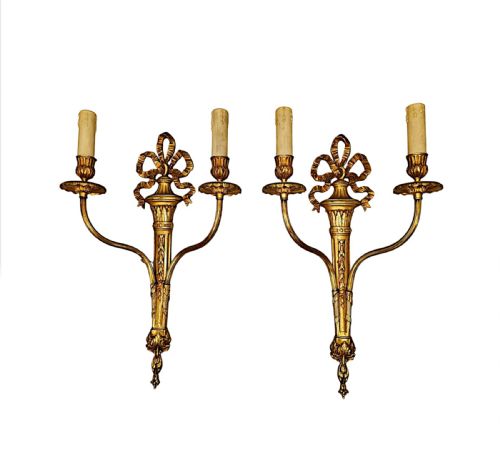
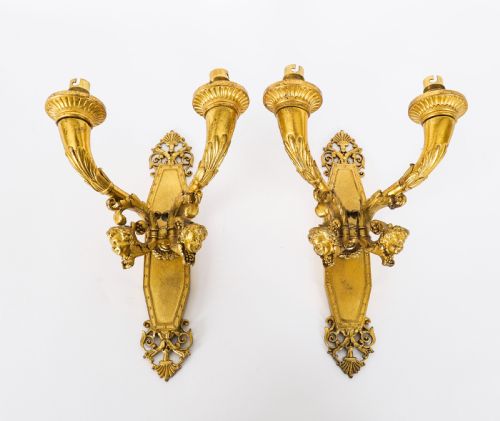
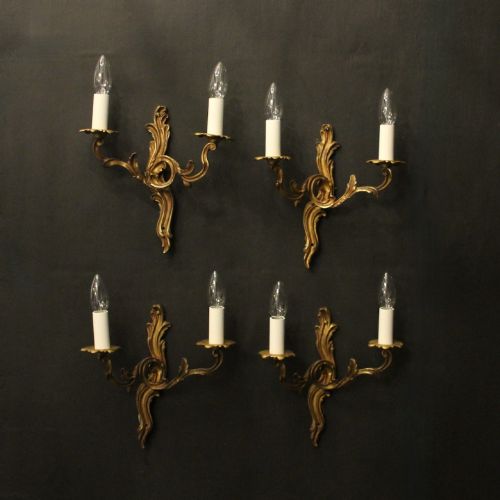
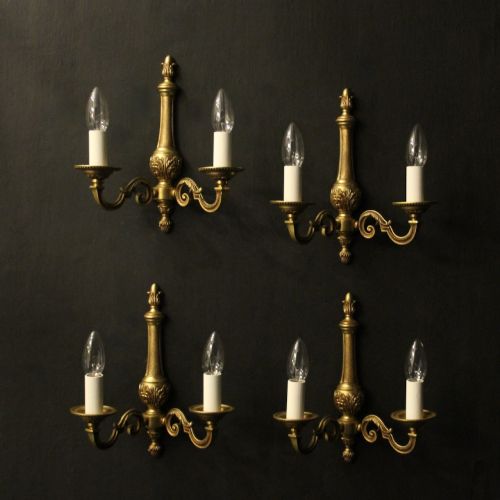
These pair wall sconce lights provide directional illumination from brass, bronze, and giltwood fixtures mounted securely beside mirrors, panels, or fireplaces.
Pair Wall Sconce Lights
When searching for pair wall sconce lights, collectors encounter twin-branch, single-arm, and multi-light fixtures designed for domestic illumination across multiple centuries. The selection spans French Rococo and Empire styles alongside Arts and Crafts copper work and Art Deco chrome designs.
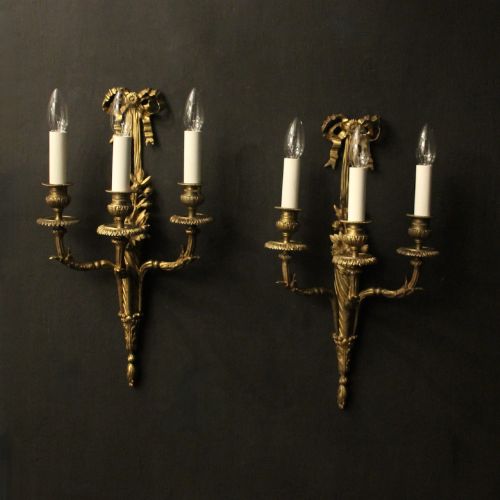
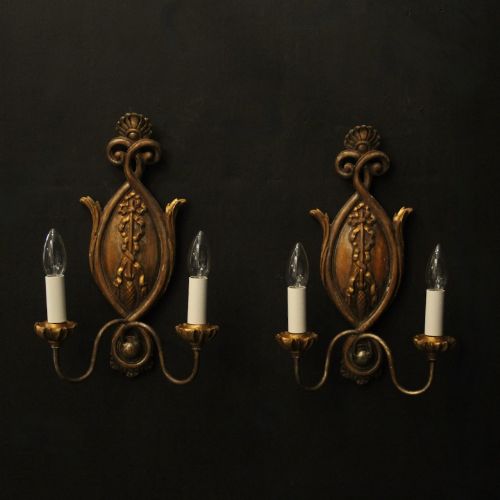
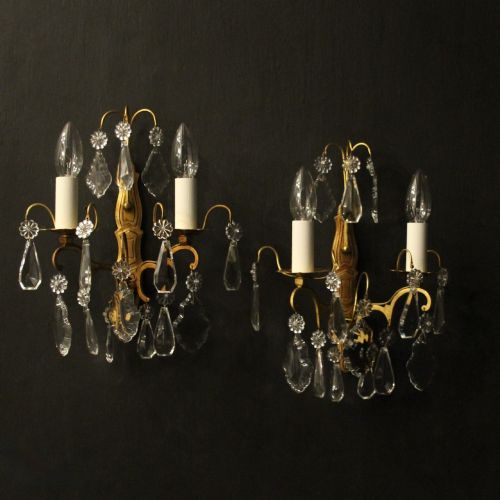
The dominant examples on this page are French gilt bronze and ormolu twin-arm fixtures originating from the nineteenth and early twentieth centuries. Alongside these, buyers find Italian giltwood girandoles, English brass pieces, and specialised lantern forms intended for interior walls.
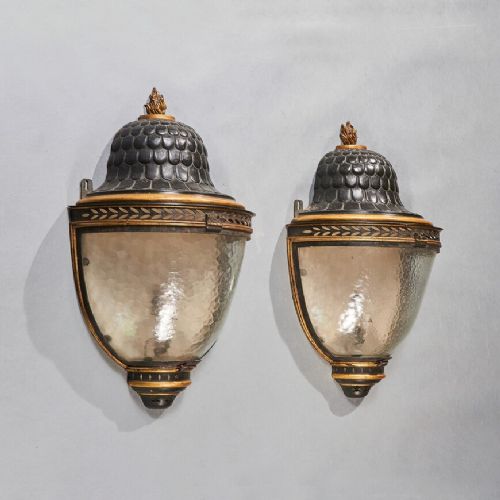
Forms extend beyond standard candle or bulb holders into specialised hanging types including convex half lanterns, tole peinte wall lanterns, and mirror-backed sconces that amplify ambient illumination. These objects bridge functional lighting and decorative wall sculpture.
Materials and construction
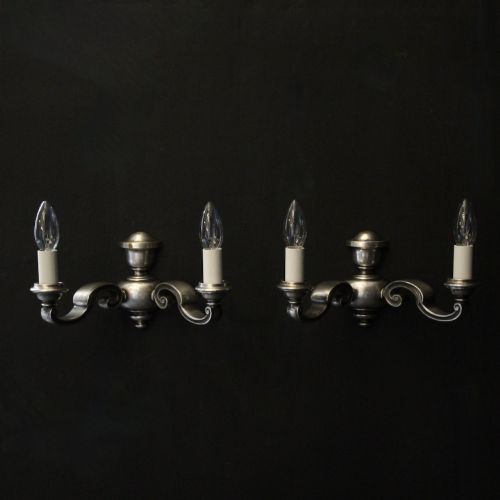
Foundry-cast bronze, brass, and ormolu form the structural chassis for the majority of these pieces, often finished with fire-gilding or silver plating. Metal components are frequently paired with hand-cut crystal drops, opaline glass shades, or imported porcelain plaques.
Carved wooden fixtures rely on solid timber substrates, principally giltwood or burr walnut, coated in gesso and leaf. Wrought iron and copper examples utilise traditional blacksmithing methods, featuring hand-hammered surfaces and exposed riveted joints.
Listings feature 19th Century, Victorian, Edwardian, and 1930 periods alongside brass, gilt bronze, and cut crystal materials.
Defining quality differences
Integration of secondary materials dictates overall execution level, separating simple cast frames from those set with genuine Sevres porcelain, Limoges plaques, or heavy hand-cut crystal prisms. Original fire-gilding retains a warm, deep luminescence that mechanical plating fails to duplicate.
Casier·W.A.S. Benson·REVO·Bruce Talbert·Maison Baguès
The Pair Wall Sconce Lights Glossary
- Ormolu
- Gilt bronze produced by applying a mercury and gold amalgam to a bronze base and heating the metal to drive off the mercury. This technique creates a durable, rich golden surface found on many French fixtures.
- Girandole
- An ornamental branched wall light featuring a reflective mirror backplate. The reflective glass multiplies the candlelight or bulb output within the room.
- Tole peinte
- Painted tinplate or sheet metal utilised for decorative lanterns and shades. It frequently incorporates hand-painted or lacquered surface decoration.
- Casting
- The process of pouring molten metal into a mould to form the primary body of a sconce. Better pieces undergo extensive hand-chasing after casting to sharpen details.
Pair Wall Sconce Lights: Frequently Asked Questions
How were pair wall sconce lights originally used?
These fixtures served to illuminate corridors, flanking mirrors, and drawing rooms by holding candles or gas burners before electrical conversion became standard. Their placement on vertical surfaces maximised light distribution at eye level.
Over subsequent decades, many examples received professional rewiring to accommodate modern electrical bulbs while retaining their historic metal and glass mounts.
How do I identify French Empire style sconces?
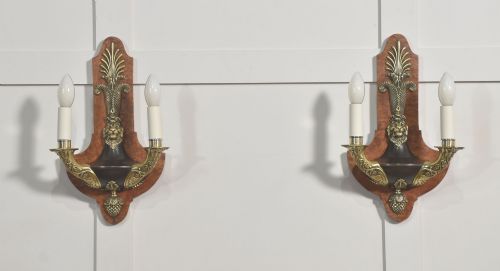
French Empire pieces typically incorporate classical military motifs, formal symmetry, laurel wreaths, and precise ormolu cast work dating from the nineteenth century. These designs reflect neoclassical architectural influences popular during the period.
They frequently employ heavy fire-gilded bronze combined with dark patinated bronze elements to create strong visual contrast on the wall.
Are these sconces supplied ready for wiring?
Many listings note previous rewiring or retention of original backplates, though buyers should verify internal electrical components with a qualified electrician prior to installation. Historic fixtures often require mounting brackets suited to their specific weight.
Checking the backplate depth ensures the piece sits flush against the wall surface while housing modern internal wiring safely.
What distinguishes Florentine giltwood girandoles?
Florentine girandoles feature carved wooden frames finished with silver gilt or gold leaf, often incorporating scrolling foliage and central mirror plates. The regional craftsmanship emphasises organic, flowing woodwork rather than heavy metal casting.
These pieces rely on gesso application over carved timber bases to achieve their characteristic textured surface relief.