
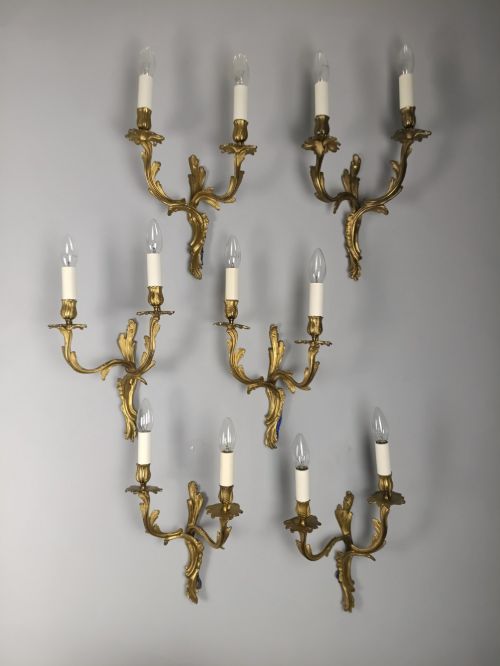
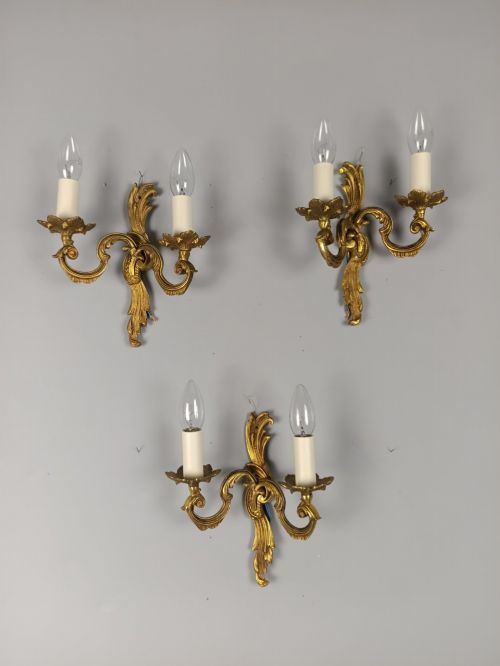


Classic Double Wall Lights
Classic double wall lights bring symmetry and refined illumination to a room, offering twin arms styled in enduring periods from the nineteenth century to the interwar decades.
Classic Double Wall Lights
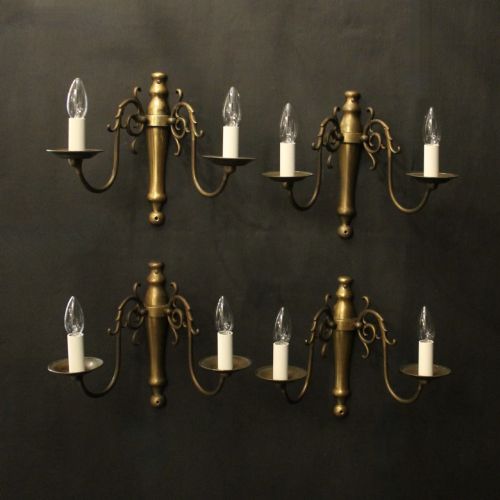
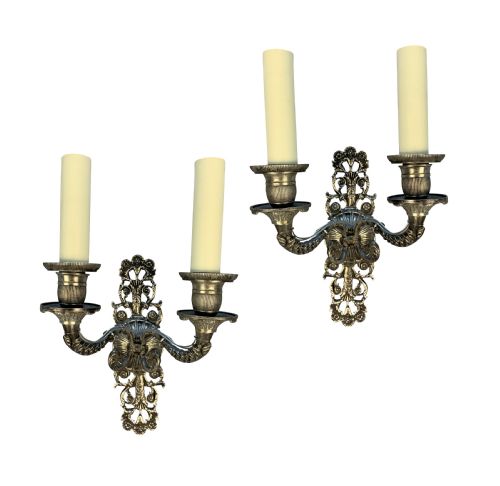
Classic double wall lights combine a dual-arm format with historical design motifs, providing balanced twin illumination from a single backplate. Buyers searching for classic double wall lights encounter fixtures primarily from the nineteenth century, the Edwardian era, and the 1920s or 1930s.
The selections span English and French origins, featuring forms such as wall sconces and twin-branch brackets. These pieces range from traditional English brass designs to ornate continental styles influenced by French Empire and Rococo aesthetics.
Most examples found here utilise a twin-arm arrangement, often supplied in matching pairs or larger coordinated sets. The overarching character remains firmly rooted in traditional craftsmanship and period revival movements.
How they were made
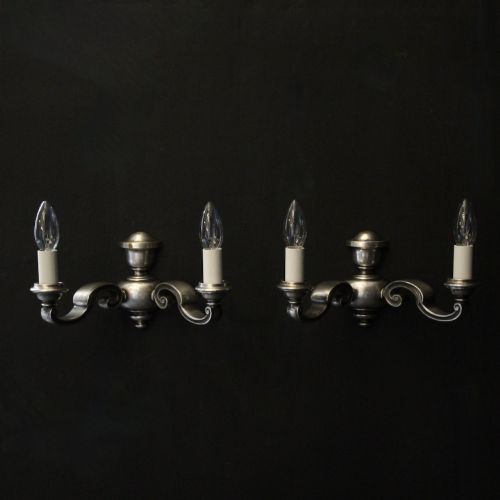
Makers utilised cast and forged metal foundations, predominantly employing brass, bronze, and plated base metals to construct sturdy backplates and sweeping arms. Silver plating and gilt finishes were frequently applied to enhance the reflective surface and impart a rich metallic lustre.
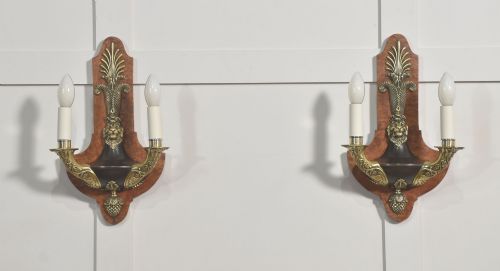
Cabinetmakers and metalworkers incorporated contrasting elements, such as burr walnut mounts paired with polished brass components. Carved wooden brackets and decorated mounts provide structural depth alongside the metal armatures.
Materials documented across the inventory include solid brass, cast bronze, silver plate, and burr walnut with metal mounts.
What varies in quality
The refinement of the casting and the crispness of decorative chasing distinguish superior examples from standard production. Finer pieces display sharply defined botanical motifs, scrollwork, and crisp junctions between the twin arms and the backplate.
The integrity and depth of the surface finish also determine quality, particularly where original gilding, silver plating, or warm patinated brass remains intact. Heavier gauge metals and substantial mounting brackets indicate a higher standard of original manufacture.
The Classic Double Wall Lights Glossary
- Sconce
- A wall-mounted lighting fixture designed to hold candles or electric lamps. These fittings project from vertical surfaces to provide ambient illumination.
- Twin-arm
- A configuration featuring two distinct branching arms extending from a central backplate. This layout distributes light evenly across flanking spaces.
- Gilded brass
- Brass treated with a thin layer of gold leaf or gilt wash to simulate solid gold. This technique was widely utilised in French interior fittings.
- Silver plate
- A thin coating of silver applied to a base metal substrate. It offers the appearance of solid silver while maintaining structural rigidity.
- Backplate
- The foundational mounting piece secured directly to the wall. It supports the weight of the arms and conceals the electrical connections.
Classic Double Wall Lights: Frequently Asked Questions
How do I wire antique wall lights?
Professional rewiring is generally required to ensure safety and compliance with modern electrical standards. Modern insulated flex is threaded through the existing internal channels where possible to preserve the original metalwork.
Qualified electricians can adapt these vintage fixtures for contemporary wall terminals without compromising the exterior appearance or structural integrity of the backplates.
What is the difference between French and English styles?
French designs from this selection frequently draw upon Empire, Rococo, and Neoclassical vocabularies, featuring elaborate casting and bright gilded finishes. They lean towards ornamental grandeur and curved botanical forms.
English variants tend to favour restrained traditional aesthetics, utilising polished brass and simpler structural lines that reflect Georgian Revival sensibilities.
How should I clean polished brass?
Gentle dusting with a dry microfibre cloth is usually sufficient for routine maintenance of unlacquered metal surfaces. Avoid harsh chemical cleaners that strip the natural ageing and warm patina accumulated over decades.
If polishing is necessary, use a mild, non-abrasive metal cleaner applied sparingly with a soft cloth to protect delicate chased details and gilt layers.