
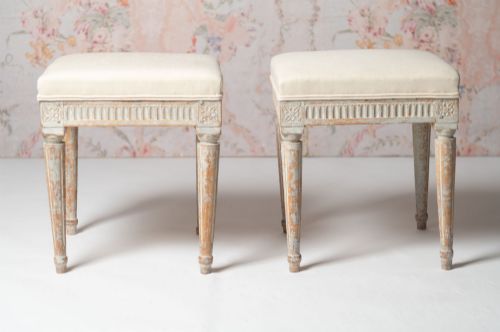
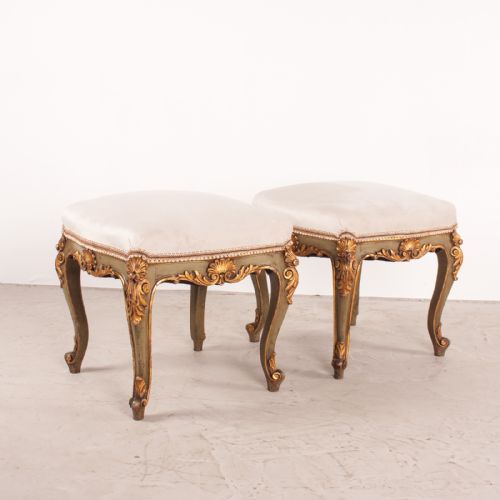
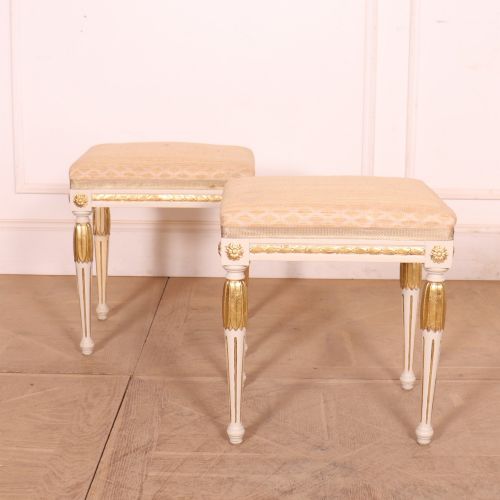
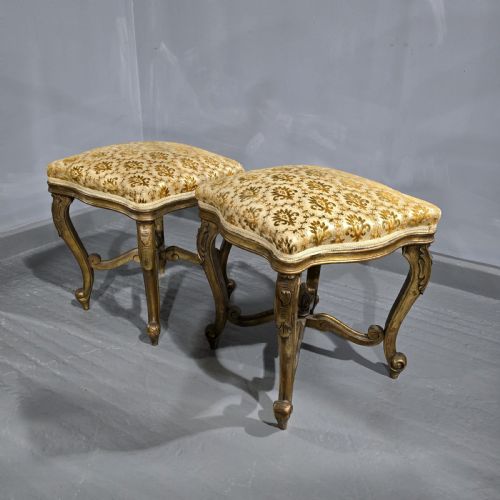


Pair Vanity Stools
Pair vanity stools bring matched proportion to a dressing room, offering dual seating in painted wood, mahogany, and fine upholstery across European periods.
Pair Vanity Stools
Pair vanity stools span centuries of European seating design, featuring matched pairs designed to sit before a dressing table or vanity. Buyers searching this phrase encounter examples ranging from eighteenth-century Swedish Gustavian forms to nineteenth-century Victorian and French revival pieces.
The selection on this page relies heavily on nineteenth-century craftsmanship, alongside eighteenth-century origins and twentieth-century interpretations. Forms include simple footstools and carved wooden frames upholstered in fabric, velvet, linen, and silk.
Swedish and French influences dominate the materials and styles available, showing painted wood, satin birch, walnut, and mahogany. These dual seats serve both functional dressing tasks and decorative symmetry in traditional interiors.
How They Were Made
Makers shaped these frames from solid timbers including mahogany, satin birch, walnut, and pine. Structural joinery supported curved cabriole legs and rectilinear frames, often finished with applied paint, gold leaf, or ebonisation.
Upholstery techniques applied traditional stuffing beneath textiles like velvet, silk, linen, and standard fabric. Decorative detail relied on hand carving in styles reflecting Louis XV, Rococo, and Biedermeier revivals.
Listings feature periods spanning from the eighteenth century through the 1930s, incorporating Swedish, French, and Victorian aesthetic traditions.
What Varies in Quality
The refinement of the woodcarving separates standard production from finer workshop output, particularly in Continental revival pieces where crisp foliage and scrollwork distinguish the form. Painted and gilded surfaces show variation in the survival of original layers and the subtlety of patination.
Frame integrity depends on the precision of original joinery in hardwoods like mahogany and walnut versus softer painted pine. The choice and execution of period textiles, from silk to heavy linen, dictate the textural authenticity of the seating.
The Pair Vanity Stools Glossary
- Gustavian
- A Swedish neoclassical style characterised by restrained carving, light painted finishes, and elegant proportions. It emerged during the late eighteenth century under French influence.
- Cabriole leg
- A furniture leg featuring a double curve, typically bowing outward at the knee and tapering inward toward the foot. This shape originates in ancient furniture traditions and defines many eighteenth and nineteenth-century designs.
- Biedermeier
- A Central European style from the mid-nineteenth century prioritising utilitarian comfort and clean lines over excessive ornamentation. It often utilises domestic timbers like birch and walnut.
- Gilt
- A thin layer of gold leaf or gold paint applied to wood surfaces to create a metallic finish. It appears frequently on French and Continental decorative frames.
- Ebonisation
- A chemical or pigment treatment applied to cheaper timbers to imitate the dark, dense appearance of ebony. Victorian makers used this technique on mahogany and other woods.
Pair Vanity Stools: Frequently Asked Questions
Where should I place pair vanity stools?
These matched stools fit naturally beneath a large dressing table or flanking a bedroom fireplace. Their paired nature provides balanced symmetry when placed at the foot of a bed or beneath a hallway mirror.
Because they occupy a small footprint, they also serve as flexible seating that moves easily to a living room seating area when hosting guests.
How do I clean painted wood frames?
Dust the carved wooden surfaces regularly with a soft, dry cloth to prevent dirt accumulation. Avoid harsh chemical cleaners that can strip historic paint layers or disturb underlying gold leaf.
For stubborn marks, use a slightly damp cloth with mild soap, drying the timber immediately afterward to protect the original finish.
Are these stools comfortable for daily use?
Most historic examples were built for brief periods of sitting while dressing rather than lounging for hours. The firm padding and upright posture reflect period expectations of functional furniture.
If you plan to use them for extended seating, ensure the historic upholstery provides adequate support or consider professional reupholstering with appropriate interior materials.
How do I identify a Gustavian stool?
Gustavian pieces typically display pale painted finishes in cream, grey, or soft white alongside restrained neoclassical carving. Look for fluted legs and symmetrical geometric details rather than heavy ornamentation.
Swedish workshop origins often show in the lighter timbers and simpler agricultural interpretations of French court styles.
Can I mix different wood tones in a room?
Pair vanity stools in mahogany or walnut introduce warm, dark timber tones that anchor lighter painted furniture. Combining different wood finishes adds depth to an interior rather than requiring strict matching.
The shared form of a matched pair provides enough visual consistency to bridge varying wood shades within the same space.